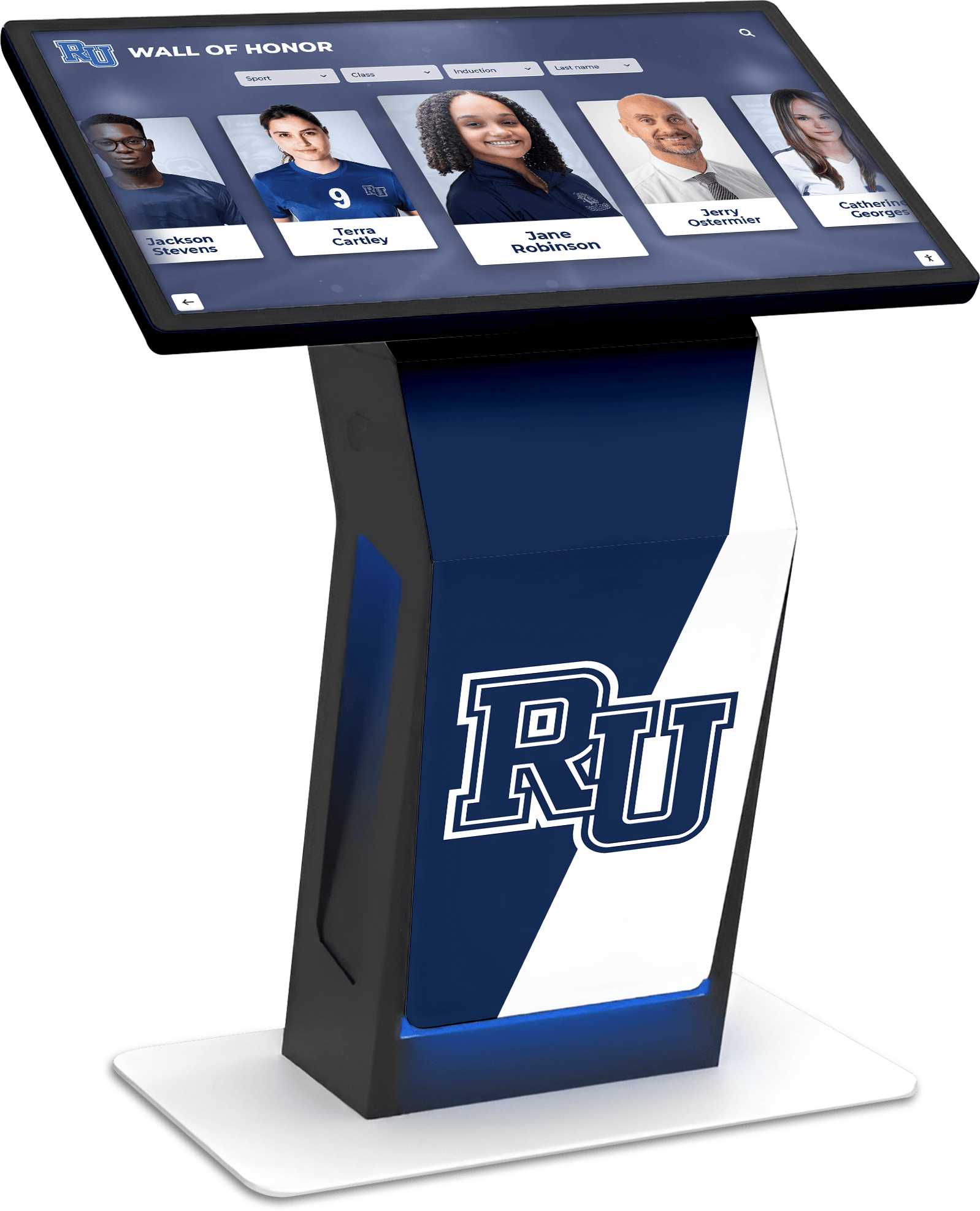




Schools and organizations face a persistent tension when choosing digital recognition platforms: they want creative freedom to match their unique brand identity, yet they need design consistency to ensure professional, accessible, cohesive experiences. Too often, this tension gets resolved through binary choices—either restrictive templates that guarantee consistency but stifle creativity, or unlimited customization that enables distinctive designs but frequently degrades into visual chaos, broken responsiveness, and accessibility failures.
The root problem centers on how platforms approach customization. Static template systems limit creativity by forcing organizations into predetermined layouts that may not suit their needs. Conversely, fully open design systems that hand organizations raw HTML and CSS require significant technical expertise while often producing inconsistent, fragmented experiences when different administrators make independent design decisions without coordinated governance.
This comprehensive guide explores how purpose-built recognition platforms like Rocket Alumni Solutions solve this challenge through structured flexibility—enabling genuine creative freedom while embedding design consistency, accessibility compliance, and technical quality through platform architecture rather than restrictions.
The traditional approach to design systems in software platforms presents users with a false dichotomy: choose rigid templates that ensure technical quality but limit creative expression, or accept full customization freedom that requires substantial technical expertise and often results in fragmented, inconsistent experiences. Schools implementing digital recognition systems find themselves caught in this trap—either accepting generic layouts that fail to reflect their distinctive identity, or investing significant resources maintaining custom implementations that drift from platform standards, break during updates, and accumulate technical debt.
Purpose-built platforms solve this challenge by expanding the library of available layouts rather than forcing organizations into fixed templates or requiring them to build from scratch. When a school needs a layout that doesn’t currently exist in the standard library, platforms like Rocket Alumni Solutions build custom layouts as first-class components—responsive, accessible, and compatible with all platform features—then add those layouts to the shared library for all customers. This approach delivers creative freedom without the ongoing cost of maintaining bespoke systems.

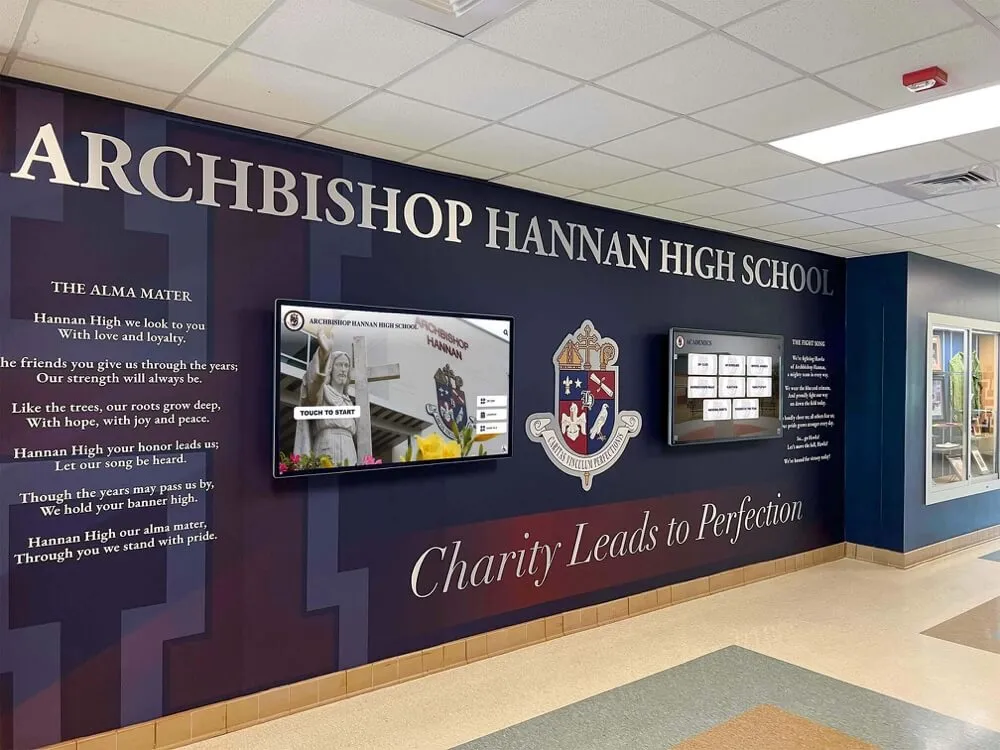
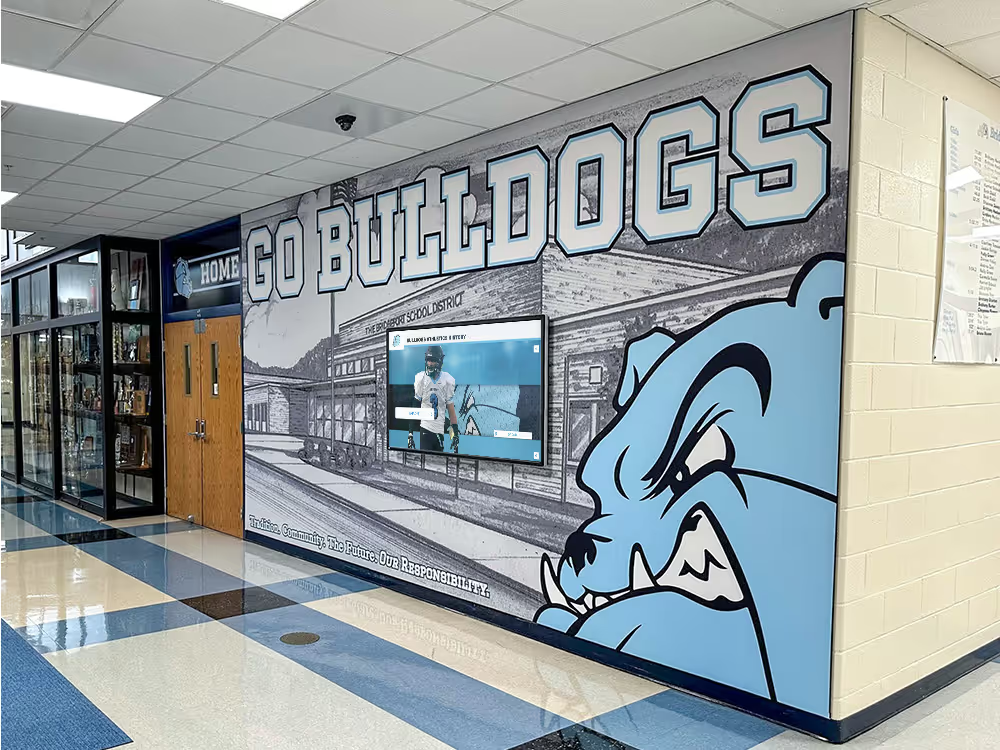
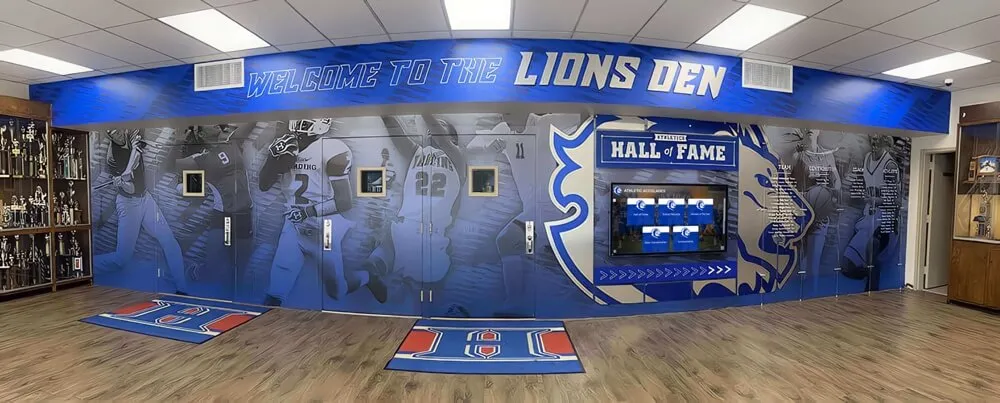
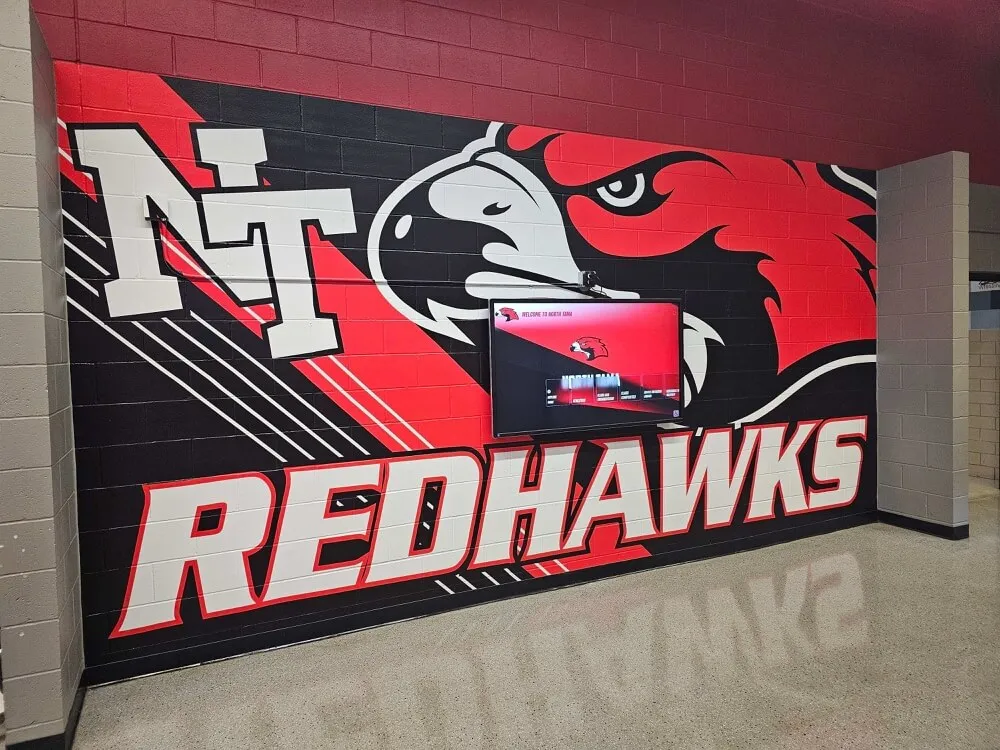
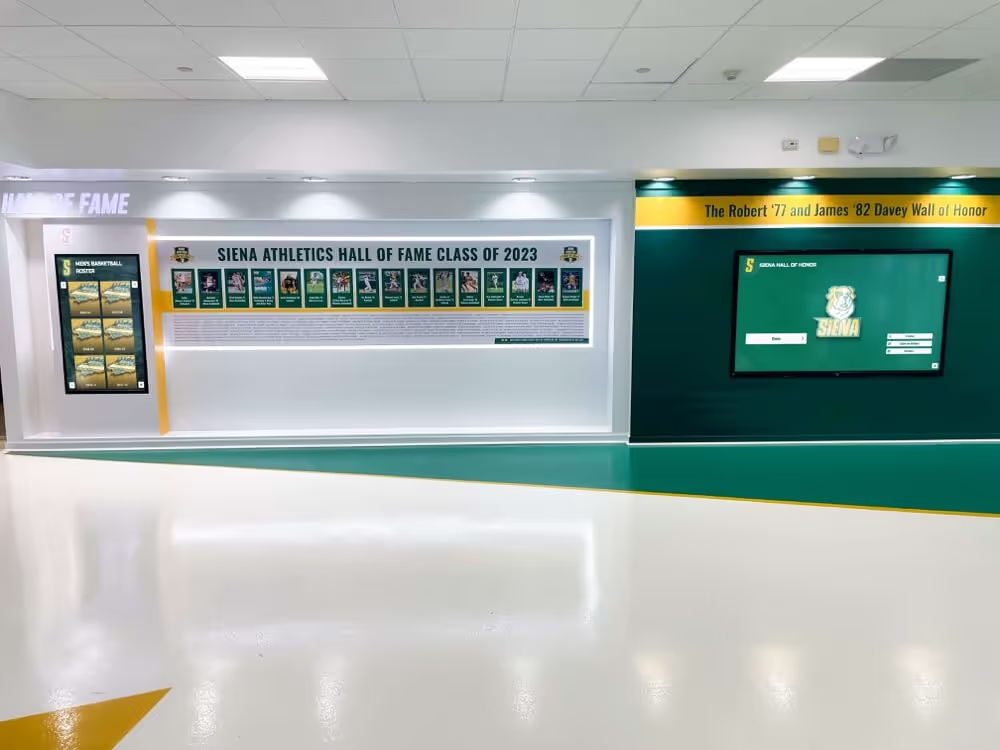
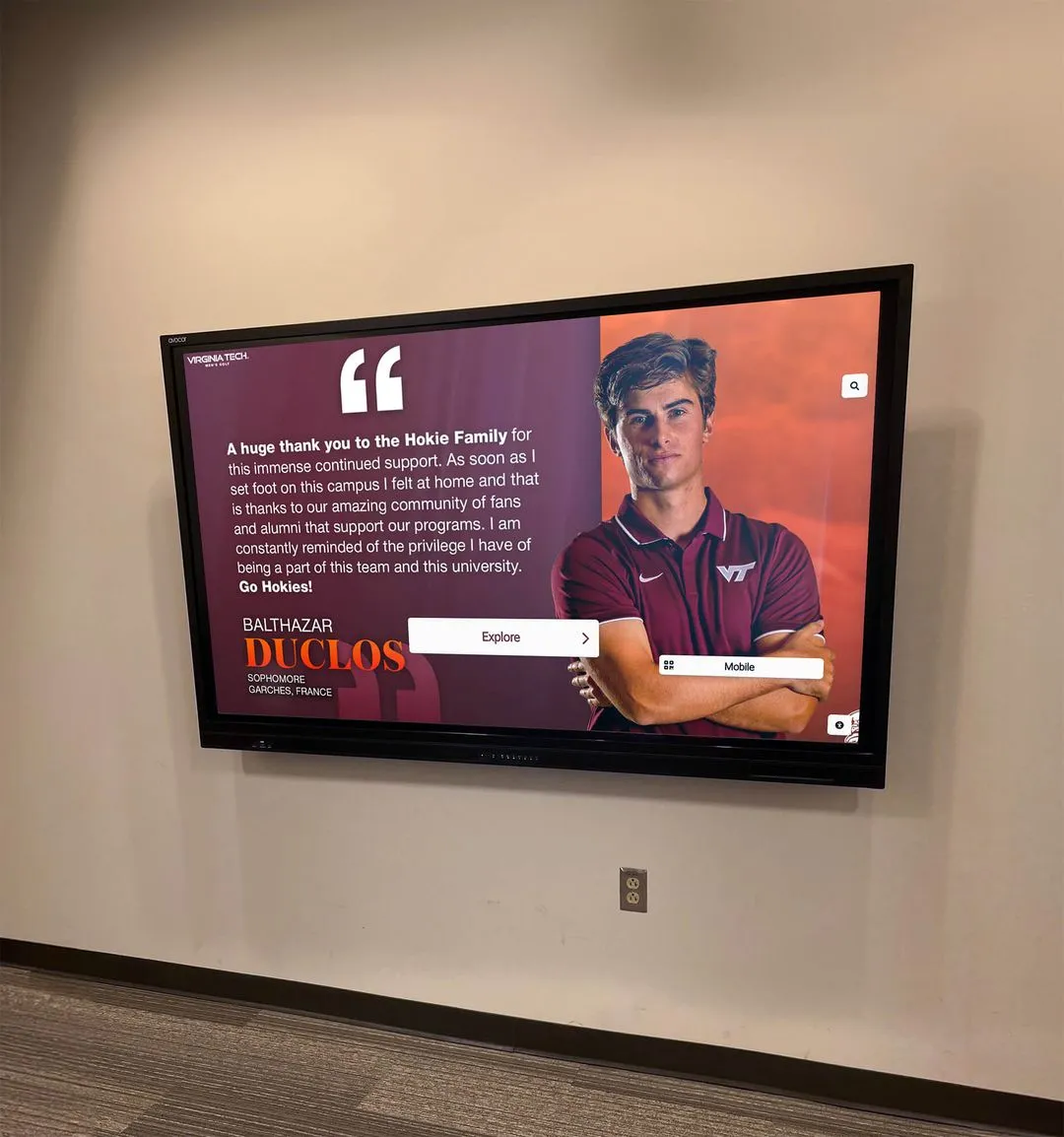
Professional recognition displays balance distinctive visual identity with consistent interaction patterns and technical quality
The Design Consistency Problem: Why Fragmentation Happens
Understanding why visual fragmentation occurs helps organizations avoid common pitfalls.
Static Templates Create Creative Bottlenecks
Traditional software platforms offer finite template collections covering common use cases but rarely accommodating unique organizational needs:
Limited Layout Options Generic template libraries typically include five to fifteen layout variations covering typical content structures. Organizations whose content, brand requirements, or display contexts don’t match these predetermined options face difficult choices: force content into inappropriate layouts that compromise messaging, pay premium prices for custom development, or abandon platform features requiring specific layouts. This limitation proves particularly frustrating for institutions with distinctive brand systems or specialized content requiring unique presentation approaches.
One-Size-Fits-All Aesthetics Template systems prioritize broad compatibility over distinctive visual identity. Default color schemes, typography, spacing, and component styles reflect safe, neutral design decisions that offend no one but rarely inspire enthusiasm. Schools with bold brand identities—distinctive color palettes, unconventional typography, unique visual language—find generic templates incompatible with established brand systems, forcing compromises that dilute institutional identity.
Inflexibility for Evolving Needs Organizational design needs evolve as programs change, brand systems refresh, and new content types emerge. Static template systems become straightjackets when institutions cannot adapt layouts to accommodate these evolutions without expensive custom development or platform migrations. The inability to iterate designs in response to user feedback or changing requirements creates long-term frustration as initially acceptable templates become increasingly inadequate over time.
Full Customization Often Produces Chaos
Open-ended customization systems promise unlimited creative freedom but frequently deliver fragmented experiences:
Technical Complexity Barriers Platforms offering full design customization assume users possess front-end development expertise including HTML, CSS, JavaScript, responsive design principles, accessibility standards, and browser compatibility testing. Most schools lack in-house staff with these specialized skills. When non-technical administrators attempt complex customizations, results often include broken layouts across different devices, inaccessible interfaces excluding users with disabilities, visual inconsistencies as different pages receive independent design treatment, and maintenance difficulties when implementations use deprecated techniques.
Inconsistent Design Patterns Without coordinated governance, multiple administrators making independent design decisions create inconsistent experiences. One section uses card-based layouts while another employs list views; navigation patterns vary between categories; color applications lack systematic logic; typography changes arbitrarily across pages. Users encountering these inconsistencies perceive unprofessional execution while struggling with interfaces that behave unpredictably as design patterns shift.
Accessibility Violations and Technical Debt Custom implementations frequently fail to maintain accessibility compliance, responsive behavior, and cross-browser compatibility that platform-provided components guarantee. Organizations discover accessibility violations only when complaints emerge or legal issues arise. Understanding ADA accessibility compliance for digital recognition displays helps organizations recognize the comprehensive requirements that platform-managed systems address systematically. Responsive breakdowns appear months after implementation when someone tests on uncommon device sizes. Browser updates break custom code relying on deprecated features. These accumulated technical issues create ongoing maintenance burdens that organizations lack resources to address systematically.
Update Conflicts and Feature Incompatibility Custom implementations often break when platforms release updates or new features. Platform improvements assume standard component usage; heavily customized installations encounter conflicts requiring manual reconciliation. Over time, customized instances diverge from platform standards, creating situations where organizations cannot access new capabilities without abandoning custom work representing significant investment.
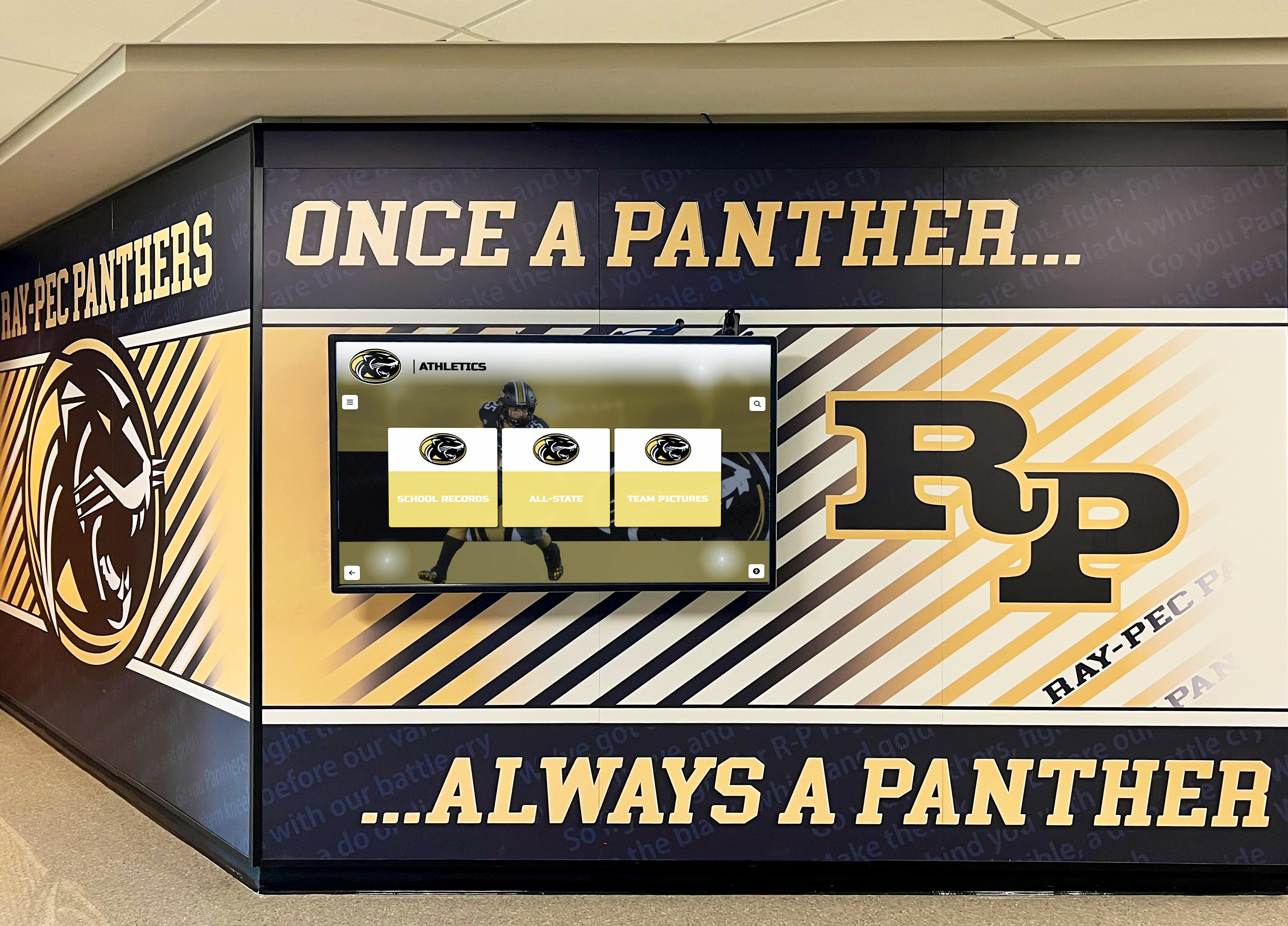
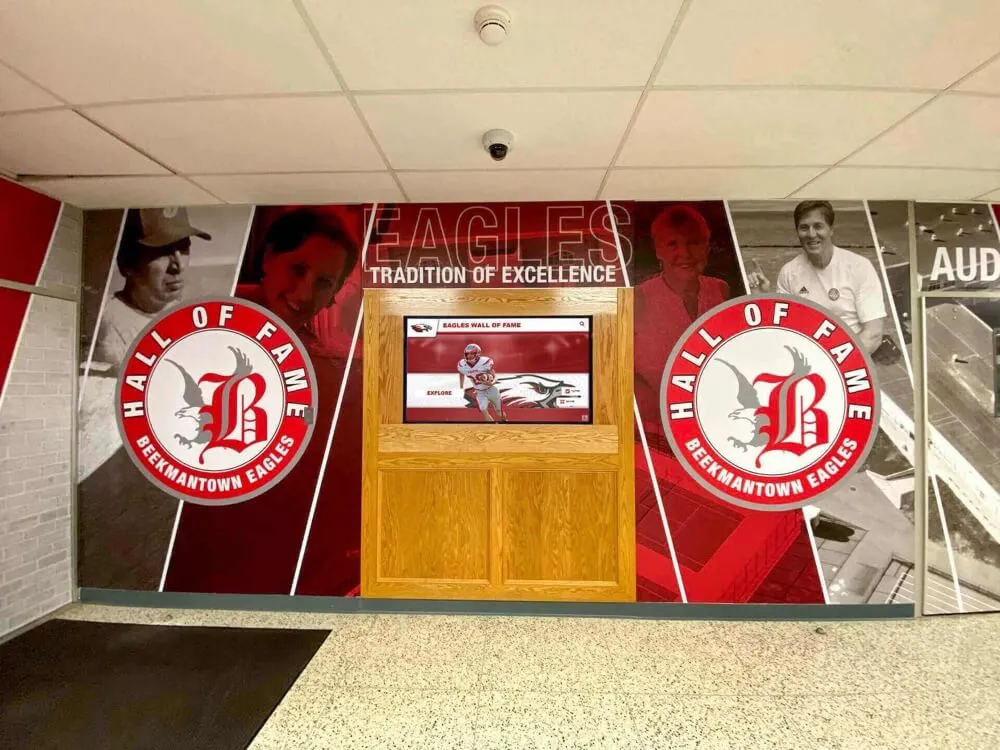
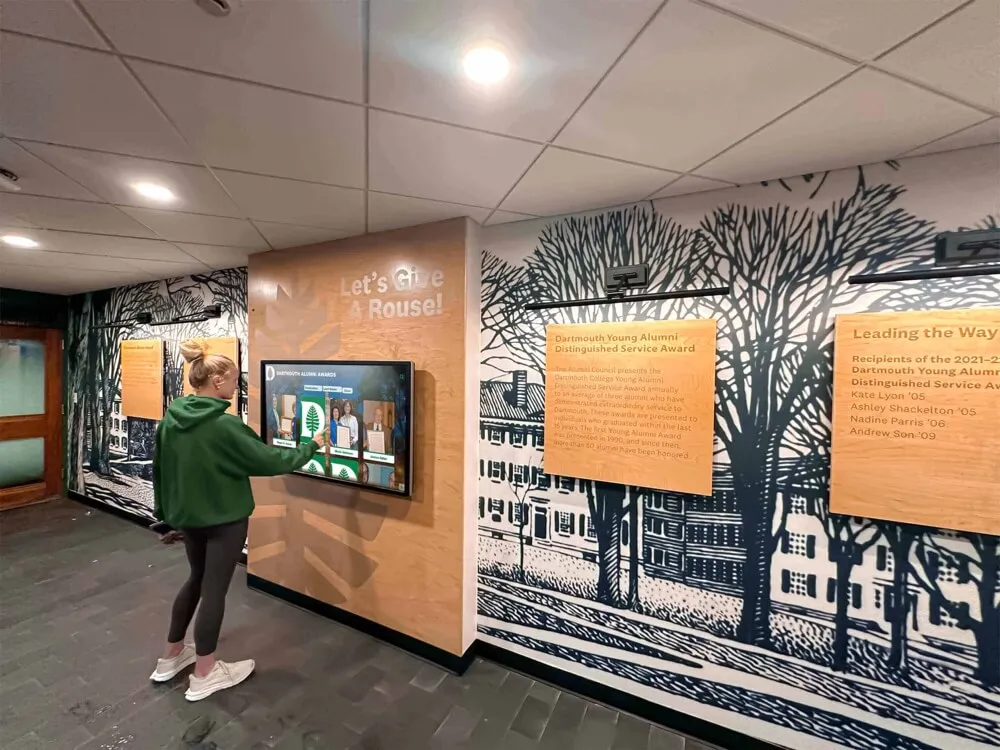
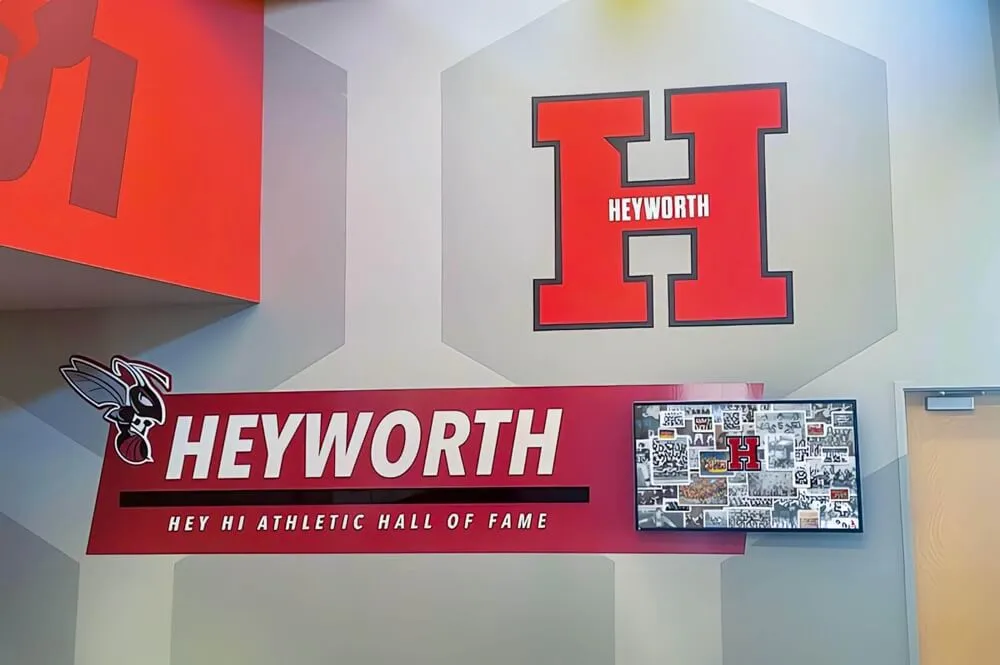
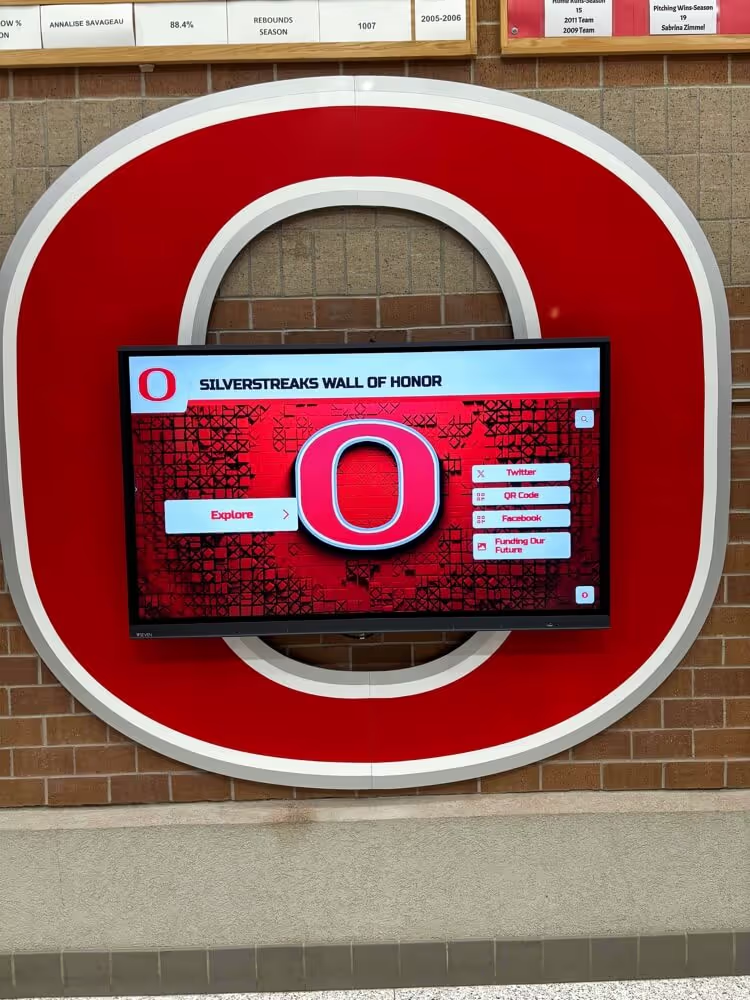
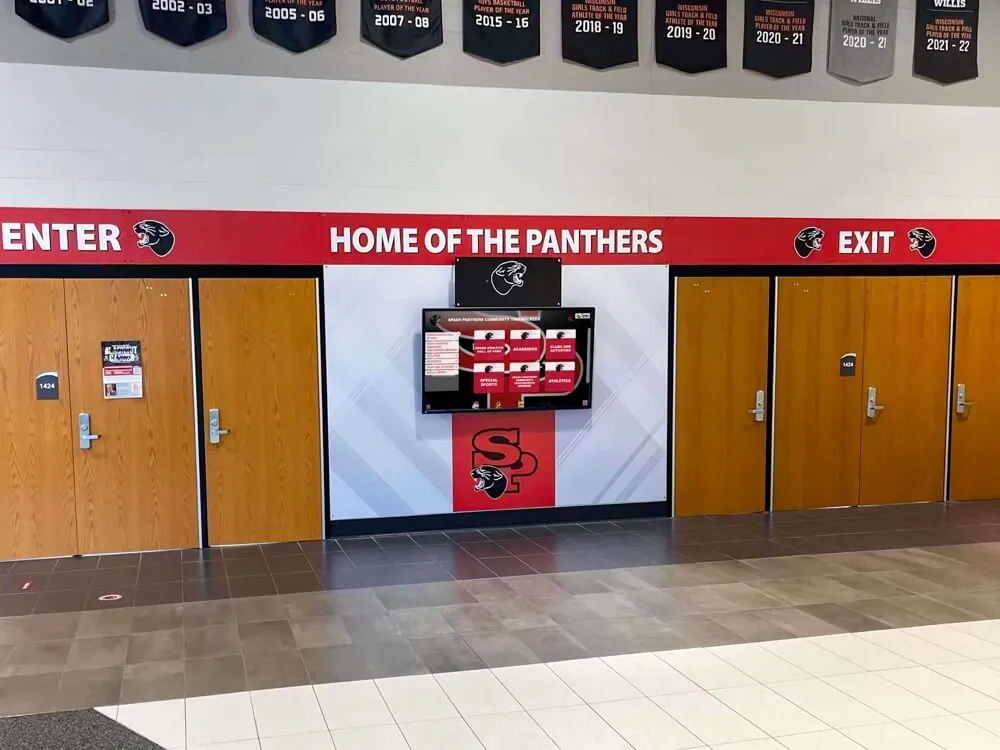
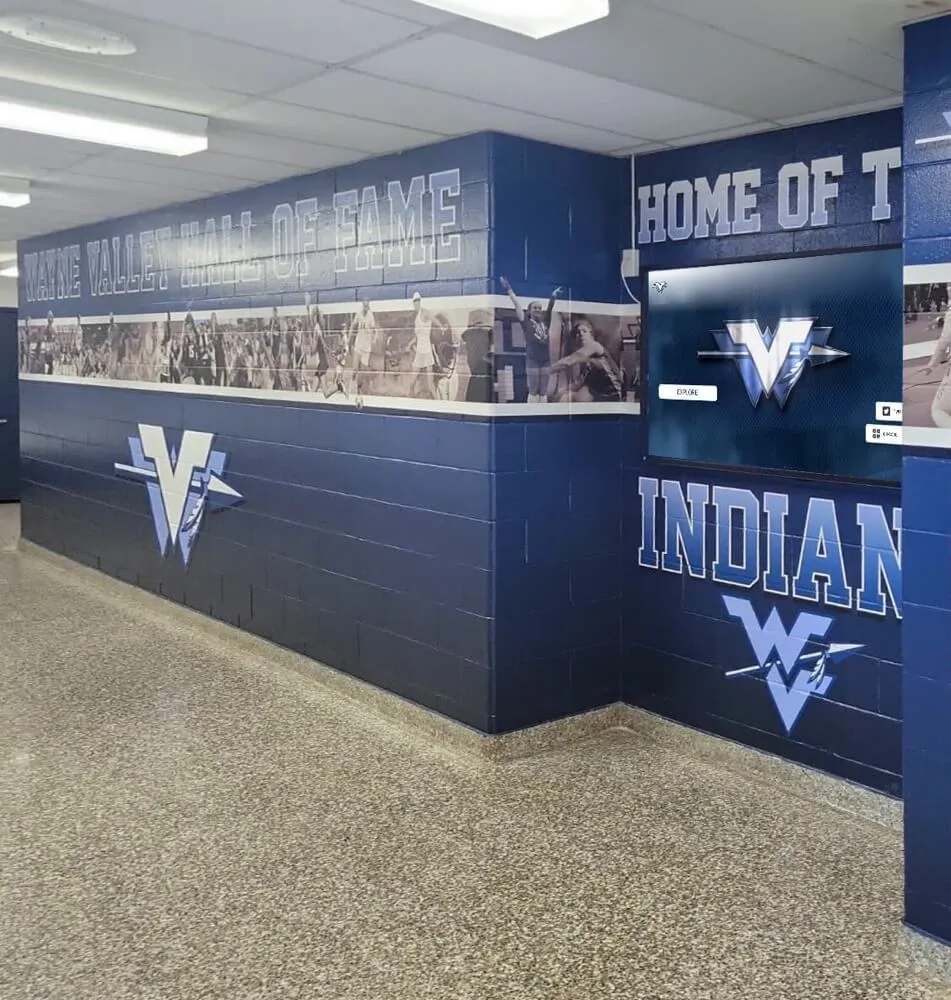
Effective design systems enable distinctive brand expressions while maintaining consistent interaction patterns and technical quality
The Rocket Alumni Solutions Approach: Expanding Libraries Instead of Forcing Templates
Purpose-built recognition platforms solve the consistency-versus-creativity tension through structured flexibility that expands available options rather than restricting choice.
Custom Layouts as First-Class Components
When schools request layouts not currently in the standard library, platforms like Rocket Alumni Solutions build them as first-class components rather than treating custom requests as exceptions:
Professional Design and Development Custom layout requests receive full platform design and development treatment. Experienced designers ensure visual quality, information hierarchy, and brand alignment. Professional developers implement responsive behavior, accessibility compliance, and cross-browser compatibility. Quality assurance teams test across devices, screen sizes, and assistive technologies. Schools receive the same technical quality in custom layouts that standard components offer—not quick hacks or minimum viable implementations that barely function.
This professional approach means custom layouts aren’t brittle special cases requiring constant maintenance. They’re reliable platform components benefiting from ongoing platform improvements, automatic compatibility with new features, and systematic testing with each platform update.
Rapid Implementation Timelines Purpose-built platforms maintain efficient custom layout development pipelines. Rather than treating each custom request as a major project requiring months of requirements gathering, design cycles, and development sprints, streamlined processes deliver new layouts within days or weeks. Schools requesting unique layouts typically see implementations within one week—fast enough to meet project timelines without significant delays while maintaining thorough design and development quality.
This rapid turnaround stems from efficient processes where platform teams understand recognition use cases deeply, maintain reliable component libraries enabling quick assembly of new layouts, and employ experienced designers and developers who’ve built dozens of recognition layouts and recognize patterns accelerating development.
Addition to Shared Library for All Customers After custom layouts are built, tested, and deployed for requesting customers, they become available in the standard layout library for all users. This shared library approach creates compounding value: early customers receive custom development addressing their specific needs, while future customers benefit from expanded options without requesting custom work. Over time, layout libraries grow to accommodate diverse use cases—each representing a real customer need rather than theoretical possibility.
The shared library model transforms what might be proprietary custom development into community benefit. Schools requesting custom layouts contribute to platform improvement for all users while receiving exactly what they need for their unique circumstances.
No Additional Cost for Custom Requests Many platforms charge premium fees for custom layout development, treating customization as special service reserved for enterprise customers willing to pay significant consulting fees. Purpose-built recognition platforms like Rocket Alumni Solutions provide custom layout development at no additional charge for all customers—small schools and large institutions receive the same access to custom layouts meeting their specific needs.
This approach recognizes that enabling creative freedom shouldn’t be premium feature requiring substantial budget. Schools with unique needs deserve layouts that serve those needs regardless of size or budget, and the platform benefits from expanded library accommodating diverse use cases.
Platform Guarantees for All Layouts
Custom layouts inherit comprehensive platform guarantees ensuring quality and longevity:
Responsive Across All Screen Sizes Every layout—standard or custom—functions properly across the full range of devices from smartphones to ultra-wide displays. Responsive behavior isn’t an afterthought or optional feature; it’s fundamental requirement built into every component. Designs automatically adapt typography sizing, spacing, column counts, image presentations, and interaction patterns to suit the current viewport.
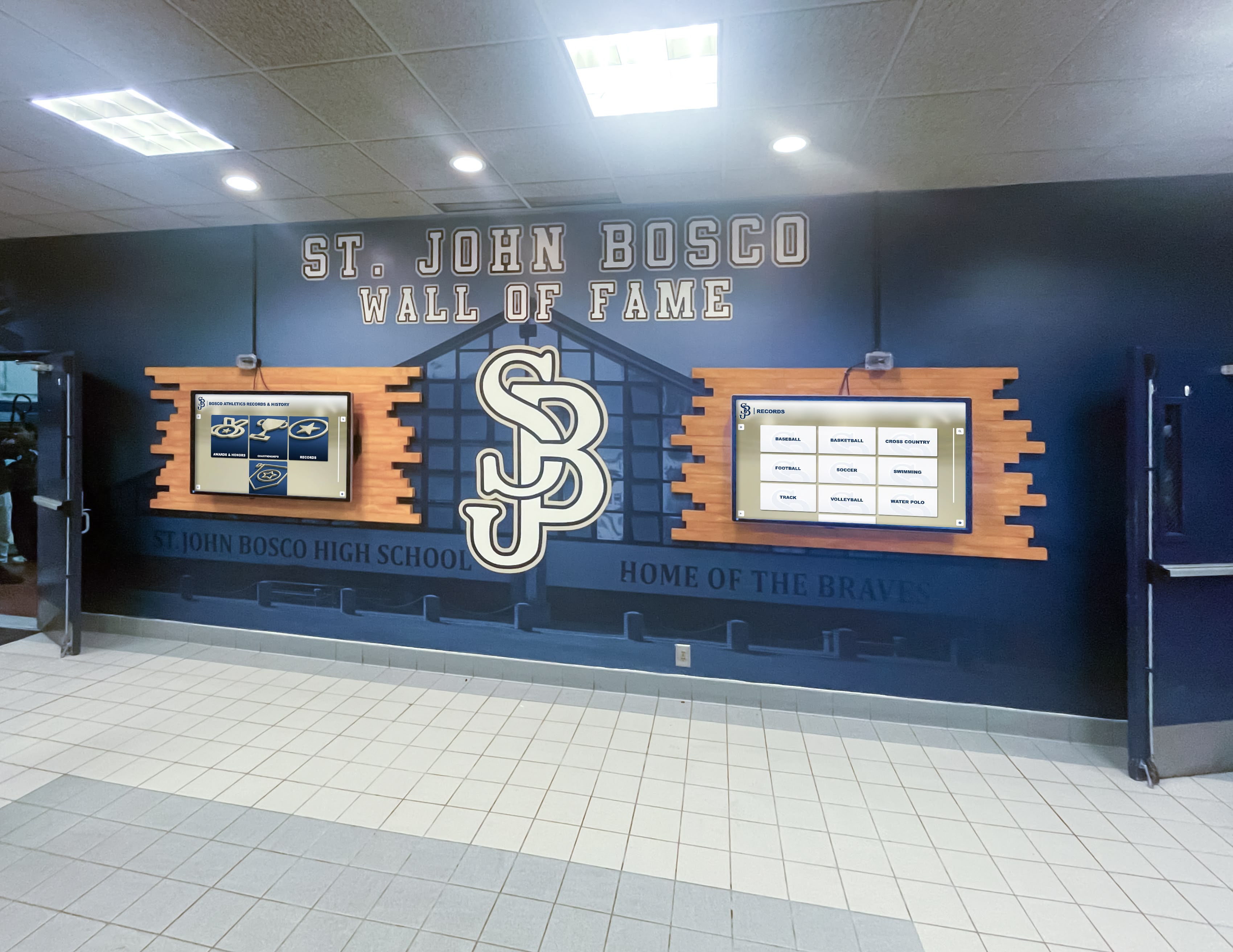
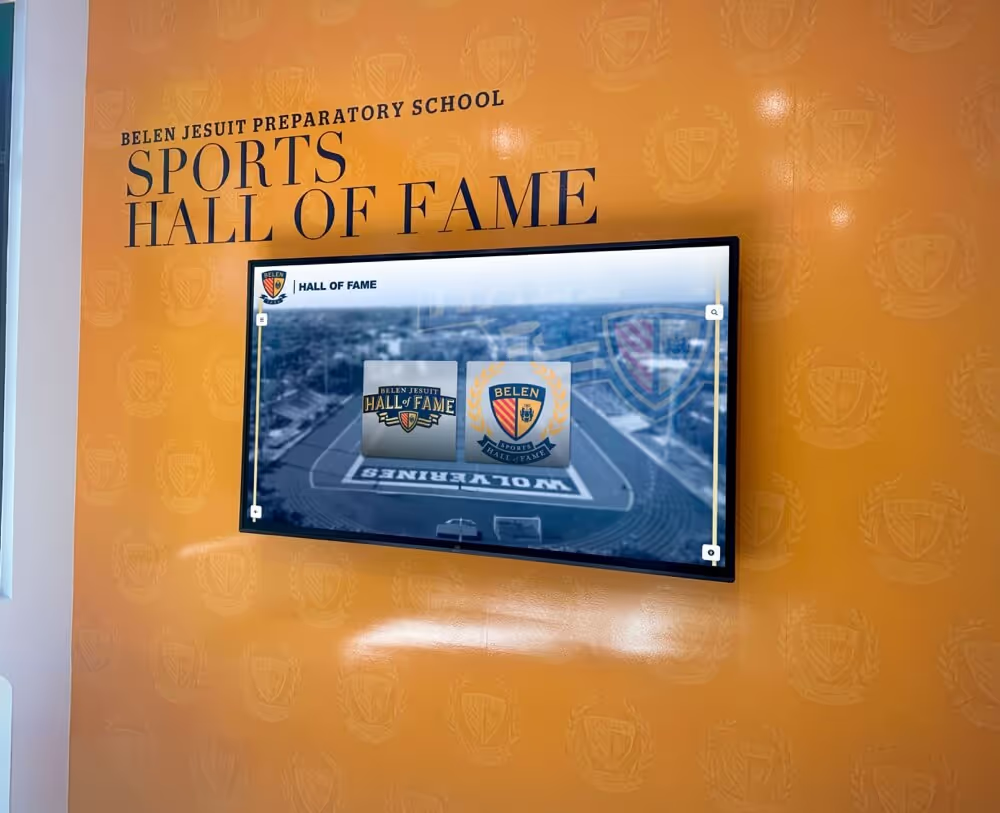
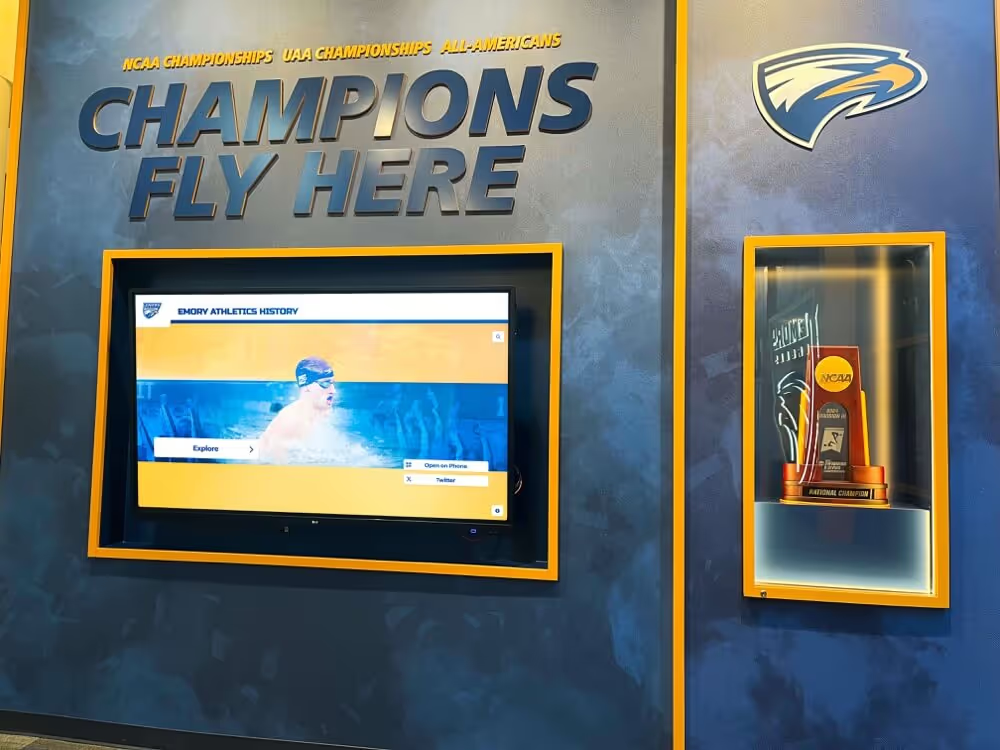
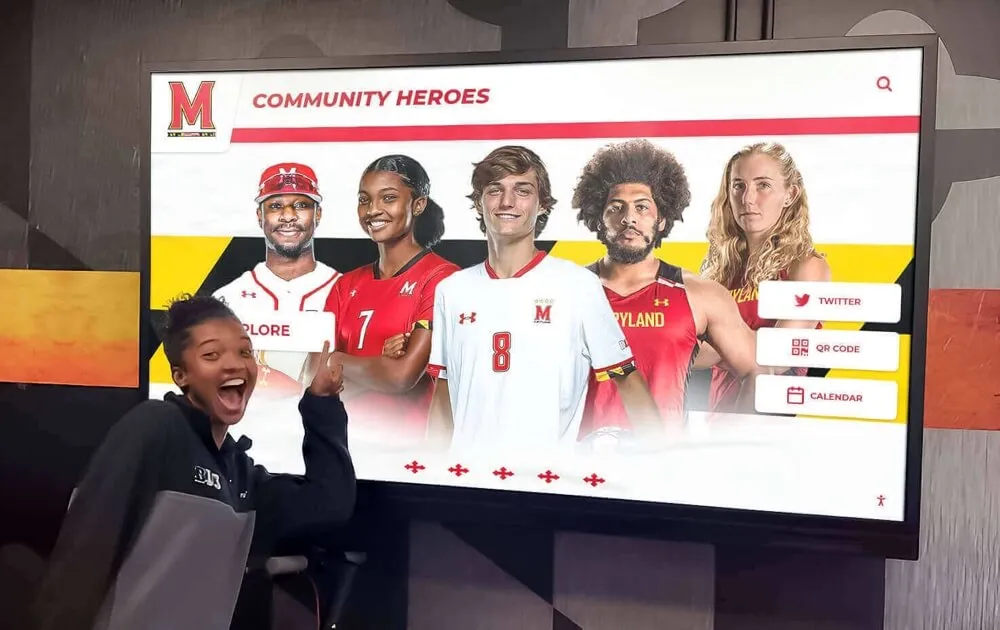
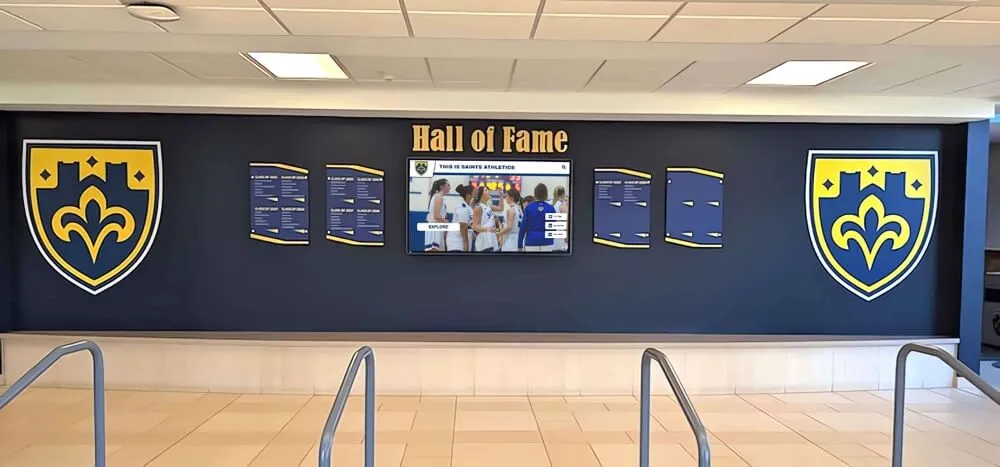
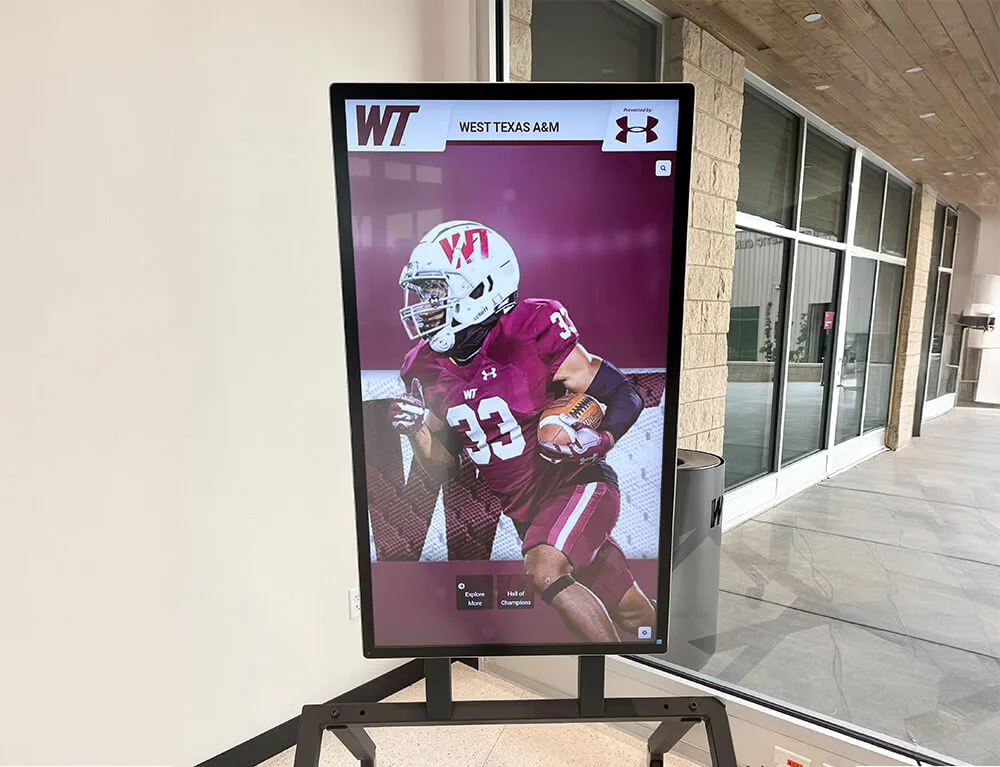
Recognition systems maintain visual consistency across multiple displays while accommodating different content types and layouts
Organizations never worry whether custom layouts will break on tablets, display awkwardly on wide monitors, or become unusable on small phone screens. Comprehensive responsive design is non-negotiable platform requirement.
ADA and Accessibility Compliance Accessibility compliance represents another non-negotiable requirement for all layouts. Custom components meet the same accessibility standards as platform-provided layouts including proper semantic HTML for screen readers, sufficient color contrast meeting WCAG guidelines, keyboard navigation support for users unable to use pointing devices, appropriate ARIA labels and roles for complex interactions, and logical focus order enabling sequential navigation.
Schools implementing custom layouts never sacrifice accessibility for distinctive design. Platform development ensures both goals coexist—unique visual presentations that remain fully accessible to users with disabilities.
Consistent Interaction Patterns While visual presentations vary across layouts, core interaction patterns remain consistent. Search functionality, filtering controls, content navigation, and detail views behave similarly regardless of layout. Users who learn to interact with one section’s content easily transfer that knowledge to other sections even when visual presentations differ.
This interaction consistency prevents confusion while enabling visual variety. Users appreciate distinctive aesthetics without needing to learn entirely new interaction models when moving between sections using different layouts.
Compatible with All Platform Features Custom layouts maintain full compatibility with platform capabilities including search and filtering systems, content type support (profiles, galleries, documents, videos), navigation structures, analytics tracking, social sharing, and future feature releases.
Organizations never face situations where custom layouts cannot access new platform capabilities or require rebuilding to support feature updates. Platform architecture ensures all layouts—standard and custom—remain first-class citizens receiving full platform support.
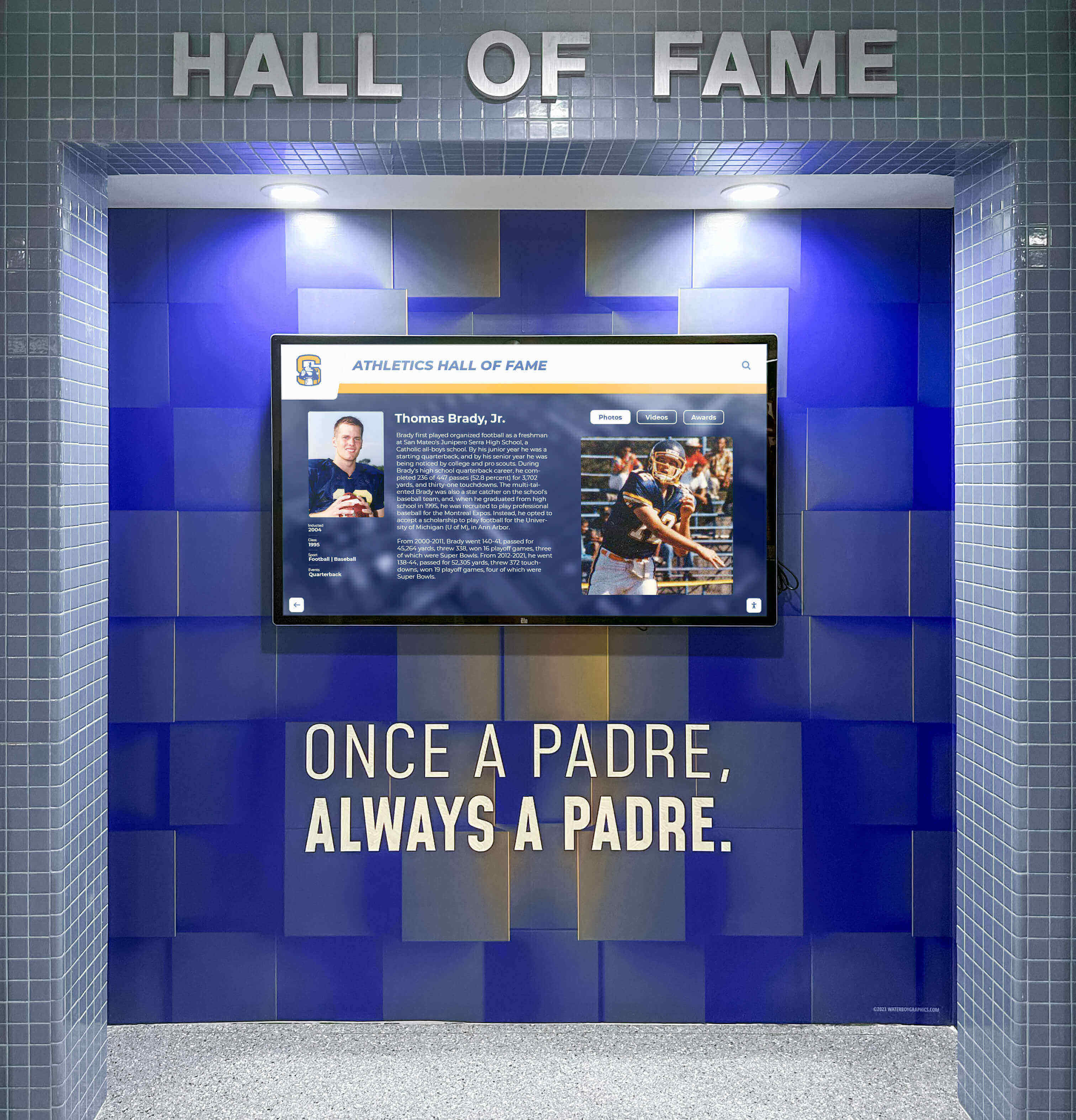
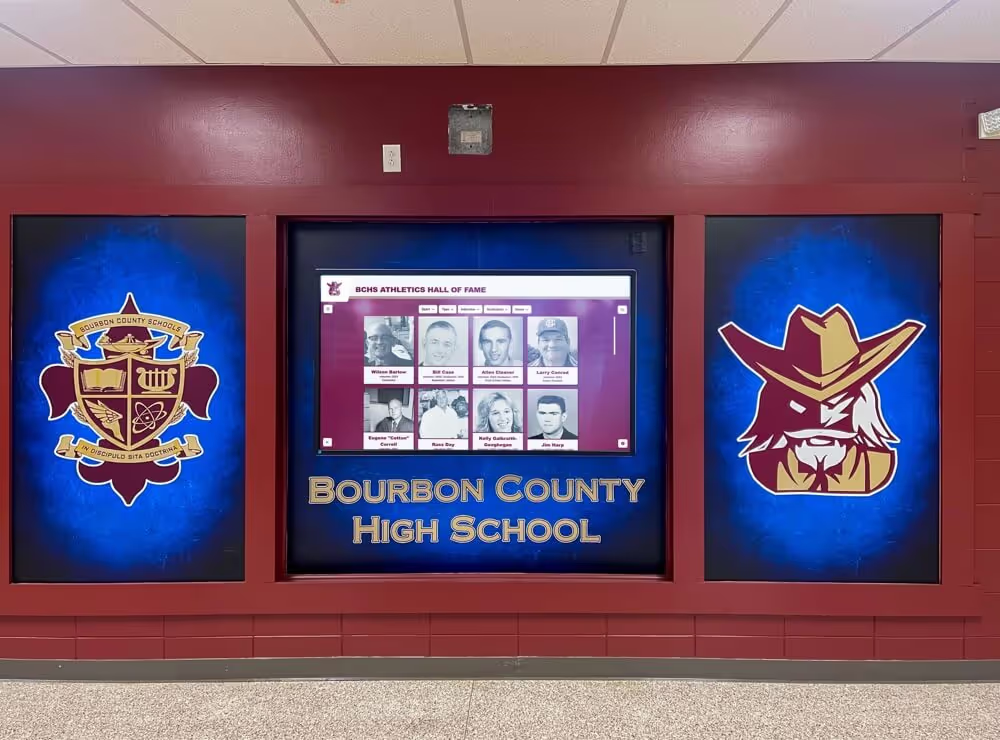
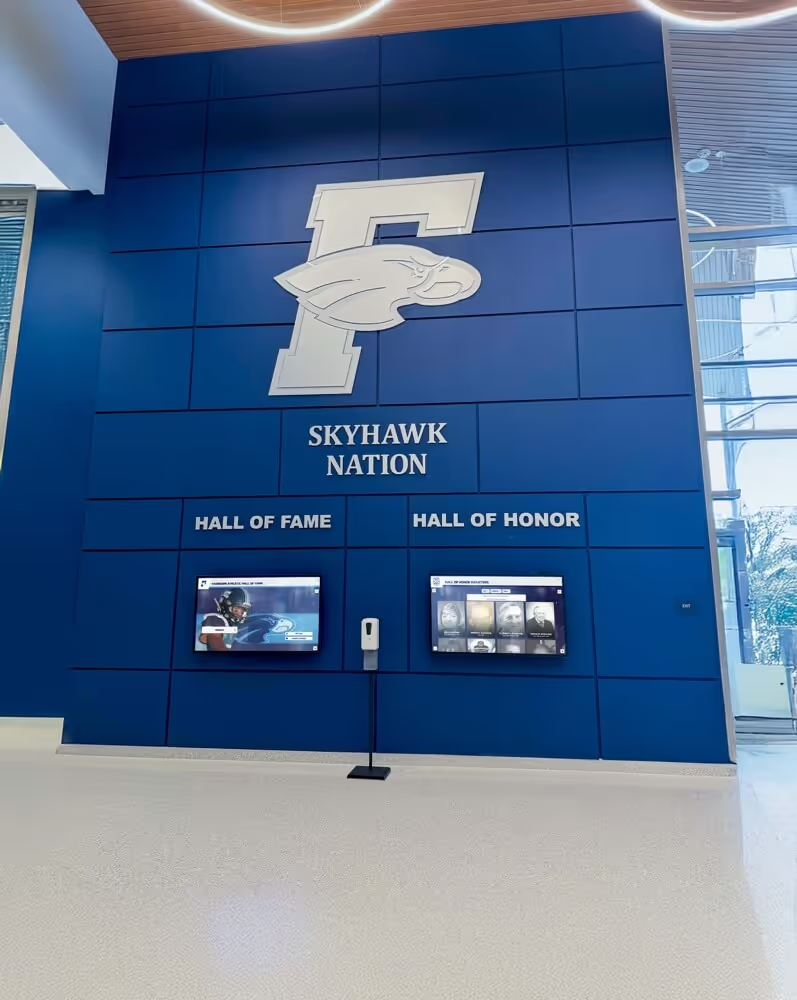
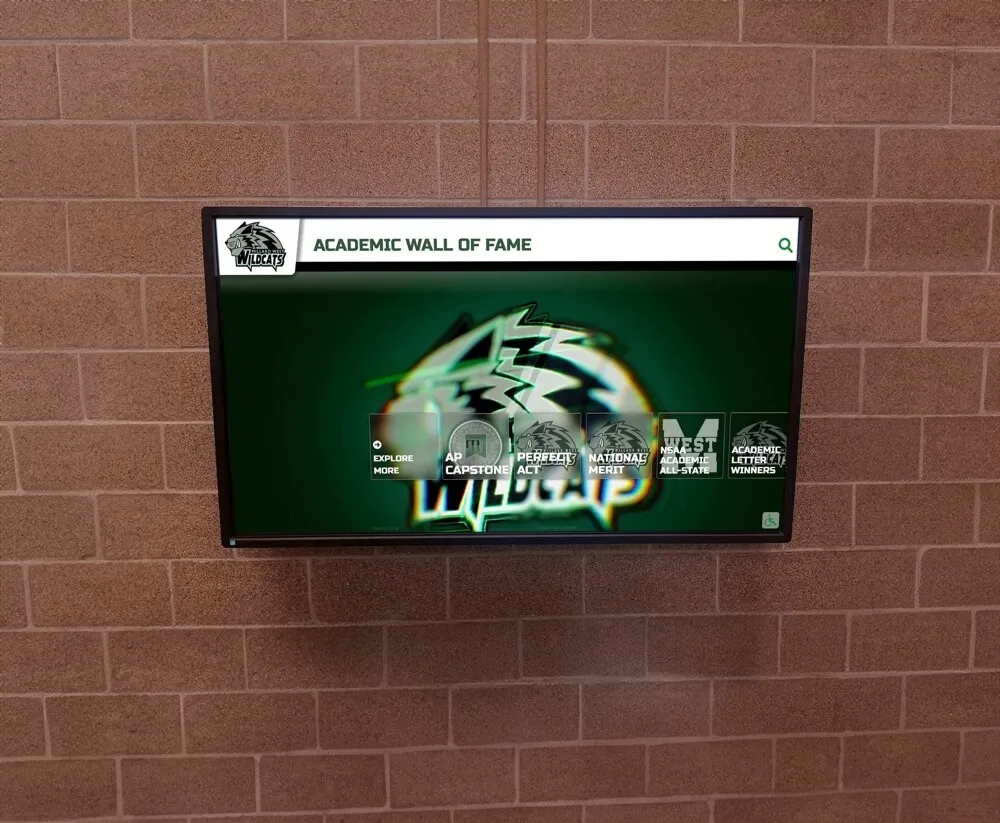
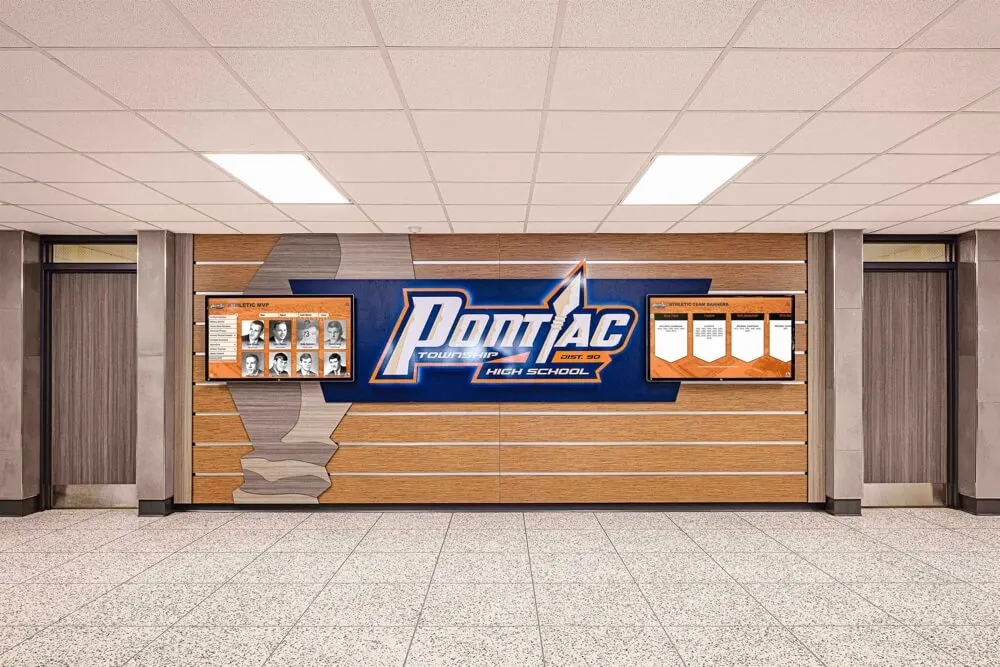
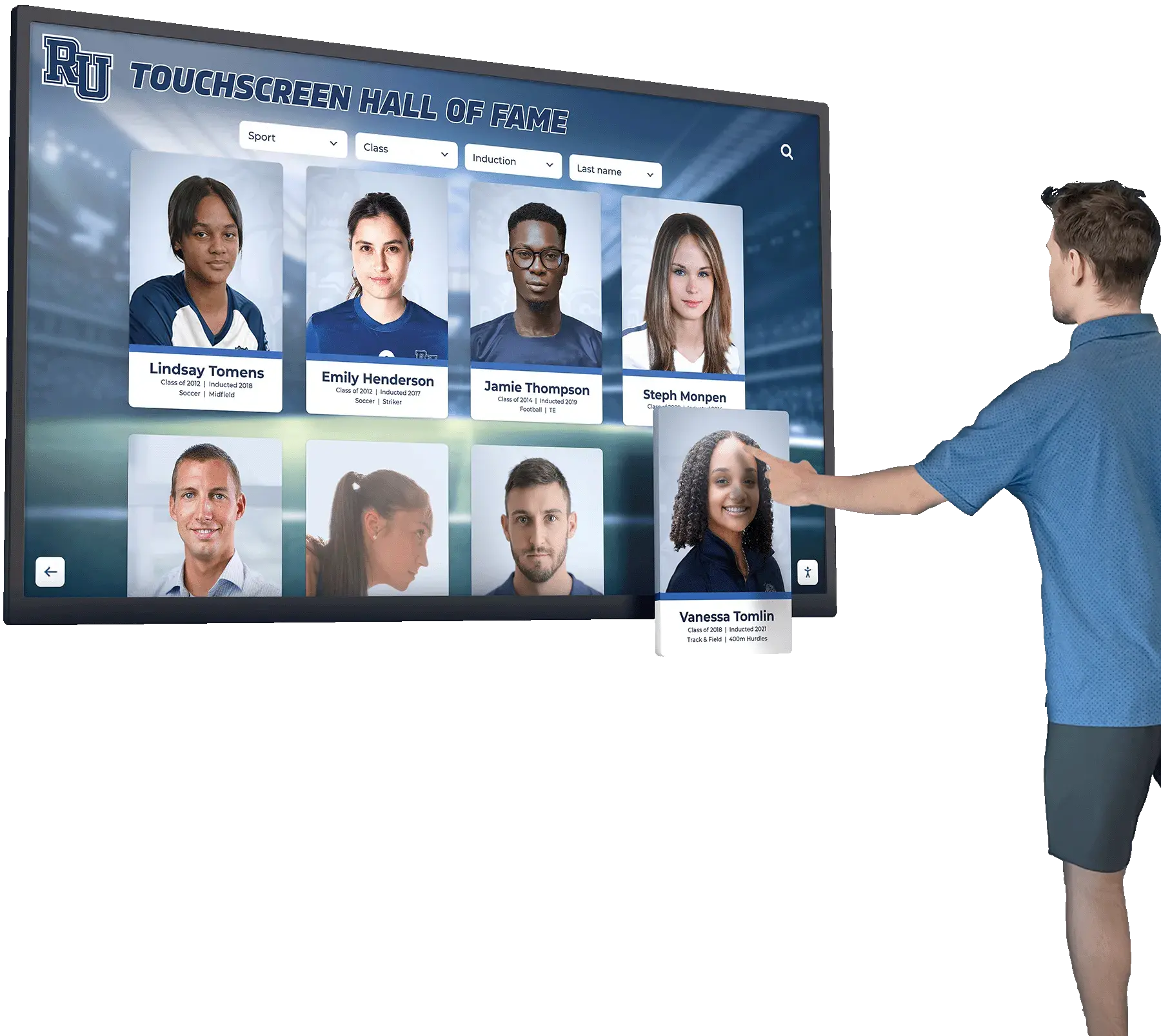
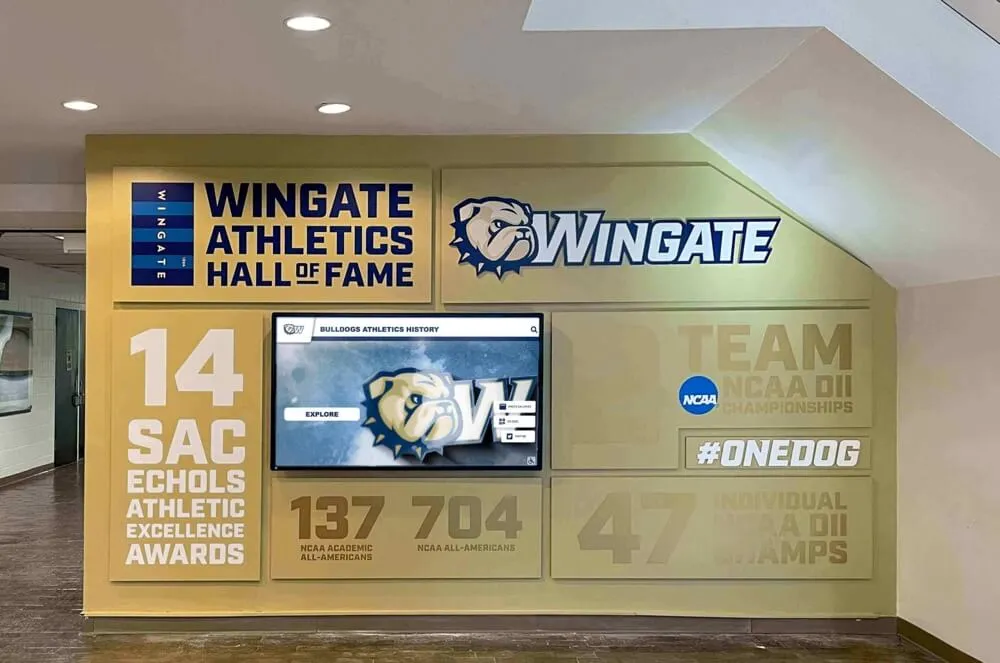
Professional recognition installations maintain technical quality and interaction consistency while reflecting distinctive institutional branding
Design Governance: Preventing Fragmentation Through System Architecture
Consistency emerges from design system structure rather than limiting user choice.
Enforced Design System Fundamentals
Recognition platforms maintain consistency through systematic enforcement of core design principles:
Typography Systems and Hierarchies Platform design systems enforce consistent typography through structured heading hierarchies, limited font family choices reflecting brand appropriateness, systematic sizing scales ensuring proper information hierarchy, consistent line heights and spacing maintaining readable text blocks, and responsive scaling adjusting typography across screen sizes.
While organizations can customize colors, layouts, and content presentations, core typography systems remain consistent. Users always encounter readable, properly structured text regardless of which sections they explore or what custom layouts are employed.
Spacing and Layout Grids Systematic spacing prevents the visual chaos that emerges when elements cluster randomly or spread inconsistently. Design systems enforce standard spacing scales (typically based on 4px or 8px increments), grid systems organizing content into predictable columns, consistent padding and margins around components, and responsive spacing that adapts to screen sizes while maintaining proportional relationships.
These spacing systems work invisibly—users don’t consciously notice systematic spacing, but they experience the visual organization and predictability that consistent spacing creates.
Component Behavior Standards Interactive components behave consistently regardless of layout or customization. Buttons provide the same hover states, focus indicators, and click feedback across all contexts. Form fields offer identical interaction patterns whether in search interfaces, submission forms, or profile editors. Navigation elements respond consistently to clicks, keyboard commands, and touch gestures.
Behavioral consistency reduces cognitive load—users learn interaction patterns once and apply that knowledge across the entire platform rather than discovering each section behaves differently.
Color Application Logic While platforms accommodate diverse brand color palettes, systematic color application prevents chaotic presentations. Design systems enforce appropriate contrast for accessibility, consistent color purposes (primary actions, secondary elements, warnings, success messages), logical background and text color pairings, and appropriate color intensity for different interface elements.
Organizations can customize which colors appear in their branded instances, but how those colors are applied follows consistent logic preventing accessibility violations or visual confusion.
Quality Control Through AI Design Agents
Modern platforms increasingly employ AI-assisted quality control catching common design failures before they reach users:
Automated Accessibility Audits AI systems scan layouts detecting potential accessibility issues including insufficient color contrast, missing alternative text for images, improper heading hierarchies, unlabeled form controls, and keyboard navigation barriers. These automated audits flag problems before publication, enabling correction during content creation rather than after accessibility complaints emerge.
Automated auditing doesn’t replace human accessibility expertise but catches the routine oversights that frequently occur when busy administrators move quickly without specialized accessibility knowledge.
Visual Consistency Analysis AI agents analyze visual presentations across layouts and sections, identifying inconsistent element spacing, misaligned components, inappropriate typography sizing, awkward image cropping, and overall visual imbalance. These analyses help administrators recognize when customizations have unintentionally degraded visual quality, enabling corrections maintaining professional presentation standards.
Visual consistency checking works particularly well when multiple staff members contribute content to different sections. AI agents detect drift that might not be obvious to individuals focused on their specific areas of responsibility.
Content Density and Readability Scoring Automated analysis evaluates whether pages present content at appropriate density—not so sparse that valuable screen space goes unused, not so dense that users feel overwhelmed. Readability scoring assesses text complexity, paragraph lengths, and information hierarchy, flagging content that may be difficult for general audiences to comprehend.
These analyses help organizations maintain the balance between comprehensive information and accessible presentation, ensuring content serves diverse audiences including those with limited familiarity with subject matter.
Brand Consistency Verification AI systems compare content presentations against defined brand guidelines, identifying deviations from established color usage, typography applications, logo treatments, and visual language. This automated brand checking helps organizations maintain brand consistency even when multiple administrators create content without centralized design oversight.
Brand verification proves particularly valuable for institutions with complex brand systems including sub-brands for different programs, where maintaining consistency requires tracking numerous brand variations and their appropriate applications.
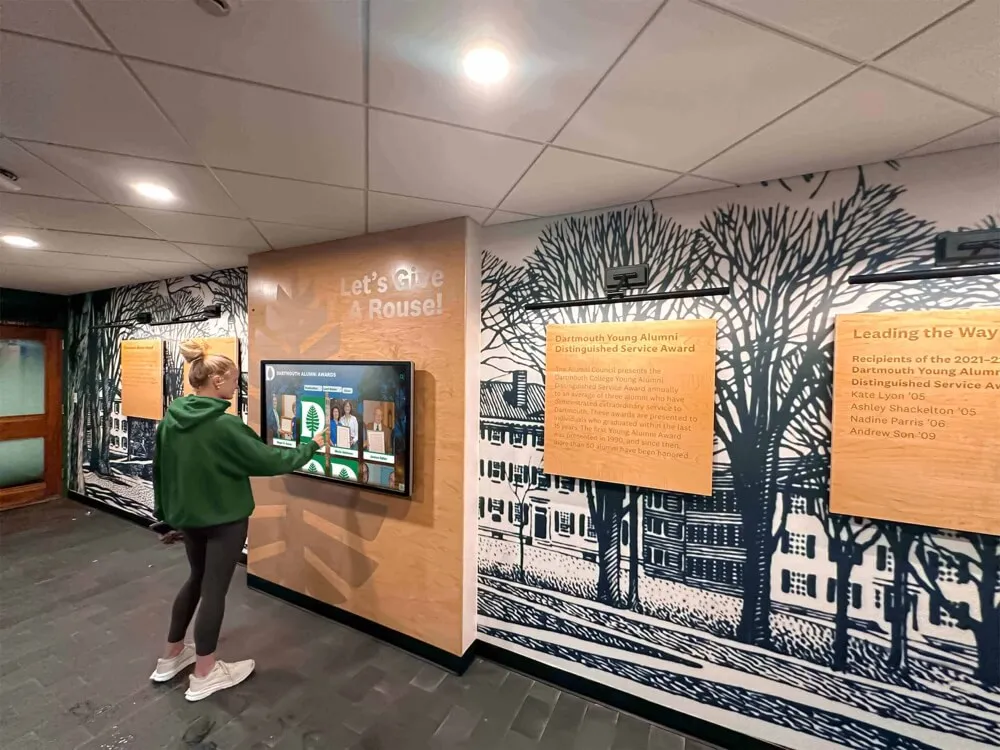
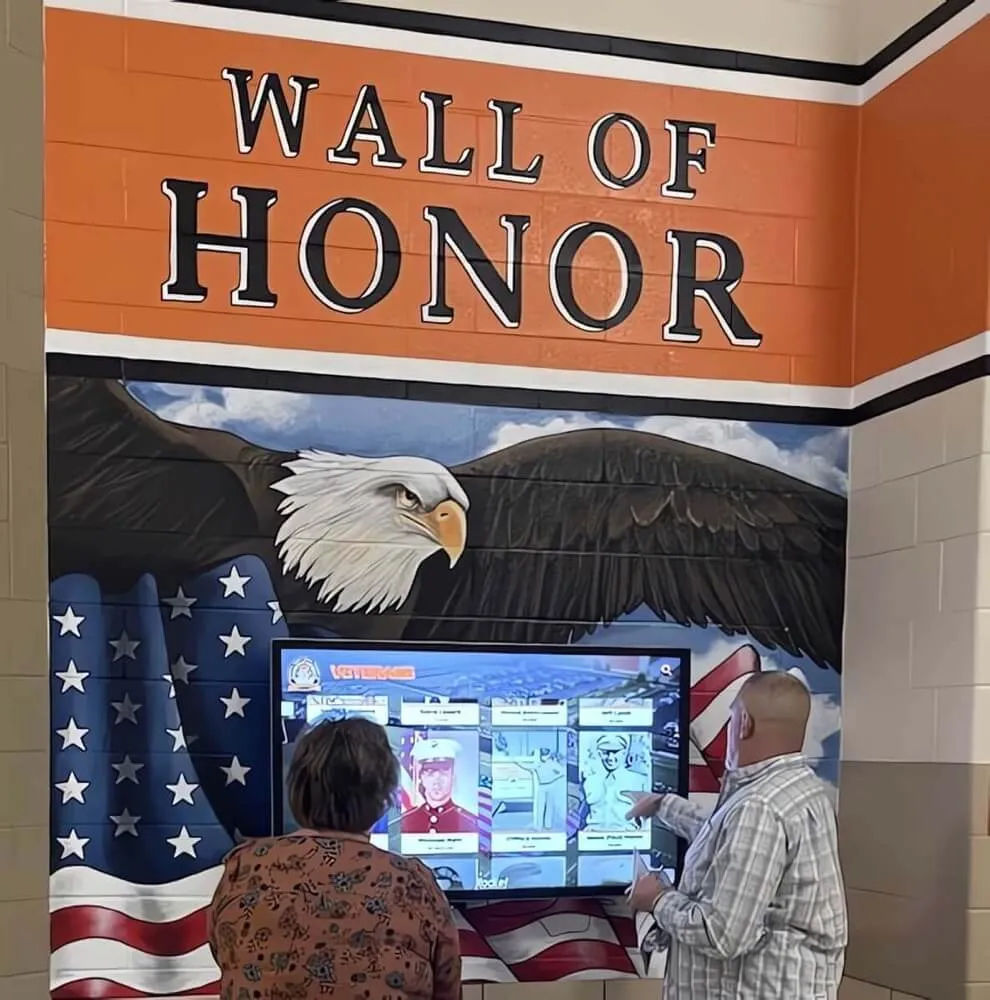
Advanced recognition systems integrate digital displays with existing architectural elements while maintaining consistent interaction patterns
The Real Tradeoff: Build Your Own Freedom or Borrow Rocket’s
Organizations must choose between maintaining custom systems or leveraging platform-provided flexibility.
What Building Your Own System Requires
Schools choosing to build and maintain fully custom recognition systems assume comprehensive technical responsibilities:
Responsive Design Implementation and Maintenance Custom implementations must handle responsive behavior across the full device spectrum. Developers need expertise in CSS media queries, flexible layouts, responsive images, touch-friendly interfaces on mobile devices, appropriate sizing for large displays, and testing across numerous device types and screen sizes. As new devices emerge and screen size distributions shift, custom implementations require ongoing updates maintaining compatibility.
Organizations building custom systems either employ in-house front-end developers with responsive design expertise or engage external development firms for ongoing maintenance—both representing substantial recurring costs compared to platform-managed responsiveness.
Accessibility Compliance and Testing Maintaining accessibility compliance requires specialized knowledge of WCAG guidelines, screen reader compatibility, keyboard navigation implementation, appropriate semantic HTML, ARIA attributes and roles, and accessible interaction patterns for complex components. Accessibility testing demands assistive technology expertise—developers must regularly test with screen readers, keyboard-only navigation, voice control systems, and other assistive technologies.
Accessibility violations carry legal risk, particularly as digital accessibility lawsuits become more common. Organizations maintaining custom implementations assume liability for accessibility failures that platform-managed systems address systematically.
Feature Parity as Platforms Evolve As recognition needs evolve and user expectations advance, organizations with custom implementations must continuously enhance capabilities to maintain feature parity with modern platforms. Search functionality must remain fast and comprehensive; filtering systems need to accommodate new content types; mobile experiences require optimization for changing usage patterns; social sharing must support evolving platforms; analytics capabilities should provide insights into engagement patterns.
Maintaining feature parity demands ongoing development investment. What sufficed three years ago becomes inadequate as user expectations advance and competitors adopt more sophisticated platforms.
Ongoing Quality Assurance Custom systems require continuous testing ensuring nothing breaks as content changes, operating systems update, browsers release new versions, devices with new screen sizes emerge, and accessibility standards evolve. Without systematic QA processes, custom implementations gradually accumulate defects—pages that worked perfectly upon launch slowly develop problems as surrounding technology ecosystem changes.
Organizations must either maintain internal QA capabilities or engage testing services, both representing ongoing costs beyond initial development.
Technical Debt and Update Conflicts Custom implementations accumulate technical debt—shortcuts taken during development, deprecated techniques still in use, workarounds for browser quirks from years past, and architectural decisions that made sense initially but constrain future development. This technical debt creates maintenance burden where changes become increasingly difficult and risky as systems age.
When underlying platforms or content management systems release updates, custom code often conflicts with changes, requiring manual reconciliation. Organizations face difficult choices: skip updates and miss security patches and new features, or invest in update compatibility work every time platforms release new versions.
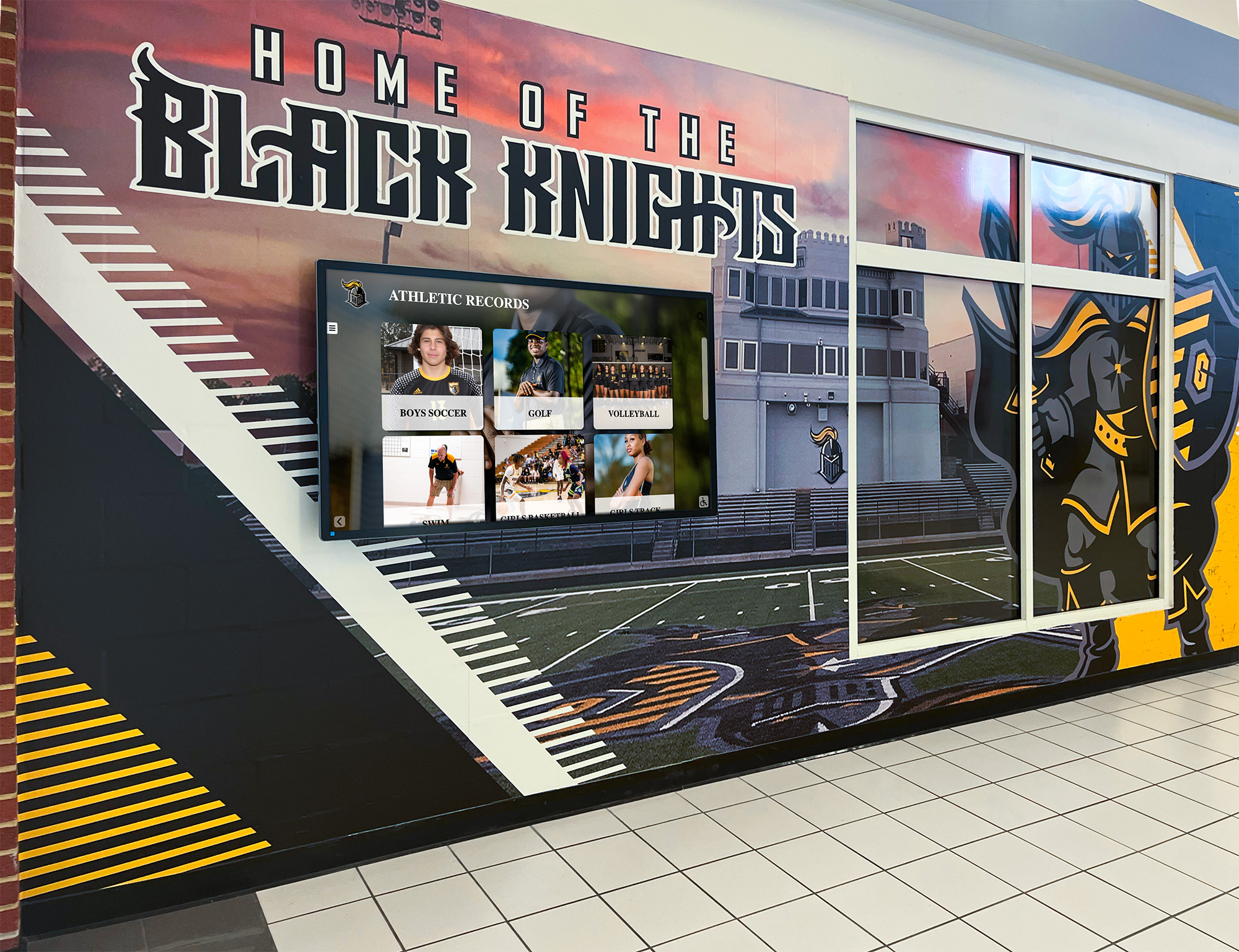
Coordinated design systems enable custom visual presentations while maintaining consistent information architecture and interaction patterns
What Platforms Like Rocket Provide
Purpose-built recognition platforms assume technical responsibilities while enabling creative freedom:
Guaranteed Responsive Behavior Organizations implementing platform-provided layouts—standard or custom—never worry about responsive functionality. Every layout works properly across all devices because platform developers built and tested responsive behavior as fundamental requirement. When new devices emerge or screen size distributions shift, platform updates automatically maintain compatibility for all instances.
Built-In Accessibility Compliance Accessibility compliance comes standard with all platform layouts. Organizations benefit from specialized expertise that platform teams maintain, including deep understanding of WCAG guidelines, experience implementing accessible interaction patterns, ongoing testing with assistive technologies, and rapid response when accessibility issues are discovered.
Platform-managed accessibility reduces legal risk while ensuring all community members can access recognition content regardless of disability.
Automatic Feature Compatibility New platform features automatically work with all layouts—standard and custom. When platforms add capabilities like advanced search, new content types, social integration, or analytics enhancements, every organization benefits without requiring custom development work adapting their implementations.
This automatic compatibility prevents situations where organizations with older or customized implementations cannot access new capabilities without substantial reinvestment.
Professional Ongoing Maintenance Platform providers handle comprehensive ongoing maintenance including browser compatibility updates, operating system changes, security patching, performance optimization, and bug fixes. Organizations never allocate internal resources to these technical maintenance tasks—platforms handle them systematically across all customer instances.
No Experience Drift or Brand Degradation Platform-managed design systems prevent the gradual experience drift that occurs when different administrators make independent decisions over time. Design consistency enforcement ensures brands remain cohesive even when multiple staff members contribute content across years. Quality control mechanisms catch the incremental degradations—slightly off colors, marginally misaligned elements, barely insufficient contrast—that compound into significant problems in self-managed systems.
Organizations maintain professional, on-brand experiences without requiring centralized design oversight or periodic redesign projects correcting accumulated drift.
Experience Design Freedom With Platform Quality
Discover how recognition platforms balance creative freedom with technical excellence, enabling unique layouts that reflect your brand while maintaining accessibility, responsiveness, and consistent user experiences across all devices.
See Rocket in ActionReal-World Applications: Custom Without Chaos
Understanding how organizations leverage platform flexibility helps illustrate practical benefits.
Athletic Department Multi-Sport Recognition
Large athletic departments need distinctive presentations for different sports while maintaining cohesive department identity:
Sport-Specific Visual Themes Basketball programs want bold, high-energy layouts emphasizing action photography and career statistics. Swimming and diving teams need layouts accommodating detailed meet results and record progressions. Team sports require roster presentations, season summaries, and championship documentation. Individual sports need athlete-focused profiles highlighting personal achievements. Schools implementing touchscreen displays for high school gyms and lobbies benefit from flexible layouts that accommodate diverse athletic content while maintaining cohesive department identity.
Platform approaches enable each sport to request layouts matching their specific content while design system governance ensures all sport-specific layouts maintain department visual identity, interaction consistency, and technical quality. Basketball and swimming layouts look distinctive but clearly belong to the same institutional family—users recognize they’re exploring the same athletic department despite encountering different visual presentations.
Responsive Behavior Across Viewing Contexts Athletic facilities feature various display contexts—large displays in gyms and field houses, mobile access for recruits and families, desktop viewing during recruiting research, and tablet usage during campus tours. Platform-managed responsive design ensures all sport-specific layouts function properly across these diverse contexts without requiring custom development for each use case.
Systematic Record Board Updates Athletic record boards require frequent updates as athletes set new marks. Platform approaches enable these updates without risking layout breakage—records automatically flow into custom layouts maintaining proper formatting, responsive behavior, and visual consistency. Athletic staff update content confident that technical quality remains intact regardless of how frequently records change or how many athletes are added.
Academic Recognition Across Departments
Schools recognizing academic achievement need flexible systems accommodating diverse recognition types:
Honor Roll and GPA Recognition Academic honor roll presentations require efficient layouts displaying hundreds of students organized by classification, GPA tier, or other criteria. These high-density layouts emphasize clean organization and easy scanning rather than detailed profiles. Comprehensive academic recognition programs benefit from layouts specifically designed for high-volume student lists while maintaining visual quality and accessibility.
National Recognition Programs National Merit Scholars, AP Scholars, and similar prestigious recognition programs deserve prominent celebration with detailed profiles explaining achievement significance, individual accomplishments, and program histories. These presentations require different layouts than basic honor roll listings—more visual prominence, comprehensive information, and aspirational presentation inspiring current students.
Subject-Specific Excellence Science fair winners, math competition participants, writing contest recipients, and other subject-specific achievements each have unique presentation needs. Science projects benefit from hypothesis, methodology, and results summaries. Math competitions need problem types and competition levels. Writing awards should include excerpts or links to full works.
Platform approaches enable requesting layouts matching these diverse academic recognition types while maintaining consistent navigation, search functionality, and interaction patterns. Students and families exploring academic recognition encounter distinctive presentations appropriate to each achievement type without confusion about how to navigate or access information.
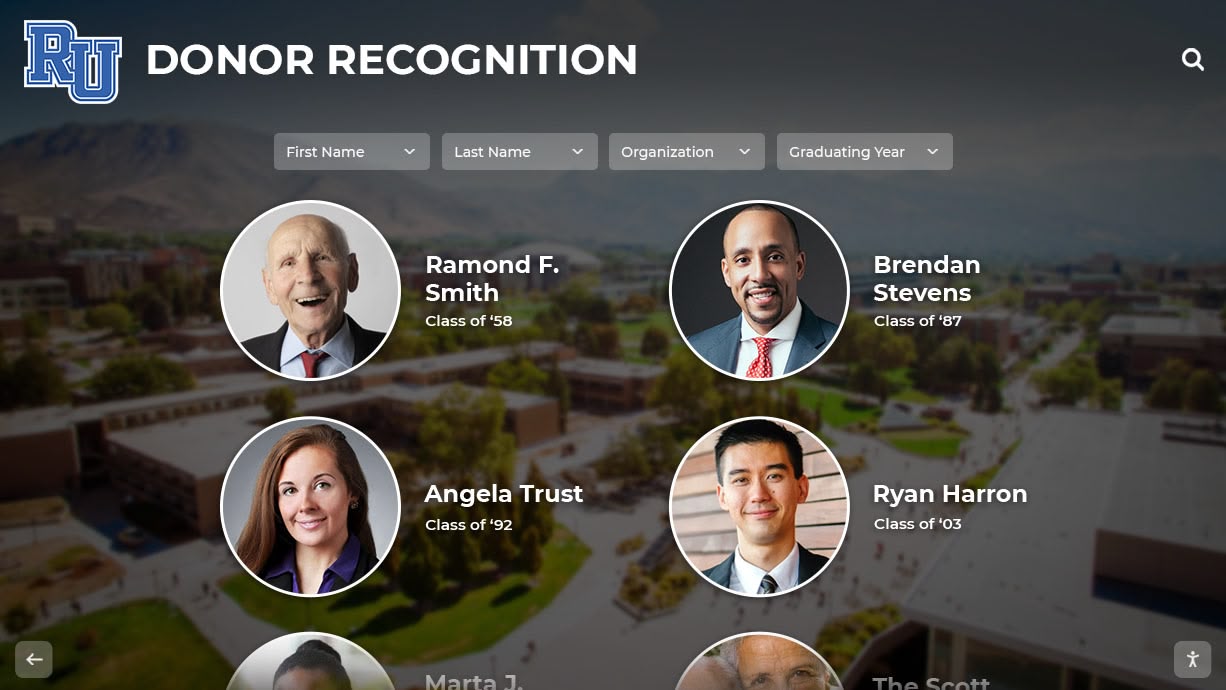
Advanced recognition systems balance distinctive visual presentations with consistent information architecture and interaction patterns
Historical Archives and Institutional Memory
Historical content requires specialized presentations different from current recognition:
Timeline-Based Navigation Historical archives benefit from chronological organization enabling exploration by decade, year, or era. Timeline layouts need to accommodate varying content densities—some periods have extensive documentation while others include limited materials. Responsive timeline designs must work on small phones showing abbreviated timelines and large displays presenting comprehensive multi-decade views. Organizations preserving institutional heritage through interactive touchscreens for museums and galleries require flexible timeline presentations that adapt to both rich documentation and sparse historical periods.
Photograph Collection Browsers Historical photograph collections require layouts optimizing visual browsing—thumbnail grids enabling quick scanning, detail views showing full-resolution images with context, and efficient navigation between related photographs. These layouts differ substantially from profile-based recognition layouts used for athlete or alumni recognition.
Oral History and Documentary Content Video oral histories and documentary content need layouts emphasizing media playback with supporting context. These presentations require player controls, transcript support for accessibility, related content suggestions, and appropriate sizing across devices from phones to large displays.
Platform approaches enable institutions to request layouts specifically designed for historical content types while maintaining design consistency with contemporary recognition sections. Historical archives feel integrated with current recognition rather than appearing to belong to entirely separate systems.
Implementation Strategies for Balanced Freedom and Consistency
Organizations can maximize benefits from structured flexibility through strategic approaches.
Starting with Standard Layouts
Most implementations should begin with standard platform layouts before requesting custom development:
Evaluate Standard Library Comprehensively Modern recognition platforms offer extensive layout libraries developed from years of customer requests. Before assuming custom layouts are necessary, organizations should thoroughly evaluate standard options—many needs that initially seem unique can be addressed through existing layouts with appropriate content and configuration. Schools considering digital wall-mount displays for nonprofits and community partnerships should explore how standard layouts can often accommodate diverse recognition needs with simple configuration rather than custom development.
Standard layouts benefit from extensive field testing across diverse organizations, proven responsive behavior across device types, documented accessibility compliance, and immediate availability without development timelines.
Identify True Customization Needs After exhaustively evaluating standard options, organizations should identify specific requirements that existing layouts cannot accommodate. Clear articulation of these needs enables efficient custom development—“We need a layout accommodating team rosters of 15-50 athletes with individual photos, positions, hometowns, and statistics, organized by year within each team” provides clearer direction than “We want something unique for football.”
Pilot Standard Layouts Before Customizing When possible, organizations should pilot implementations using standard layouts, gather user feedback, and identify friction points before requesting custom development. This piloting reveals which customizations deliver meaningful value versus which represent aesthetic preferences with minimal functional impact. Custom development can then focus on high-impact modifications rather than cosmetic changes to standard layouts that already function well.
Strategic Custom Layout Requests
When custom layouts are appropriate, strategic requesting ensures maximum value:
Focus Custom Development on High-Visibility Sections Not every section requires custom layouts. Organizations should concentrate custom development on high-traffic, high-importance sections like main athletic hall of fame displays, distinguished alumni recognition, or primary academic achievement showcases. Secondary sections can often use standard layouts, reserving custom development budget for areas where distinctive presentation delivers maximum impact.
Request Reusable Patterns Custom layout requests should emphasize reusability across similar content types. Rather than requesting a layout specifically for football, ask for a “team sport layout accommodating large rosters, season records, and championship documentation” usable for football, basketball, soccer, and other team sports. This reusable approach provides more value than narrowly focused single-purpose custom layouts.
Provide Comprehensive Requirements Upfront Efficient custom development requires thorough initial requirements. Organizations should document content types and volumes, required fields and information architecture, specific brand requirements including colors and typography, example layouts from other sources showing desired aesthetics, and device contexts where layouts will primarily be used. Comprehensive requirements reduce iteration cycles and revision rounds.
Maintaining Consistency as Systems Evolve
Ongoing governance prevents gradual fragmentation as recognition systems mature:
Documented Design Standards Organizations should document design standards even when platforms provide systematic enforcement. These standards cover approved color applications, typography usage guidelines, image treatment requirements, logo placement rules, and spacing and layout principles. Documentation helps new staff members understand institutional standards while providing reference for content decisions.
Periodic Design Audits Even with platform-provided consistency enforcement, organizations should periodically audit recognition systems identifying accumulated inconsistencies, outdated content with superseded styling, sections with degraded user experience, and opportunities for consolidation where multiple similar layouts could be unified. Athletic departments implementing interactive kiosk solutions for schools and universities benefit from regular reviews ensuring all touchpoints maintain consistent quality as content evolves over time.
These audits catch drift before it becomes significant and identify opportunities for system improvements leveraging new platform capabilities.
Coordinated Content Creation Processes Multiple staff members contributing content require coordination preventing inconsistent applications. Organizations should establish clear roles defining who creates and approves content, review processes ensuring quality before publication, style guidelines for writing tone and content structure, and image standards for file formats, sizing, and quality.
Coordinated processes prevent situations where different sections develop distinctive styles and conventions creating fragmented experiences.
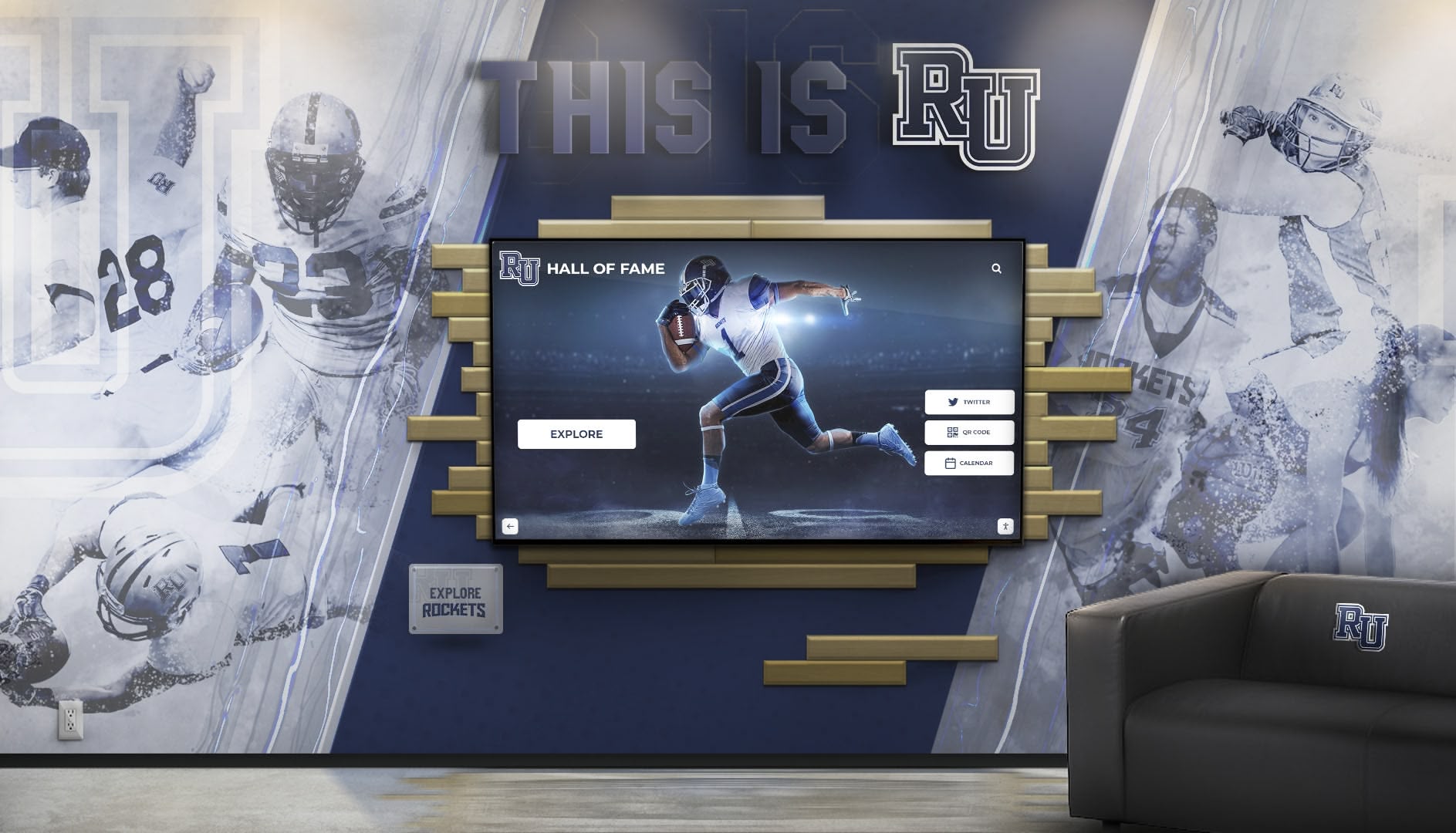
Professional recognition installations demonstrate how custom visual presentations maintain technical quality and interaction consistency
Benefits of Structured Flexibility Approaches
Platform-managed creative freedom delivers concrete advantages over template restrictions or unlimited customization.
Organizations Gain Creative Freedom Without Technical Burden
Schools and institutions get exactly the layouts they need without assuming responsibility for technical implementation:
Unique Designs Reflecting Institutional Identity Organizations can request layouts specifically designed around their brand systems, content needs, and aesthetic preferences. Athletic departments with bold, energetic brand personalities get dynamic layouts emphasizing action and achievement. Academic institutions with traditional, scholarly identities receive dignified, information-rich presentations. Community organizations with warm, inclusive cultures see friendly, accessible layouts. Understanding how platforms support digital signage services with multi-screen widgets and no-code tools helps organizations appreciate the balance between customization and technical simplicity.
This creative freedom means institutions never compromise brand identity to fit platform limitations. Recognition experiences feel authentically institutional rather than generic.
No Ongoing Technical Maintenance After custom layouts are developed and implemented, organizations never worry about responsive updates, accessibility maintenance, browser compatibility, or feature updates. Platforms handle all technical maintenance automatically. Institutions receive creative freedom without the technical burden that typically accompanies custom development.
This maintenance-free customization represents significant value—organizations get bespoke experiences without building internal technical capacity to maintain them.
Rapid Iteration Based on Feedback When organizations discover their initial layout requests don’t quite meet needs, platform-provided custom development enables rapid iteration. Rather than being locked into expensive custom implementations that are prohibitively costly to revise, organizations can request modifications that platform teams implement quickly. This iteration capability means initial imperfection doesn’t create long-term problems—layouts evolve based on real usage feedback.
Users Experience Consistency Despite Visual Variety
Community members exploring recognition content encounter cohesive experiences despite diverse layouts:
Predictable Interaction Patterns Users learn once how to search, filter, navigate between items, and access detailed information. These interaction patterns remain consistent even when exploring sections with different visual presentations. The cognitive load stays low—users don’t need to figure out new interaction models as they move between sections.
This interaction consistency proves particularly important for older users less comfortable with technology and users accessing platforms infrequently who haven’t developed deep familiarity with specific interfaces.
Professional Presentation Quality All sections maintain professional presentation regardless of which layouts are employed or when content was last updated. Systematic design governance prevents the gradual degradation that occurs in self-managed systems—no slightly-off colors, no barely-misaligned elements, no almost-adequate contrast. Professional quality remains consistent across the entire system.
Accessibility Without Exceptions Accessible experiences extend to all sections regardless of custom layouts or distinctive presentations. Users relying on screen readers, keyboard navigation, high contrast modes, or other assistive technologies encounter consistently accessible interfaces. Accessibility isn’t sacrificed in custom sections or sections with distinctive visual treatments.
Platforms Benefit From Expanding Use Case Coverage
Platform providers gain advantages from custom development approaches that add to shared libraries:
Continuously Growing Layout Libraries Each custom request addresses a real organizational need. As these custom layouts become part of standard libraries, platforms accommodate increasingly diverse use cases without requiring custom development for common scenarios. Early customers’ custom requests become standard options for future customers, reducing the proportion of implementations requiring custom work as platforms mature.
Real-World Validation of Layout Effectiveness Layouts built for actual organizations in response to specific needs undergo real-world validation immediately. Platform teams quickly learn which layouts work well, which need refinement, and which use cases remain underserved. This practical feedback loop ensures library growth focuses on layouts that genuinely serve organizational needs rather than hypothetical possibilities.
Competitive Differentiation Through Flexibility Platforms offering structured flexibility differentiate themselves from rigid template systems and complex fully-custom alternatives. Organizations evaluating recognition platforms recognize the value of creative freedom without technical burden—this balanced approach provides compelling competitive advantage over alternatives requiring binary choices between limitation and complexity.
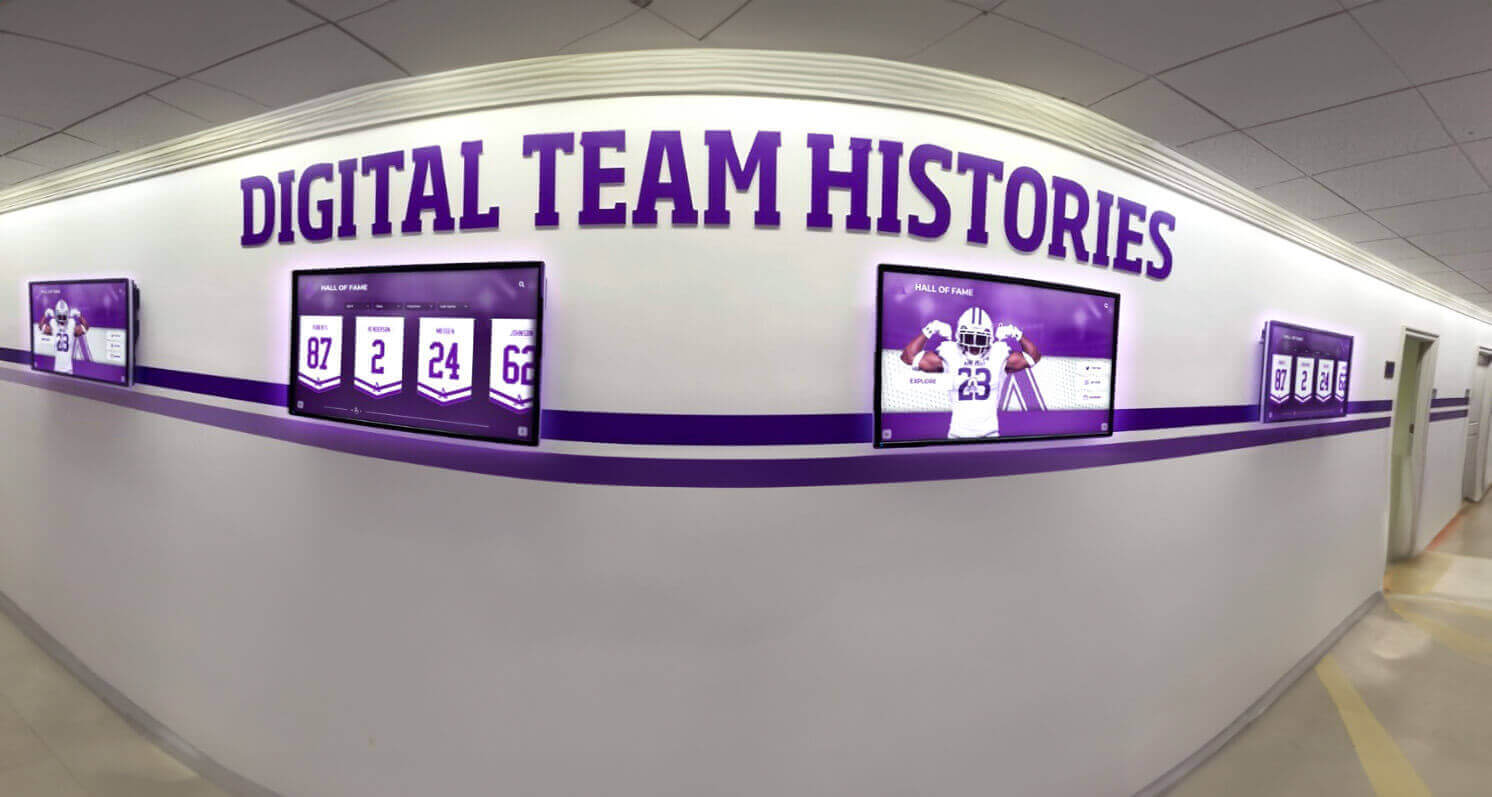
Multi-display recognition systems demonstrate how design governance enables visual consistency across distributed installations
Counter-Positioning: Templates Are Quality Frameworks, Not Creative Ceilings
Organizations often misunderstand platform “templates” as limitations rather than quality frameworks.
Reframing Templates as Quality Infrastructure
Platform-provided layouts represent quality infrastructure rather than creative restrictions:
Technical Quality Guarantees What platforms call “templates” actually represent quality-assured components guaranteeing responsive behavior, accessibility compliance, cross-browser compatibility, and feature integration. These guarantees would require substantial technical investment if organizations built equivalent custom systems independently.
Reframing templates as quality infrastructure helps organizations appreciate that accepting platform-provided layouts doesn’t mean accepting limitation—it means accepting guaranteed technical quality while focusing creative energy on content, brand customization, and strategic communication rather than technical implementation.
Expandable Foundations Platform layouts represent starting points rather than fixed endpoints. Organizations can request modifications, additions, and entirely new layouts that become part of expanded libraries. This expandability means templates aren’t ceilings limiting creativity—they’re floors guaranteeing minimum quality while enabling unlimited growth through custom development adding to shared resources.
Professionally Designed Information Architecture Platform layouts embody professionally designed information architecture based on usability research and field testing across numerous implementations. Organizations leveraging these layouts benefit from design expertise that would be expensive to develop independently. Custom requests build on this expertise rather than starting from blank slates requiring fundamental information architecture decisions.
Platform Flexibility Enables Unique Outcomes
Recognition platforms delivering structured flexibility enable outcomes indistinguishable from fully custom systems while maintaining platform benefits:
Distinctive Visual Identity Organizations implementing custom platform-provided layouts achieve visual presentations as distinctive as fully custom implementations. Community members exploring recognition content don’t recognize they’re viewing “platform templates”—they experience unique presentations reflecting institutional identity and brand personality.
This distinctiveness without the burden of custom maintenance represents the core value proposition: unique outcomes with platform reliability and governance.
Content-Driven Differentiation Beyond layout variations, organizations differentiate through content strategy, brand application, media quality, and information depth. Recognition systems featuring compelling stories, high-quality photography, comprehensive historical documentation, and engaging multimedia content create memorable experiences regardless of whether layouts are standard platform options or custom developments.
Focusing organizational energy on content excellence rather than technical implementation often delivers more differentiation than custom layouts with mediocre content.
Evolving Flexibility as Platforms Mature Platform flexibility increases as custom requests expand layout libraries and platform capabilities advance. Organizations implementing recognition systems today benefit from years of prior custom development building extensive layout options. As platforms mature further, standard libraries will accommodate increasingly diverse needs, reducing the proportion of implementations requiring custom development while maintaining creative freedom through comprehensive standard options.
Conclusion: Controlled Flexibility Creates Better Recognition Experiences
The tension between design consistency and creative freedom resolves through platforms that expand available options rather than limiting choice or requiring organizations to assume technical burdens. Purpose-built recognition systems like Rocket Alumni Solutions enable institutions to request custom layouts that platform teams build quickly, deliver as first-class components with full platform guarantees, and add to shared libraries benefiting all customers—all at no additional cost.
This approach delivers genuine creative freedom without the ongoing expenses of maintaining bespoke systems. Organizations receive exactly the layouts they need, implemented with professional design quality, responsive across all devices, accessible to all users, and compatible with all platform features. Custom layouts aren’t brittle special cases requiring constant maintenance—they’re reliable platform components benefiting from systematic updates, automatic compatibility with new features, and comprehensive quality assurance. Schools evaluating options for building school pride through creative recognition ideas can leverage both custom and standard layouts to create distinctive experiences that strengthen community identity.
The real tradeoff organizations face isn’t between templates and customization but between building and maintaining their own freedom or borrowing platform-provided flexibility. Schools building custom recognition systems assume responsibility for responsive implementation, accessibility compliance, feature parity as platforms evolve, ongoing quality assurance, and accumulated technical debt. These responsibilities demand sustained technical resources that many institutions lack.
Platform approaches transfer these technical responsibilities to specialized teams while enabling creative outcomes matching or exceeding what organizations could build independently. Design governance enforced through system architecture prevents the visual fragmentation that plagues self-managed systems where different administrators make independent decisions over time. AI-assisted quality control catches accessibility violations, visual inconsistencies, content density issues, and brand deviations before they reach users—maintaining professional quality without requiring expensive design oversight.
The concept of “templates” as creative limitations misrepresents what quality-focused platforms provide. Platform layouts represent quality frameworks—guarantees of responsive behavior, accessibility compliance, and feature compatibility—not creative ceilings. These frameworks enable rather than restrict by handling technical complexity automatically, allowing organizations to focus energy on content excellence, brand expression, and strategic communication rather than technical implementation details.
Organizations evaluating recognition platforms should look beyond simplistic “template versus custom” categorizations to understand how different providers balance consistency with flexibility. Rigid template systems limit creativity while protecting technical quality. Unlimited customization enables distinctive designs while creating maintenance burdens and inconsistency risks. Structured flexibility approaches that expand libraries through custom development delivered as first-class components represent optimal balance—creative freedom with platform-grade reliability and governance. Schools seeking touchscreen kiosk software for interactive displays should prioritize platforms offering this structured flexibility over purely template-based or fully custom alternatives.
Your institution’s recognition needs are unique—your brand identity, content requirements, and display contexts differ from other organizations. You deserve recognition experiences reflecting these distinctive characteristics without compromising technical quality, accessibility compliance, or long-term maintainability. Purpose-built platforms delivering structured flexibility enable exactly this balance: unique outcomes with platform guarantees.
Ready to explore recognition platforms that balance creative freedom with technical excellence? Book a demo to discover how platforms like Rocket Alumni Solutions enable custom layouts that reflect your brand while maintaining accessibility, responsiveness, and consistent user experiences that build engaged communities around shared achievements and institutional heritage.