
High school cross country runners face a unique challenge: balancing peak performance across an entire season while avoiding overtraining and injury. Unlike track’s short, explosive efforts, cross country demands sustained endurance, strategic pacing, and mental toughness developed through consistent, intelligent training. Yet many runners and coaches struggle to structure effective weekly workouts that build fitness progressively without breaking down young athletes still developing physically and mentally.
The difference between mediocre and championship-caliber cross country programs often comes down to training design. Successful programs don’t simply run higher mileage—they implement structured cross country workout plans that systematically develop aerobic capacity, lactate threshold, running economy, and mental resilience. These programs understand that teenage bodies require different training stimulus than collegiate or professional runners, emphasizing long-term development over short-term gains that risk burnout or injury.
This comprehensive guide presents a coach-approved weekly cross country workout plan specifically designed for high school runners. Whether you’re a first-year runner learning training fundamentals, an experienced varsity athlete chasing personal records, or a coach structuring team workouts, this framework provides the systematic approach necessary for sustained improvement throughout the season. The training philosophy balances hard efforts with adequate recovery, builds toward championship performances through periodized progressions, and creates sustainable habits supporting athletic development beyond a single season.
Effective cross country training requires understanding how different workout types contribute to race performance, structuring weekly schedules that balance intensity with recovery, adjusting training loads based on individual athlete development, and timing peak fitness for championship meets. This guide explores each component while providing concrete weekly training templates adaptable to various skill levels and competitive goals.

Modern schools celebrate cross country excellence through digital recognition displays honoring record-breaking performances and championship teams
Understanding Cross Country Training Principles
Before diving into specific workouts, understanding fundamental training principles helps runners and coaches make informed decisions about training structure and progression.
The Aerobic Foundation
Cross country racing demands sustained aerobic power across 3-5 kilometer distances for high school athletes. Unlike sports requiring explosive anaerobic bursts, cross country performance correlates directly with aerobic capacity—your body’s ability to deliver oxygen to working muscles efficiently over extended periods.
Base Building Through Easy Running
The foundation of any effective cross country workout plan consists of easy-paced aerobic running building cardiovascular efficiency, developing slow-twitch muscle fibers, strengthening connective tissues gradually, and teaching the body to utilize fat as fuel during sustained efforts. This base running typically occurs at conversational pace—effort levels allowing athletes to talk comfortably while running.
Most high school runners should accumulate 60-80% of weekly mileage through easy aerobic running. Beginners might run 15-25 miles weekly at this effort, while experienced varsity runners may build to 35-50+ miles weekly during peak training periods. The key involves consistency rather than speed—steady aerobic development over months and years creates the physiological foundation supporting faster race performances.
Progressive Mileage Development
Young runners require conservative mileage progressions respecting developmental limitations. The traditional 10% rule—increasing weekly mileage by no more than 10% each week—provides general guidance, though individual response varies based on training age, biological maturity, and injury history.
Smart cross country programs build mileage gradually through:
- Early season base periods emphasizing volume over intensity
- Structured build weeks followed by periodic recovery weeks reducing volume 20-30%
- Season-long mileage peaks occurring 3-4 weeks before championship meets
- Individualized mileage targets based on athlete experience and physical development
Speed Development Through Varied Intensity
While aerobic capacity provides the foundation, cross country racing requires sustained speeds significantly faster than easy training pace. Developing this speed requires structured intensity through specific workout types targeting different physiological adaptations.
Lactate Threshold Training
Your lactate threshold represents the fastest pace sustainable before lactic acid accumulates faster than your body can clear it. For cross country runners, improving this threshold directly translates to faster race paces sustained across entire competitions.
Tempo runs represent the primary lactate threshold workout for distance runners. These sustained efforts at “comfortably hard” pace—typically 80-88% of maximum heart rate or approximately 15-30 seconds per mile slower than 5K race pace—teach bodies to buffer and clear lactate efficiently while running fast. Quality tempo runs last 15-30 minutes for high school runners, with total tempo volume rarely exceeding 35-40 minutes even for advanced athletes.
Senior night celebration traditions often honor cross country seniors who’ve dedicated years to developing their racing fitness through consistent threshold training.
VO2 Max Intervals
While threshold training improves sustainable pace, VO2 max intervals develop your maximum aerobic capacity—the ceiling for oxygen delivery and utilization. These harder efforts push closer to maximum heart rate (90-95%) for shorter durations with recovery intervals allowing repeat efforts.
Effective VO2 max workouts for high school cross country runners include:
- 800m repeats at 5K race pace with equal recovery (e.g., 4-6 x 800m)
- 1000m repeats slightly slower than 5K pace (e.g., 4-5 x 1000m)
- 3-minute hard efforts on varied terrain (e.g., 5-6 x 3min hard)
- Hill repeats of 60-90 seconds at hard effort
These workouts stress aerobic systems maximally, triggering adaptations increasing overall capacity over time. However, their intensity demands adequate recovery—most high school programs include only one VO2 max session weekly during peak training phases.
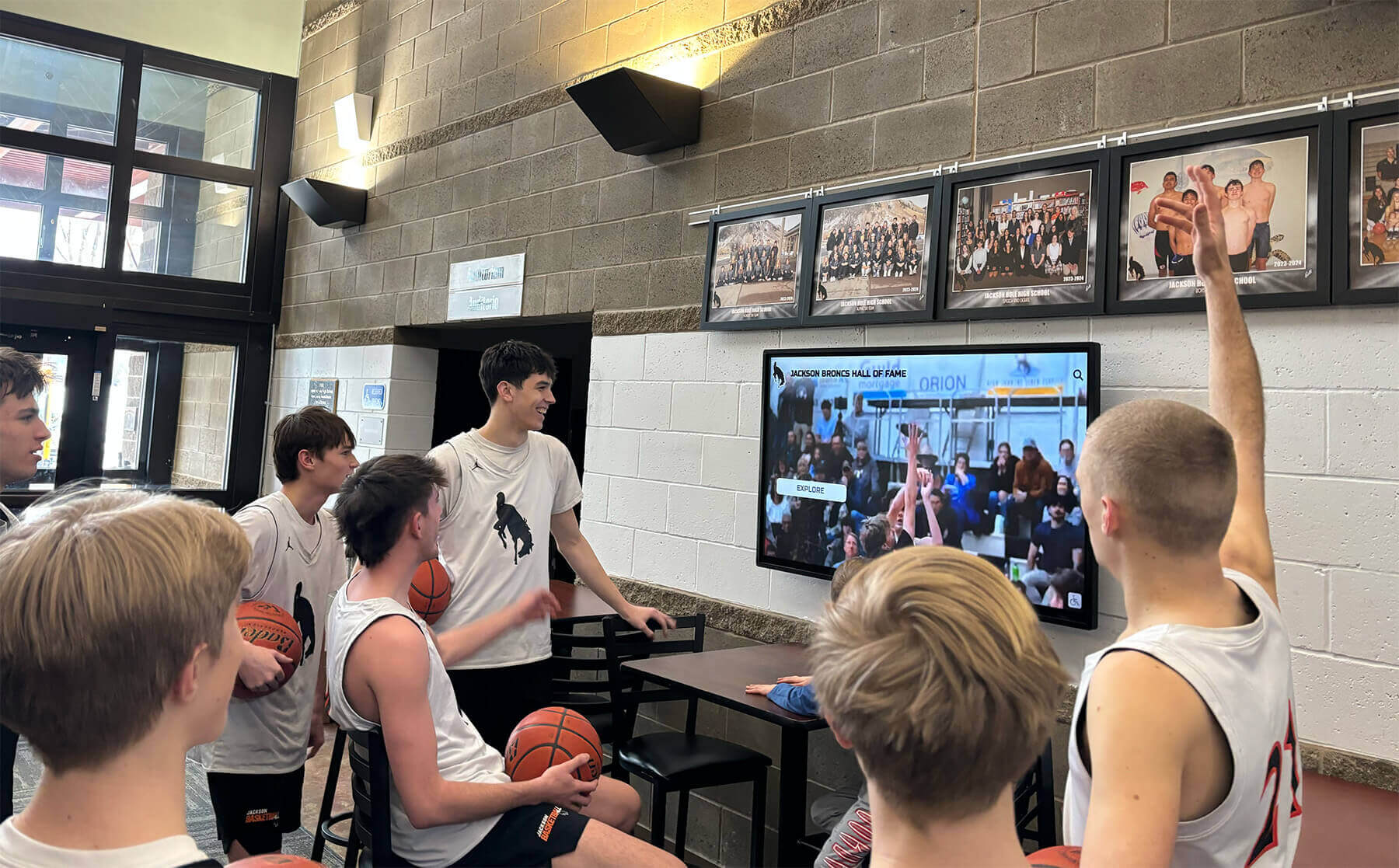
Digital displays enable cross country teams to track seasonal progress and celebrate performance milestones
Recovery and Adaptation
Training stress triggers improvement only when followed by adequate recovery allowing physiological adaptation. Understanding recovery principles separates sustainable programs from those risking overtraining and injury.
Active Recovery Days
Easy recovery runs following hard workouts serve multiple purposes: flushing metabolic waste from muscles, maintaining aerobic stimulus without additional stress, reinforcing proper running mechanics, and providing psychological benefits from consistent training rhythms. Recovery runs should feel genuinely easy—significantly slower than race pace with no temptation to push effort levels.
Many young runners struggle with recovery discipline, falling into “moderate pace purgatory” where easy runs become too hard while hard workouts lack sufficient intensity. Effective cross country workout plans clearly distinguish easy and hard days, avoiding the middle-ground efforts that accumulate fatigue without triggering optimal adaptations.
Complete Rest Days
While running culture often celebrates consecutive training days, research demonstrates that complete rest—absolutely no running—provides essential recovery for developing athletes. High school cross country runners typically benefit from 1-2 complete rest days weekly, particularly during high-intensity training phases or when managing minor injuries.
Complete rest allows:
- Musculoskeletal tissue repair and strengthening
- Nervous system recovery from training stress
- Glycogen replenishment in depleted muscle stores
- Mental refreshment preventing psychological burnout
Smart coaches monitor athlete fatigue levels, adjusting planned rest days based on individual recovery needs rather than rigidly following predetermined schedules regardless of athlete readiness.
Sleep and Nutrition
Training represents only one component of performance improvement—recovery depends equally on sleep quality and nutritional adequacy. High school athletes require 8-10 hours of quality sleep nightly for optimal recovery, though academic demands often interfere with sufficient rest. Similarly, developing bodies need adequate calories and nutrients supporting both training stress and continued growth.
Cross country coaches increasingly educate athletes about recovery fundamentals extending beyond workout structures—helping young runners understand that training, nutrition, and sleep form interconnected systems where weakness in any area limits overall performance potential.
Coach-Approved Weekly Workout Structure
This section provides specific weekly training templates for different skill levels and season phases. Each template balances training stress with recovery while progressively building fitness toward peak performances.
Early Season Base Building (Weeks 1-4)
The early season establishes aerobic foundations supporting higher intensity work later. This phase emphasizes volume over speed, gradually building mileage while introducing basic tempo and interval work.
Beginner/Novice Runner Weekly Plan Total weekly mileage: 15-25 miles
Monday: Complete rest or easy 20-30 minute cross-training (cycling, swimming)
Tuesday: Easy run 25-35 minutes at conversational pace, including 4-6 x 100m strides
Wednesday: Tempo effort - 10 minute easy warm-up, 12-15 minutes at tempo pace (comfortably hard), 10 minute easy cool-down
Thursday: Easy run 25-30 minutes at conversational pace
Friday: Easy run 20-25 minutes or complete rest (alternating weekly)
Saturday: Interval workout - After warm-up, 6-8 x 400m at 5K goal pace with 400m recovery jog; 10 minute cool-down
Sunday: Long run 40-60 minutes at easy conversational pace
This beginner template gradually introduces training stimulus without overwhelming developing systems. Notice that only two quality sessions occur weekly (Wednesday tempo, Saturday intervals), with other runs maintaining easy aerobic effort.
Intermediate Runner Weekly Plan Total weekly mileage: 25-40 miles
Monday: Easy run 30-40 minutes with 6-8 x 100m strides, or complete rest
Tuesday: Tempo run - 10-15 minute warm-up, 18-22 minutes at tempo pace, 10 minute cool-down
Wednesday: Easy run 35-45 minutes at conversational pace
Thursday: Hill workout - After warm-up, 8-10 x 90-second hill repeats at hard effort with jog-down recovery; 10 minute cool-down
Friday: Easy run 25-35 minutes or complete rest
Saturday: Long intervals - After warm-up, 5-6 x 1000m at 5K race pace with 2-3 minute recovery; 10 minute cool-down
Sunday: Long run 60-90 minutes at easy conversational pace
Intermediate runners handle additional volume and slightly higher intensity while maintaining the fundamental structure of two quality sessions weekly with adequate easy running and recovery.

Successful cross country programs create lasting recognition celebrating athletes who commit to rigorous training schedules
Advanced/Varsity Runner Weekly Plan Total weekly mileage: 35-55 miles
Monday: Easy run 40-50 minutes with 8-10 x 100m strides, or 30-minute recovery run if fatigued
Tuesday: Threshold workout - 15 minute warm-up, 25-30 minutes continuous tempo, 10-15 minute cool-down; OR 2 x 2 miles at tempo with 3-minute recovery
Wednesday: Easy run 45-55 minutes at conversational pace, may include moderate fartlek efforts (e.g., 6-8 x 2min moderate with 1min recovery)
Thursday: VO2 max intervals - After warm-up, 6-8 x 800m at 5K race pace with equal time recovery; OR 5-6 x 1200m at slightly slower than 5K pace with 2.5-minute recovery
Friday: Easy run 30-40 minutes or complete rest
Saturday: Race or race-simulation workout - During competition weeks, race effort; during training weeks, 2-3 miles at goal race pace OR 4-5 miles steady at slightly slower than race pace
Sunday: Long run 70-100 minutes at easy conversational pace, potentially with progression last 15-20 minutes to moderate effort
Advanced runners accumulate higher weekly volume while managing three quality sessions (Tuesday threshold, Thursday intervals, Saturday tempo/race). The additional volume comes primarily through longer easy runs and the optional moderate fartlek session Wednesday.
Mid-Season Competition Phase (Weeks 5-9)
As the season progresses, training shifts toward maintaining base fitness while sharpening speed and practicing race efforts. Weekly mileage typically peaks during this phase before beginning gradual reduction approaching championship meets.
Key Training Adjustments
During competition phases, modify weekly plans to accommodate race schedules:
- Race weeks: Replace one quality workout with the race itself; reduce volume 15-20% through shorter easy runs
- Recovery after races: Following Saturday races, Sunday becomes very easy recovery or complete rest; Monday remains easy recovery
- Intensity focus: Quality workouts shift from pure volume to race-specific pacing and speed development
- Individual variation: Athletes racing well maintain training structure; struggling athletes may reduce volume/intensity investigating recovery needs
Mid-Season Weekly Template (Advanced Runner, Non-Race Week)
Monday: Easy run 40-50 minutes or complete rest
Tuesday: Cruise intervals - 2 mile warm-up, 3-4 x 1 mile at tempo pace with 90-second recovery, 1 mile cool-down
Wednesday: Easy run 45-50 minutes conversational pace
Thursday: VO2 max workout - 2 mile warm-up, 5-6 x 1000m at 5K race pace OR 8-10 x 600m at slightly faster than 5K pace with equal recovery, 1 mile cool-down
Friday: Easy run 30 minutes or complete rest
Saturday: Race simulation - 2 mile warm-up, 3 miles at goal race pace with focus on even pacing and race tactics, 1 mile cool-down
Sunday: Long run 75-90 minutes easy, may include moderate surges last 2-3 miles
Mid-Season Weekly Template (Advanced Runner, Race Week)
Monday: Easy run 40 minutes
Tuesday: Sharpening workout - 2 mile warm-up, 6-8 x 400m at slightly faster than 5K pace with 400m recovery, 1 mile cool-down
Wednesday: Easy run 30-35 minutes conversational pace
Thursday: Easy run 25-30 minutes with 6-8 x 100m strides
Friday: Complete rest or very easy 20-minute shakeout
Saturday: RACE
Sunday: Easy recovery 30-40 minutes or complete rest depending on race effort and how body feels
Notice how race weeks significantly reduce volume and eliminate threshold work, focusing instead on maintaining sharpness through shorter speed sessions while maximizing freshness for competition.
Many successful programs display their cross country achievements through interactive kiosk solutions that showcase record times and championship performances.

Cross country programs preserve training and racing excellence through permanent displays celebrating record-breaking performances
Championship Taper Phase (Weeks 10-12)
The final 2-3 weeks before championship meets require strategic training reduction—maintaining fitness and sharpness while eliminating fatigue that could limit race performance. Effective tapering can improve race times 2-6% compared to untapered performances.
Taper Principles for Cross Country
Championship tapers for high school runners should:
- Reduce volume 30-50% from peak training loads over 2-3 weeks
- Maintain workout intensity and frequency while cutting duration
- Eliminate long runs or reduce significantly (e.g., 60 minutes instead of 90)
- Emphasize quality sleep, nutrition, and stress management
- Include race-specific workouts reinforcing pace familiarity and confidence
Two-Week Championship Taper Template
Week Before Championships (7 days out):
Monday: Easy run 35-40 minutes
Tuesday: Short VO2 max session - Warm-up, 4-5 x 600m at race pace with full recovery, cool-down (total session 6-7 miles)
Wednesday: Easy run 30 minutes
Thursday: Easy run 30 minutes with 6-8 x 100m strides
Friday: Complete rest or very easy 20-minute shakeout
Saturday: Race simulation - After warm-up, 2 miles at race pace feeling smooth and controlled; short cool-down
Sunday: Easy run 40-50 minutes
Championship Week:
Monday: Easy run 30 minutes conversational
Tuesday: Sharpening session - Warm-up, 6 x 300m at slightly faster than race pace with full recovery focusing on smooth mechanics; short cool-down
Wednesday: Easy run 20-25 minutes or complete rest
Thursday: Easy 20-minute shakeout with 4-6 x 100m strides
Friday: Complete rest or very easy 15-minute shakeout depending on athlete preference
Saturday: CHAMPIONSHIP RACE
Sunday: Easy recovery or celebration rest!
Notice dramatic volume reduction while maintaining intensity through short, sharp sessions. This approach keeps neuromuscular systems primed for race speeds while eliminating accumulated fatigue that could slow performance.
Workout Components and Execution
Understanding how to properly execute different workout types ensures athletes gain maximum benefit while minimizing injury risk.
Warm-Up and Cool-Down Protocols
Every quality workout should begin with thorough warm-up and end with adequate cool-down. These bookend components prepare bodies for intense efforts and facilitate recovery afterward.
Effective Warm-Up Structure
Quality warm-ups lasting 15-20 minutes should include:
- 10-15 minutes easy jogging gradually increasing pace
- Dynamic mobility exercises (leg swings, walking lunges, high knees, butt kicks)
- 4-6 progressive strides of 80-100 meters increasing to workout pace
- Brief rest before beginning main workout set
Proper warm-ups elevate core temperature, increase blood flow to working muscles, improve range of motion, prepare nervous systems for explosive efforts, and reduce injury risk particularly in cooler weather. Never skip warm-ups even when feeling time-pressured—rushed warm-ups frequently lead to suboptimal workouts or preventable injuries.
Cool-Down Best Practices
Post-workout cool-downs lasting 10-15 minutes facilitate recovery through:
- Easy jogging allowing heart rate to decrease gradually
- Gentle stretching of major muscle groups while still warm
- Opportunity to mentally process workout performance
- Beginning of recovery process for next training session
Athletes who consistently cool-down properly report less muscle soreness, faster recovery between workouts, and better overall training consistency compared to those who stop abruptly after intense efforts.
Tempo Run Execution
Tempo runs develop lactate threshold—the most critical fitness component for cross country racing. However, many athletes run tempos either too hard (turning them into exhausting races) or too easy (failing to trigger desired adaptations).
Finding Correct Tempo Pace
Proper tempo effort should feel “comfortably hard”—sustainable for the prescribed duration but requiring focus and effort. Physiologically, this corresponds to:
- 80-88% of maximum heart rate
- 15-30 seconds per mile slower than current 5K race pace
- Breathing rhythm allowing short phrases but not full conversations
- Effort sustainable for 20-40 minutes with consistent pacing
Many young runners run tempos too hard initially, then fade badly during final portions. Effective tempos maintain even or slightly progressive pacing throughout, finishing feeling like you could continue another 5-10 minutes at the same effort if required.
Tempo Workout Variations
Beyond continuous tempo runs, several variations provide similar benefits:
- Cruise intervals: Tempo-paced segments (4-6 minutes to 2 miles) with short recoveries (1-2 minutes) allowing slightly faster pace than continuous tempos
- Progression runs: Starting at easy pace and gradually building to tempo effort over final 15-20 minutes
- Tempo fartlek: Alternating tempo effort with easy running (e.g., 3 x 8 minutes tempo with 2 minutes easy)
These variations maintain threshold training stimulus while providing mental breaks from sustained tempo efforts that some athletes find monotonous or challenging.
Schools often recognize their most dedicated cross country athletes through state championships displays celebrating championship performances earned through consistent threshold training.
Interval Training Execution
Interval workouts develop VO2 max and race-specific speed. Proper execution requires attention to pacing, recovery, and overall workout volume.
Pacing Strategy for Intervals
The most common interval mistake involves running initial repetitions too fast, then struggling through later reps at significantly slower paces. Effective interval pacing should:
- Target even or slightly negative splits (later reps equal or faster than early ones)
- Feel controlled and smooth during early repetitions
- Reach appropriate effort level (typically 5K race pace or slightly faster) but not all-out sprinting
- Allow completion of prescribed workout without excessive struggle
If you cannot complete the planned workout at target paces, either the paces are too aggressive for current fitness or inadequate recovery exists from previous training. Adjust expectations rather than grinding through poor-quality repetitions that increase injury risk without training benefits.
Recovery Intervals
Recovery between hard intervals should allow partial but not complete recovery—heart rate dropping to approximately 120-130 bpm before beginning next repetition. Recovery duration varies based on interval length and athlete fitness:
- 400m repeats: 1:1 to 1:1.5 work-to-rest ratio (equal time or up to 50% more recovery)
- 800m-1000m repeats: Equal time recovery or 2-3 minutes active recovery
- Mile repeats: 2-4 minutes active recovery
Recovery should involve easy jogging or walking rather than complete standstill, maintaining muscle temperature and preventing stiffness while allowing systems to partially recover.
Total Interval Volume
High school cross country runners should accumulate 2-3.5 miles of total interval volume during VO2 max sessions depending on experience and season phase. For example:
- Beginner: 6 x 400m (1.5 miles total) or 4 x 800m (2 miles total)
- Intermediate: 8 x 600m (3 miles total) or 5 x 1000m (3.1 miles total)
- Advanced: 6-8 x 800m (3-4 miles total) or 5-6 x 1200m (3.7-4.5 miles total)
Exceeding these volumes during high school often provides minimal additional benefit while significantly increasing injury risk and recovery demands.

Permanent recognition displays honor cross country athletes who achieved excellence through dedicated interval training and competitive racing
Long Run Strategy
Weekly long runs build aerobic endurance, mental toughness, and confidence for race distances. However, overly aggressive long runs can hinder recovery and subsequent training quality.
Appropriate Long Run Duration
High school cross country long runs should rarely exceed 90-100 minutes regardless of pace. More specifically:
- Beginner runners: 40-60 minutes
- Intermediate runners: 60-80 minutes
- Advanced runners: 70-100 minutes
These durations provide substantial endurance benefits while avoiding excessive musculoskeletal stress on developing bodies. Remember that high school races last 15-20 minutes—long runs need not approach marathon-style durations for effective cross country preparation.
Long Run Pace and Effort
The vast majority of long runs should occur at easy, conversational pace—typically 60-90 seconds per mile slower than race pace. This allows:
- Comfortable completion without excessive fatigue
- Recovery for upcoming quality sessions
- High weekly mileage accumulation without overtraining
- Sustainable training progression throughout the season
Some programs incorporate progression long runs where final 15-20 minutes build to moderate or tempo effort. These hybrid workouts provide additional training stimulus but should replace rather than supplement regular quality sessions to avoid excessive training stress.
Special Considerations for High School Runners
Young athletes face unique challenges requiring training modifications compared to adult or collegiate runners.
Growth and Development Factors
High school encompasses dramatic physical development as teenagers progress through various growth and maturation stages. Training must account for these developmental realities.
Biological Age vs. Chronological Age
Runners of identical chronological age may differ dramatically in biological maturity. Early-maturing athletes often dominate younger age groups through temporary physical advantages, while late-maturing runners may struggle initially before excelling once development catches up.
Smart coaches avoid pushing immature athletes excessively hard chasing short-term results that could lead to injury or burnout. Instead, quality programs:
- Adjust training loads based on individual development rather than age-group standards
- Emphasize long-term athlete development over immediate competitive success
- Monitor growth patterns and modify training during rapid growth periods
- Encourage multi-sport participation supporting overall athleticism
Managing Training During Growth Spurts
Rapid growth periods temporarily increase injury vulnerability as bones lengthen faster than muscles and tendons adapt. During obvious growth spurts, consider:
- Reducing training volume 15-25% until growth rate stabilizes
- Emphasizing technique and easy aerobic running over intense speed work
- Increasing attention to flexibility and mobility work
- Adding strength training supporting muscular development around lengthening bones
Many career-threatening injuries in young runners trace back to excessive training during growth periods when bodies needed rest and adaptation time instead.
Academic and Social Balance
High school athletes navigate demanding academic schedules, social development, and family responsibilities alongside athletic commitments. Sustainable cross country programs integrate these realities rather than treating running as the sole priority.
Training Schedule Flexibility
Rigid training plans ignoring individual life circumstances create unnecessary stress undermining performance. Effective coaches:
- Provide workout alternatives when athletes face academic deadlines or family obligations
- Understand that missed workouts occasionally happen and adjust accordingly
- Emphasize overall training consistency over perfect adherence to predetermined schedules
- Communicate that education and family should take precedence during genuine conflicts
Sleep and Recovery Realities
While 8-10 hours nightly sleep represents the ideal, many high school students struggle meeting this standard due to academic demands, social activities, and early school start times. Programs should:
- Educate athletes about sleep importance and practical sleep hygiene strategies
- Adjust training intensity when athletes show signs of inadequate recovery
- Avoid scheduling intense morning workouts when possible given teenage circadian rhythms
- Recognize that weekend recovery matters significantly for chronically sleep-deprived students
Injury Prevention and Management
Young runners face particular injury vulnerabilities requiring proactive prevention and conservative injury management.
Common Cross Country Injuries
High school distance runners most frequently experience:
- Shin splints (medial tibial stress syndrome)
- Stress fractures (tibia, metatarsals, femur)
- Plantar fasciitis
- IT band syndrome
- Runner’s knee (patellofemoral pain syndrome)
Most injuries result from training errors—excessive volume increases, inadequate recovery, poor biomechanics, or inappropriate footwear—rather than accidents or contact.
Prevention Strategies
Evidence-based injury prevention includes:
- Progressive mileage increases respecting 10% weekly guidelines
- Strength training targeting hip stability, core strength, and lower leg resilience
- Adequate recovery between hard efforts
- Proper footwear replaced every 300-400 miles
- Attention to early warning signs (persistent soreness, altered mechanics, decreased performance)
Quality programs tracking injury rates and patterns can identify systemic training issues requiring adjustment before injuries become widespread.
Conservative Return-to-Running Protocols
When injuries occur, conservative rehabilitation preventing recurrence outweighs aggressive timelines risking chronic problems. Smart return-to-running protocols:
- Allow complete resolution of pain during daily activities before resuming running
- Begin with walk/run progressions rather than immediate full training
- Rebuild volume slowly over 2-4 weeks before adding intensity
- Address underlying biomechanical or training factors that contributed to injury
Pushing injured athletes back into full training prematurely frequently results in re-injury and extended absences that could have been avoided with additional recovery time initially.
Programs that support comprehensive student athlete mental health create environments where runners feel comfortable reporting injuries early rather than training through problems until they become serious.
Monitoring Progress and Adjusting Training
Effective cross country workout plans require ongoing assessment and adjustment based on athlete response and performance indicators.
Performance Testing and Benchmarks
Regular testing provides objective feedback about training effectiveness and fitness progression.
Time Trial Assessment
Periodic time trials—all-out efforts over standard distances—reveal current fitness levels and appropriate training paces. Consider:
- 2-mile time trials: Run every 3-4 weeks during base/build phases providing current 5K race pace estimates
- 1-mile time trials: Shorter assessment revealing VO2 max development and speed improvements
- 400m/800m repeats: Track sessions showing speed endurance and pacing consistency
Compare time trial results to previous performances and training pace adjustments. Improving times indicate effective training, while stagnant or declining performances suggest inadequate recovery, inappropriate training stimulus, or potential overtraining.
Training Pace Calculations
Base training paces on current fitness rather than goal times. After time trials, recalculate:
- Tempo pace: 15-30 seconds per mile slower than current 5K ability
- Interval pace: Current 5K race pace or slightly faster for shorter reps
- Easy pace: 60-90 seconds per mile slower than 5K pace, truly conversational
Many young runners train at paces appropriate for desired future fitness rather than current ability, leading to excessive fatigue and disappointing races. Patient progression from current fitness toward goals produces better results than overly optimistic training based on aspirational times.
Monitoring Training Load and Recovery
Beyond performance tests, daily monitoring reveals whether athletes are adapting positively or accumulating excessive fatigue.
Subjective Wellness Monitoring
Simple daily check-ins assessing:
- Sleep quality (1-10 scale)
- Muscle soreness (1-10 scale)
- Energy level (1-10 scale)
- Overall mood (1-10 scale)
Consistently low scores across multiple categories signal inadequate recovery requiring rest days or reduced training intensity. Many teams use simple apps or spreadsheets tracking these metrics, allowing coaches to identify struggling athletes before missed workouts or injuries occur.
Heart Rate Monitoring
Resting heart rate measured immediately upon waking provides insight into recovery status. Elevated resting heart rate (5+ beats above normal baseline) often indicates:
- Incomplete recovery from previous training
- Onset of illness
- Overtraining or excessive life stress
- Need for additional rest or reduced training intensity
Athletes tracking resting heart rate over time develop baselines revealing when bodies need extra recovery despite feeling subjectively okay.
Performance Markers
Workout quality itself reveals training effectiveness:
- Consistent or improving times at same effort levels = positive adaptation
- Declining workout performances at same or harder effort = inadequate recovery
- Inability to hit prescribed paces = training paces too aggressive for current fitness
- Excellent workout days followed by terrible runs = excessive training stress
Smart coaches adjust upcoming training based on workout performance rather than rigidly adhering to predetermined plans regardless of athlete response.

Championship cross country teams preserve their training philosophies and record performances through digital team history displays
Building a Championship Team Culture
Individual training excellence matters, but championship cross country teams develop collective cultures supporting every athlete’s development.
Creating Accountability Systems
Teams training together develop accountability structures helping athletes maintain consistency through challenging workouts and difficult training phases.
Training Groups and Partners
Organize runners into training groups based on current ability and training goals:
- Similar ability levels keep workouts appropriately challenging for all participants
- Consistent training partners build relationships strengthening commitment
- Friendly competition within groups elevates effort without destructive rivalry
- Stronger runners learn leadership through supporting developing teammates
Rotate group assignments periodically as fitness levels change throughout the season, ensuring athletes train with appropriately matched partners rather than struggling to maintain unrealistic paces or coasting through insufficiently challenging efforts.
Team Captains and Leadership
Effective team captains model commitment, encourage struggling teammates, maintain positive culture, and bridge communication between coaches and athletes. Select leaders based on:
- Demonstrated work ethic and training consistency
- Positive influence on team culture
- Communication skills and emotional intelligence
- Willingness to prioritize team success over individual glory
Invest time developing leadership skills in captains rather than assuming talented athletes automatically make effective leaders.
Celebrating Progress and Achievement
Recognition reinforces desired behaviors and maintains motivation throughout long seasons with inevitable challenges and setbacks.
Process-Oriented Recognition
Beyond celebrating race results, recognize:
- Training consistency (attendance, workout completion)
- Improvement regardless of absolute performance level
- Effort and attitude during difficult workouts
- Support provided to teammates
- Recovery and injury management discipline
This broader recognition approach values behaviors contributing to long-term success while honoring athletes at all ability levels, not just top performers.
Digital Recognition Platforms
Modern teams increasingly utilize digital recognition displays celebrating:
- Season-long progression and personal records
- Team records and championship performances
- Individual athlete profiles and career highlights
- Historical context connecting current teams to program legacy
These permanent installations create visible reminders of program excellence while inspiring younger athletes toward similar achievements.
Schools committed to comprehensive athletic recognition often implement all-state athlete recognition programs honoring exceptional cross country performances.
Establishing Team Traditions
Traditions unique to your program build identity and create shared experiences binding athletes across graduating classes.
Workout Traditions
Consider establishing signature workouts that become program traditions:
- Season-opening time trial on traditional course
- Mid-season benchmark workout measuring progress
- Pre-championship confidence-building session
- Alumni challenge workouts connecting current and former athletes
These recurring traditions provide continuity year-to-year while creating anticipation and emotional significance beyond ordinary training sessions.
Social and Team-Building Activities
Cross country team bonding occurs naturally through shared training, but intentional social activities strengthen relationships:
- Pre-season team camp building fitness and relationships
- Post-race team meals celebrating collective efforts
- Team movie nights during taper weeks
- End-of-season banquet recognizing achievement and community
Strong team relationships developed through these experiences help athletes persist through difficult training periods when individual motivation wanes.
Many successful programs honor their team achievements through senior sports banquet speeches celebrating both individual excellence and collective team culture.
Nutrition and Hydration for Cross Country Training
Proper nutrition and hydration directly impact training quality, recovery, and race performance. High school runners need practical guidance supporting their training demands.
Daily Nutrition Fundamentals
Cross country training burns significant calories while bodies are still growing and developing. Adequate nutrition supports both demands simultaneously.
Caloric Needs and Macronutrients
Active high school distance runners typically require:
- 2,500-3,500+ daily calories depending on body size, training volume, and growth needs
- 55-65% carbohydrates providing energy for training and glycogen replenishment
- 15-20% protein supporting muscle repair and development
- 20-30% healthy fats supporting hormone production and overall health
Many young runners, particularly females, chronically under-eat relative to training demands, risking compromised recovery, injury vulnerability, hormonal disruption, and impaired performance. Focus on adequate overall intake rather than restrictive dieting.
Timing Nutrition Around Training
Strategic meal and snack timing optimizes training performance and recovery:
- Pre-workout (2-3 hours before): Carbohydrate-rich meal providing energy without gastrointestinal distress
- Pre-workout (30-60 minutes before): Optional small snack (banana, toast, energy bar) for early morning or after-school training
- Post-workout (within 30-60 minutes): Combination of carbohydrates (replenish glycogen) and protein (muscle repair)
- Throughout day: Regular meals and snacks maintaining energy availability
Skip restrictive eating patterns or fad diets. Growing athletes training seriously need consistent, adequate nutrition supporting performance and development.
Hydration Strategies
Proper hydration prevents performance decrements and supports recovery between training sessions.
Daily Hydration Guidelines
Distance runners should consume:
- 0.5-1.0 ounces of fluid per pound of body weight daily (e.g., 64-128 ounces for 128-pound runner)
- Additional 16-24 ounces per hour of training
- More during hot weather or high-intensity sessions producing heavy sweating
Monitor urine color as simple hydration assessment—pale yellow indicates good hydration, while dark yellow/amber suggests inadequate fluid intake requiring increased consumption.
Training and Race Hydration
For workouts and races:
- Hydrate well in 24 hours preceding hard efforts or races
- Consume 16-20 ounces of fluid 2-3 hours before morning workouts/races
- During long runs exceeding 60 minutes, consume 4-6 ounces every 20 minutes
- Avoid overhydrating immediately before races (increases bathroom needs without performance benefits)
Practice hydration strategies during training rather than experimenting on race day when gastrointestinal issues could compromise performance.
Recovery Nutrition
Post-workout nutrition significantly influences recovery quality and adaptation to training stress.
The Recovery Window
Consuming appropriate nutrition within 30-60 minutes after hard efforts optimizes recovery through:
- Replenishing depleted glycogen stores when muscles are most receptive
- Providing amino acids for muscle repair and adaptation
- Reducing muscle breakdown and inflammation
- Preparing body for subsequent training sessions
Effective recovery nutrition includes:
- 3:1 or 4:1 ratio of carbohydrates to protein
- 15-25 grams of high-quality protein
- 45-75 grams of carbohydrates
- Adequate fluids replacing sweat losses
Practical recovery options: chocolate milk, smoothies with fruit and protein powder, peanut butter sandwich with banana, Greek yogurt with granola and berries.
Avoiding Nutritional Pitfalls
Common nutrition mistakes among high school runners include:
- Inadequate overall calorie intake relative to training demands
- Skipping breakfast before morning practices
- Insufficient protein consumption for muscle recovery
- Over-reliance on processed foods lacking micronutrients
- Restrictive eating or disordered eating patterns
Coaches should monitor athlete nutrition and address concerning patterns early, potentially involving sports dietitians for athletes showing signs of disordered eating or relative energy deficiency.
Mental Training and Race Preparation
Physical preparation alone doesn’t ensure optimal race performance. Mental skills training and race preparation strategies complete championship-level preparation.
Developing Mental Toughness
Cross country racing demands sustained discomfort management and mental resilience through challenging race segments.
Embracing Discomfort in Training
Quality workouts provide opportunities practicing mental toughness in controlled environments:
- Maintaining pace when feeling tired
- Staying focused during final repetitions
- Pushing through temporary discomfort toward workout completion
- Developing internal motivation independent of external pressure
Athletes who consistently complete challenging workouts develop confidence handling race discomfort, knowing they’ve managed similar sensations during training.
Race Visualization and Mental Rehearsal
Systematic visualization improves race performance by:
- Mentally rehearsing race strategies and tactics
- Anticipating challenging race segments and planning responses
- Building confidence through repeated mental success experiences
- Reducing race-day anxiety through familiarity
Effective visualization includes:
- Imagining race course specifics (terrain, weather, competition)
- Visualizing pace execution and even splits
- Mentally practicing responses to challenging scenarios (getting bumped at start, falling behind, surging to pass)
- Seeing yourself finishing strong and achieving goals
Practice visualization regularly during taper weeks, making mental preparation as systematic as physical training.
Race Strategy Development
Smart race execution often separates runners of similar fitness levels.
Pacing Strategy
For most high school cross country races, even-pace or slightly negative-split strategies (faster second half) produce optimal results:
- First kilometer: Controlled effort settling into sustainable rhythm without getting caught up in early race adrenaline
- Middle kilometers: Maintain even effort, focusing on relaxation and efficiency
- Final kilometer: Progressive effort increase, drawing on reserves for strong finish
Avoid dramatic early pace surges that create oxygen debt requiring slowdowns later. Better to gradually build speed throughout races than desperately try maintaining unsustainable early paces.
Course-Specific Tactics
Familiarize yourself with race courses whenever possible:
- Note hill locations and plan pacing adjustments (maintain effort rather than pace on uphills)
- Identify passing opportunities (wide sections allowing movement through pack)
- Recognize mental checkpoints (specific landmarks for pace assessment)
- Understand finish dynamics (long straightaways vs. tight corners)
Walking or jogging courses before races builds confidence while revealing tactical opportunities unavailable to less-prepared competitors.
Competitive Tactics
Beyond individual pacing, team tactics can influence race outcomes:
- Pack running: Teammates working together share pacing duties and provide psychological support
- Surge tactics: Strategic accelerations drop competitors or respond to rival moves
- Displacement racing: Team focus on placing ahead of key competitors rather than absolute times
- Communication: Teammates encouraging each other during difficult race segments
Discuss team tactics during final pre-race preparations, ensuring everyone understands both individual and collective race goals.
Programs celebrating athletic achievement often preserve memorable races through championship ring ceremonies honoring exceptional performances.
Pre-Race Preparation and Routines
Consistent pre-race routines reduce anxiety while ensuring optimal physical readiness.
Race Week Preparation
Final preparations during championship weeks:
- Maintain normal sleep schedules (avoid staying up late or excessive social activity)
- Continue adequate hydration and nutrition
- Complete short sharpening workouts maintaining feel for race pace
- Review race strategy and visualization
- Minimize non-running physical stress (limit time standing, excessive walking)
Race Day Routine
Develop consistent pre-race routines including:
- 3 hours before: Final meal (familiar foods, primarily carbohydrate)
- 90 minutes before: Arrive at race venue, preview course if possible
- 60 minutes before: Begin dynamic warm-up routine
- 30 minutes before: Complete 4-6 strides at race pace
- 15 minutes before: Final bathroom, remove warm-ups, move to start line
- 5 minutes before: Final mental preparation, deep breathing
Repeating this routine creates familiarity and confidence, helping athletes feel prepared and focused rather than anxious and scattered.
Conclusion: Building Excellence Through Intelligent Training
Successful cross country programs develop runners systematically through intelligent training balancing hard work with adequate recovery, immediate performance with long-term development, and individual achievement with team culture. The weekly workout structures presented throughout this guide provide frameworks supporting these goals—but remember that no single training plan fits all runners perfectly.
The best coaches adapt general principles to individual athletes, monitoring response and adjusting accordingly. They balance ambitious training with conservative injury prevention. They develop complete athletes emphasizing character and resilience alongside competitive achievement. Most importantly, they remember that high school cross country represents just one chapter in young athletes’ lives—building positive relationships with running and establishing healthy patterns supporting lifetime fitness matters as much as any single season’s results.
Whether you’re a runner implementing these training concepts individually, a coach structuring team workouts, or a parent supporting a young athlete, focus on consistent execution of fundamental principles. Build aerobic foundations through patient mileage accumulation. Develop speed systematically through appropriately intense tempo runs and intervals. Prioritize recovery allowing adaptation rather than accumulation of fatigue. And celebrate progress at every level, recognizing that improvement itself—regardless of absolute performance—reflects success worth honoring.
Cross country’s greatest lessons extend far beyond finish line times. The discipline of consistent training, resilience through temporary setbacks, patience with long-term development, and satisfaction from sustained effort toward meaningful goals transfer to every aspect of life. Athletes learning these lessons through thoughtfully structured training programs gain advantages lasting far longer than high school running careers.
As your program builds traditions of excellence and develops athletes who achieve their potential through intelligent training, consider how you’ll celebrate and preserve these accomplishments. Modern schools increasingly utilize digital recognition displays from Rocket Alumni Solutions that showcase cross country achievements—individual records, team championships, and athlete profiles—creating permanent installations inspiring future generations while honoring current excellence. These interactive systems allow programs to celebrate complete athlete stories beyond single race results, displaying training philosophies, season progressions, and personal growth alongside competitive achievements. By combining intelligent training approaches with meaningful recognition systems, cross country programs create cultures of sustained excellence where every athlete feels valued and inspired toward their personal best.