Championship banners for gyms have hung from rafters since schools first started playing organized sports. They serve a clear purpose: marking the moments a program reached something worth remembering. But walk into most gymnasiums today and you see the problem playing out in real time—banners faded to near-illegibility, sponsors crowding out state titles, and conference championships from two decades ago given the same visual weight as last year’s regional crown. The ceiling runs out before the story does. This guide offers a practical framework for deciding what championship banners belong on the wall, which ones should rotate to make room, and what recognition belongs in a digital display where it can actually be found, updated, and explored.
Championship banners for gyms occupy a strange place in school athletics. They feel permanent and official, but the decisions behind them are rarely made with a long-term plan. A team wins a conference title. Someone orders a banner. A volunteer hangs it. That process repeats for twenty years until every square foot of wall and ceiling space is claimed—and suddenly adding any new recognition requires either removing something old or renting a lift.
Athletic directors managing these spaces deserve a clearer framework. Not every achievement belongs on a physical banner. Not every banner needs to hang forever. And a growing number of recognition categories—individual records, hall of fame inductees, season rosters, historical archives—belong on digital displays where content is searchable, updateable, and accessible to everyone in the building.

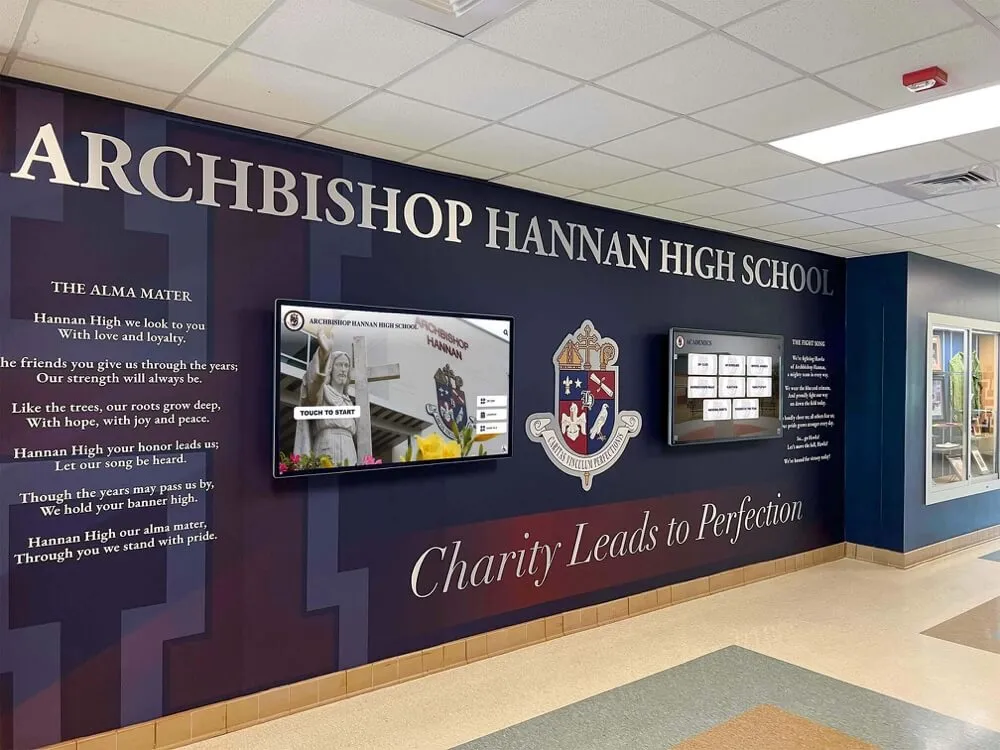
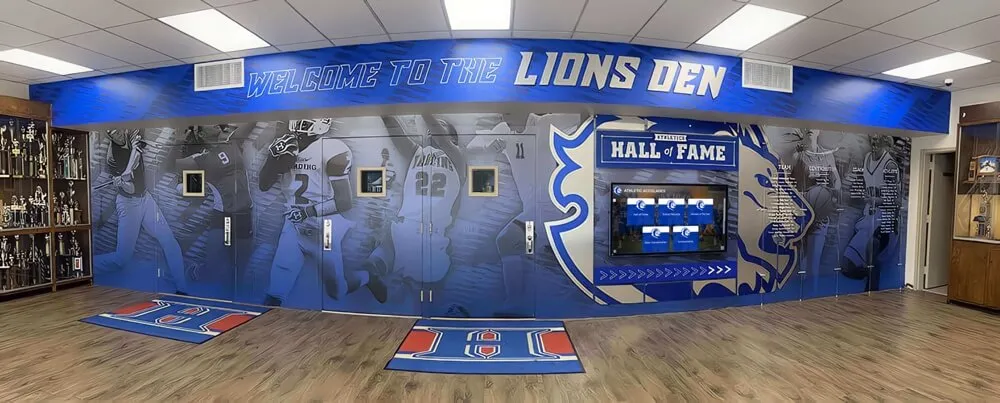
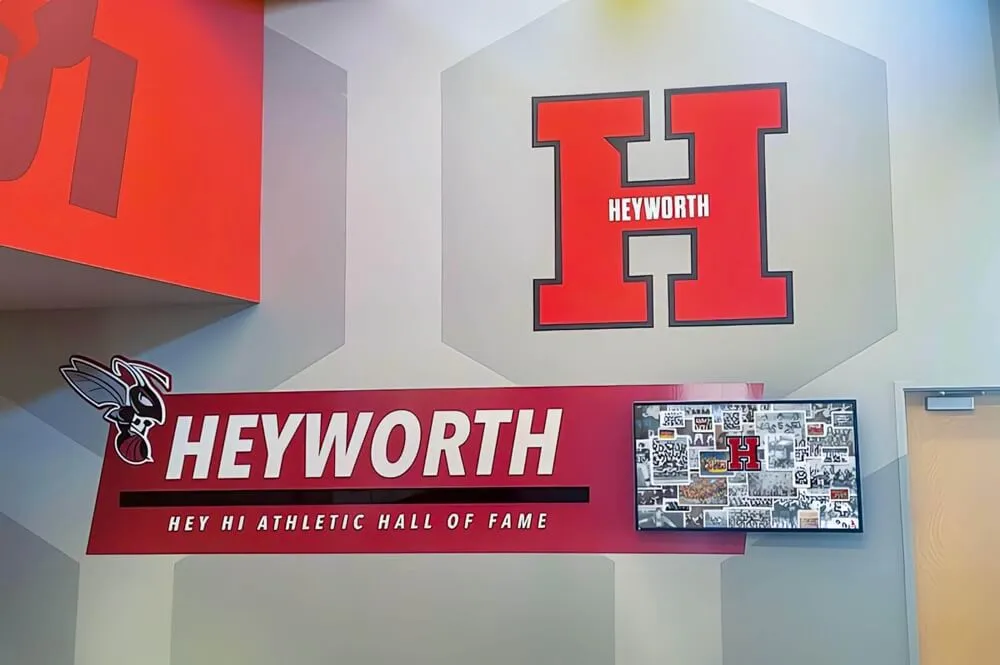
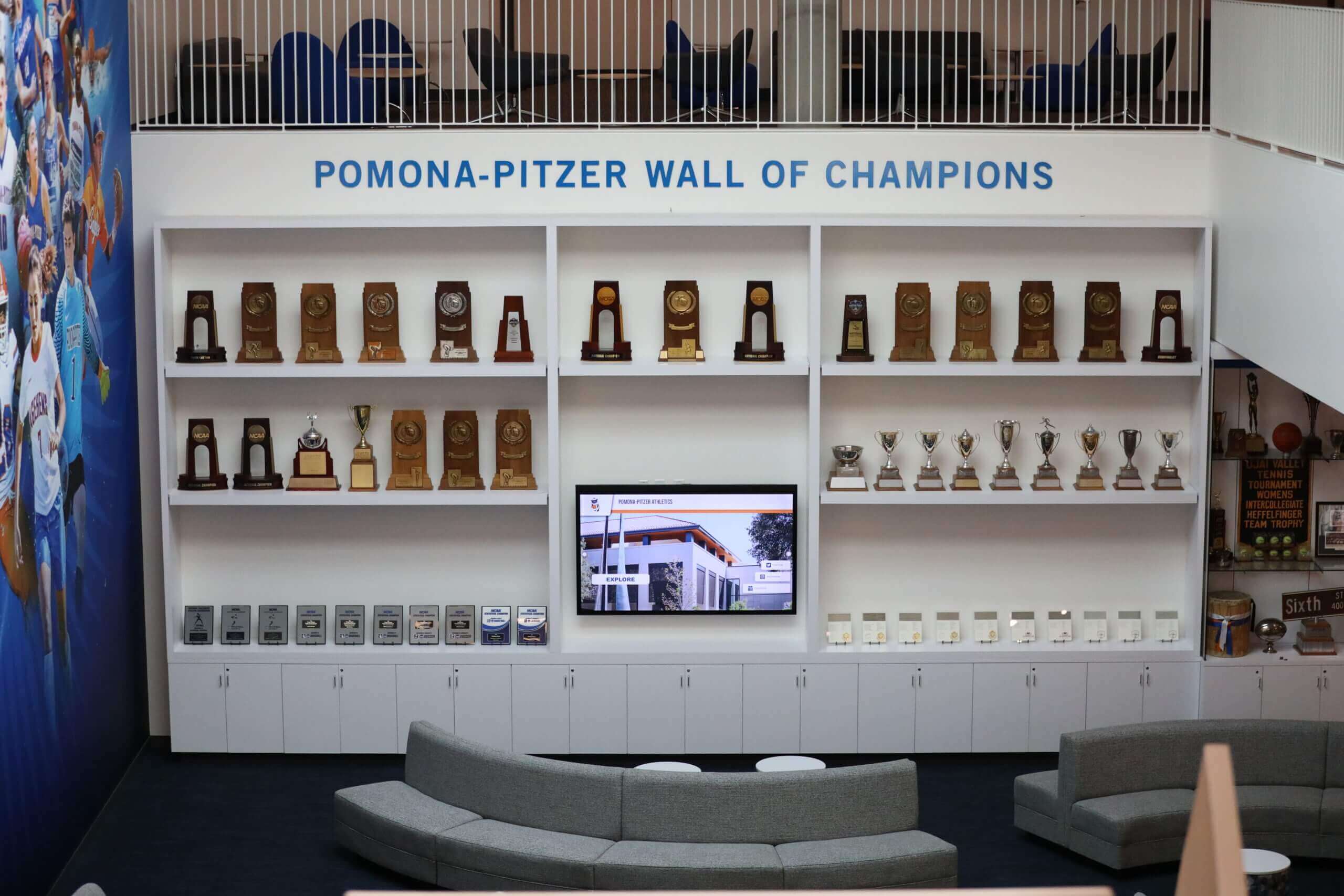
A well-organized wall of champions pairs curated physical recognition with space to accommodate achievements across multiple decades and sport types
What Championship Banners for Gyms Actually Communicate
Before deciding what to hang, rotate, or digitize, it helps to be specific about what gym banners do well and where they fall short.
The Strengths of Physical Championship Banners
They establish identity at scale. A state championship banner visible from every seat in the gym communicates program stature instantly—to home fans, visiting teams, and recruits walking in for the first time. That ambient authority is hard to replicate digitally.
They create permanent landmarks. The banner hanging where it has always hung becomes part of the building’s memory. Alumni returning for a reunion recognize it. Students who weren’t born when it was earned still know what it represents. Physical permanence carries a different weight than a database entry.
They reward the program publicly. Championship banners in gyms exist partly for the athletes who earned them—but they also exist for the community. A banner is a public declaration that this school, these coaches, these families invested in something and it paid off. That public dimension matters.
Where Physical Banners Fall Short
They run out of room. Gym ceiling and wall space is finite. When a school hangs banners for every conference title, every tournament appearance, and every booster sponsor alongside championship markers, the result is visual congestion. Individual banners lose meaning when they compete with forty others for attention.
They can’t update themselves. A banner printed in 2008 still says 2008. It cannot reflect how that team’s athletes performed in the years that followed. It cannot link to a video of the championship game or show the full roster. The recognition is frozen at the moment of printing.
They’re expensive to manage. Hanging, removing, and storing gym banners requires equipment, staff time, and budget. Programs that haven’t thought about this systematically often discover they’re paying significant costs for recognition that most visitors can barely read from ground level.
They can’t hold individual recognition. A championship banner names the year and possibly the sport. It doesn’t name the athlete who hit the deciding shot, the coach who built the program over fifteen years, or the senior captain whose leadership carried the team through a losing streak. That depth of recognition belongs somewhere else.
A Framework for Championship Banner Decisions
The clearest way to manage championship banners for gyms is to divide all athletic recognition into three categories: permanent wall space, rotation candidates, and digital-first content.
Category 1: What Earns Permanent Wall Space
Not every banner should stay on the wall indefinitely, but some recognition genuinely belongs there permanently.
State and national championships. A state title is the apex of interscholastic competition. These banners should hang in a consistent location—ideally organized by sport and year—and should never be taken down to make room for lesser recognition. If ceiling space is genuinely full, the answer is removing lower-tier banners, not crowding out a state championship.
Program milestone achievements. Some achievements mark turning points in a program’s history rather than just single seasons—a first-ever state appearance, an undefeated regular season, a national ranking. These warrant permanent display because they carry historical significance beyond the win-loss record.
Regional and sectional championships in programs with demonstrated excellence. For schools where a regional title represents a genuine ceiling—programs competing in historically dominant conferences or in small enrollment classifications where state titles are rarely earned—regional championships may warrant permanent display. The threshold should be set by program context, not applied uniformly.
Retired numbers and banner-format individual honors. Some schools display retired numbers as banners in their gym. These belong in the permanent category when the recognition standard is clearly defined and applied consistently. Winter sports programs often use banner-format recognition effectively for multi-sport athletes whose careers spanned multiple seasons.
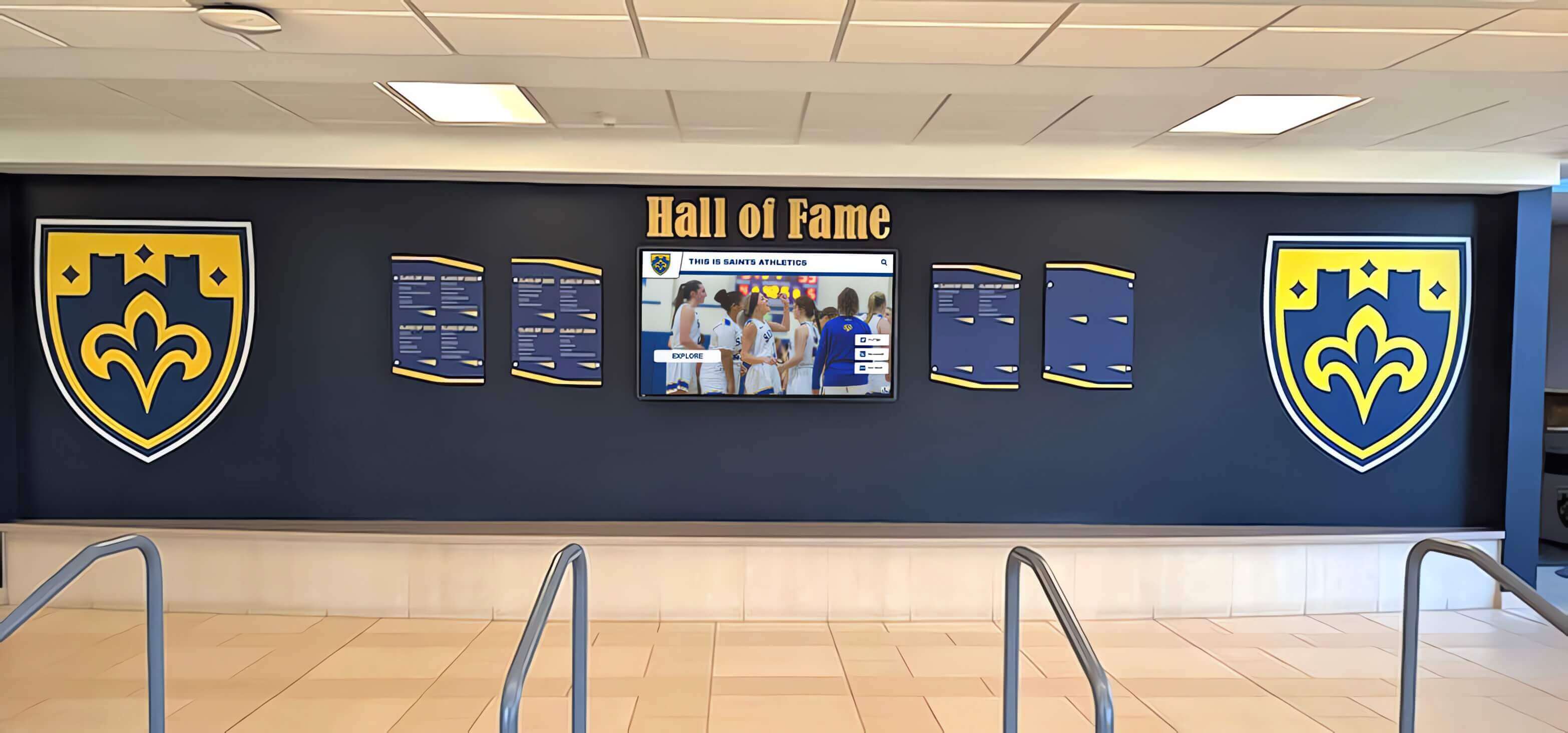
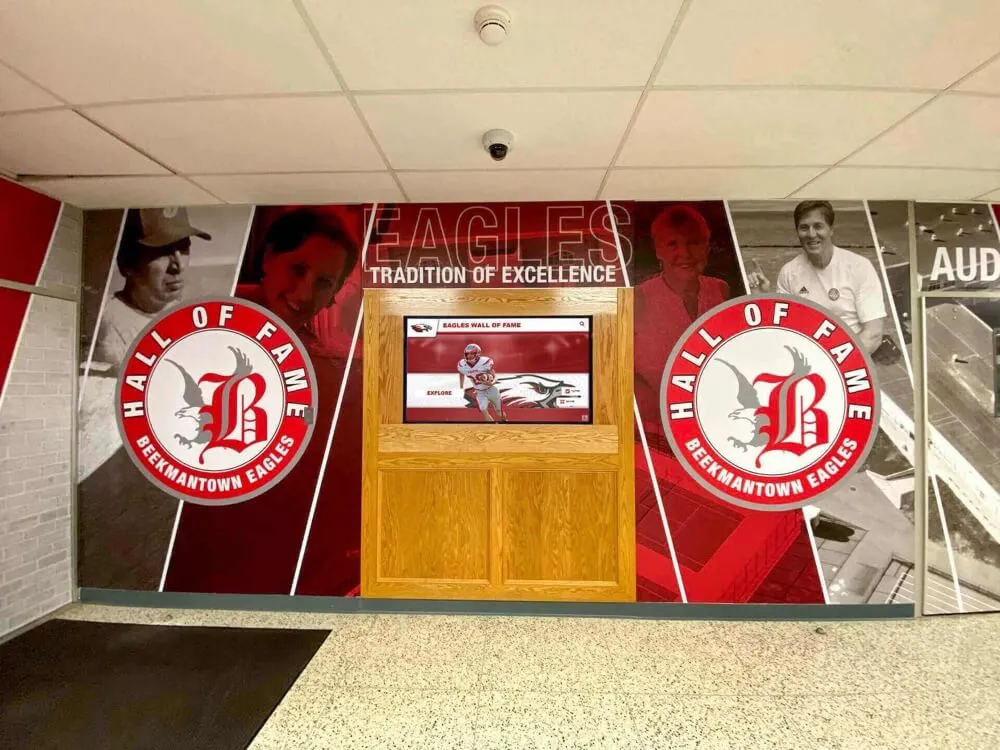
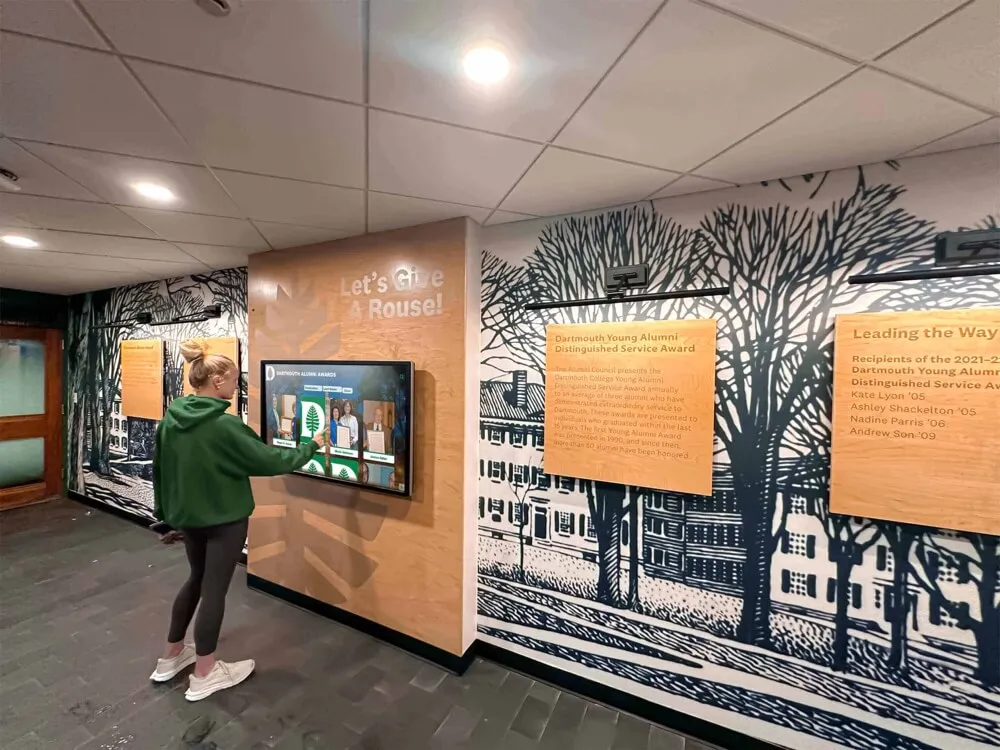
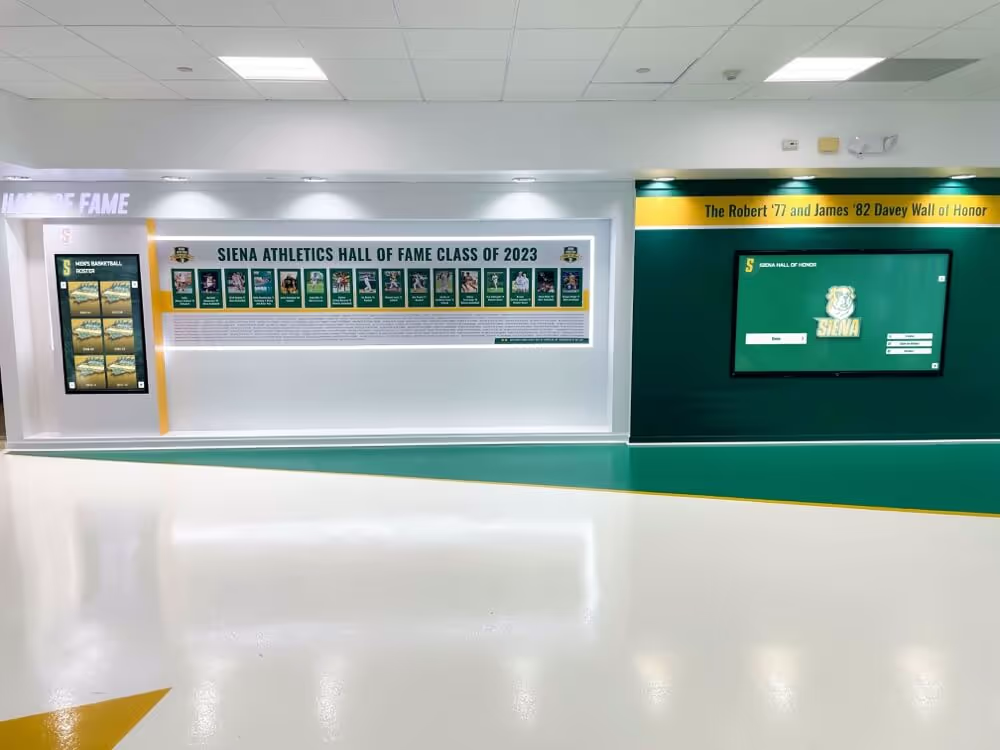
Programs that combine physical commemorative elements with digital displays create layered recognition environments that serve both visitors and current students
Category 2: What Should Rotate
Rotation doesn’t mean disrespect—it means making strategic choices about which recognition deserves prime display space at any given time.
Conference and league championships. Conference titles are meaningful, but a school that wins its conference regularly will fill an entire gym wall with banners within a decade. A better approach: display the three to five most recent conference championships alongside any year the program achieved something beyond a conference title. Older conference banners can be archived, stored, or moved to a secondary display location in the fieldhouse, weight room, or team hallway.
Tournament runner-up and participation banners. Runner-up finishes and tournament participation often receive banners that compete visually with actual championships. These can be stored rather than displayed permanently, or moved to a digital record that documents the full history without claiming prime wall space.
Sponsor recognition banners. Booster and sponsor banners serve a purpose, but they should not compete with athletic championship recognition. Consider whether sponsor acknowledgment belongs in a separate display area—a donor wall, a lobby panel, or a digital donor recognition display—rather than in the athletic recognition space inside the gym itself.
Seasonal spirit and homecoming displays. Banners used for school spirit events, homecoming, and pep rallies should be explicitly treated as temporary. Storing and reusing these banners rather than leaving them permanently installed preserves wall space for permanent athletic recognition.
Category 3: What Belongs on a Digital Display
A growing category of athletic recognition is genuinely better served by digital platforms than by physical banners. This isn’t about cutting costs—it’s about matching content to medium.
Individual athlete records and achievements. A championship banner can’t tell you who holds the school record in the 400 meters or which quarterback threw the most touchdown passes in program history. A digital record board or touchscreen display can display this content dynamically, update when records are broken, and show full historical context at a scale no physical banner could match.
Hall of fame inductees. Schools that induct athletes into an athletic hall of fame face a recognition problem: plaques fill up, display cases overflow, and alumni who were inducted a decade ago are often invisible to current students. Digital hall of fame systems allow unlimited inductees, rich profiles with photos and career statistics, and content that can be explored interactively. Winter sports hall of fame programs benefit particularly from digital formats that can accommodate the depth of multi-sport athletic careers.
Historical archives and season-by-season records. A gym banner can’t hold seventy years of program history. A digital archive can. Schools with long athletic traditions can digitize historical photos, old programs and rosters, news clippings, and championship documentation dating back decades—content that would be impossible to display physically but is genuinely engaging when accessible through a touchscreen display in the lobby or gymnasium.
Academic and multi-area recognition. Championship banners for gyms focus naturally on athletic achievement. But schools also want to recognize academic all-Americans, National Honor Society members, and students who excel across multiple domains. Digital displays handle this cross-category recognition naturally, without competing visually with athletic championship markers or requiring a different physical space for every category.
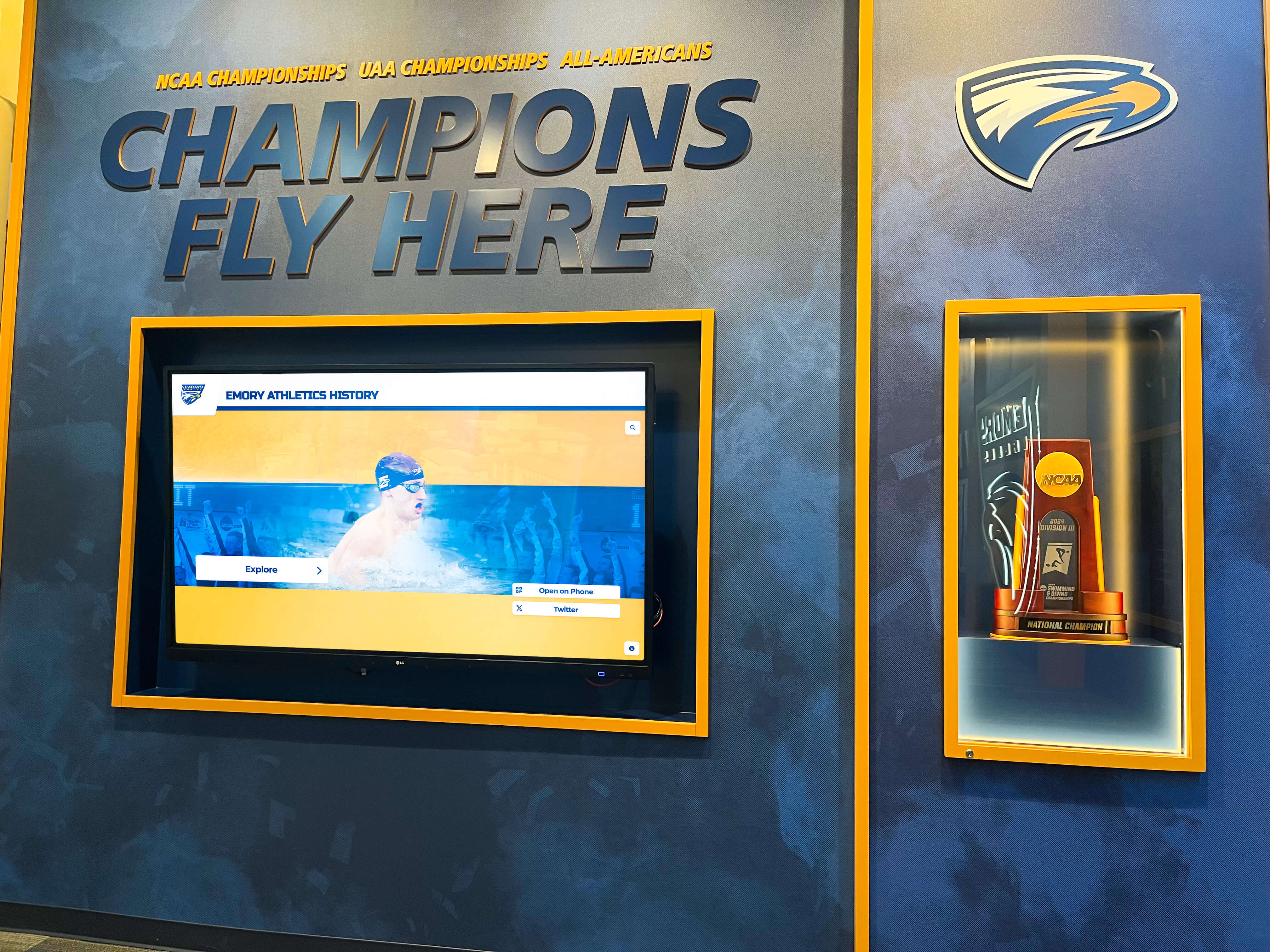
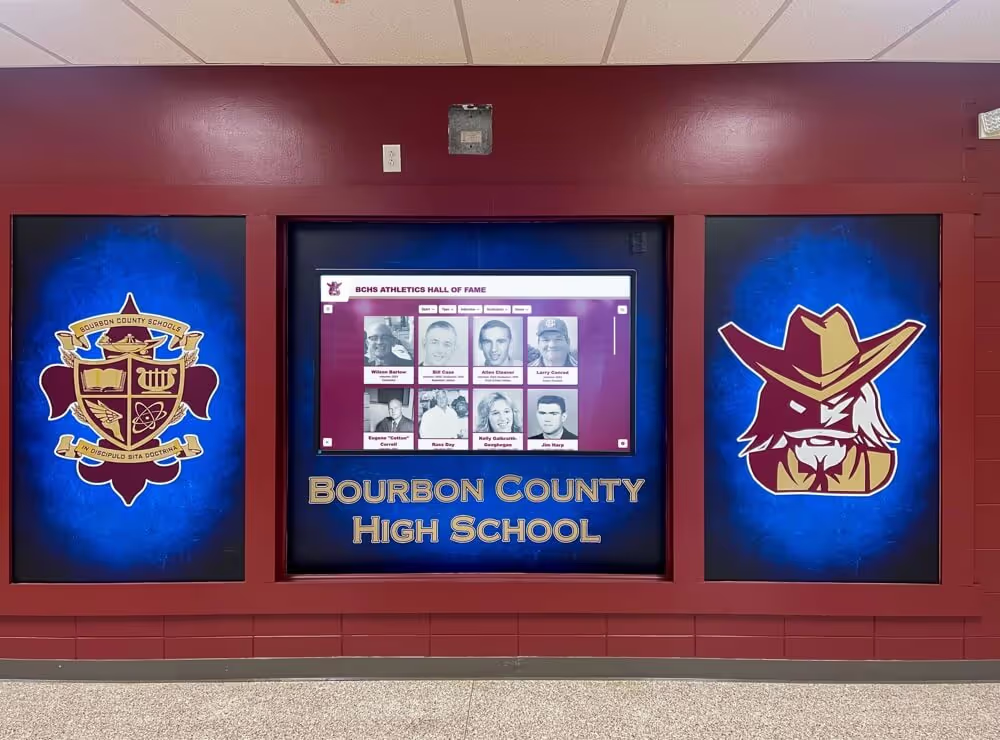
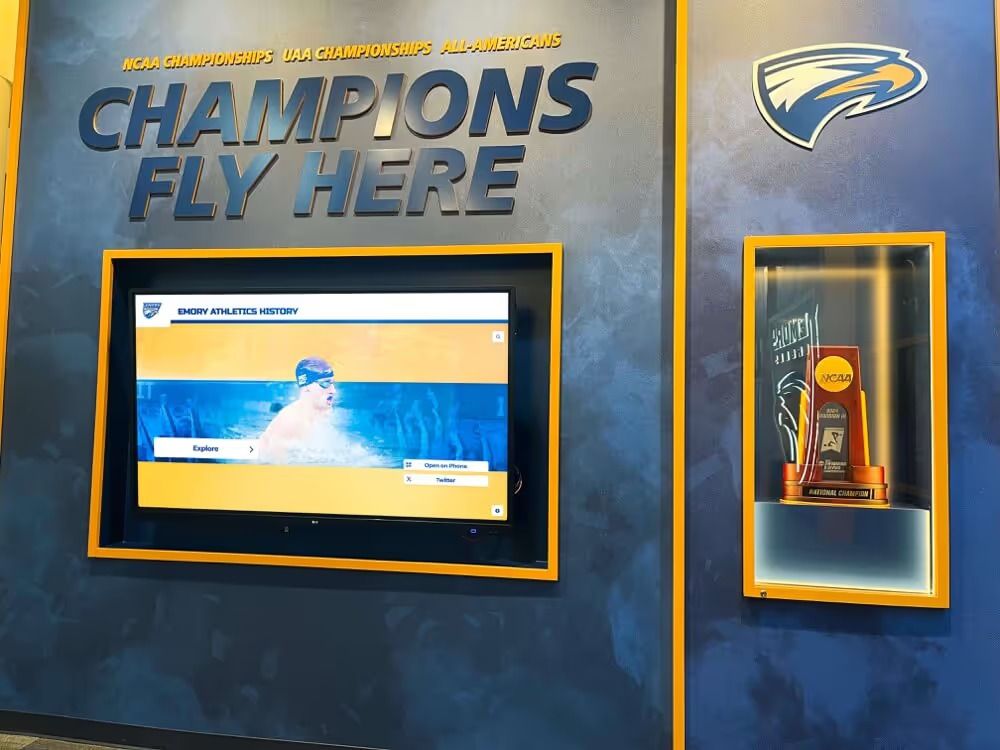
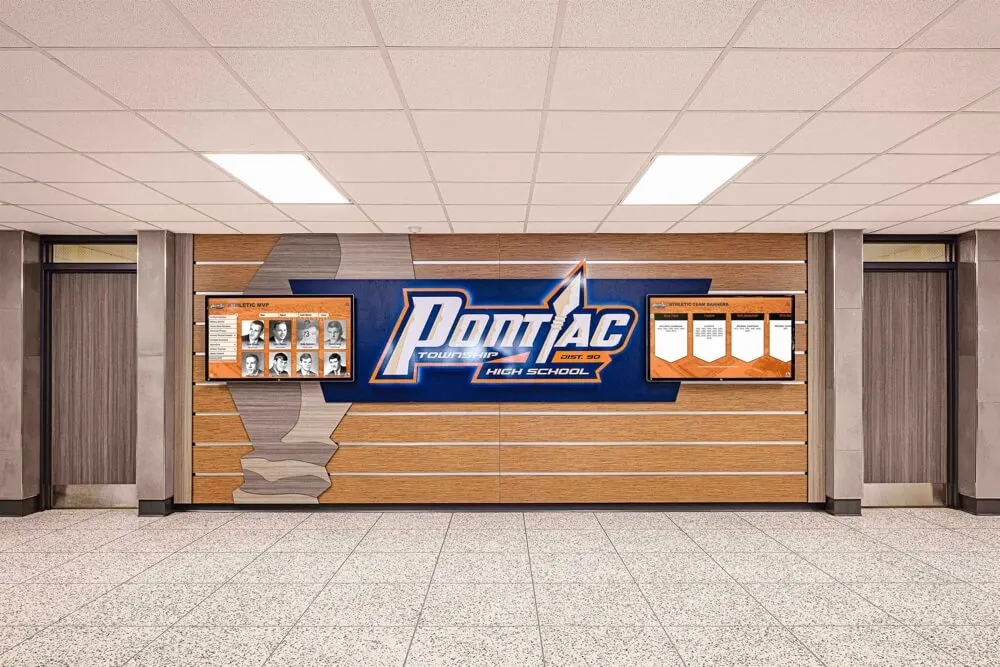
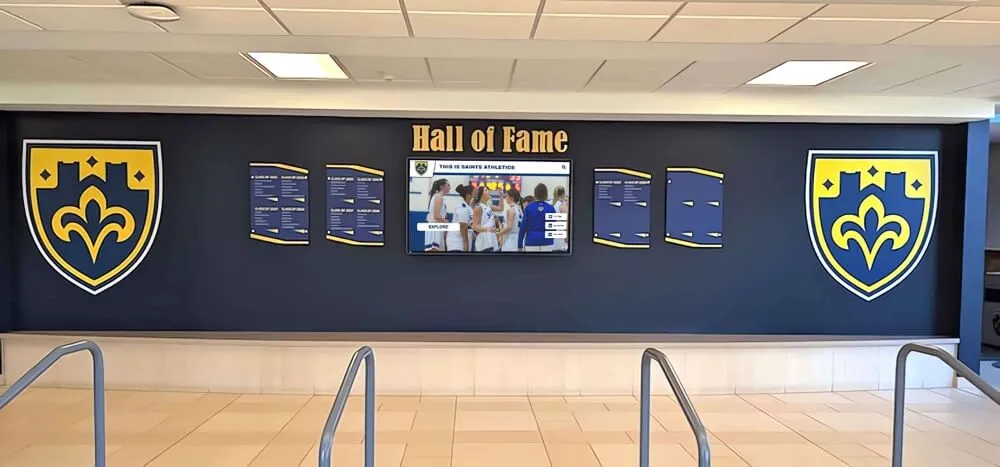
Dedicated championship walls that focus on the highest-tier achievements create visual clarity that gets lost when too many recognition types compete for the same space
Practical Steps for Auditing Your Gym’s Championship Banners
Most schools haven’t audited their gym recognition space systematically. These steps create a starting point.
Inventory What’s Currently Hanging
Walk the gym with a camera and a spreadsheet. Document every banner: sport, year, achievement level, condition. Many athletic directors are surprised to discover they can’t read every banner from ground level—fading, distance, and lighting make some banners functionally invisible.
Note banners that are damaged or faded beyond legibility. A championship banner that can no longer be read isn’t serving its purpose. These are the first candidates for replacement or removal.
Establish a Tier Hierarchy
Before adding or removing anything, establish written criteria for what earns permanent space in your gym. A simple three-tier hierarchy works for most programs:
- Tier 1 (permanent): State championships, national recognition, program milestones
- Tier 2 (active rotation): Conference and regional championships from recent years
- Tier 3 (archive or digital): Historical conference titles, participation recognition, individual statistics
Once the criteria are written, apply them to your current inventory. Some banners will shift categories. Some will be identified for digital migration. The policy protects future athletic directors from the same ad hoc decisions that created the current crowding.
Digitize Historical Content Before Removing It
Removing a banner without preserving its content creates a real loss. Before any banner comes down, photograph it, document the achievement it represents, and enter that record into a digital archive. Yearbook scanning services and archival digitization processes offer models for how to digitize aging physical materials without damage—similar principles apply to championship banners and historical athletic documents.
A digital record of every championship the school has ever won is more complete than a selective physical display. Physical walls show a curated subset. Digital archives can show everything.
Assess Display Infrastructure
Physical championship banners require space, mounting hardware, and ongoing maintenance. Digital recognition displays require a different kind of infrastructure—screens, mounts, software, and content management. Before making decisions about what to hang or digitize, assess what’s already in place.
Many schools find that a single touchscreen display in the gymnasium lobby or athletic hallway handles the majority of dynamic recognition needs—individual records, hall of fame inductees, seasonal updates—while the physical banners in the gym focus on permanent championship markers.
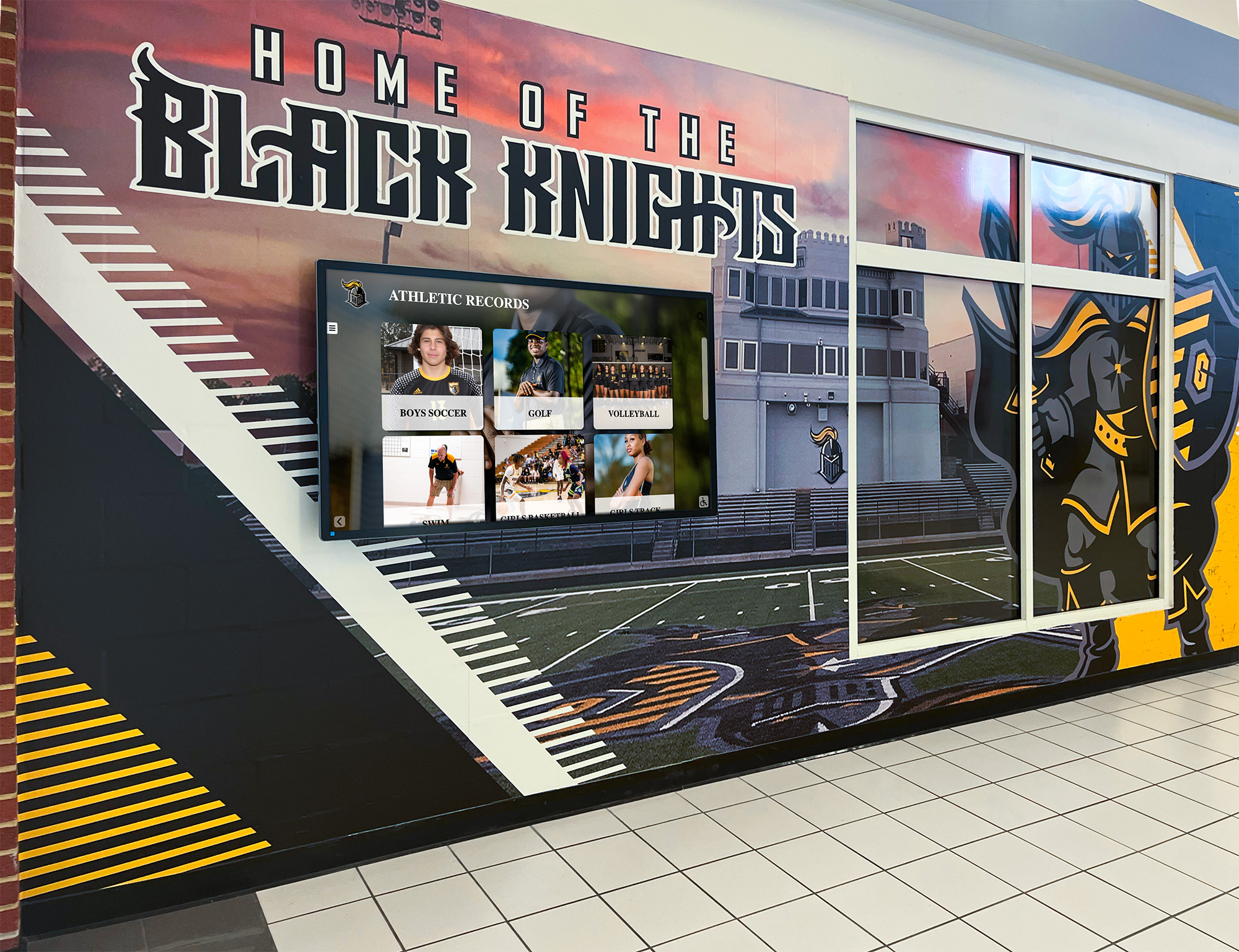
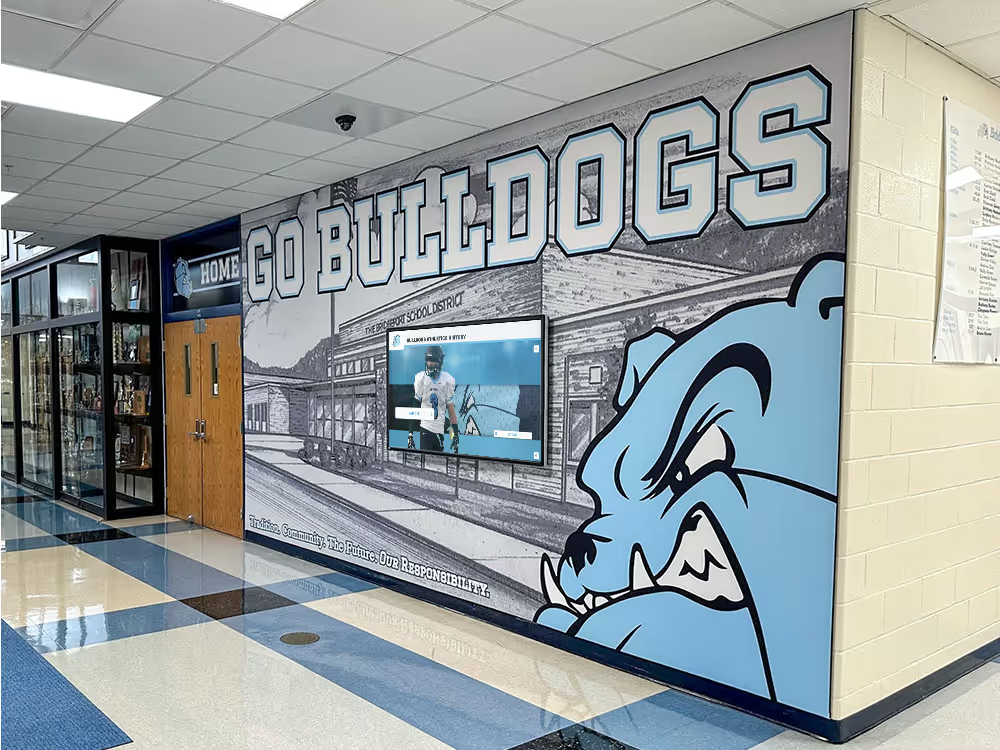
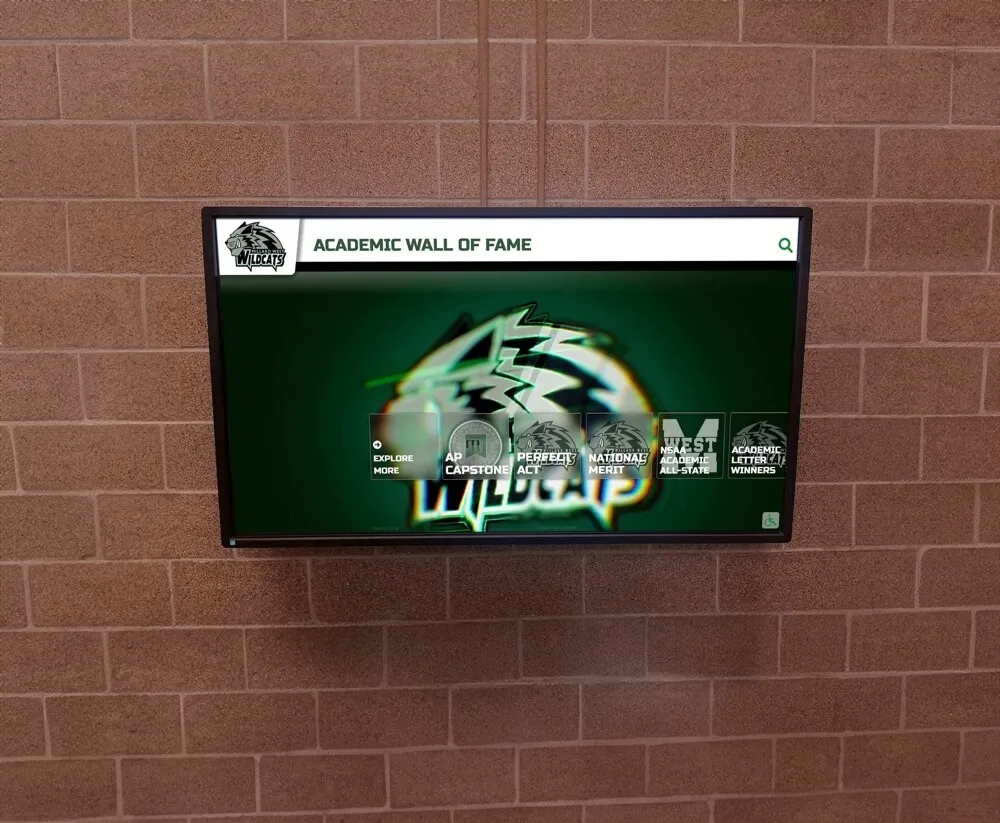
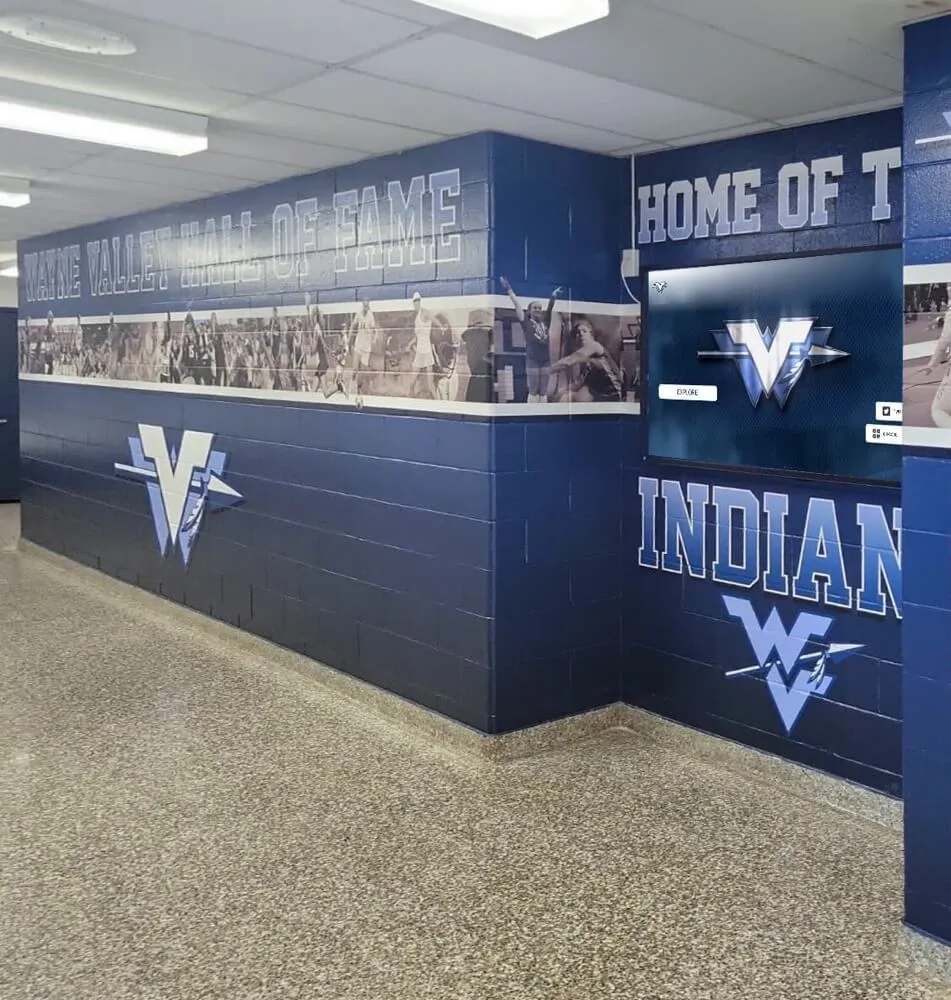
Integrating digital record displays alongside physical murals and banners creates a recognition environment that updates automatically without requiring new physical installations
Designing Championship Banner Displays That Hold Up Over Time
Schools that think carefully about banner design upfront avoid the fading, crowding, and inconsistency problems that plague most gym displays.
Standardize Before You Add
The most visually effective championship banner installations share a consistent format—same dimensions, same font family, same color palette across all years. When every banner looks slightly different because they were ordered from different vendors across different decades, the wall reads as accumulation rather than institution.
If your program has reach and budget, commissioning a cohesive redesign of existing banners before adding new ones creates a more professional result. If budget is limited, at minimum standardize going forward so future additions match.
Consider Location Strategically
Championship banners for gyms are most effective when they’re placed where they can actually be read and seen. High rafters create visibility from a distance but sacrifice legibility for the detail that makes recognition meaningful—the year, the sport, the specific achievement.
Consider placing the most significant championship banners at lower elevation on end walls where they’re readable during games and practice. Reserve high-rafter space for older historical banners where the broad visual impact matters more than fine print legibility.
Leave Room for What Comes Next
The most common mistake in gym banner planning is designing for current inventory without accounting for future growth. A basketball program that wins a conference title most years will double its banner count within a decade. Build the display infrastructure to accommodate growth, or build the rotation policy that controls it.
Use Materials That Last
Championship banners for gyms hang for decades. The investment in higher-quality materials—UV-resistant inks, reinforced grommets, heavier fabric weights—pays off in banners that remain legible and presentable twenty years from now. A state championship banner printed on lower-quality stock that fades within five years is doing the program a disservice.
Academic recognition programs often apply similar thinking—recognizing the full scope of student achievement in ways that hold up over time, both physically and institutionally.
The Case for Digital Championship Recognition in Gyms
Physical banners and digital displays are not competing technologies. They serve different functions and work best when both are present and each handles what it does best.
What Digital Adds That Physical Cannot
Depth of story. A championship banner records a year and a sport. A digital display can hold the full story: coaching staff, roster, bracket progression, key game moments, and where athletes went after graduation. Current students and visiting families find that context genuinely engaging in ways that a banner at rafter height cannot provide.
Accessibility. Not everyone can read a banner from the bleachers. Not everyone knows the history behind a 2003 championship. Digital recognition systems allow exploration at eye level, with search functionality that surfaces content relevant to whoever is standing at the screen.
Ongoing updates. When a record is broken or a new hall of fame class is inducted, a digital system updates immediately. Physical banners require ordering, shipping, installation, and cost. Programs that want to recognize achievement consistently can do so more frequently—and more cost-effectively—through digital platforms.
Alumni connection. A touchscreen display that includes historical rosters, old photos, and program archives creates a genuine connection point for alumni returning to the building. It also creates a reason for current students to engage with program history that a banner alone rarely provides.
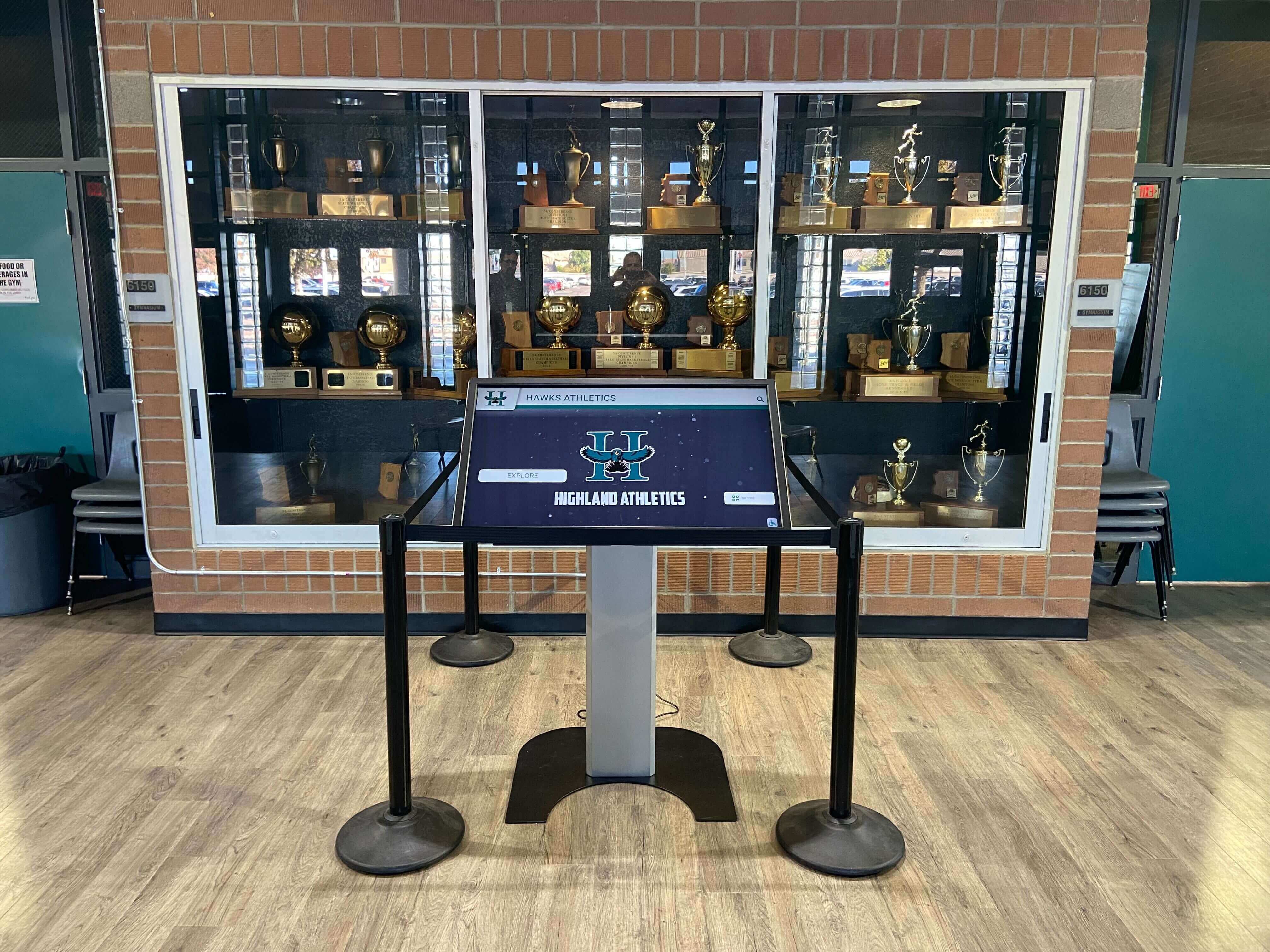
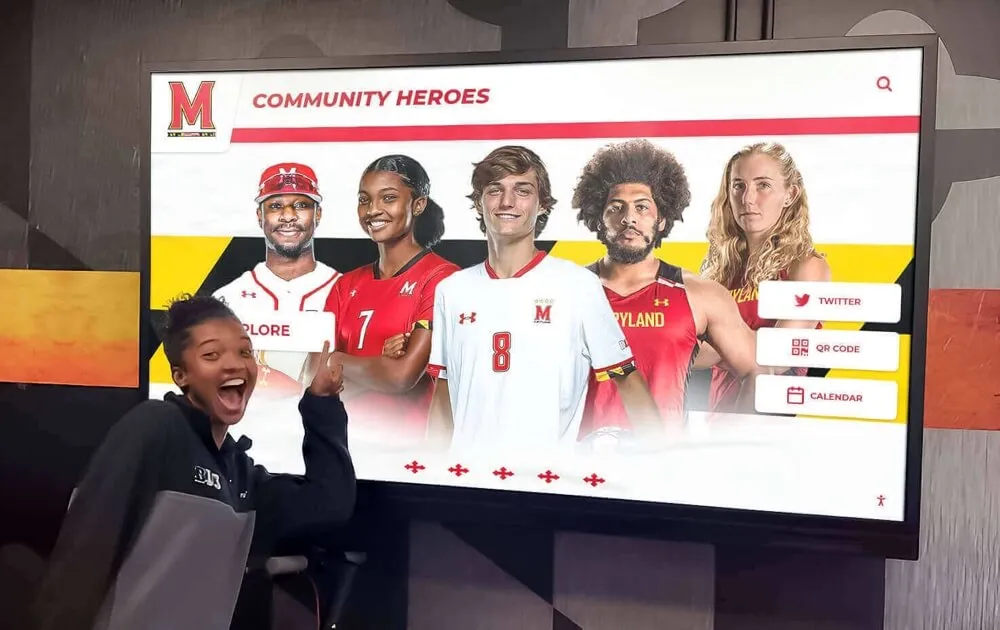
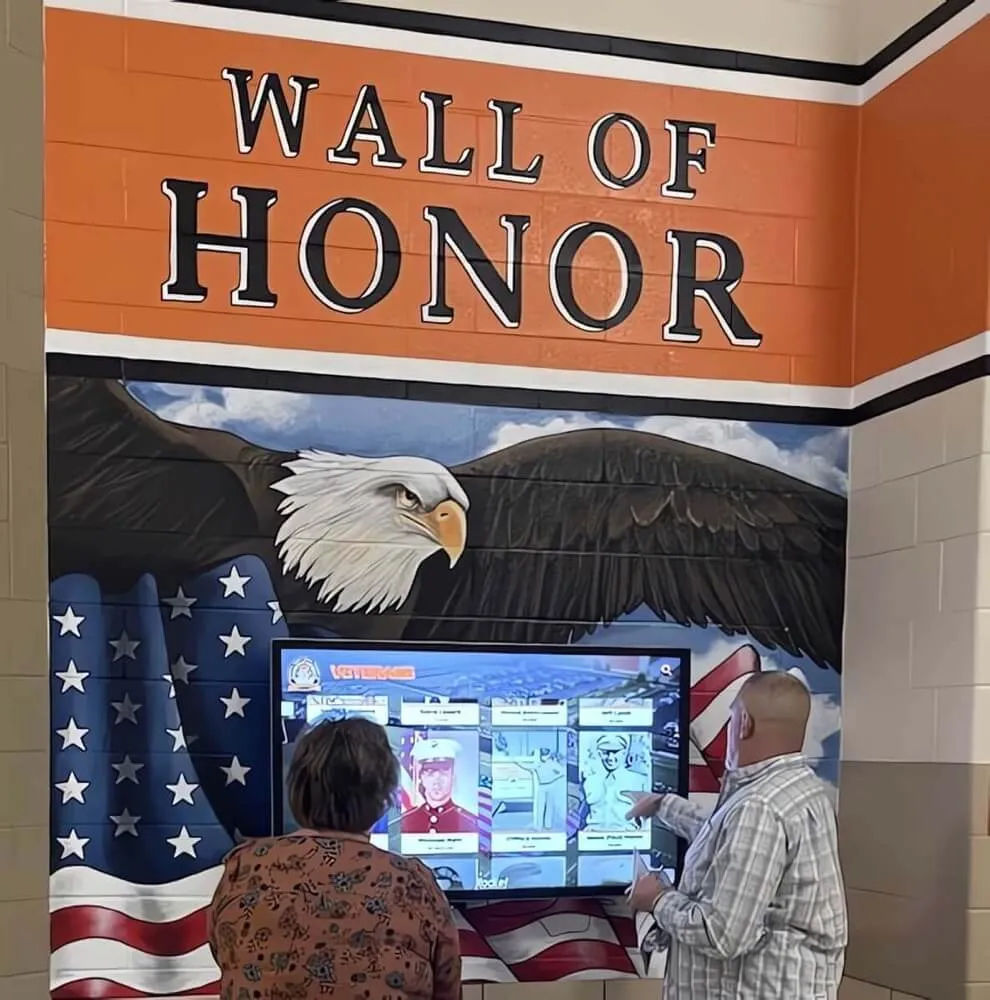
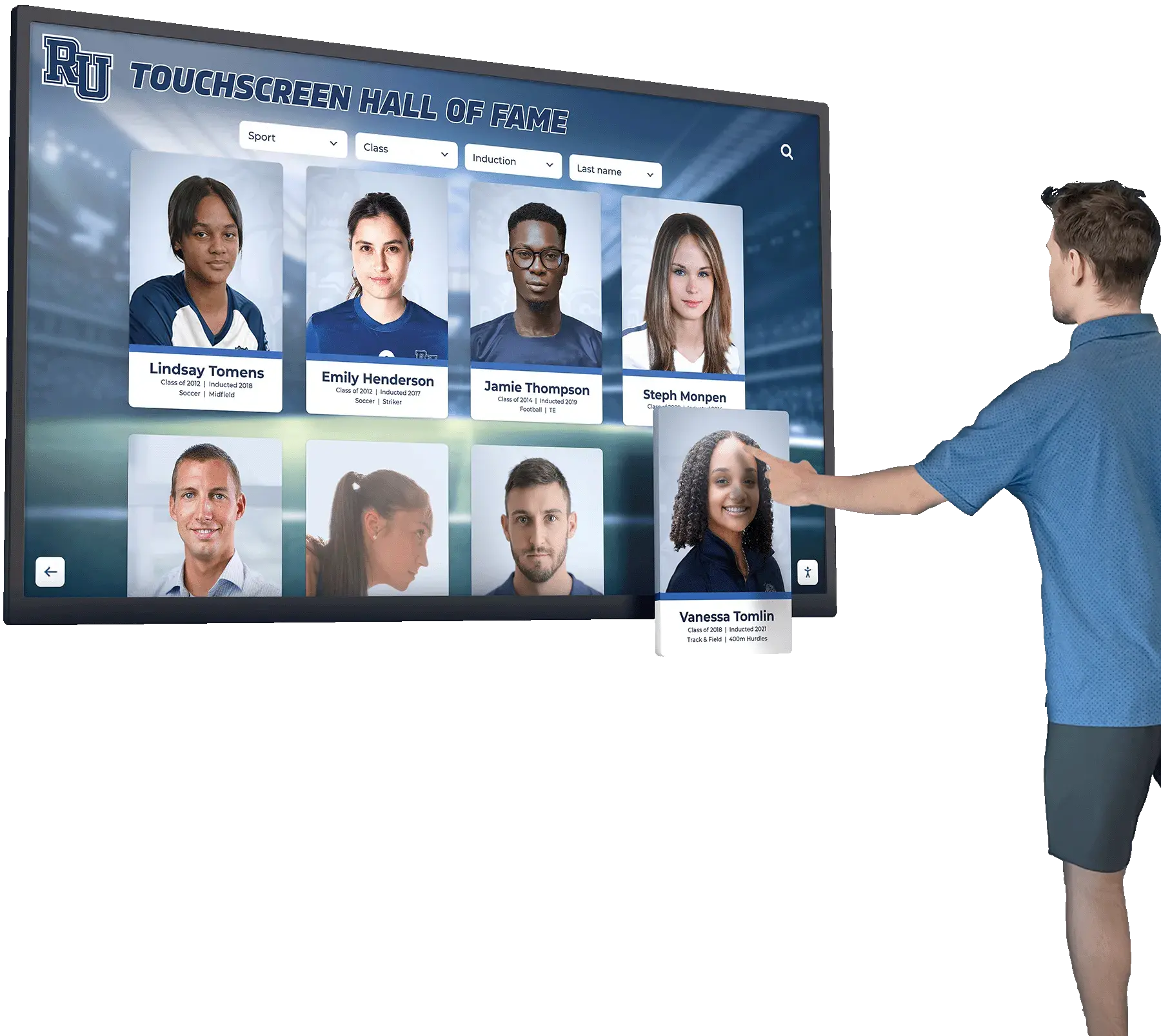
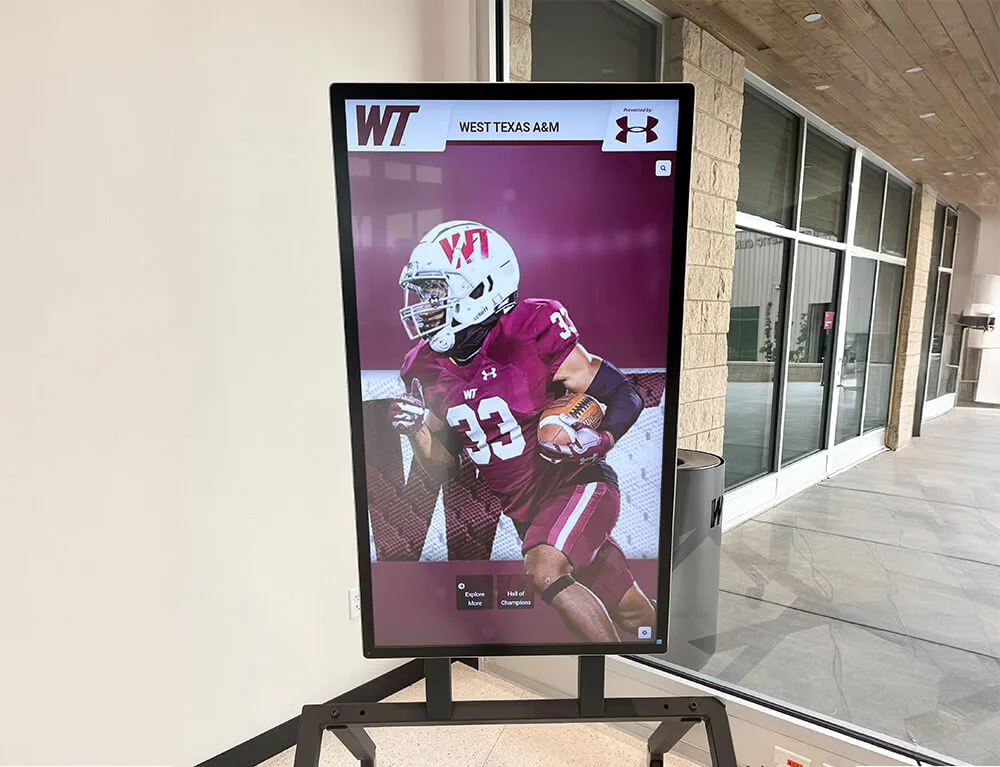
Touchscreen kiosks integrated into traditional trophy display areas let schools preserve familiar recognition structures while adding depth and interactivity that physical cases cannot match
Positioning Digital Displays for Maximum Impact
The most effective placement for a digital recognition display in a gym context is at eye level in a high-traffic location: the lobby entrance, the hallway adjacent to the gym, or a dedicated recognition alcove near the athletic wing. These locations create natural opportunities for students, families, and visitors to engage without requiring them to seek out the display.
For programs with significant championship histories, a wall-mounted touchscreen that opens to a complete championship archive—organized by year, sport, and achievement level—gives that history far more utility than a rafter full of banners that most visitors can barely see.
Archiving What’s Already on the Wall
Many schools have championship banners representing achievements that predate any digital records—programs that won conference titles in the 1980s when photos were stored in boxes, not databases. Digitizing this history is worth the effort.
Archiving physical championship recognition into a digital system creates content that would otherwise be lost when banners fade, when buildings are renovated, or when institutional memory turns over as staff retires. The process of digitizing aging school materials is less complex than most schools expect and produces results that serve the community far longer than a deteriorating physical banner.
Making the Transition: A Realistic Timeline
Schools rarely overhaul their entire recognition system at once. A phased approach produces better outcomes.
Phase 1: Establish policy. Before anything changes physically, document the criteria for what earns permanent space, what rotates, and what moves to digital. Put this in writing so future decisions are consistent. This phase costs nothing and prevents future ad hoc decisions from recreating the current problem.
Phase 2: Audit and photograph existing banners. Document everything currently on the walls. Identify what needs repair or replacement, what could move to rotation storage, and what content needs digital preservation before any physical changes.
Phase 3: Install digital infrastructure. If the school doesn’t yet have a digital recognition display in the athletic space, this is the phase to add one. The display doesn’t need to be large or expensive to be effective. Small and medium high schools find that even a single interactive display creates significant engagement without requiring a major capital investment.
Phase 4: Migrate content. Move appropriate content to the digital system: individual records, historical championship documentation, hall of fame inductees, and any banner-level recognition that doesn’t meet the permanent display threshold. This is the phase where the physical wall begins to breathe again.
Phase 5: Update the physical display. With a policy in place and digital infrastructure handling dynamic content, the physical championship banners in the gym can be organized consistently—standardized formats, logical grouping by sport and tier, and space deliberately held for future additions.
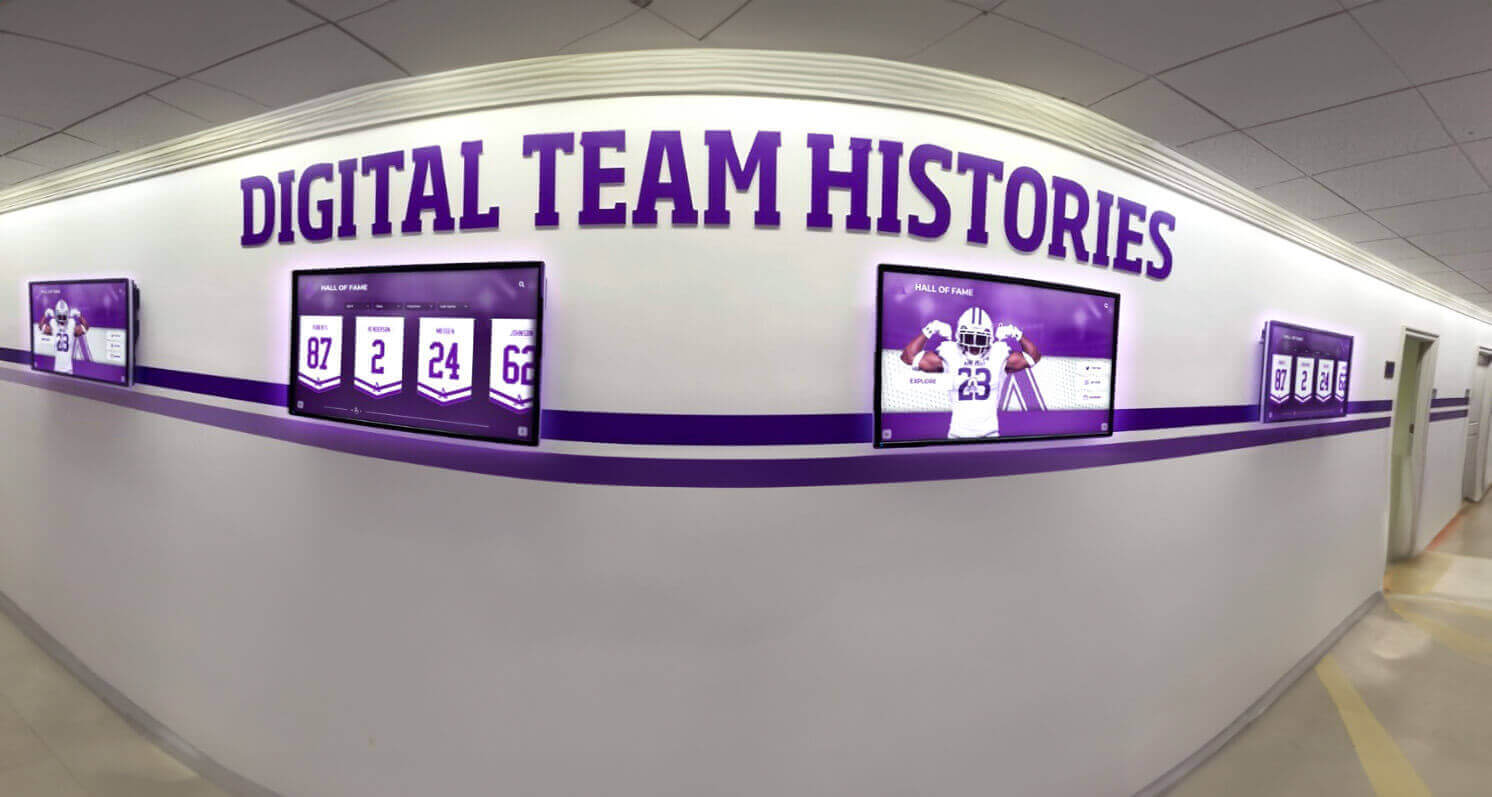
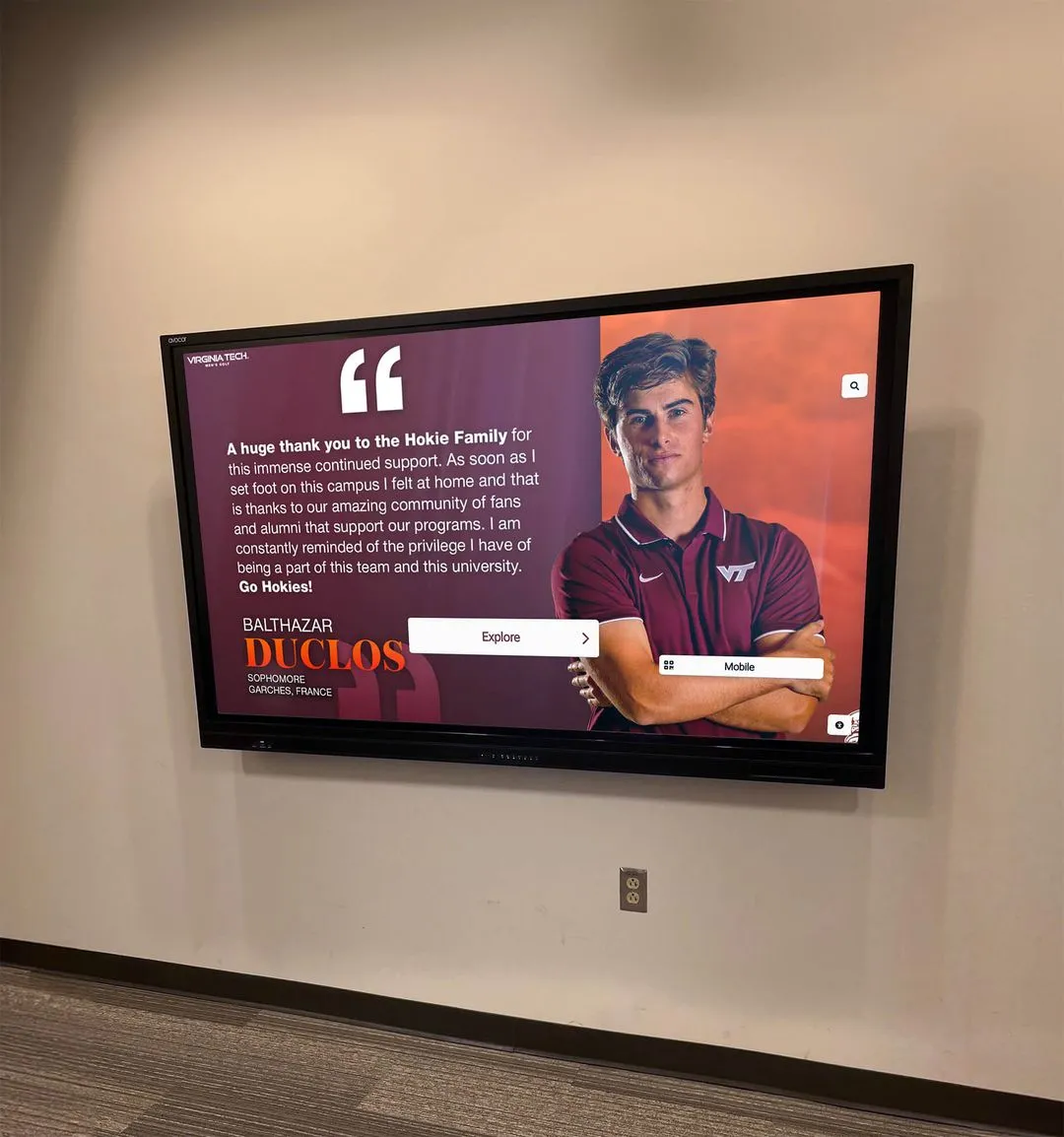
Digital team history displays in athletic hallways let schools document full program histories across every sport without the space constraints of physical banner installations
Common Questions About Championship Banners for Gyms
Should we take down banners for championships that are no longer recognized?
Occasionally, reclassification or conference realignment means a past championship was earned under a structure that no longer exists. These banners still represent genuine achievement—the athletes earned those titles under the rules that applied at the time. The appropriate response is usually to retain the banner as historical documentation, potentially adding context rather than removing the recognition.
What happens to retired banners?
Banners that come down from gym walls don’t need to be discarded. Many schools store them in the athletic director’s office, the team locker room, or the school archive where they remain accessible for reunions, anniversary events, and historical research. Digital documentation should precede any physical removal so the achievement remains in the official record.
How do we handle banners from discontinued sports programs?
Discontinued programs still produced championship banners that represent real accomplishment. These often warrant retention in the permanent category precisely because the program no longer exists to add future banners. A digital archive can tell the fuller story of the program’s history alongside the physical banner.
Can digital displays replace championship banners entirely?
For most schools, the answer is no—and that’s the right answer. Physical championship banners serve functions that digital displays cannot fully replicate: ambient presence during competition, visible tradition for visiting teams, permanent landmarks in a community’s shared memory. The goal is not replacement but complementarity. Physical banners should handle what they do best; digital systems should handle everything else.
Building a Recognition Program That Serves the Whole Athletic Community
Championship banners for gyms represent the most visible layer of athletic recognition, but they’re not the only layer that matters. Students who earn all-conference honors, coaches who build programs over decades, and volunteers who make athletic programs run all deserve recognition that goes beyond what a banner can provide.
The schools that do this best treat physical championship banners as the top of a recognition pyramid—highly curated, permanently displayed, and reserved for the achievements that genuinely represent a program’s highest moments. Below that level, a structured digital recognition system handles everything else: individual records, seasonal rosters, hall of fame inductees, academic recognition, and the full archive of program history that connects current athletes to the generations who came before them.
That combination—selective physical banners for championship milestones, digital recognition for everything else—creates athletic recognition spaces that are visually compelling, historically rich, and genuinely useful to everyone who walks through the gym door.
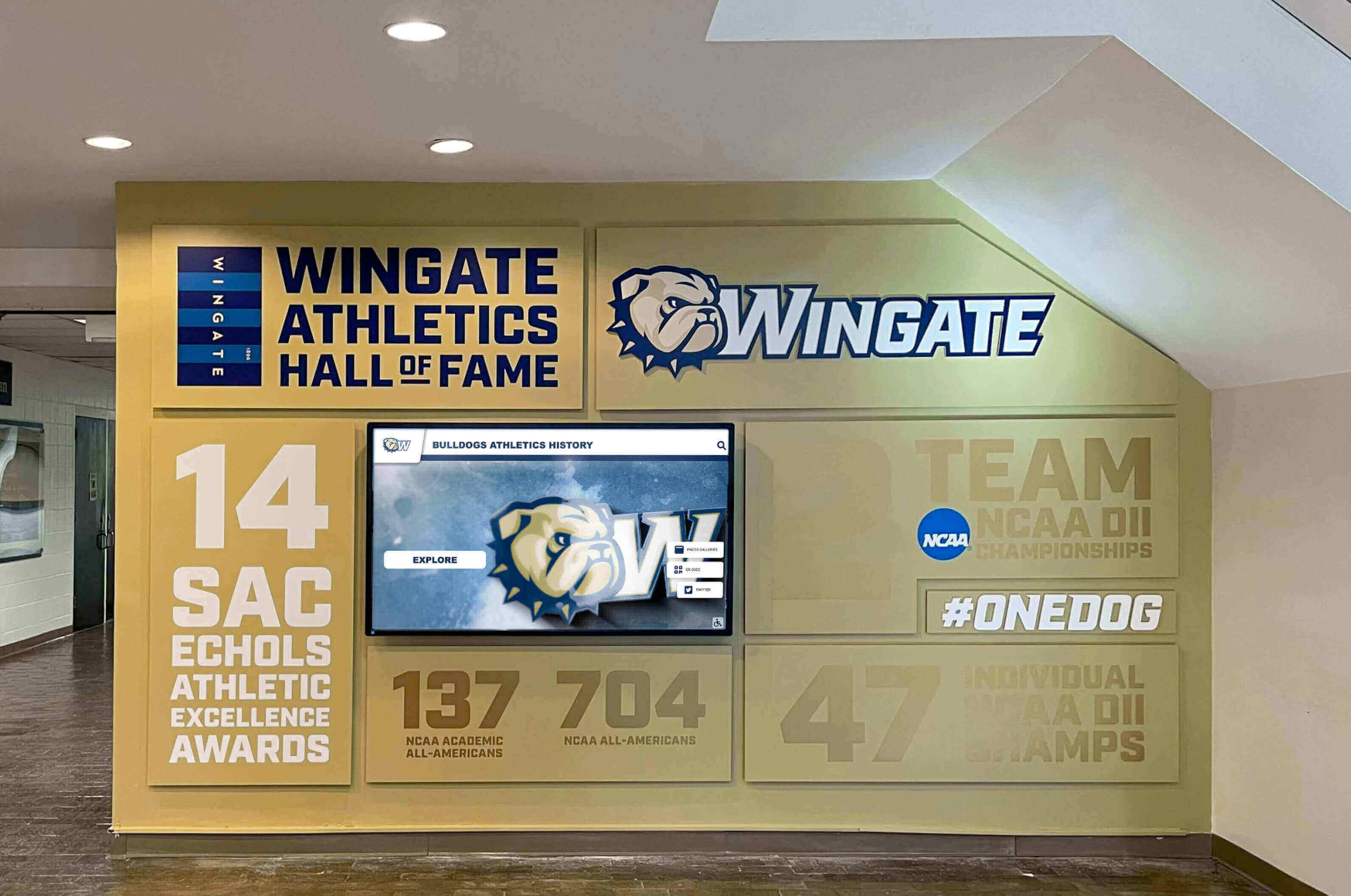
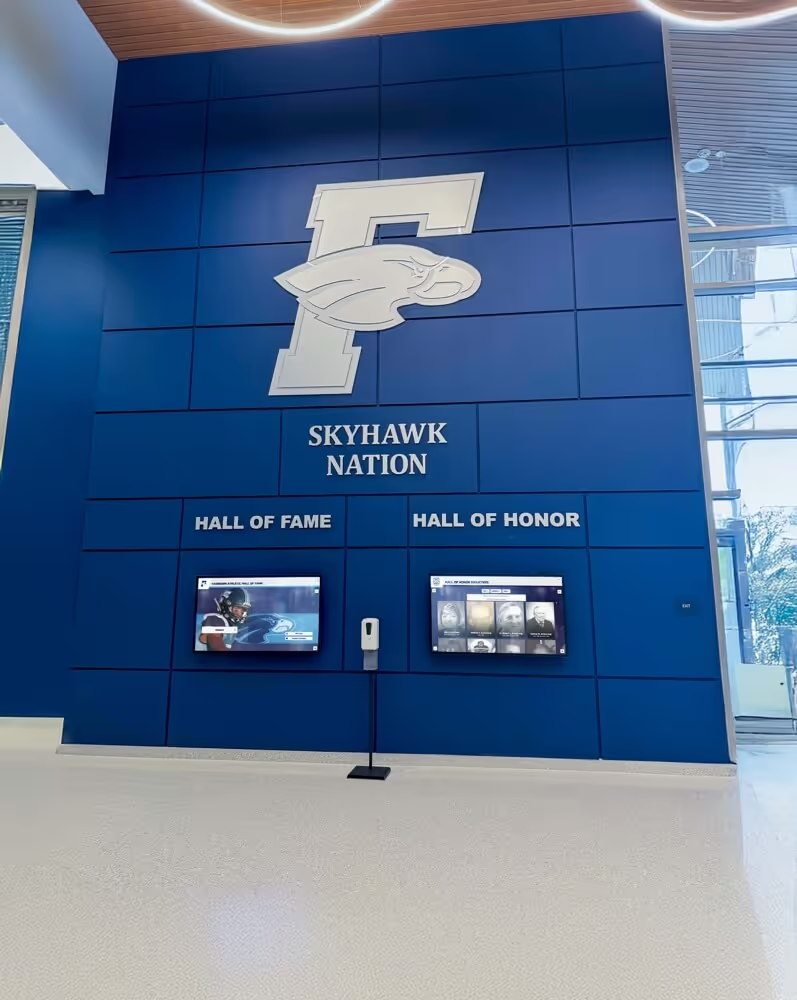
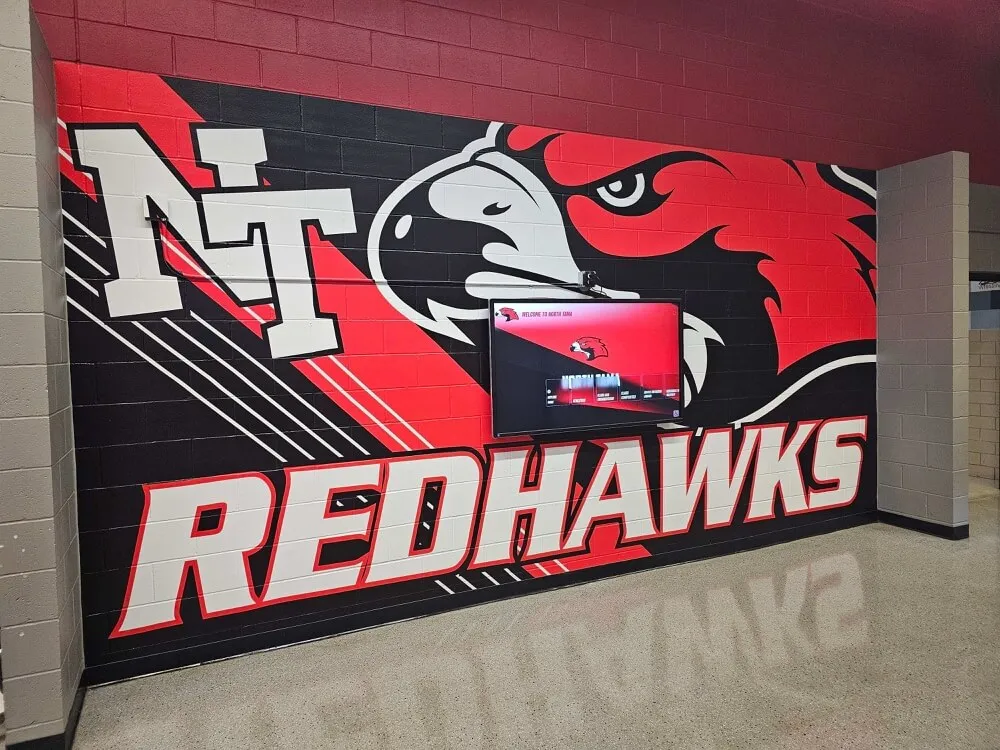
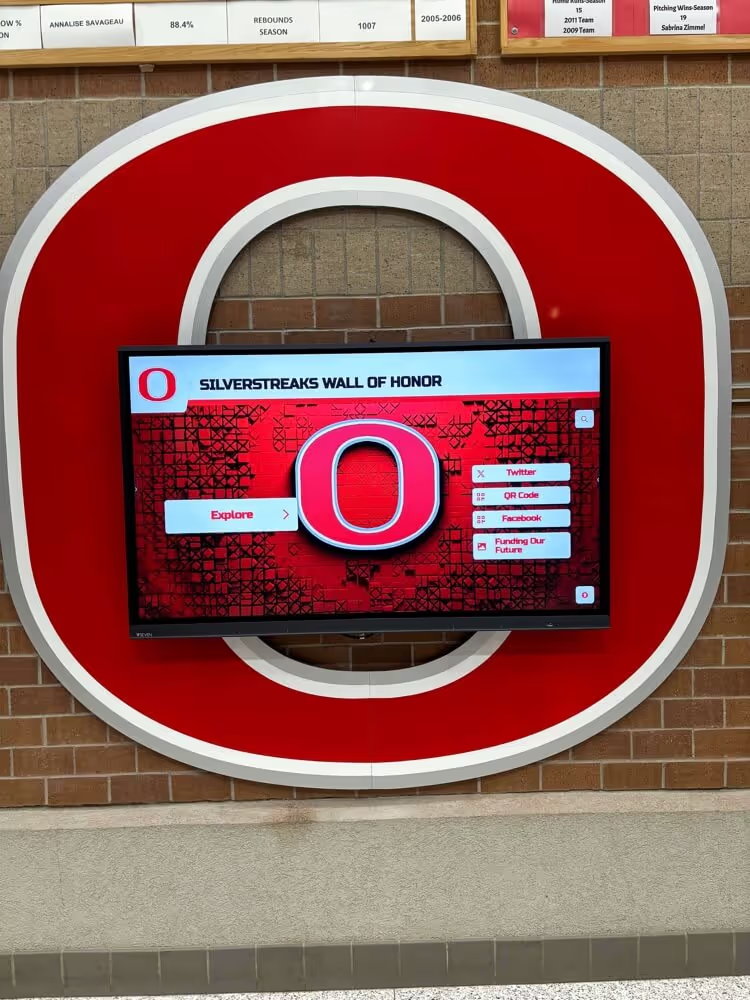
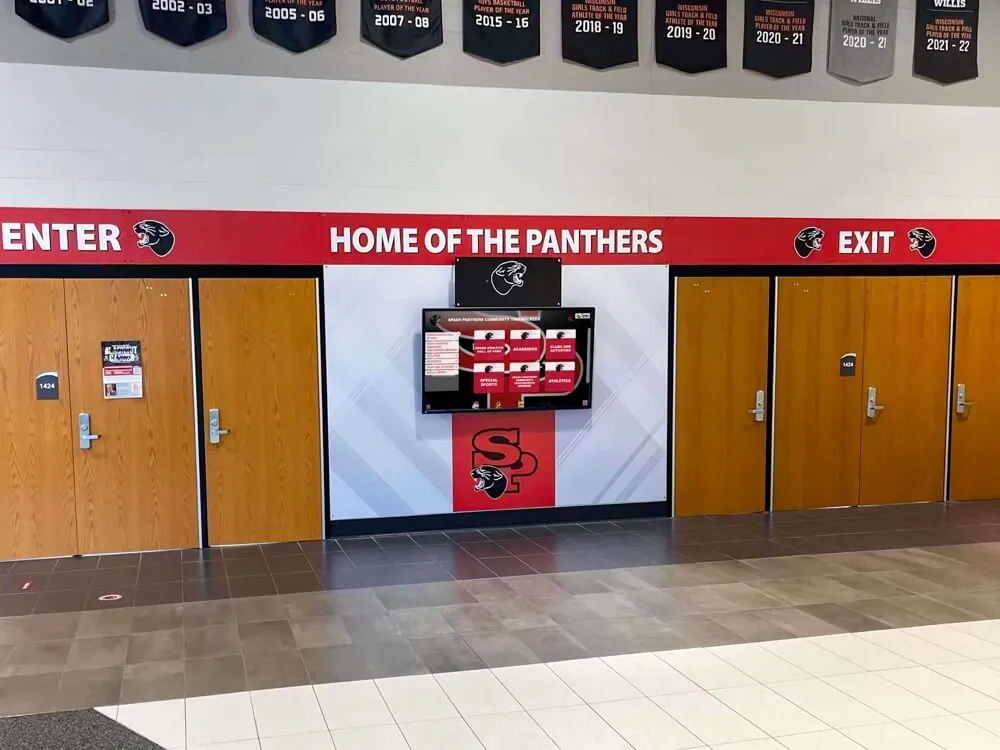
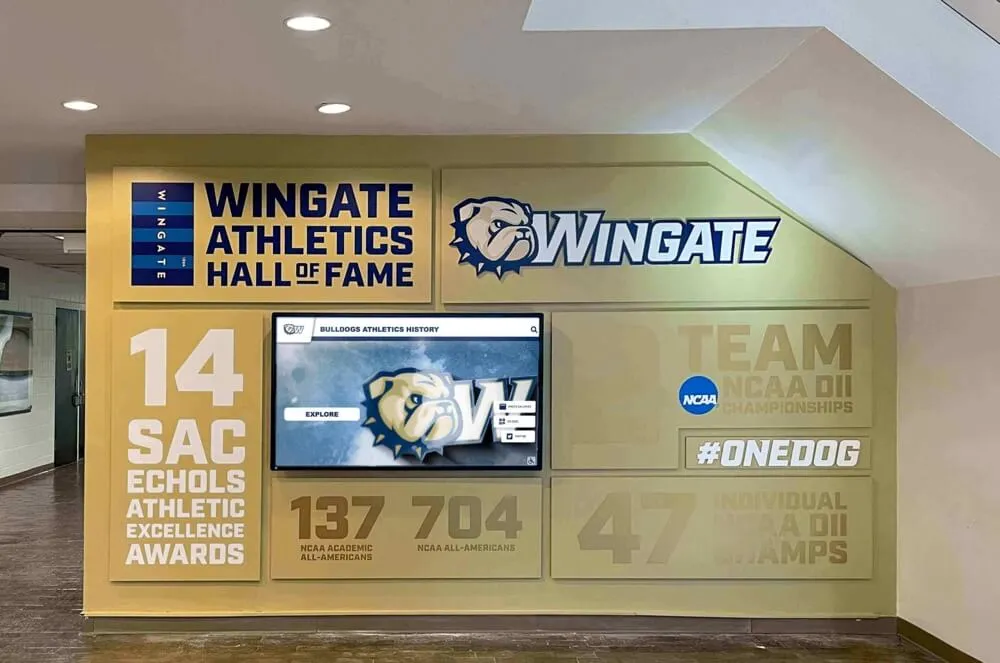
Lobby recognition installations that integrate mascot identity with organized achievement displays create welcoming environments that communicate program pride to visitors and recruits alike
Conclusion
Championship banners for gyms have earned their place in school athletic culture. They communicate tradition, mark milestones, and create the ambient authority that visitors notice the moment they walk through the doors. But managing them well requires more than hanging a new banner after every winning season.
The most effective approach treats gym banner decisions as strategic rather than reactive: permanent display for championships that represent the program’s highest tier, rotation policies that keep the wall current without losing historical context, and digital recognition systems that hold everything the physical wall cannot—individual records, hall of fame histories, archival content, and the full depth of a program’s story across generations.
When championship banners and digital recognition work together, schools create athletic environments that serve current students, engage returning alumni, and communicate program excellence to everyone who walks through the door.
Ready to see how a digital recognition system can complement your gym’s championship banners? Request a demo from Rocket Alumni Solutions to explore touchscreen walls of fame, digital trophy cases, athletic record boards, and interactive displays built specifically for school athletic programs.