



Intent: demonstrate — Campus tours represent defining moments in prospective student decisions, where first impressions determine whether families envision themselves as part of your community or continue searching elsewhere. Traditional campus tours follow predictable scripts—walking groups through facilities, reciting admission statistics, and pointing out landmarks—creating informative but often impersonal experiences that fail to forge emotional connections distinguishing your institution from competitors.
Interactive campus storytelling transforms these utilitarian tours into engaging narrative journeys where prospective students discover authentic institutional identity through rich multimedia experiences, encounter current student voices sharing real experiences, explore achievement traditions inspiring future participation, and develop personal connections to campus culture creating belonging before enrollment. When tours move beyond physical navigation to emotional resonance, admissions outcomes improve dramatically.
This comprehensive guide explores how admission teams leverage interactive storytelling through digital displays, touchscreen technology, mobile platforms, and strategic narrative design to create warm, personalized campus experiences that convert prospective students into enrolled members of vibrant campus communities.
Modern prospective students and families approach college selection as sophisticated consumers evaluating multiple options against complex criteria. According to higher education research, most students visit 5-7 campuses before making final decisions, with campus tour experiences significantly influencing these choices. Students report that authentic glimpses into daily campus life, genuine student perspectives, and clear institutional identity matter more than facilities or statistics alone in determining where they ultimately enroll.
Interactive storytelling addresses this reality by moving beyond surface-level campus tours to create experiences where institutions reveal their authentic character, students discover personal fit indicators, families understand unique value propositions, and communities demonstrate welcoming cultures. Solutions like Rocket Alumni Solutions provide platforms specifically designed for campus storytelling applications, enabling institutions to showcase achievements, preserve heritage, and create engaging experiences that warm digital spaces while connecting prospective students to institutional narratives.

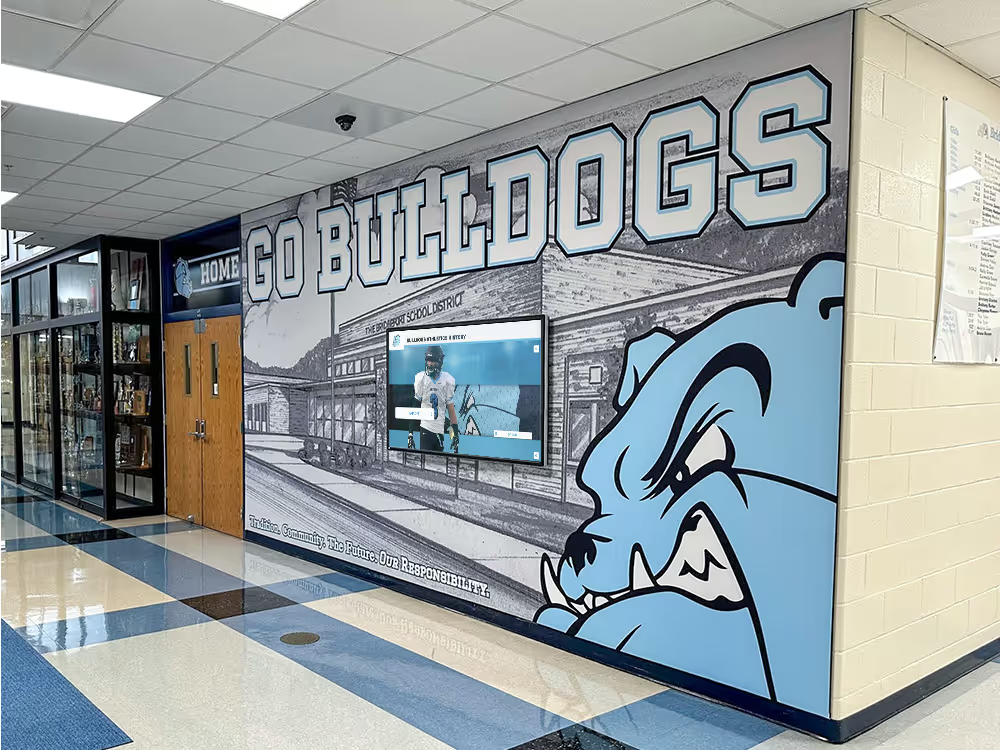
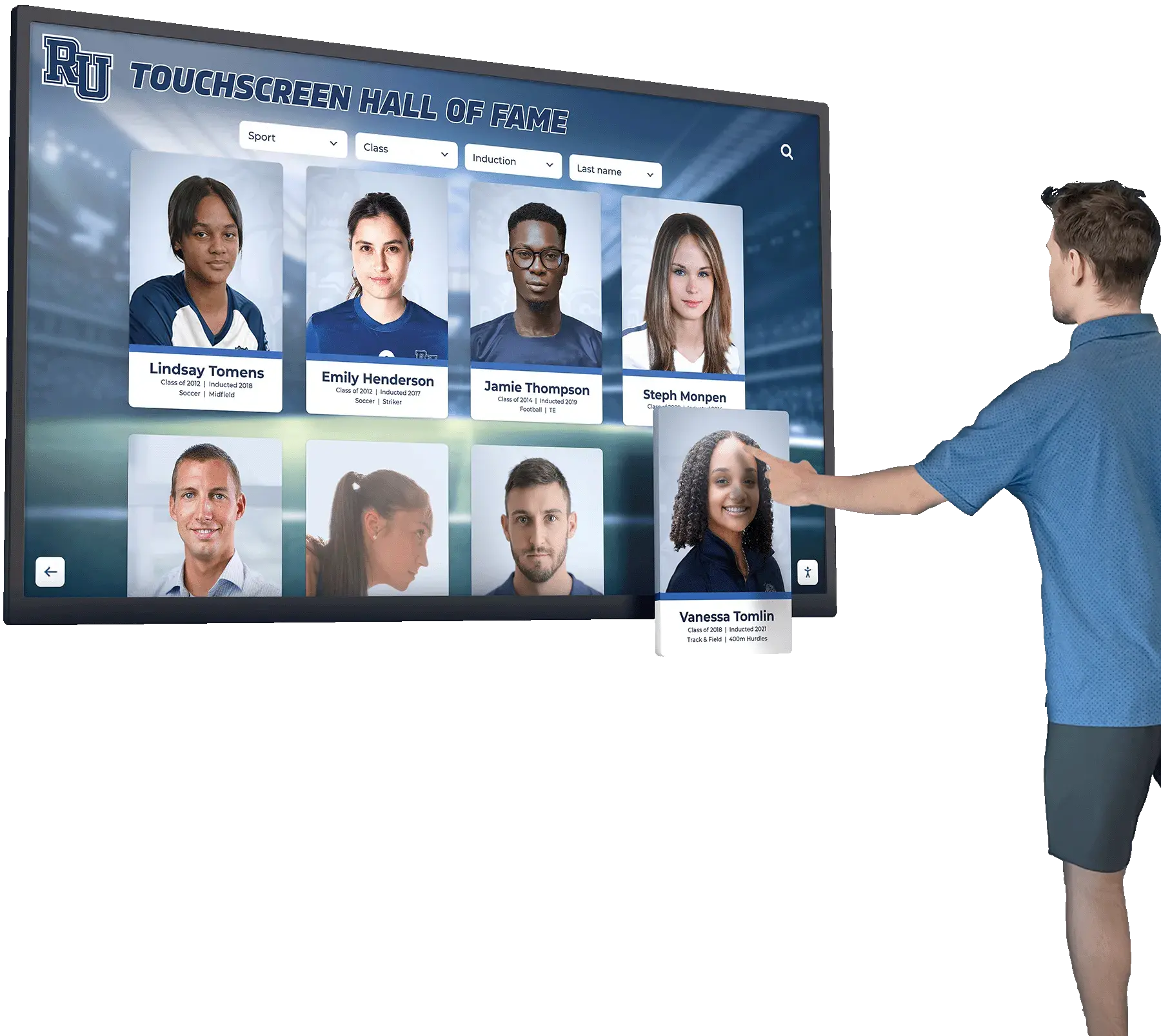
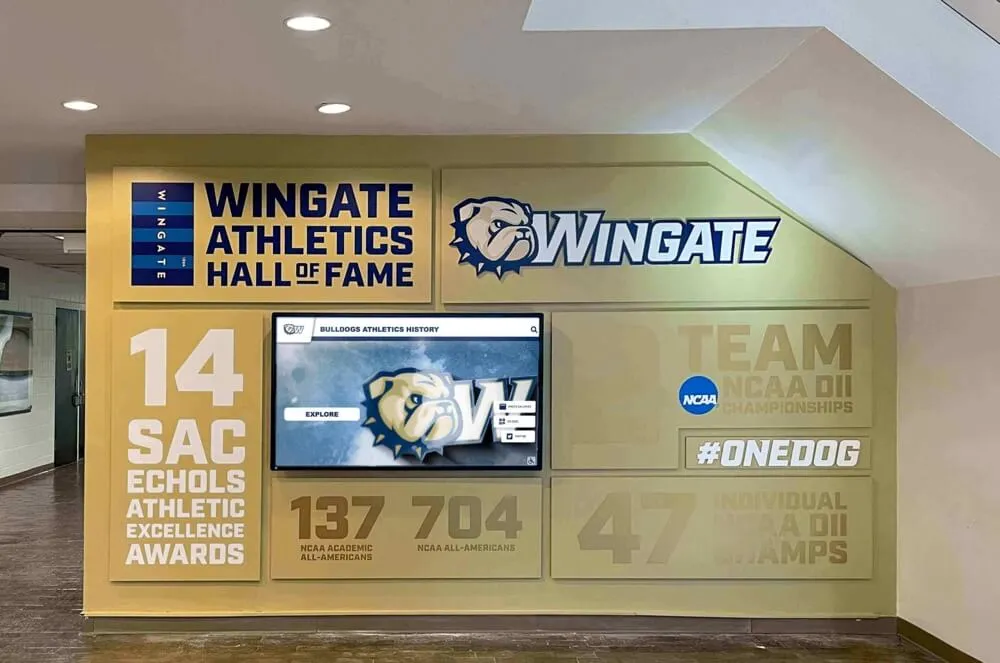
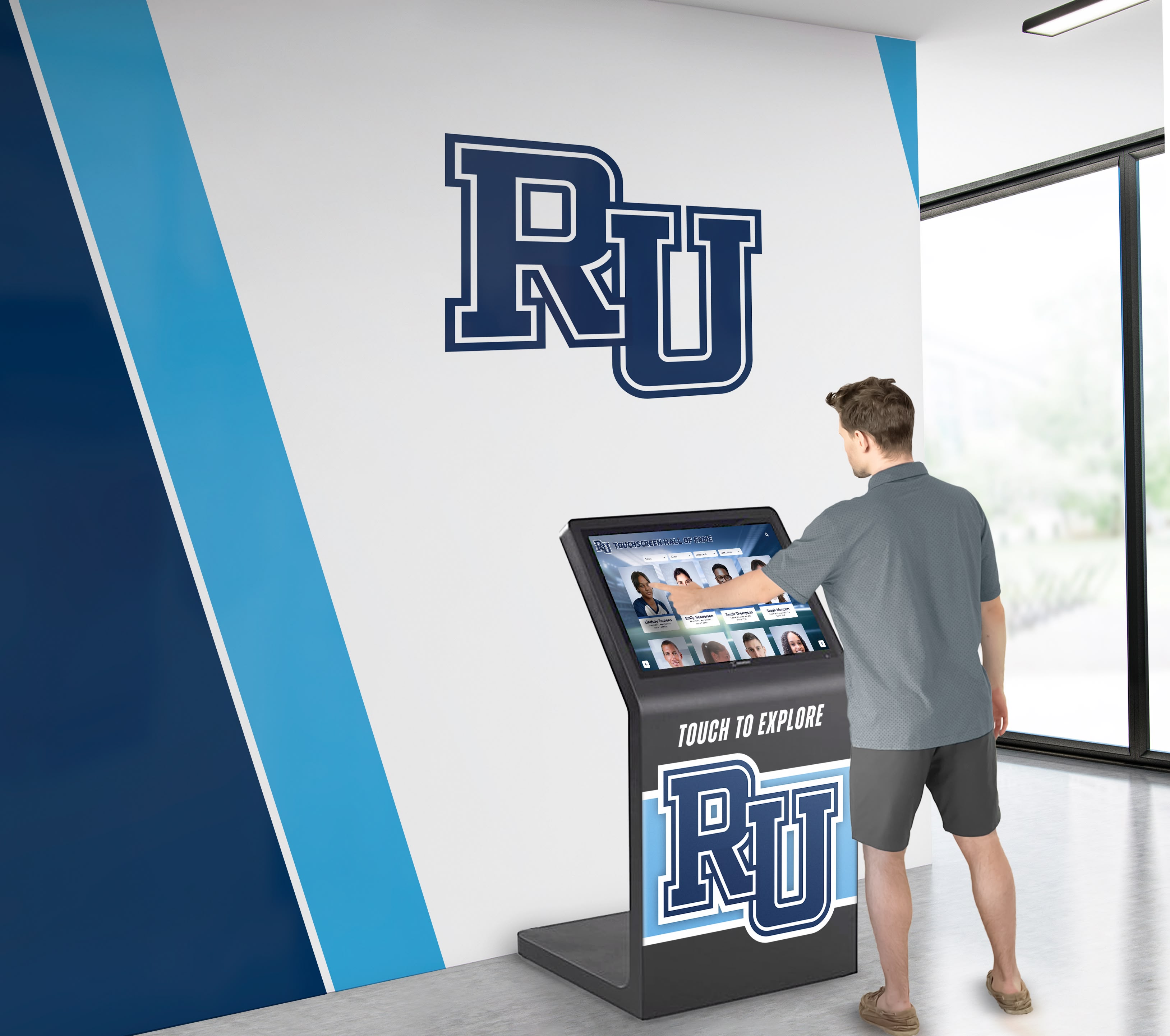
Interactive campus displays enable self-directed exploration during tours and independent visits
Understanding the Admissions Challenge
Before exploring interactive storytelling solutions, recognizing challenges facing admission teams helps clarify why narrative-driven approaches create competitive advantages.
The Commoditization of Campus Tours
Traditional campus tour approaches have become remarkably similar across institutions:
Scripted Generic Presentations
Most campus tours follow predictable patterns—meeting at admissions offices, walking predetermined routes through campus, stopping at academic buildings, residence halls, and recreational facilities, and concluding at student centers or dining halls. Tour guides deliver rehearsed information about class sizes, student-faculty ratios, study abroad programs, and campus amenities that sound virtually identical across institutions.
This standardization makes differentiation difficult. Prospective families struggle distinguishing between campuses after visiting multiple schools offering similar facilities, comparable statistics, and indistinguishable tour narratives. When tours feel interchangeable, students make decisions based on peripheral factors rather than genuine institutional fit.
Limited Authentic Student Voice
While tour guides provide student perspectives, single individual voices cannot represent diverse campus experiences. One enthusiastic biology major cannot credibly speak to engineering programs, Greek life culture, athletic team experiences, or international student perspectives. Prospective students recognize these limitations, viewing tour guides as admissions marketing rather than authentic peer insights.
Families want to hear from multiple students across different majors, backgrounds, and experiences—the comprehensive perspective impossible to provide through traditional one-guide-per-tour approaches.
Shallow Engagement with Institutional Identity
Traditional tours show physical spaces but rarely convey deeper institutional character—values driving campus culture, traditions binding community across generations, achievements defining institutional excellence, or authentic daily experiences distinguishing your campus from others. Without these deeper narratives, tours become real estate showings rather than cultural introductions.
Prospective students leave tours knowing where buildings stand but not understanding what makes your community unique, memorable, or worthy of choosing over equally impressive competitors.
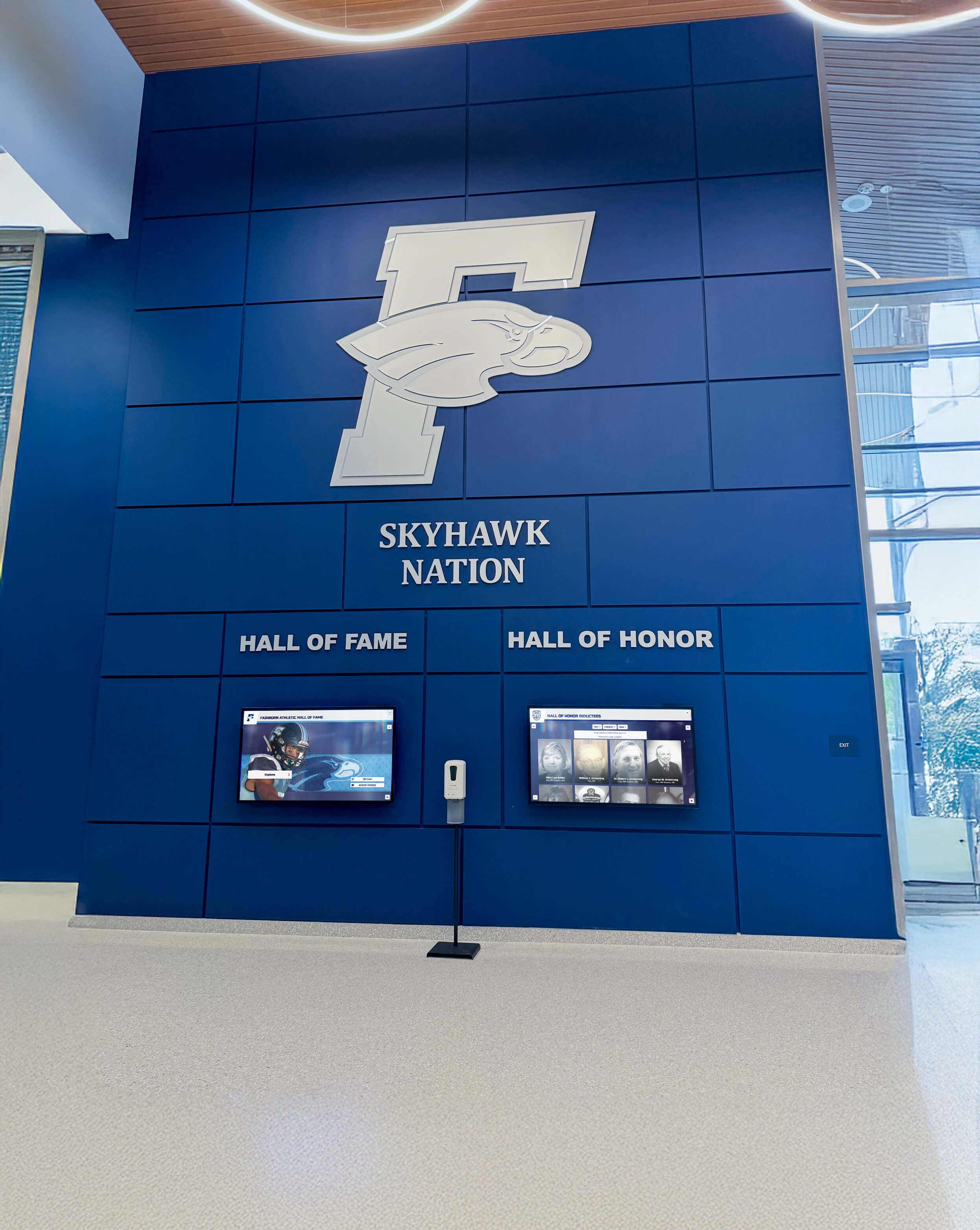
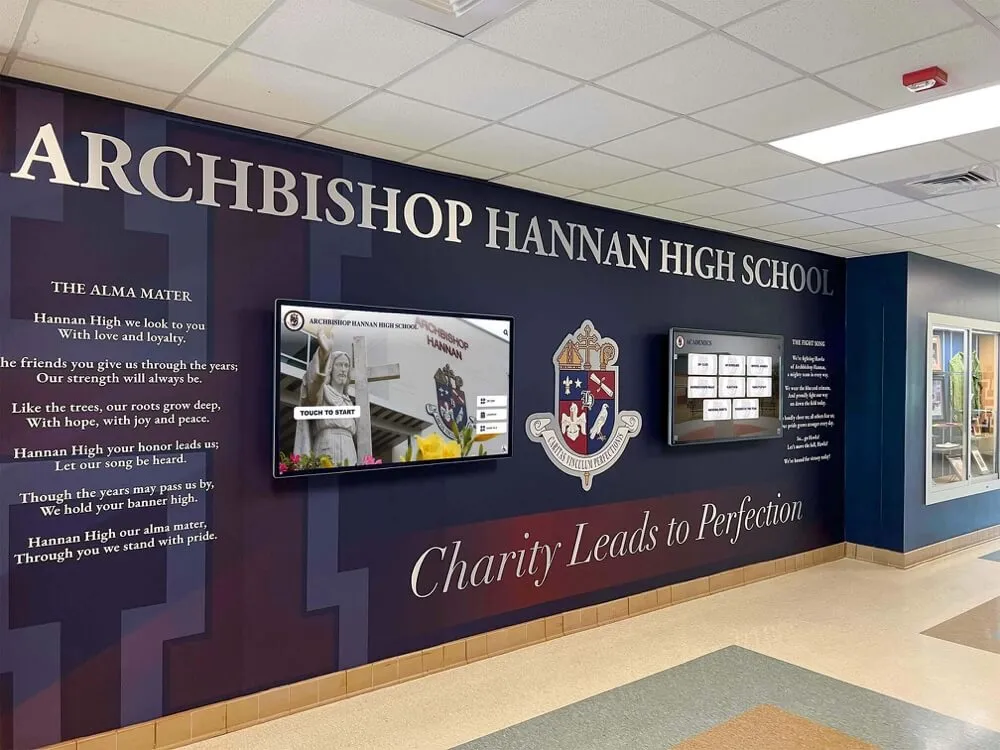
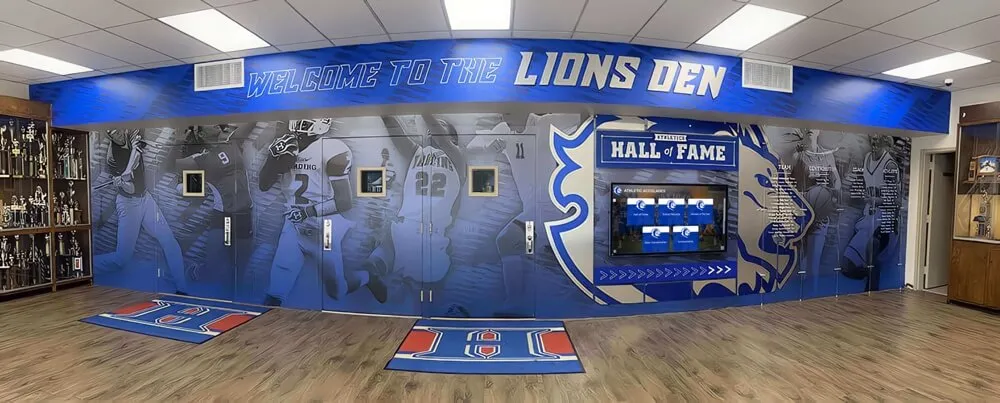
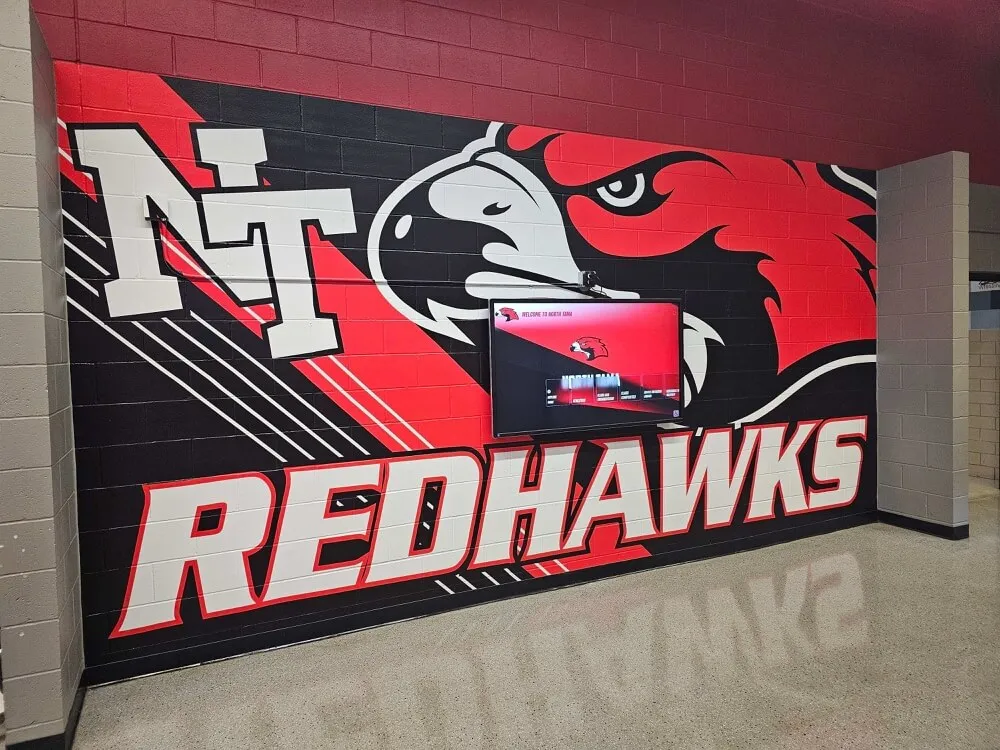
Prominent lobby installations demonstrate institutional pride while providing conversation starting points for tour groups
The Self-Guided Visit Challenge
Many prospective students visit campuses independently outside organized tour schedules:
Evenings, Weekends, and Off-Schedule Visits
Prospective families often visit campuses when convenient for their schedules—Saturday mornings, Sunday afternoons, or weekday evenings when admissions offices are closed. These independent visitors receive no guided experience, wandering campuses with limited context, missing key locations and information, forming impressions based on incomplete exploration, and potentially developing negative perceptions from confusing or unwelcoming experiences.
Without guided storytelling, independent visitors see physical infrastructure but miss narratives that would create meaningful connections and positive impressions.
Geographic Constraints and Virtual Exploration Needs
International students, students from distant states, or families with financial constraints preventing multiple campus visits increasingly rely on virtual exploration before committing to physical visits. Traditional static websites with photo galleries and text descriptions fail creating engaging virtual experiences that substitute for in-person tours.
These students need rich, interactive digital experiences enabling authentic campus exploration from anywhere globally, discovering institutional culture and community character without geographic presence.
Prospective Student Agency and Self-Direction
Modern students prefer self-directed exploration matching personal interests rather than following prescribed tour routes addressing generic concerns. An engineering prospect wants extensive time in laboratories and maker spaces. A performing arts student prioritizes theater facilities and music studios. Student-athletes focus on training facilities and competitive histories.
Traditional tours cannot customize experiences for each individual’s priorities, leaving prospective students to seek information independently—often unsuccessfully when campus storytelling resources remain inaccessible beyond guided tours.
Differentiation in Competitive Admissions Markets
Institutions face intense competition for qualified students:
Similar Statistical Profiles
Many colleges and universities occupy similar competitive tiers with comparable admission statistics, academic offerings, and campus resources. Prospective students evaluating schools with equivalent academic reputations, similar selectivity levels, and comparable costs struggle identifying meaningful differences informing enrollment decisions.
When quantitative factors appear equivalent, qualitative differentiators—campus culture, community character, institutional values, and authentic student experiences—become decision drivers. Schools effectively communicating these intangible qualities through compelling storytelling gain competitive advantages.
Declining Demographics and Enrollment Pressures
Many regions face declining high school graduate populations creating intensified competition for shrinking applicant pools. According to demographic projections, traditional college-age populations will decline in numerous states over coming years, increasing pressure on admissions offices to convert higher percentages of prospects into enrolled students.
This environment demands more effective engagement strategies throughout the admissions funnel—from initial awareness through campus visits to final enrollment decisions. Interactive storytelling creates memorable experiences improving conversion at every stage.
Rising Family Expectations for Institutional Transparency
Modern families approach college selection with heightened expectations for transparency about outcomes, authentic student experiences, campus culture realities, and return on investment. Generic marketing messaging and surface-level tour experiences no longer satisfy sophisticated consumers demanding genuine insights into daily campus life and graduate outcomes.
Interactive storytelling addresses this demand by providing access to authentic student voices, comprehensive achievement records, transparent institutional histories, and evidence of vibrant communities—the substantive information families increasingly require before making enrollment commitments.
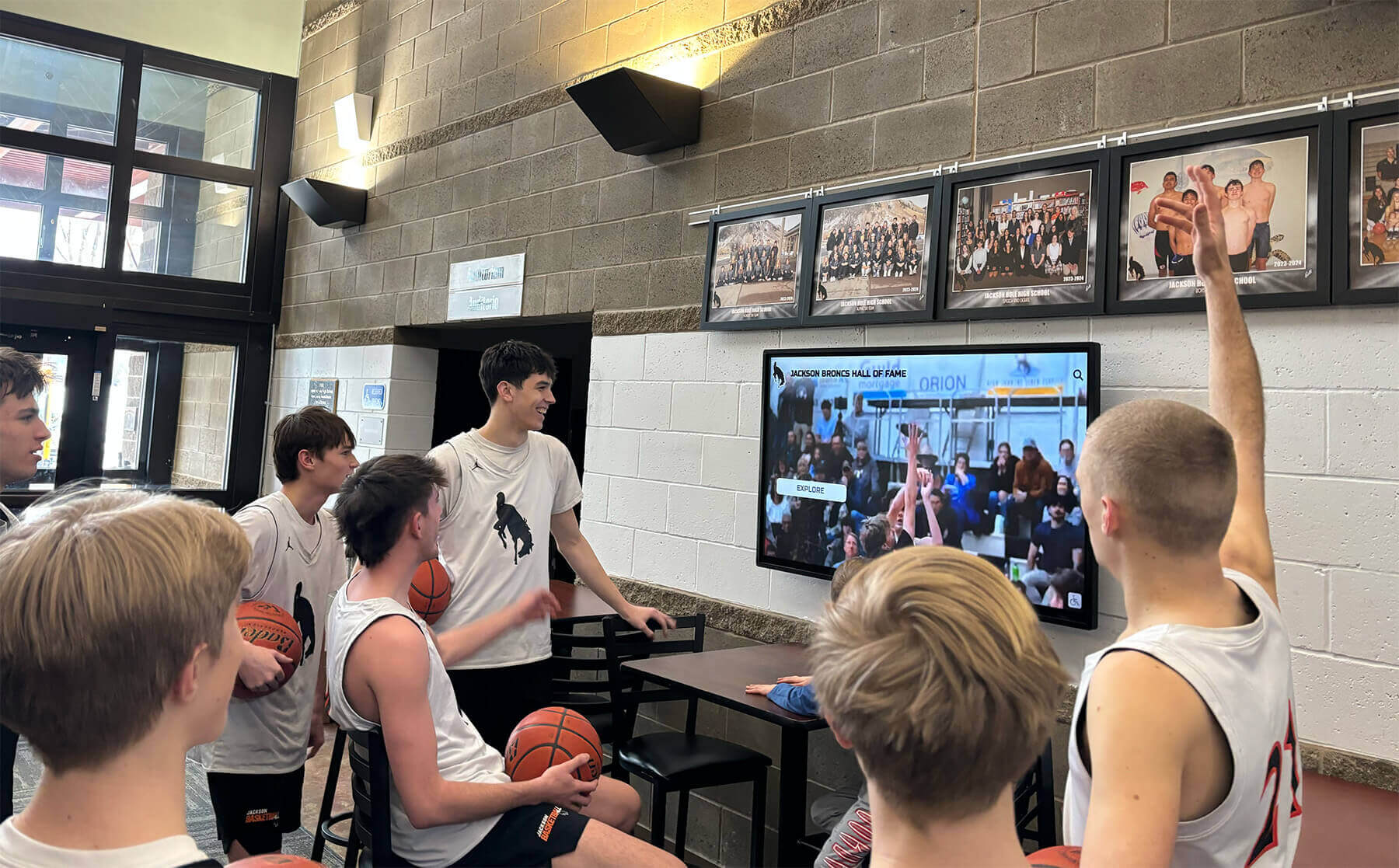
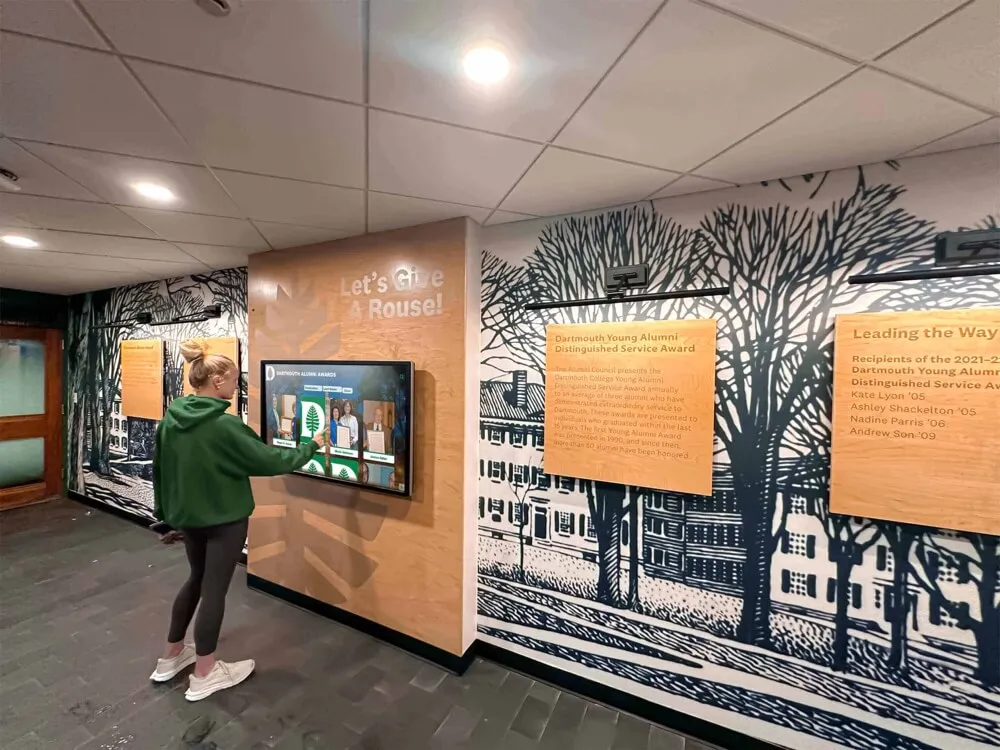
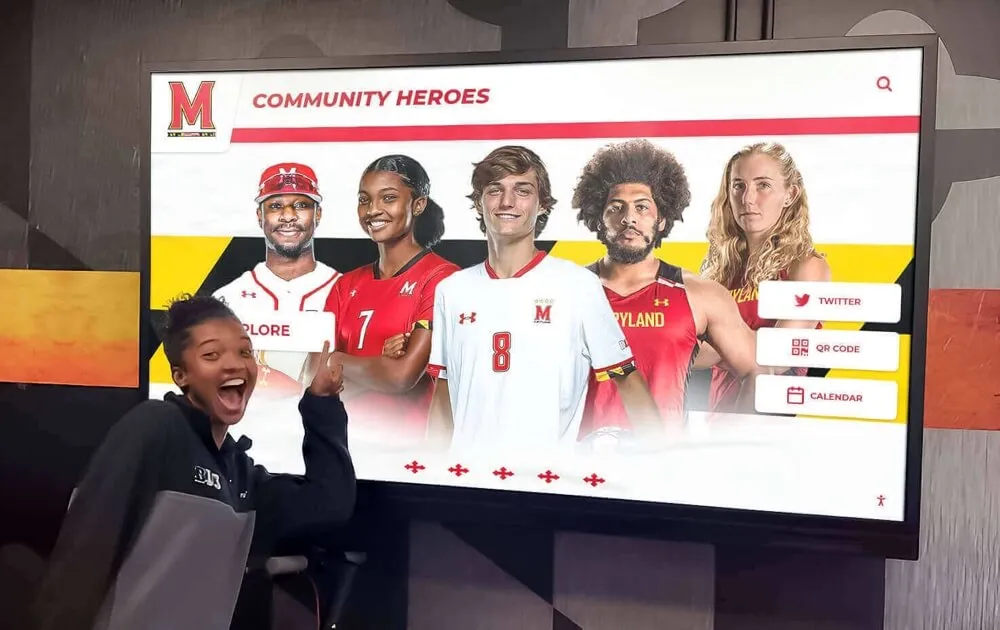
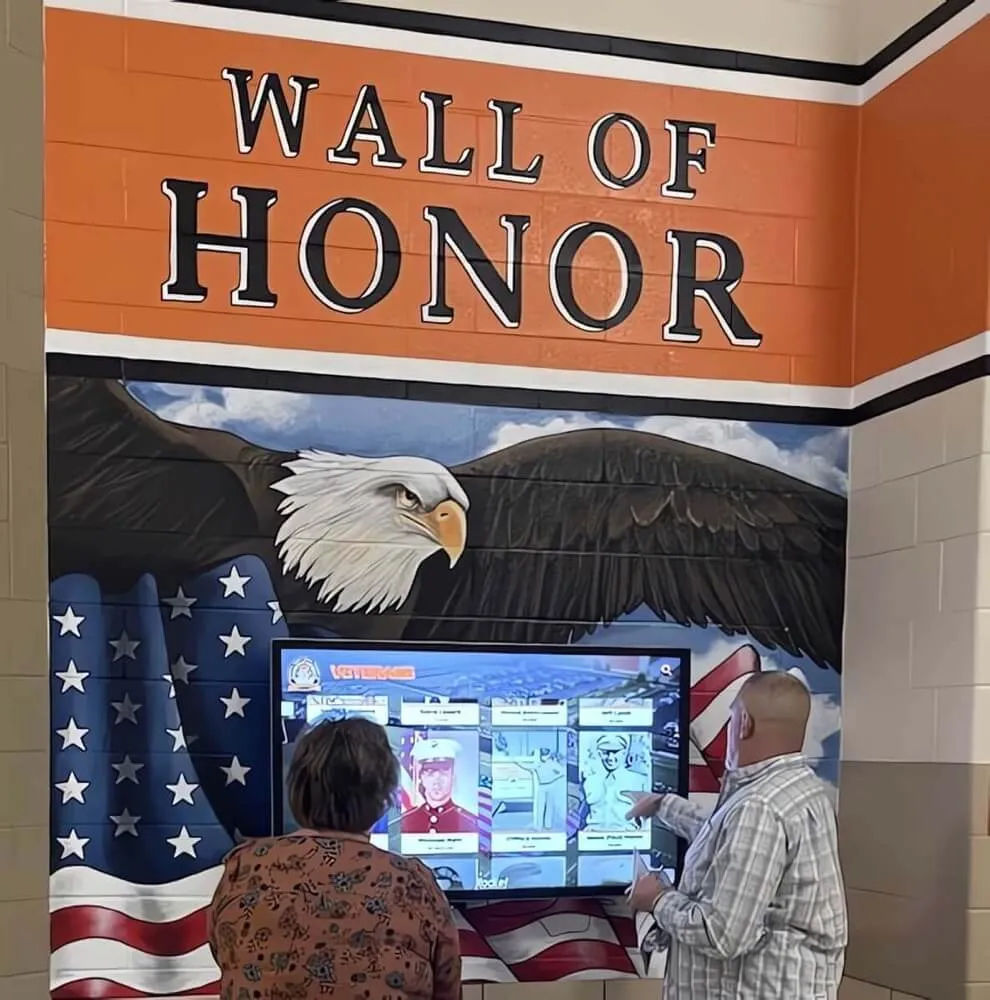
Current students naturally gather around interactive displays, demonstrating authentic campus engagement to prospective families
Interactive Storytelling Through Digital Campus Displays
Modern technology enables rich narrative experiences impossible through traditional tour approaches alone.
Touchscreen Campus Recognition Systems
Interactive displays transform static recognition into engaging storytelling platforms:
Comprehensive Achievement Archives
Digital recognition systems like those provided by Rocket Alumni Solutions showcase institutional excellence across multiple dimensions including athletic hall of fame recognition celebrating championship teams and individual achievers, academic honor rolls highlighting scholarly excellence, distinguished alumni profiles demonstrating graduate success trajectories, faculty achievement recognition honoring teaching and research excellence, and historical milestone documentation preserving institutional evolution.
These comprehensive archives demonstrate sustained excellence over time, building credibility with prospective families while showcasing the traditions they might join by enrolling. When prospects discover athletes who went on to professional careers, alumni who launched successful companies, or faculty who published groundbreaking research, they envision similar possibilities for their own futures.
Multi-Layered Search and Exploration
Unlike static plaques presenting limited information, interactive displays enable deep exploration through intuitive search by individual names, year-based browsing exploring specific eras, program-based filtering discovering department-specific achievements, and keyword searching finding relevant content matching personal interests.
This functionality enables prospective students to discover personal connections—finding hometown alumni, locating graduates from their high schools, discovering shared interests with current students, or identifying mentors in intended majors. These connection discoveries create emotional resonance transforming abstract institutional information into personally meaningful narratives.
Multimedia Storytelling Integration
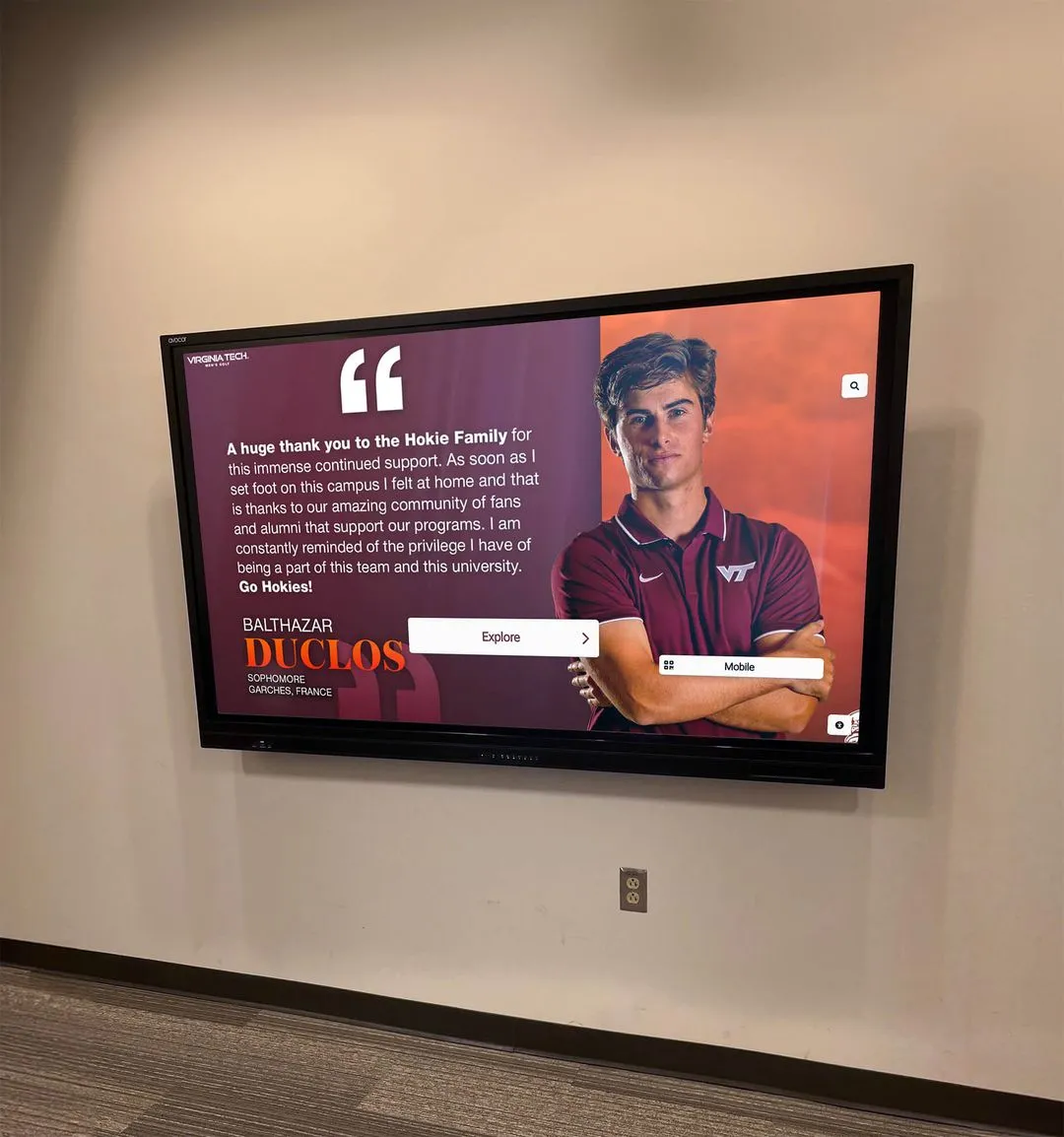
Digital platforms incorporate diverse media enriching narratives including high-resolution photographs showing authentic moments, video profiles featuring student and alumni voices, audio recordings preserving historical perspectives, document scans displaying primary sources, and interactive timelines contextualizing institutional evolution.
This multimedia richness creates engaging experiences that text-only materials cannot match, bringing campus stories to life through sensory-rich presentations resonating with digital-native prospective students.
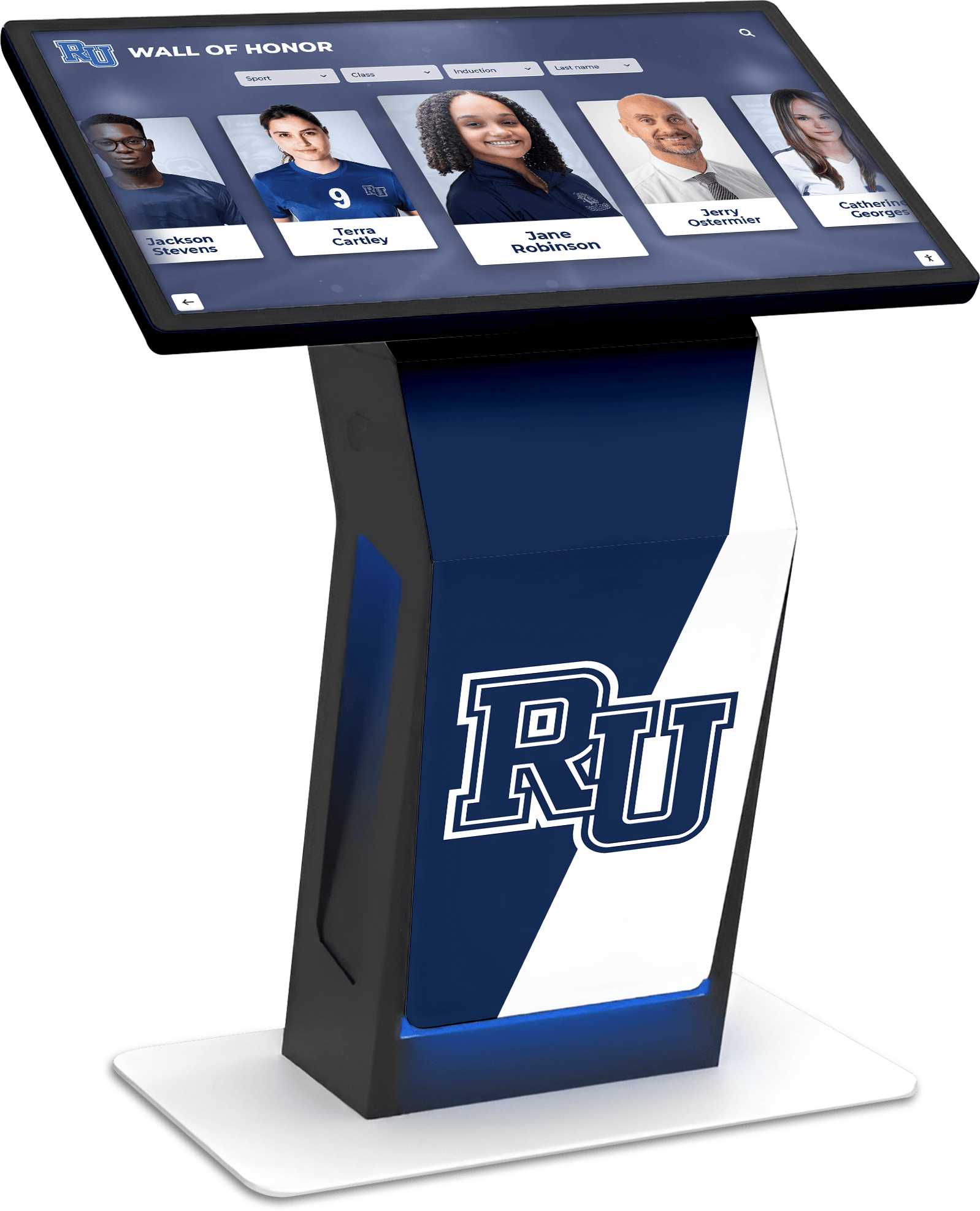
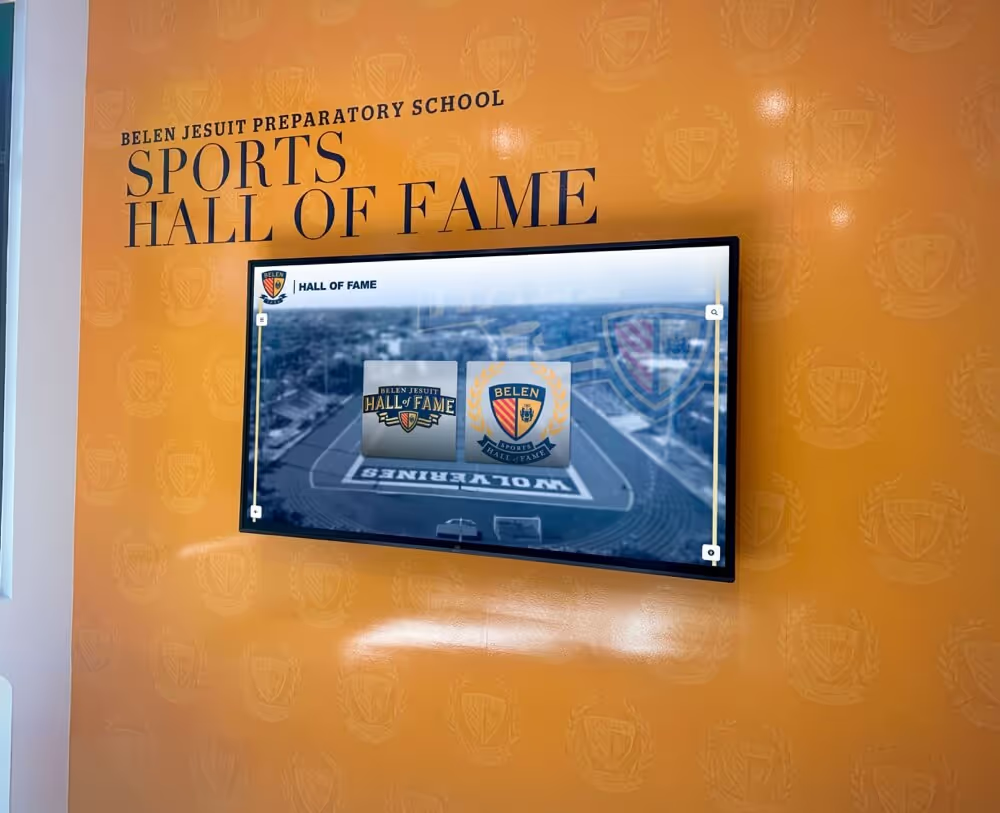
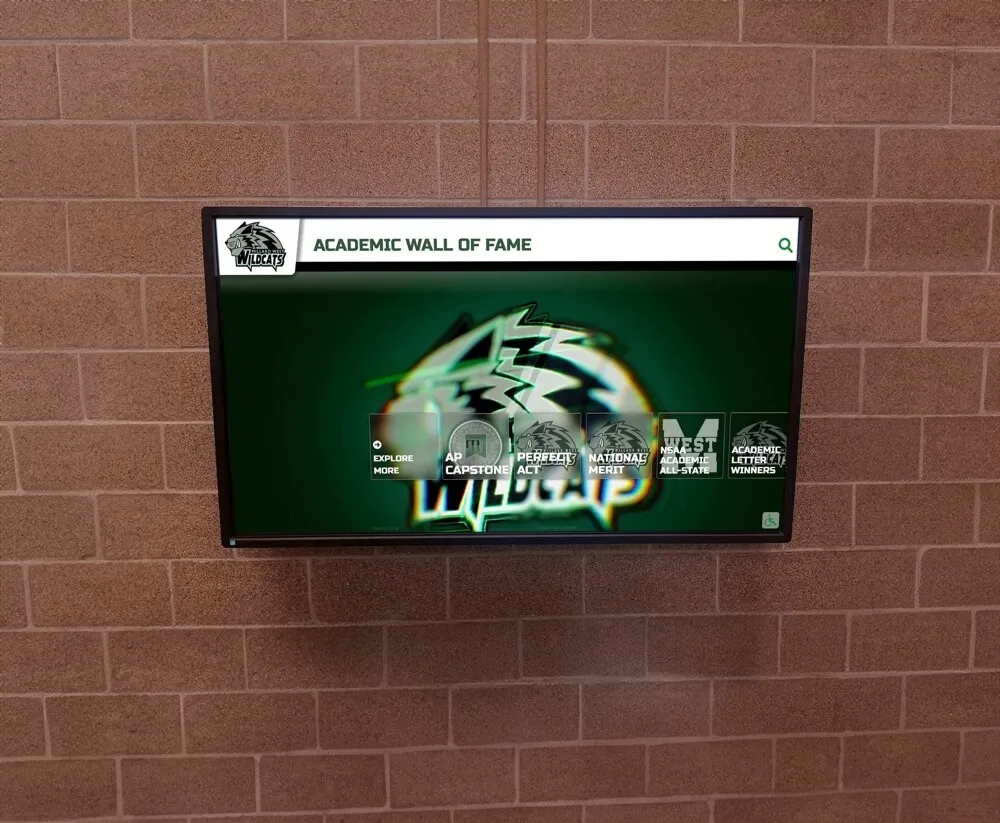
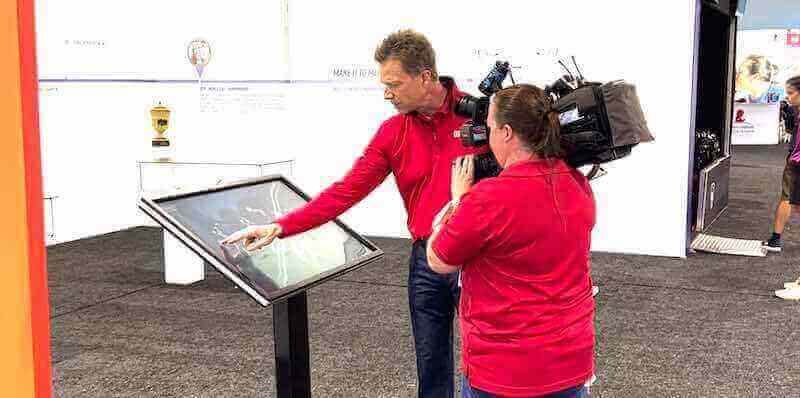
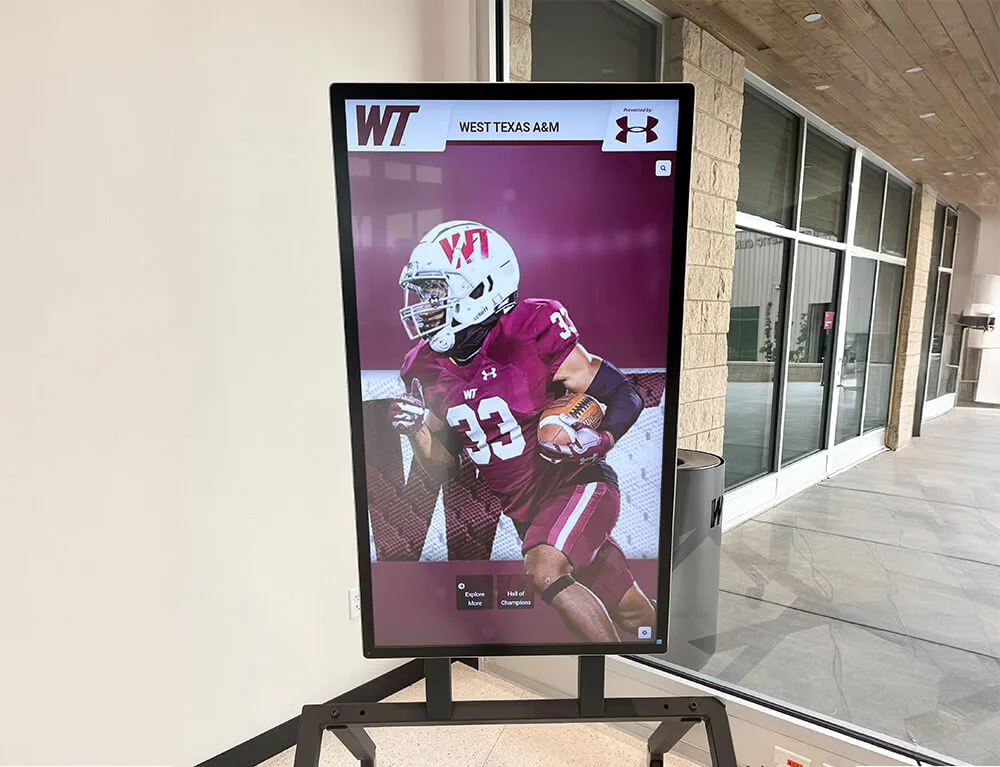
Professional touchscreen installations enable intuitive exploration of institutional achievements and heritage
Strategic Display Placement for Maximum Tour Impact
Physical location determines whether displays enhance admissions experiences:
Primary Tour Route Installations
Position interactive displays along standard tour paths ensuring every visiting prospective student encounters storytelling opportunities including main entrance lobbies where tours begin or end, student centers where tour groups typically pause, academic building common areas visited during facilities tours, and athletic facilities showcasing competitive excellence.
Strategic placement ensures displays become natural tour stopping points where guides incorporate interactive elements into narratives, enabling demonstrations of search functionality, encouraging prospect interaction and exploration, and creating memorable moments distinguishing your tours from competitors.
Self-Guided Discovery Points
Install displays in locations prospective students visit independently including residence hall lobbies where prospects explore housing, library entrance areas attracting academically focused visitors, recreational facility entrances appealing to fitness-oriented prospects, and departmental spaces within specific academic buildings.
These independent discovery points serve self-directed visitors exploring campus outside organized tours, providing storytelling access during evening and weekend visits when admissions offices are closed, enabling deep dives into personal interest areas beyond general tour coverage, and creating opportunities for family conversations about institutional fit based on discovered information.
Admissions Office Waiting Areas
Transform waiting time before tours or admission interviews into engagement opportunities through displays in reception areas providing pre-tour exploration enabling visitors to preview campus stories they’ll encounter, reducing pre-tour anxiety through familiar faces and authentic student perspectives, and creating conversation starters with admission counselors about discoveries made during exploration.
Engaged prospects arrive at tours or interviews already connected to institutional narratives, improving receptivity to additional storytelling throughout their campus experiences.
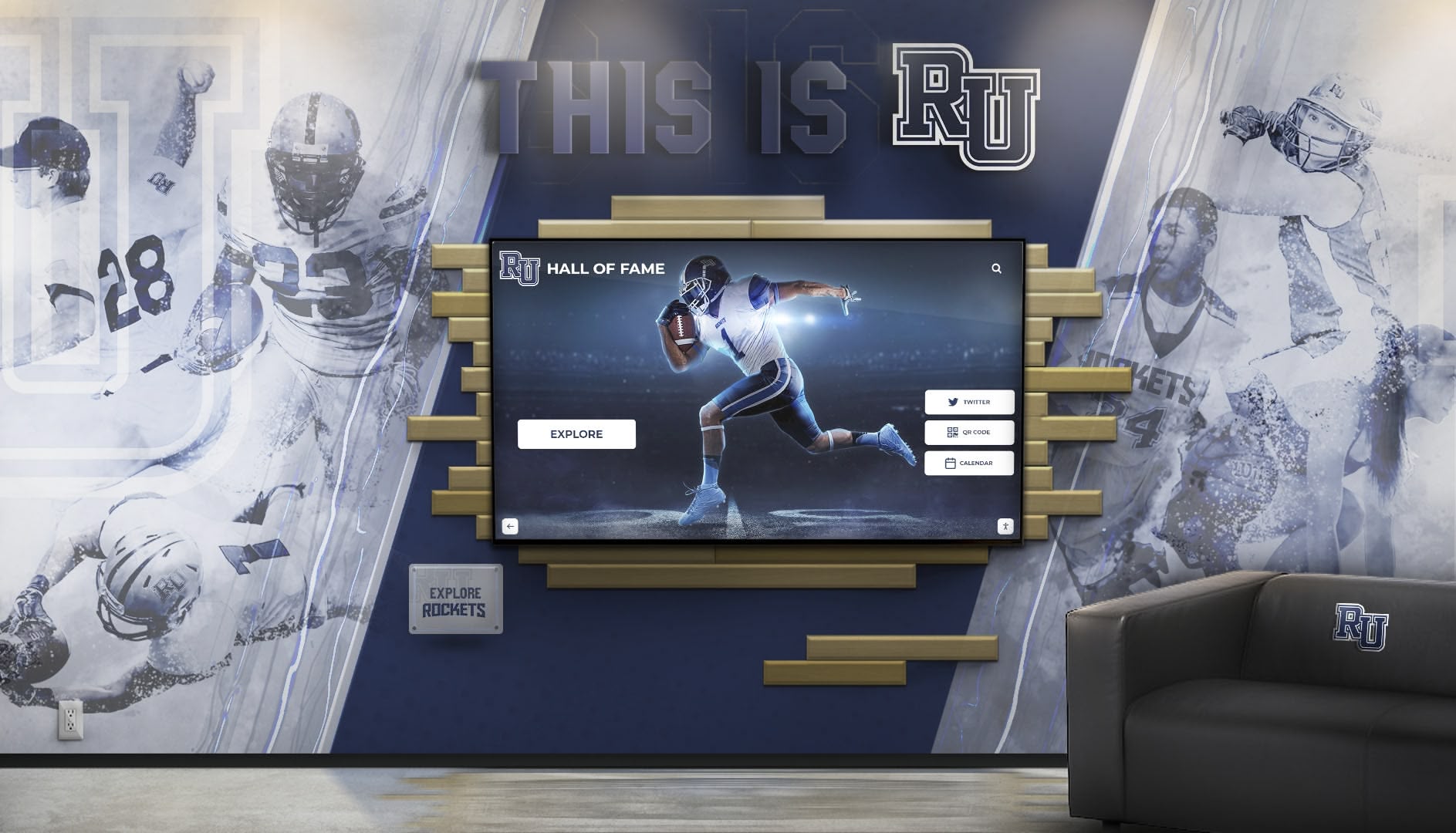
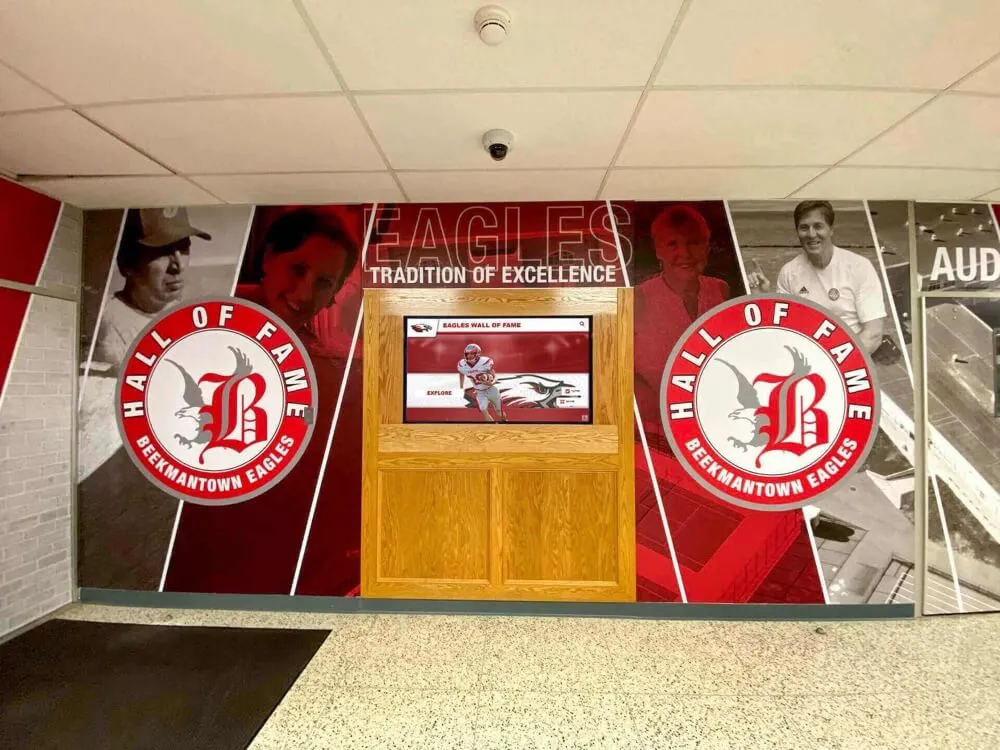
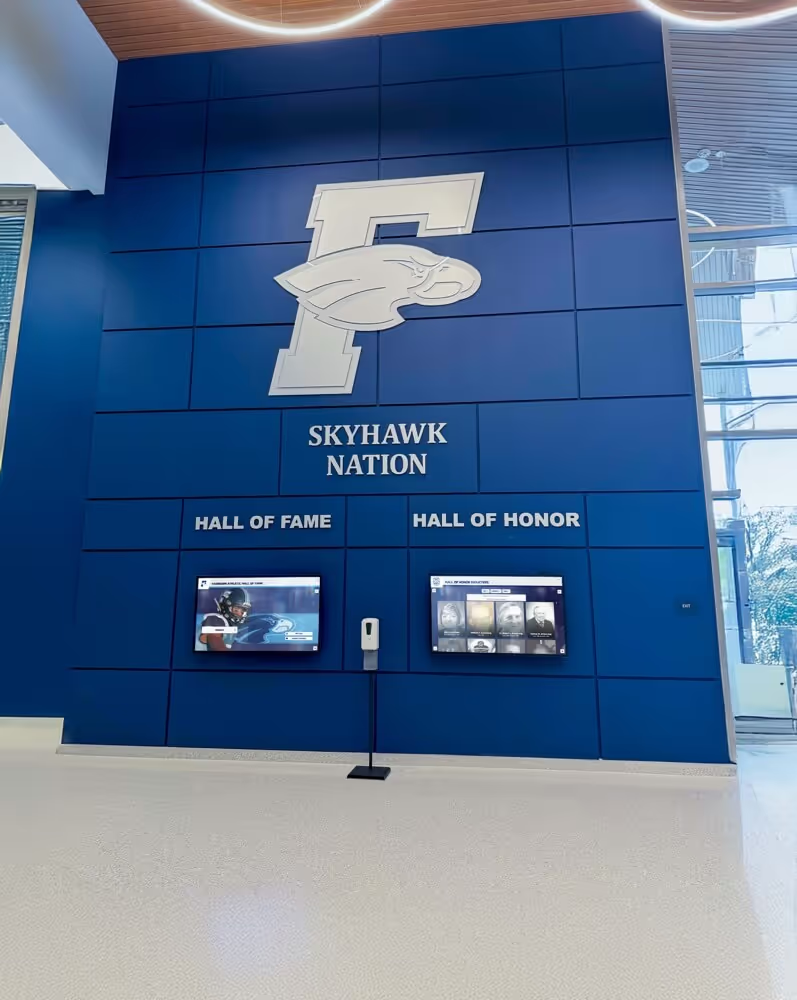
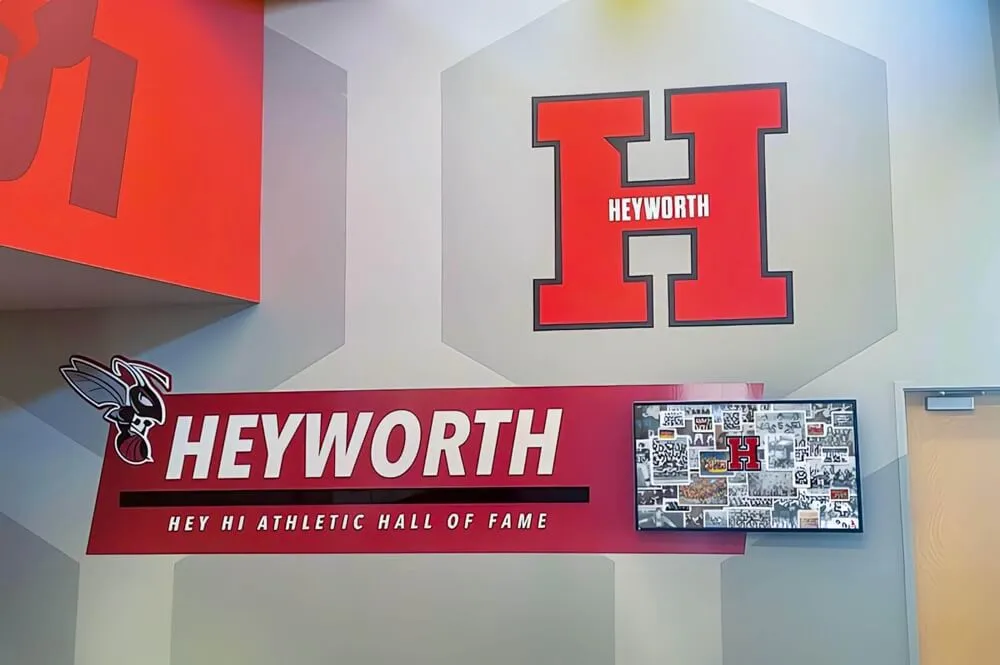
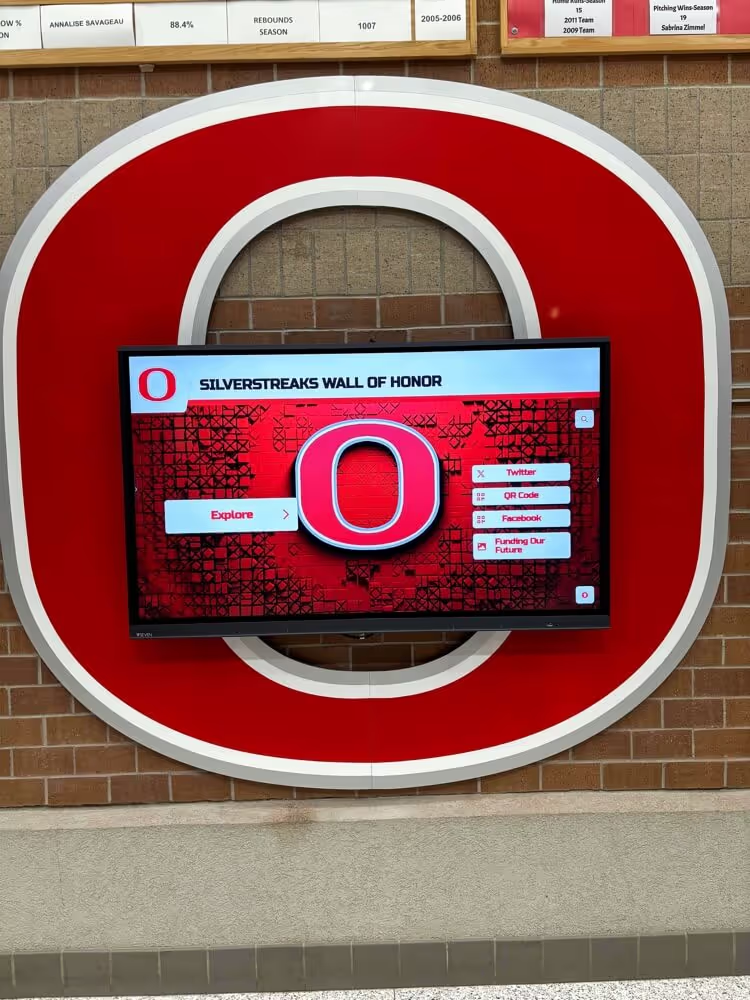
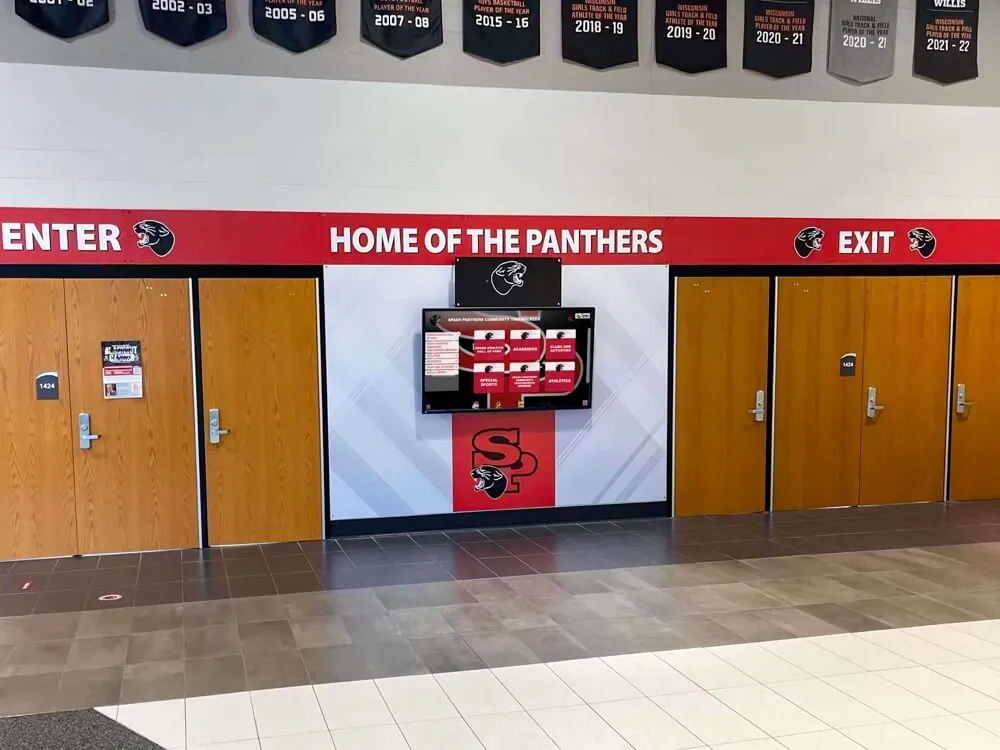
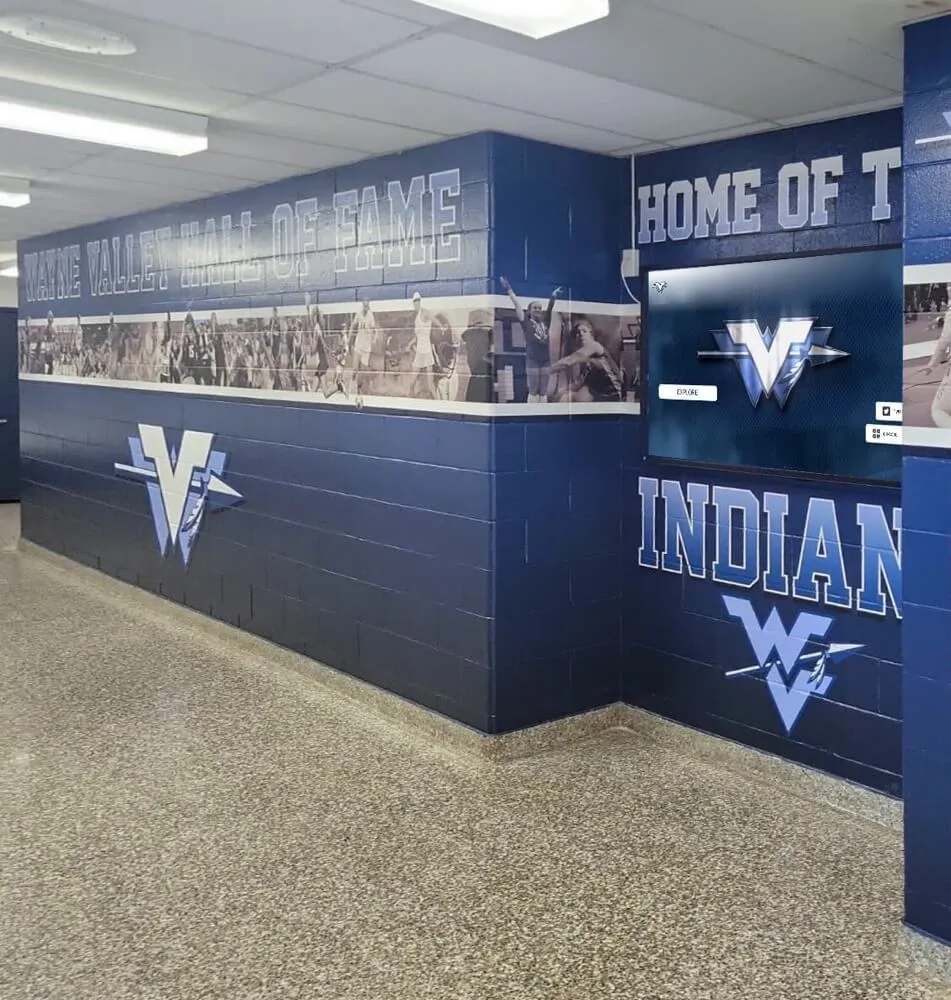
Coordinated displays with institutional branding create impressive environments celebrating excellence and tradition
Mobile and Web-Based Interactive Storytelling
Digital storytelling extends beyond physical campus through mobile platforms and web experiences.
Mobile-Responsive Campus Story Platforms
Modern prospective students expect mobile-accessible content:
Pre-Visit Virtual Exploration
Enable prospective students to explore campus stories before physical visits through mobile-accessible web platforms providing searchable achievement archives browsable from anywhere, video profiles offering authentic student perspectives, virtual campus tours with embedded storytelling, and interactive timelines documenting institutional evolution.
Pre-visit exploration helps prospects arrive at campus already familiar with institutional identity, having identified specific interests to explore during tours, with preliminary connections to students, programs, or traditions, and possessing contextual knowledge enhancing on-campus experiences.
This preparation transforms campus visits from information-gathering exercises into confirmation experiences where prospects validate fit perceptions developed through prior digital engagement.
On-Campus Enhancement Through Mobile Integration
QR codes strategically placed throughout campus bridge physical and digital experiences by enabling instant access to extended content about specific buildings, providing video narratives from students in particular programs, offering historical context about campus locations, and allowing self-guided tour paths following personal interests.
Prospective students scanning codes during independent exploration access rich storytelling without requiring tour guide presence, enabling customization of campus experiences, encouraging exploration beyond standard tour routes, and providing take-home content for later review and family discussion.
Post-Visit Continued Engagement
Mobile platforms maintain connections after campus visits end through saved content accessible for reviewing discovery moments, shareable stories prospects can send to family and friends, continued exploration of topics introduced during tours, and updated content keeping prospects engaged throughout decision processes.
This ongoing engagement keeps your institution top-of-mind as prospects compare options, reinforces positive impressions developed during campus visits, and provides fresh content for repeat virtual visits as decision deadlines approach.
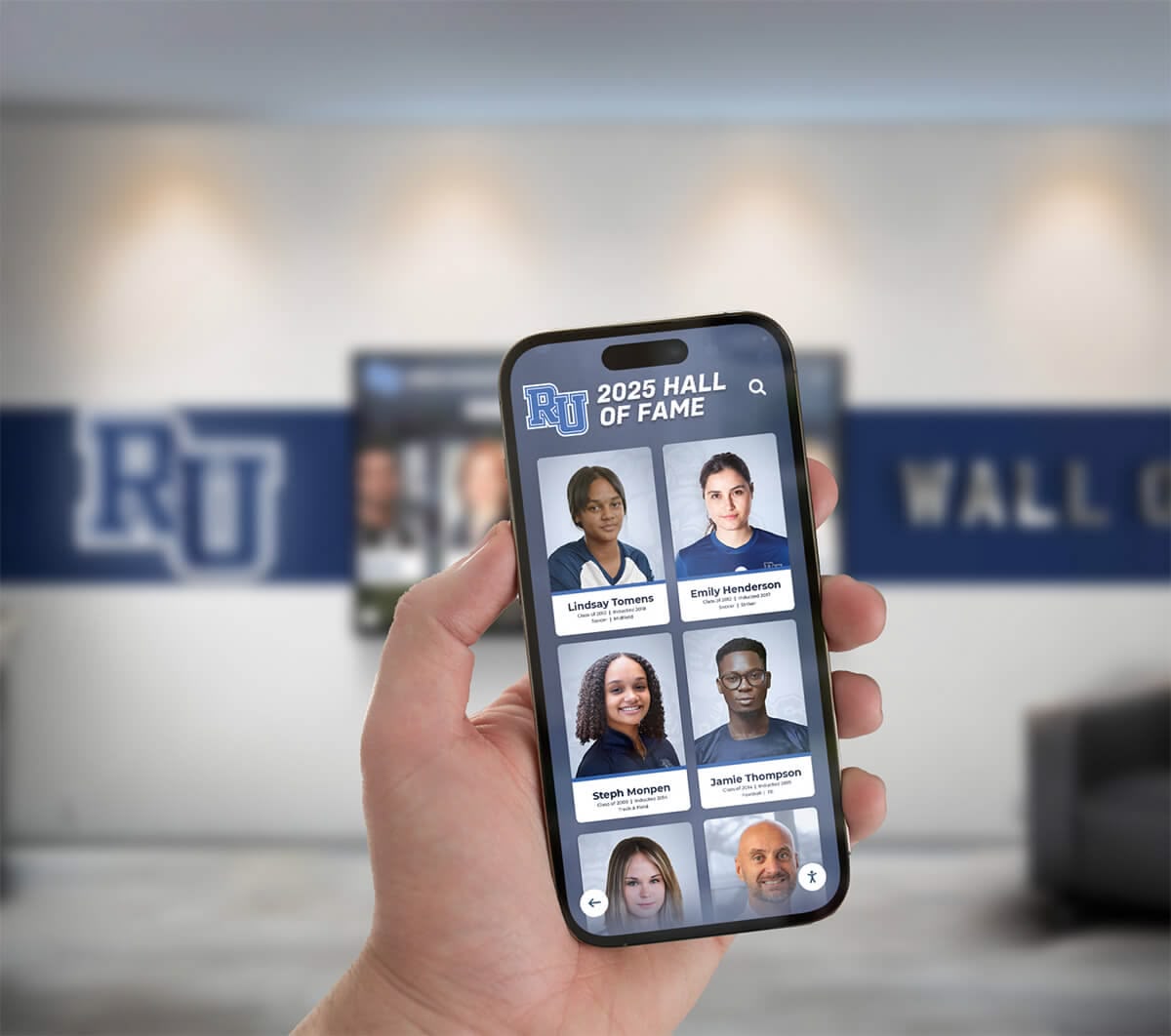
Mobile-accessible platforms enable anytime, anywhere campus storytelling access
Virtual Tour Integration and Remote Engagement
Geographic barriers dissolve through comprehensive digital experiences:
360-Degree Campus Virtual Tours
High-quality virtual tours with embedded storytelling hotspots provide remote prospects comprehensive campus exposure including navigable pathways through campus spaces mimicking physical tours, embedded video profiles from students in various majors, clickable achievement highlights integrated into facility views, and historical timeline overlays showing campus evolution.
These immersive experiences enable international students, students from distant regions, or families with travel constraints to develop genuine understanding of campus character without physical presence, making informed decisions about whether to invest in campus visits, and arriving prepared if they do visit in person.
Live Virtual Tour Enhancement
Many institutions now offer live virtual tours via video conferencing platforms where remote prospects join real-time campus walks. Interactive digital content enhances these experiences through screen-shared displays showing achievement archives guides discuss, embedded links prospects can explore independently after tours conclude, real-time polling enabling prospect questions and interests to shape tour content, and follow-up resources extending engagement beyond scheduled tour times.
Enhanced virtual tours create interactive experiences approaching in-person tour engagement rather than passive video watching, improving remote prospect conversion rates and enrollment outcomes.
Prospective Student Self-Serve Content Libraries
Comprehensive web-based storytelling libraries enable prospects to explore at their own pace including sortable achievement databases organized by program, sport, or era, video interview collections featuring diverse student perspectives, downloadable program-specific resources matching individual interests, and alumni spotlight profiles demonstrating career outcome possibilities.
Self-serve libraries respect prospect autonomy and learning preferences, accommodate different decision-making timelines and research depths, reduce pressure some prospects feel during live tours, and provide content supporting parent involvement and family decision discussions.
Crafting Compelling Campus Narratives
Effective storytelling requires strategic narrative design beyond simply displaying information.
Authentic Student Voice Integration
Prospective students trust peer perspectives more than institutional marketing:
Diverse Student Profile Collections
Comprehensive storytelling platforms showcase students across multiple dimensions including varied academic majors and programs, diverse backgrounds, identities, and life experiences, multiple involvement patterns from athletes to artists to activists, different class years from freshmen to seniors to recent alumni, and honest portrayals of challenges alongside successes.
This diversity ensures every prospect finds relatable voices helping them envision belonging regardless of background, interests, or goals. When prospects discover students who share similar experiences, identities, or aspirations, they develop confidence about fit and welcome within your community.
Video Interview Storytelling
Short video profiles prove particularly powerful for conveying authentic experience through 60-90 second clips where students answer standard questions, unscripted responses preserving genuine voices rather than polished marketing messaging, varied settings showing real campus locations and activities, and multiple students addressing similar topics providing comprehensive perspectives.
Questions might include “Why did you choose this institution?”, “What surprised you most about campus life?”, “How did you find your community here?”, “What’s your favorite campus tradition?”, and “What advice would you give prospective students?” These authentic responses resonate more powerfully than institutional marketing materials.
Written Reflections and Achievement Context
Beyond basic recognition, interactive platforms can include student-authored content providing achievement context and personal insights including how students balanced academics with activities, challenges overcome in pursuit of excellence, mentors and supporters who enabled success, advice for prospective students with similar aspirations, and reflections on how achievements shaped personal growth.
These first-person narratives transform achievements from data points into inspiring stories demonstrating that success comes from dedication and support rather than innate talent alone—messages particularly important for prospects from underrepresented backgrounds who may doubt their ability to succeed.
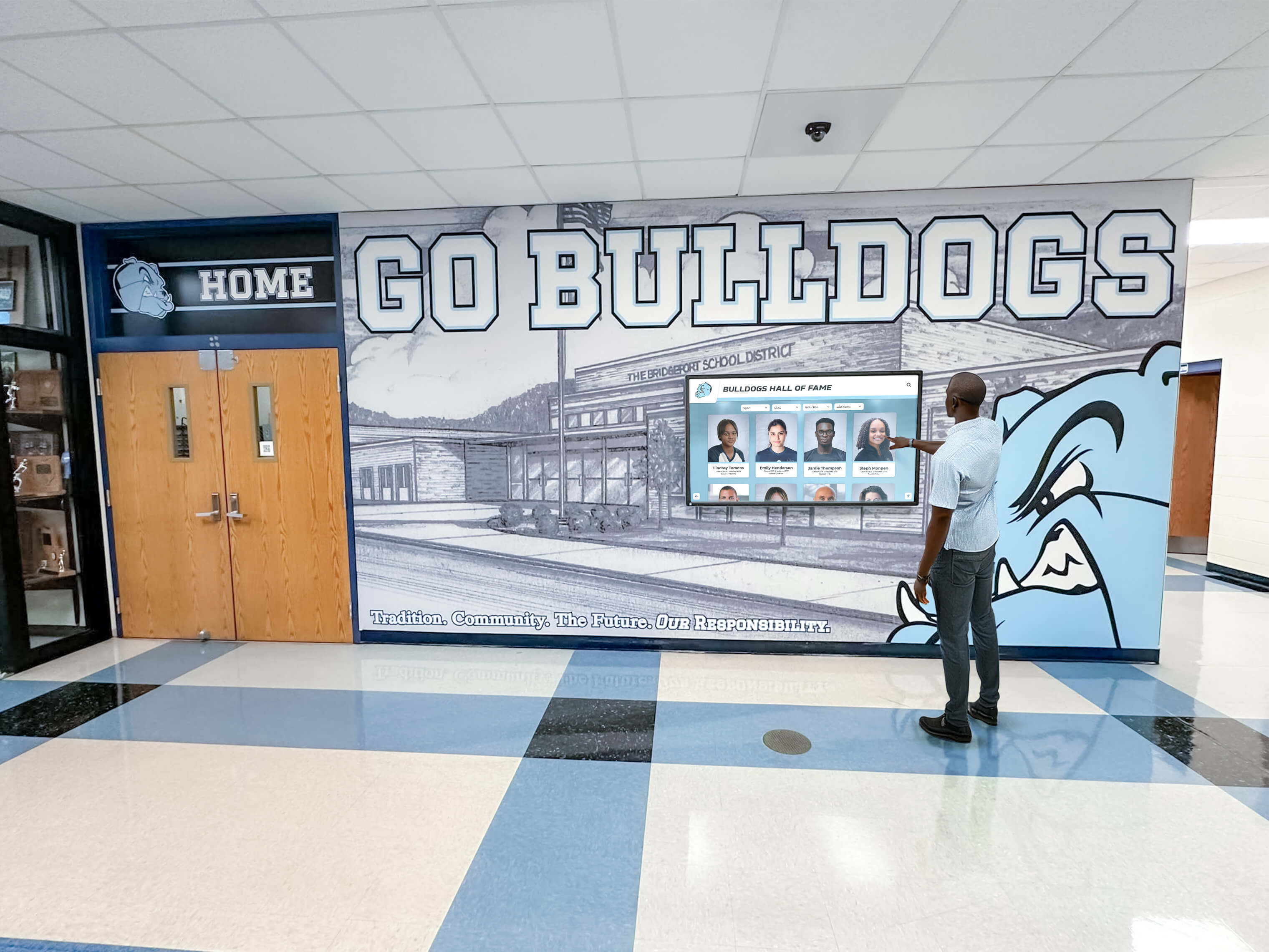
Current student interaction with displays demonstrates authentic campus culture to prospective visitors
Historical Storytelling and Institutional Identity
Institutional heritage provides powerful differentiation:
Founding Story and Mission Evolution
Every institution possesses unique founding narratives worth preserving and sharing including founding circumstances and original mission, how institutional identity evolved across decades, significant leadership transitions and their impacts, pivotal decisions shaping current character, and historical milestones marking institutional growth.
These historical narratives help prospective families understand institutional values, differentiate your community from similar competitors, and appreciate traditions they would inherit by joining your community. Historical depth demonstrates stability and proven commitment that appeals to families making significant financial and personal investments.
Tradition and Ritual Documentation
Campus traditions create belonging and community identity worth showcasing including annual events bringing entire campus together, class-specific traditions marking milestones, competitive traditions defining athletic culture, academic ceremonies celebrating scholarly achievement, and quirky customs unique to your institution.
Prospective students drawn to specific traditions often cite them as enrollment decision factors. Interactive platforms enable comprehensive tradition documentation through video footage of events, historical accounts explaining tradition origins, student reflections about tradition meaning, and participation guides helping prospects understand how they might engage.
Architectural and Campus Evolution
Physical campus development tells institutional growth stories including historic building preservation demonstrating heritage respect, new facility investment showing continued development, architectural styles reflecting era characteristics, landscape and outdoor space evolution, and sustainability initiatives revealing institutional values.
Interactive timelines with historical and contemporary photographs enable prospects to appreciate how campuses evolved, understand current facility contexts within longer development arcs, and see evidence of continued institutional investment supporting student experience quality.
Achievement Recognition as Storytelling
Recognition serves narrative purposes beyond simple acknowledgment:
Excellence Standards and Cultural Values
What institutions choose to recognize reveals cultural priorities including academic achievement recognition demonstrating scholarly values, athletic excellence celebration showing competitive commitment, service and leadership awards highlighting civic engagement priorities, diversity and inclusion recognition reflecting community values, and creative achievement honors validating artistic expression.
Prospective students evaluating cultural fit pay attention to these signals. Students seeking academically rigorous environments appreciate prominent academic recognition. Community-service-oriented prospects respond to visible service achievement celebration. Recognition patterns communicate authentic institutional identity more credibly than mission statements alone.
Trajectory and Possibility Demonstration
Achievement recognition shows prospects what becomes possible through institutional participation including current student success demonstrating accessible achievement, recent alumni accomplishment revealing immediate post-graduation outcomes, established alumni success showing long-term trajectory possibilities, and progression narratives illustrating growth from student to alumnus.
When prospects see alumni who started as students like themselves and achieved remarkable subsequent success, they envision similar possibilities for their own futures—powerful motivation for enrollment decisions.
Program-Specific Excellence Evidence
Comprehensive achievement displays provide program-specific success evidence helping prospects evaluate academic strength in intended majors including departmental academic award recipients, faculty research and publication recognition, alumni career outcomes by program, competitive team success in academic disciplines, and notable program milestones and accreditations.
This granular evidence helps prospects assess program quality beyond institutional reputation alone, make informed decisions about academic fit, and develop confidence in their chosen fields of study.
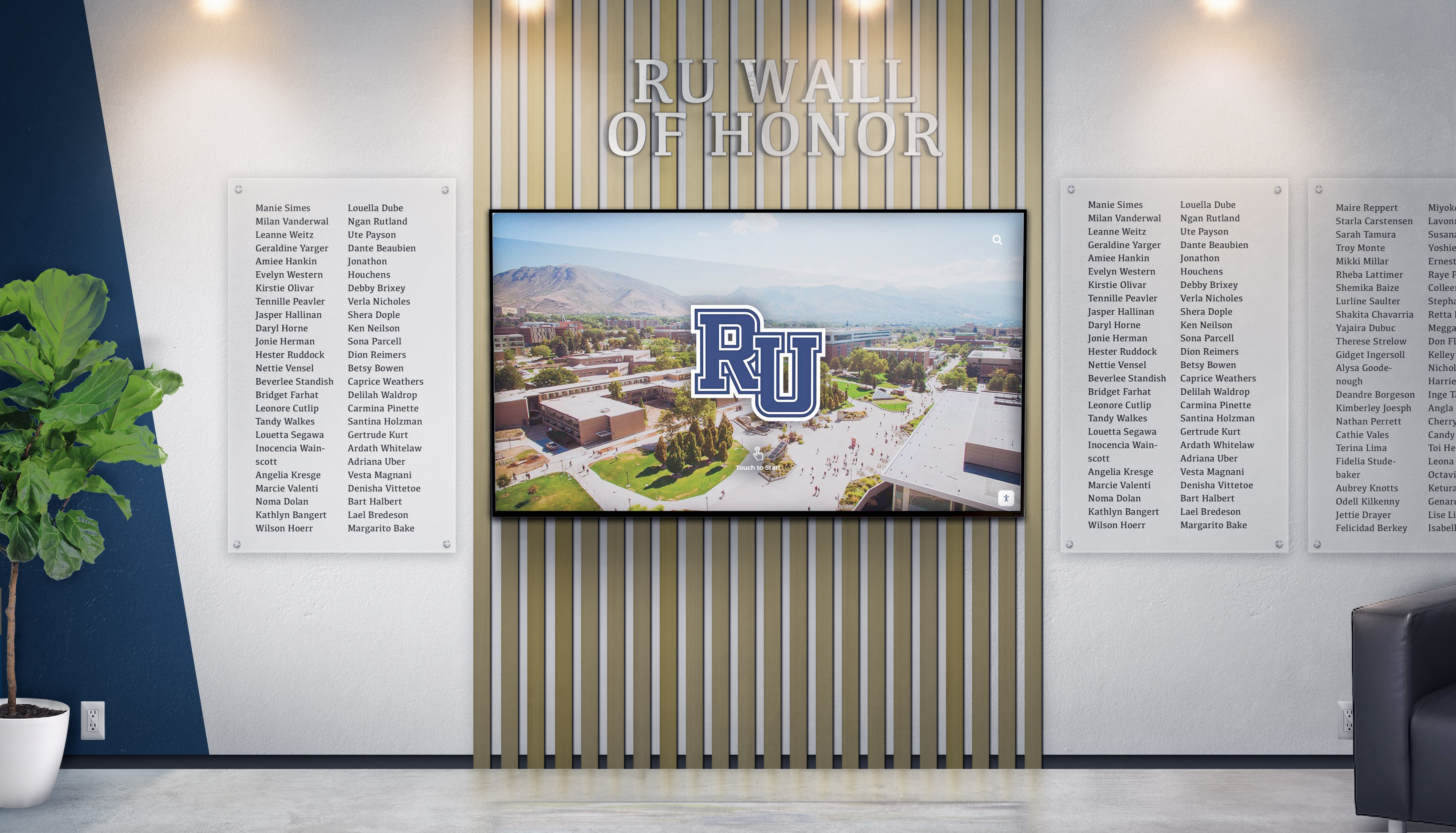
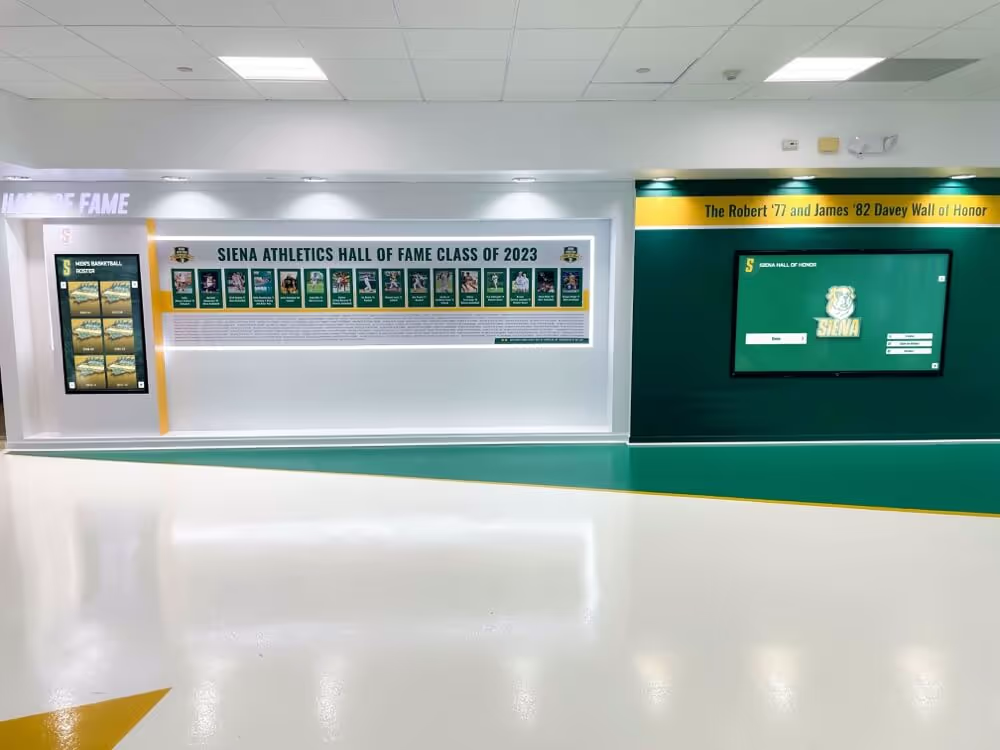
Integrated displays combine digital storytelling with traditional recognition creating comprehensive celebration
Implementation Strategies for Admission Teams
Successfully integrating interactive storytelling requires systematic planning and cross-functional coordination.
Content Development and Curation
Compelling storytelling depends on quality content:
Identifying Storytelling Assets
Audit existing institutional content including achievement records from athletics, academics, and activities, historical materials from archives and libraries, photographic and video assets from marketing departments, alumni success stories from advancement offices, and student reflection content from orientation and senior programs.
This inventory reveals available resources while identifying content gaps requiring development. Many institutions discover substantial storytelling assets scattered across departments needing centralization and organization for storytelling effectiveness.
Student Voice Recruitment and Recording
Develop systematic approaches for capturing authentic student perspectives including identifying diverse student representatives across programs and experiences, conducting video interviews with consistent equipment and settings, asking meaningful questions generating substantive responses, obtaining necessary permissions for content use, and creating ongoing pipelines for continuous content refreshment.
Admission offices partnering with student life, communications, and academic departments can distribute content development workload while ensuring comprehensive representation across campus populations.
Historical Research and Digitization
Institutions with rich histories benefit from archival research including yearbook and publication digitization preserving historical photographs and stories, oral history interviews with alumni and longtime community members, document scanning making primary sources accessible, historical timeline development organizing institutional evolution narratives, and tradition documentation ensuring cultural knowledge preservation.
Historical content development often engages advancement offices seeking alumni engagement opportunities, libraries with archival expertise, and student research projects providing academic learning experiences alongside institutional benefit.
Quality Standards and Content Guidelines
Establish clear standards ensuring consistent quality including technical specifications for photographs and videos, content review and approval workflows, accessibility requirements for inclusive design, factual accuracy verification processes, and regular content auditing and updating procedures.
Systematic quality management prevents inconsistent materials from undermining storytelling effectiveness while ensuring sustainable content maintenance over time.
Technology Platform Selection
Appropriate technology choices determine long-term success and user satisfaction:
Purpose-Built Recognition vs. Generic Digital Signage
Distinguish between specialized platforms like Rocket Alumni Solutions designed specifically for biographical content, searchable achievement databases, and institutional storytelling versus generic digital signage systems designed for advertising and announcements lacking critical storytelling functionality.
Purpose-built platforms provide essential features including intuitive content management for non-technical staff, robust search and filtering for discovery, multimedia integration supporting diverse content types, appropriate aesthetic templates for institutional contexts, and web platform integration enabling mobile access.
Generic systems repurposed for storytelling typically frustrate users and limit engagement through missing features and inappropriate design patterns unsuited for biographical and achievement content.
Accessibility and Universal Design
Ensure platforms serve all visitors including screen reader compatibility for vision-impaired users, appropriate font sizes and contrast ratios, intuitive navigation for varying technical comfort levels, ADA compliance for touchscreen heights and approach spaces, and mobile accessibility for smartphone and tablet users.
Accessible design benefits all users while ensuring compliance with disability access requirements protecting institutions from potential legal issues.
Cloud-Based Management and Updates
Cloud platforms enable distributed content management including remote access from any internet-connected device, multi-user permissions supporting cross-departmental contributions, real-time updates appearing immediately across all displays, automatic backups preventing content loss, and scalability accommodating content growth over time.
Local-only systems requiring physical hardware access create management bottlenecks limiting sustainable maintenance, particularly when displays occupy multiple campus locations.
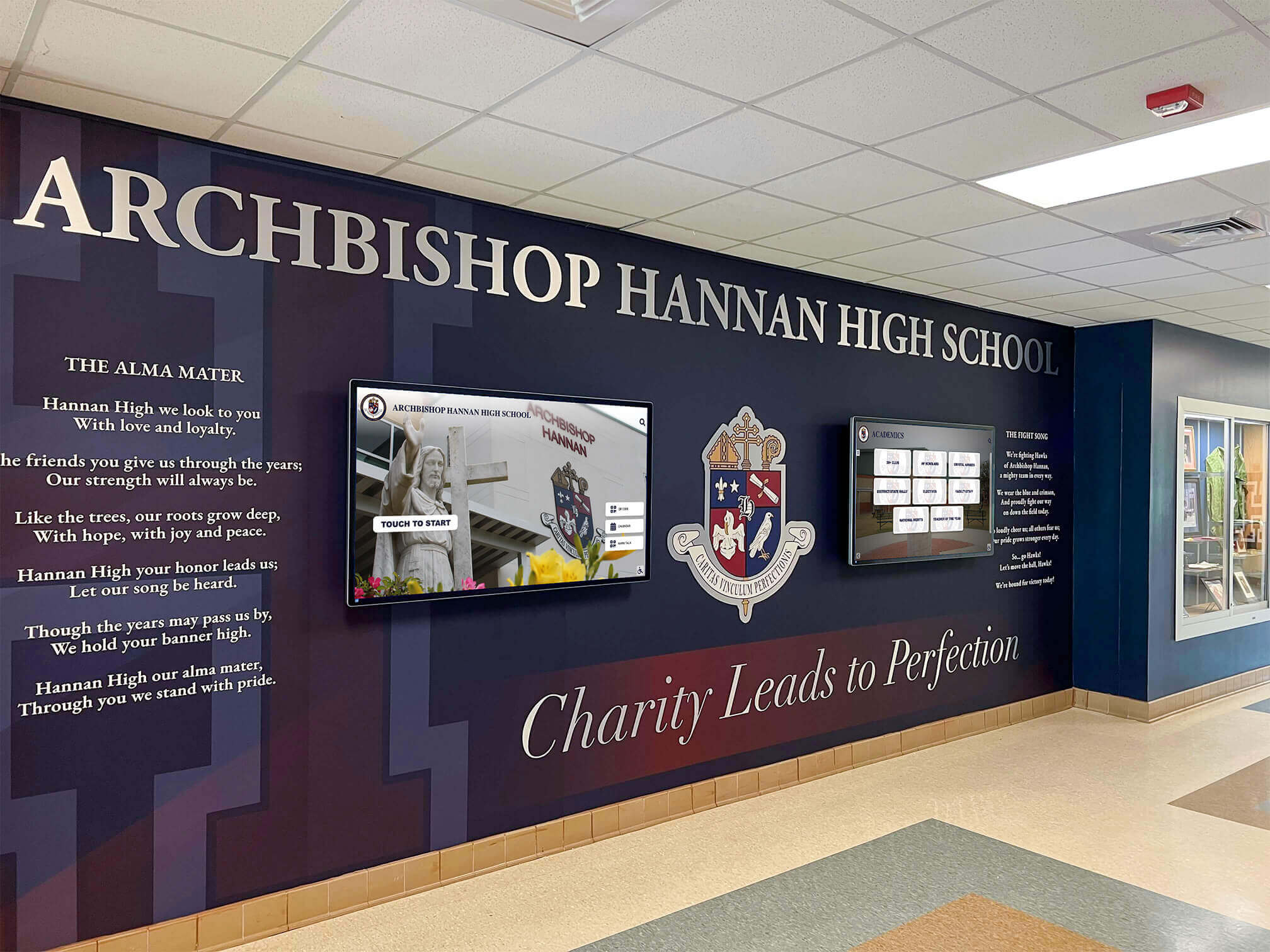
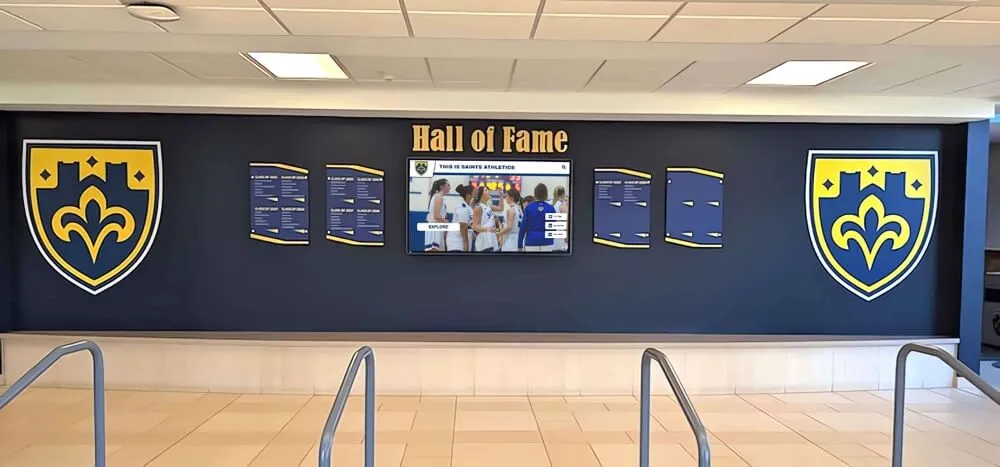
Professional installations integrate technology with institutional architecture and branding
Training Tour Guides and Admission Staff
Human guides remain essential even with excellent technology:
Incorporating Interactive Elements into Tour Scripts
Train guides to seamlessly integrate digital storytelling including planned stopping points at interactive displays, demonstration of search and exploration functionality, encouraging prospect hands-on interaction, connecting displayed content to broader institutional narratives, and using displays as launching points for authentic conversation.
Interactive displays work best when guides treat them as tools enhancing personal storytelling rather than replacements for human connection. The combination of technology and authentic human perspective creates most powerful experiences.
Handling Technology Failures and Glitches
Prepare guides for inevitable technical issues including backup narratives when displays malfunction, troubleshooting basic connectivity problems, knowing who to contact for technical support, and maintaining tour quality when technology fails.
Technology should enhance but not depend upon perfect functionality. Well-trained guides handle glitches gracefully without disrupting tour experiences or undermining confidence in institutional competence.
Encouraging Prospect Questions and Exploration
Use interactive displays as catalysts for authentic conversation including inviting prospects to search for topics of personal interest, asking prospects about discoveries they find meaningful, connecting displayed content to prospect questions and concerns, and sharing personal connections to featured stories when authentic.
The best tours balance information delivery with genuine dialogue where prospects feel heard and understood. Interactive displays facilitate this balance by providing conversation frameworks while maintaining personal connection.
Measuring Storytelling Impact on Admissions Outcomes
Assess whether interactive storytelling improves enrollment results:
Campus Visit Satisfaction and Feedback
Monitor whether storytelling enhances visit experiences through post-visit surveys asking about most memorable elements, focus groups with admitted students about decision factors, prospective student feedback during follow-up communication, and comparative satisfaction between visits utilizing storytelling versus traditional tours.
Positive feedback validates storytelling investments while identifying improvement opportunities before problems affect enrollment outcomes.
Enrollment Conversion Metrics
Track whether storytelling correlates with improved conversion including campus visit to application submission rates, application to admission offer acceptance rates, demonstrated interest indicators throughout admission funnels, and yield rates among students who engaged with interactive content.
While many factors affect enrollment decisions, institutions implementing compelling storytelling typically see measurable conversion improvements suggesting storytelling contributes to enrollment success.
Engagement Analytics from Digital Platforms
Digital platforms provide quantitative engagement data including interaction volume and session duration at touchscreen displays, mobile platform usage and content access patterns, most-viewed content revealing prospect interests, and search query analysis showing discovery patterns.
These analytics inform content development priorities, identify high-value storytelling assets deserving prominence, and reveal prospect information needs admission teams should address.
Creating Digital Warming Through Campus Storytelling
The concept of digital warming—transforming impersonal digital spaces into engaging, personalized experiences—applies powerfully to campus storytelling and admissions engagement.
Personalization and Relevant Discovery
Modern prospects expect content matching personal interests:
Search and Filtering Enabling Personal Pathways
Unlike linear tour narratives presenting identical content to all visitors, interactive platforms enable personalized exploration through geographic filtering discovering students from prospect hometowns, program-based searches exploring intended majors, activity-based filtering finding students with similar interests, and name searches when prospects know current students or alumni.
Personal discovery moments create stronger connections than generic institutional information. When prospects find students from their high schools, discover alumni in their intended career fields, or identify students sharing their backgrounds, they envision belonging more concretely than possible through generic campus tours.
Recommendation Systems Suggesting Relevant Content
Advanced platforms can suggest content based on prospect profiles and behavior including highlighting programs matching stated interests, surfacing students with similar backgrounds or identities, recommending achievement stories relevant to prospect goals, and connecting prospects with alumni networks in home regions.
These personalized recommendations make vast content libraries navigable while ensuring prospects discover most relevant information matching individual decision criteria.
Creating Moments of Surprise and Delight
Unexpected personal discoveries create memorable experiences including recognizing familiar names in achievement archives, discovering shared hometowns with featured students, finding connections to personal interests or activities, and uncovering surprising facts about institutional history.
These delight moments generate enthusiasm prospects share with family and friends, create positive associations prospects remember during decision processes, and differentiate your institution from competitors offering more generic tour experiences.
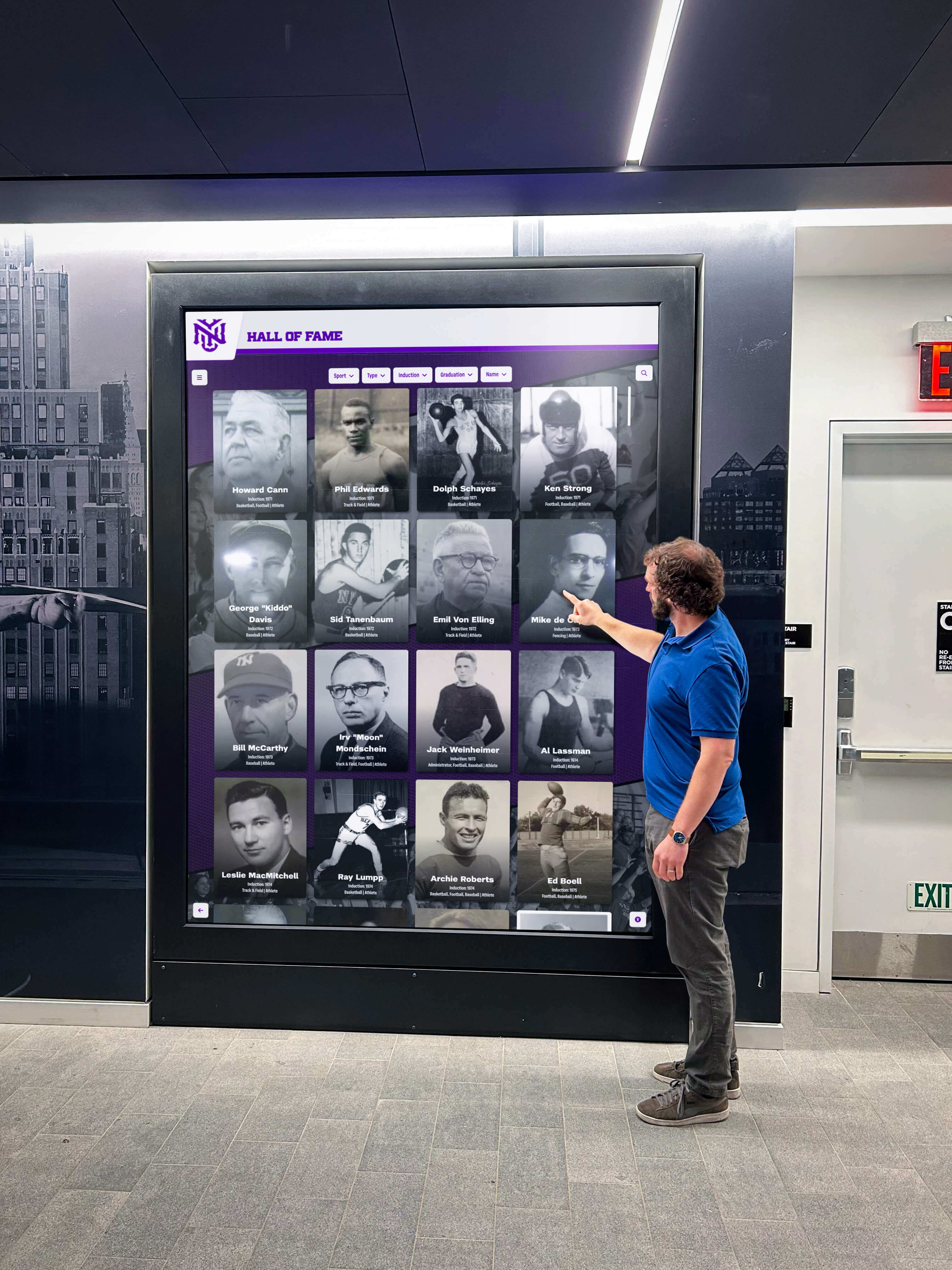
Intuitive interfaces appeal to all ages enabling family exploration and discussion
Social Sharing and Peer Influence
Prospects influence each other’s decisions through social networks:
Built-In Social Sharing Functionality
Enable prospects to share discoveries including one-click sharing to Instagram, Facebook, Twitter, and other platforms, pre-formatted social posts highlighting discovered content, shareable direct links to specific profiles or achievements, and downloadable content for offline sharing.
When prospects share campus stories through personal networks, institutional visibility extends exponentially while peer validation occurs as friends and family engage with shared content—creating organic marketing reach impossible through institutional channels alone.
User-Generated Content Integration
Consider enabling prospect contributions including photo uploads from campus visits, comments or questions on featured content, reviews and perspectives from admitted students, and crowdsourced tradition explanations from current students.
User-generated content creates community ownership while providing authentic peer perspectives prospective students trust more than institutional marketing. However, implement moderation ensuring quality and appropriateness while maintaining authentic voice.
Influencing Peer Networks and Application Decisions
Prospects often influence friends’ application decisions through shared discoveries, social media content generating interest, peer group discussions about campus experiences, and competitive dynamics where friend groups apply to similar schools.
Compelling storytelling creates content prospects naturally share, extending institutional reach while leveraging peer influence driving application interest among prospect networks.
Best Practices and Success Stories
Learning from successful implementations helps avoid common pitfalls.
Starting Small and Scaling Strategically
Comprehensive storytelling programs evolve over time:
Pilot Implementations in High-Impact Locations
Begin with single installations in strategic locations including main admissions office lobbies where all tour groups gather, primary entrance buildings with highest prospective student traffic, athletic facilities for recruiting athlete visits, or signature academic buildings representing institutional strength.
Pilot implementations prove concept value, generate stakeholder enthusiasm through visible results, identify workflow and training needs before wider deployment, and create demonstrated success supporting expanded investment.
Iterative Content Development
Build storytelling libraries progressively including initial focus on most compelling content types, regular additions expanding coverage and diversity, responding to usage analytics showing high-interest topics, and incorporating feedback from admission staff and prospects.
Attempting comprehensive content development before launch typically delays implementation and often results in uneven quality. Starting focused enables faster launch with excellent initial content, followed by continuous enhancement based on actual usage and feedback.
Phased Campus Deployment
Expand installations systematically including adding locations based on traffic patterns and prospective student pathways, coordinating with campus renovation or construction projects, timing installations with peak admission season beginnings, and ensuring adequate staff training accompanies each expansion.
Phased deployment manages budget constraints while building institutional capacity and experience supporting sustainable long-term operations.
Coordination Across Campus Stakeholders
Successful storytelling requires multi-departmental collaboration:
Admission Office Leadership and Vision
Admission teams should drive implementation including articulating storytelling goals and success metrics, identifying prospect information needs and decision criteria, providing prospect feedback informing content priorities, and measuring impact on enrollment outcomes.
Admission ownership ensures storytelling serves recruitment objectives rather than becoming technology projects disconnected from admission strategy.
Student Life and Activities Partnership
Student affairs offices contribute essential content including current student voice recruitment and coordination, documentation of campus traditions and programming, student organization achievement records, and residence life and campus culture insights.
This partnership ensures storytelling reflects authentic student experience rather than idealized marketing narratives disconnected from daily campus reality.
Alumni Relations and Advancement Collaboration
Development offices provide valuable historical and alumni content including distinguished alumni profiles demonstrating outcome possibilities, historical archival materials from institutional records, donor recognition integration acknowledging philanthropic support, and alumni network connections for geographic outreach.
Advancement partnerships often provide funding support given storytelling’s value for alumni engagement alongside admissions benefits.
Athletics and Competitive Programs Input
Athletic departments contribute significant achievement content including championship team recognition and individual athlete honors, competitive records and statistical achievements, student-athlete academic success stories, and program tradition and rivalry documentation.
Athletic achievement proves particularly compelling for many prospects and families, making athletics partnership essential for comprehensive storytelling.
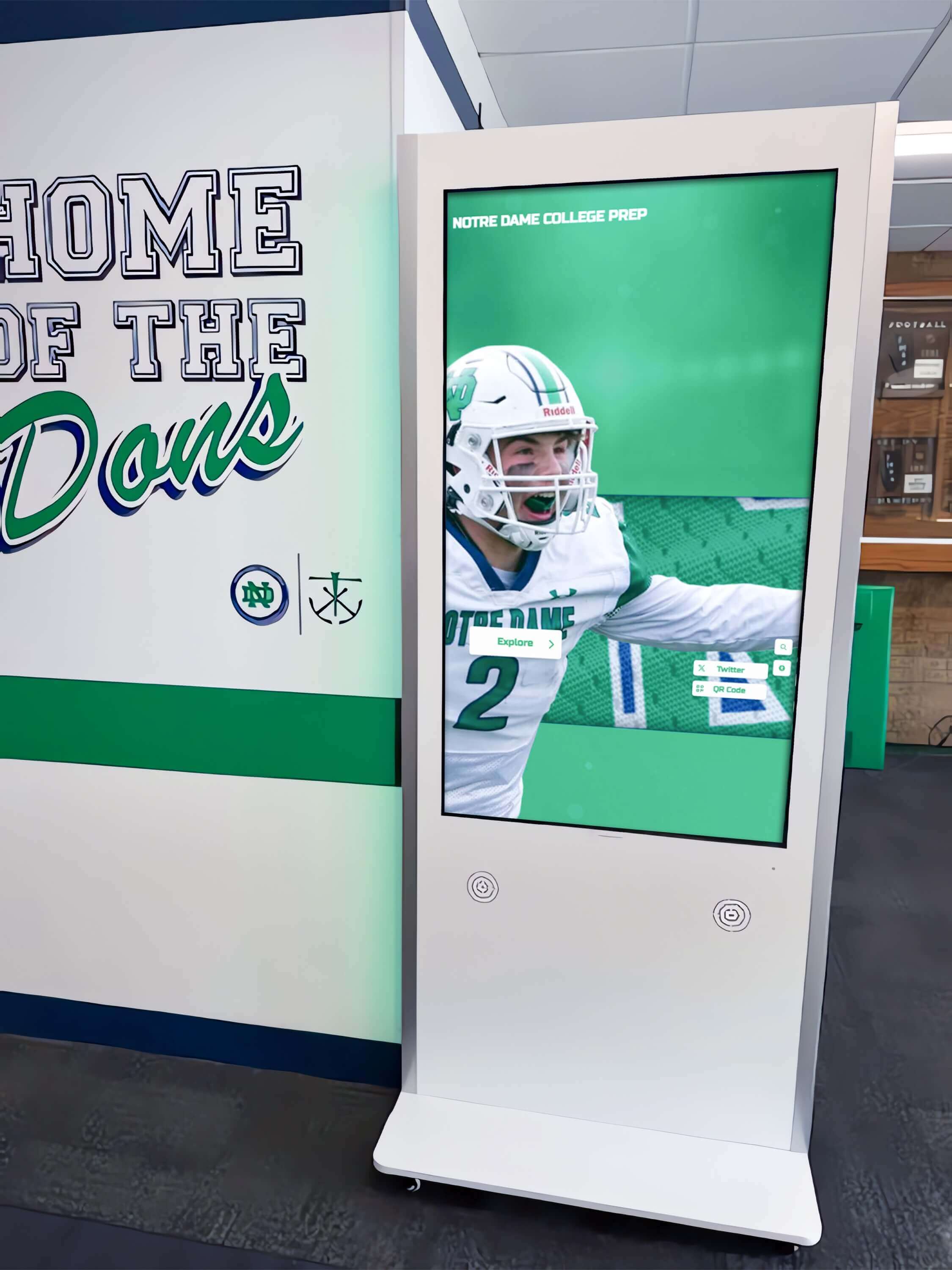
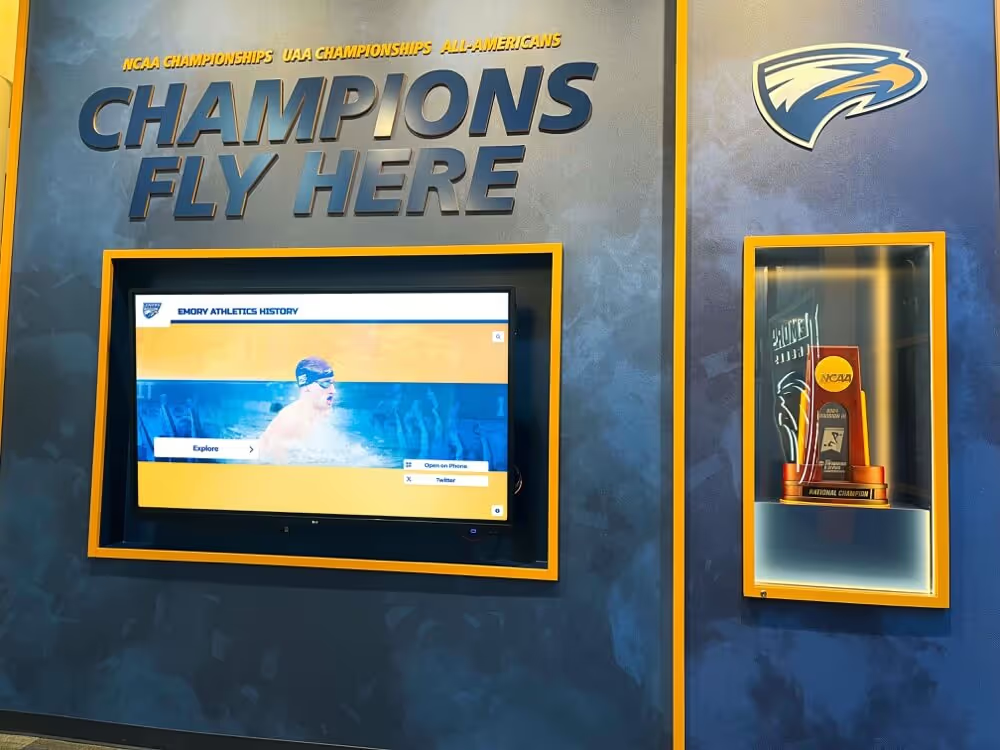
Athletic facility installations serve recruiting visits while celebrating program excellence and tradition
Avoiding Common Implementation Pitfalls
Learn from others’ mistakes:
Insufficient Content Refresh and Maintenance
Static content becomes outdated quickly, undermining credibility including failure to add new achievements and recognitions, retention of graduates no longer representing current experience, broken links or outdated contact information, and neglected historical gaps creating incomplete narratives.
Establish sustainable maintenance workflows ensuring ongoing content quality through assigned responsibilities for regular updates, scheduled content audits identifying gaps and errors, processes for systematic new content addition, and governance ensuring continued institutional commitment.
Technology Without Narrative Strategy
Installing impressive displays without compelling content wastes investment including generic content failing to differentiate your institution, incomplete stories lacking depth or authenticity, poor organization preventing discovery and navigation, and absence of connection to admission messaging and strategy.
Technology enables storytelling but cannot substitute for strategic narrative development. Invest adequately in content alongside technology.
Ignoring Accessibility and Inclusion
Inaccessible or non-inclusive storytelling alienates prospects including featuring only certain demographics or programs, technical barriers preventing access for all users, stories emphasizing only traditional paths and experiences, and neglecting diverse achievement and success definitions.
Comprehensive, accessible, inclusive storytelling welcomes all prospects while demonstrating institutional commitment to diversity and belonging.
Conclusion: Storytelling That Converts Prospects Into Community Members
Interactive campus storytelling represents fundamental advancement beyond traditional admission tours toward engagement experiences that forge emotional connections, communicate authentic institutional identity, demonstrate vibrant community culture, and help prospective students envision themselves as future community members. When prospects explore achievement traditions, discover students sharing their backgrounds and aspirations, hear authentic voices describing real experiences, and uncover unexpected personal connections—these moments create the digital warming effect where cold campus visits transform into warm, memorable experiences influencing enrollment decisions.
Traditional campus tours serve necessary functions showing physical facilities and providing basic information, but they increasingly fail meeting modern prospect expectations for authentic insight, personalized relevance, and compelling differentiation among similar institutions. Generic walking tours following predictable scripts create forgettable experiences leaving prospects unable to articulate what makes your community unique, special, or worthy of enrollment over equally impressive competitors.
Interactive storytelling addresses these limitations by enabling self-directed exploration matching individual interests, providing comprehensive student perspectives beyond single tour guide voices, showcasing institutional identity through authentic achievement and tradition documentation, creating surprising discovery moments prospects remember and share, and extending engagement beyond campus visit time constraints through mobile and web access.
Implementation success requires strategic planning addressing content development drawing from multiple campus sources, technology platform selection prioritizing storytelling-specific functionality, stakeholder coordination ensuring cross-departmental collaboration, tour guide training integrating interactive elements into admission experiences, and continuous assessment measuring storytelling impact on enrollment outcomes.
Solutions like Rocket Alumni Solutions provide purpose-built platforms specifically designed for campus storytelling applications, eliminating countless implementation challenges through intuitive content management enabling non-technical staff participation, robust search supporting personalized discovery, multimedia integration bringing stories to life through diverse formats, and proven engagement experiences informed by hundreds of institutional implementations.
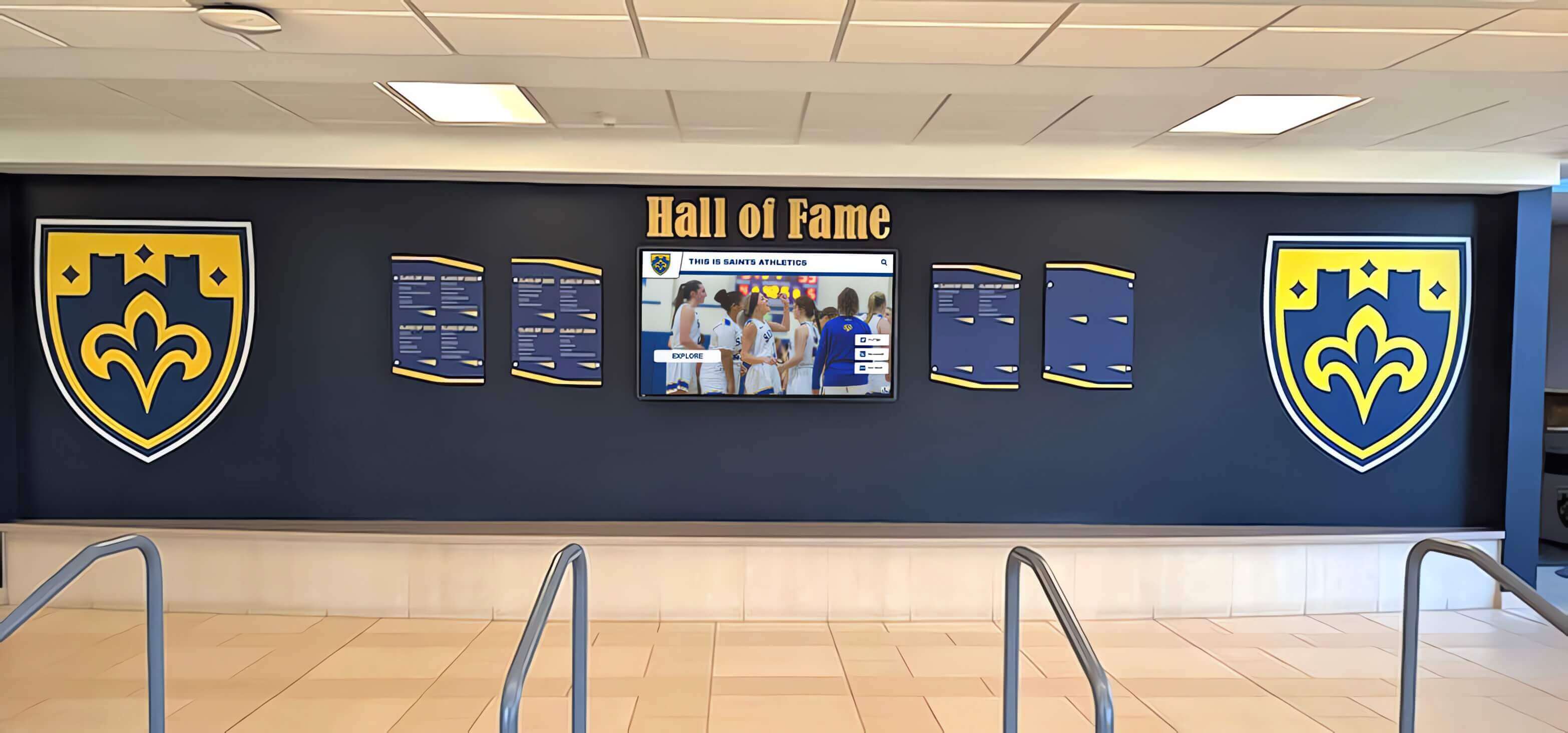
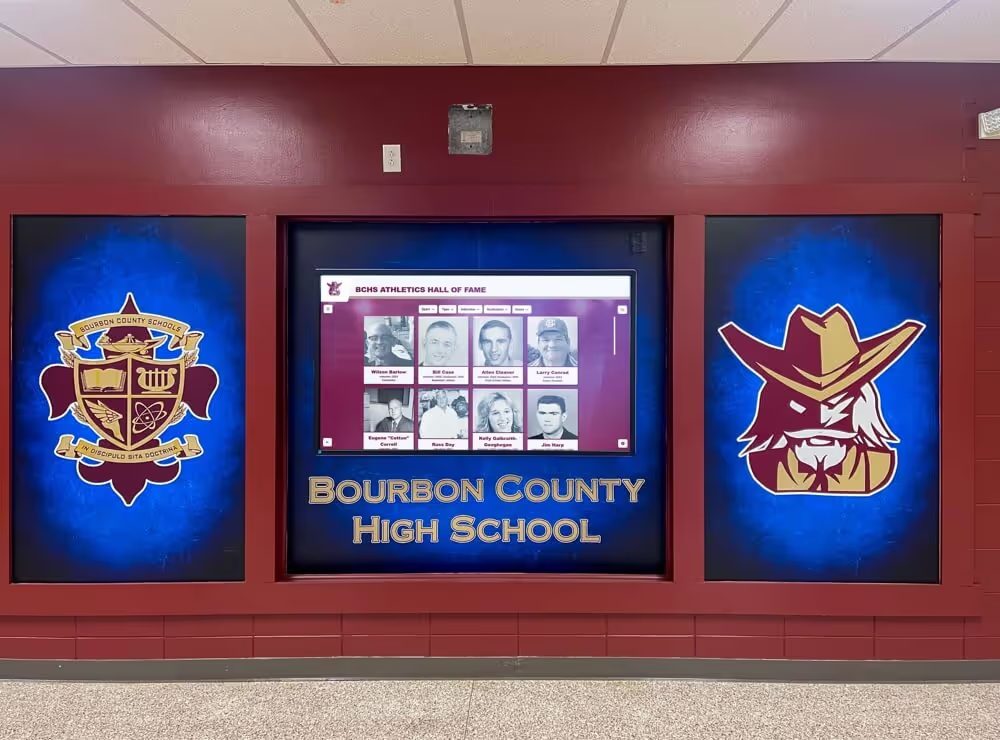
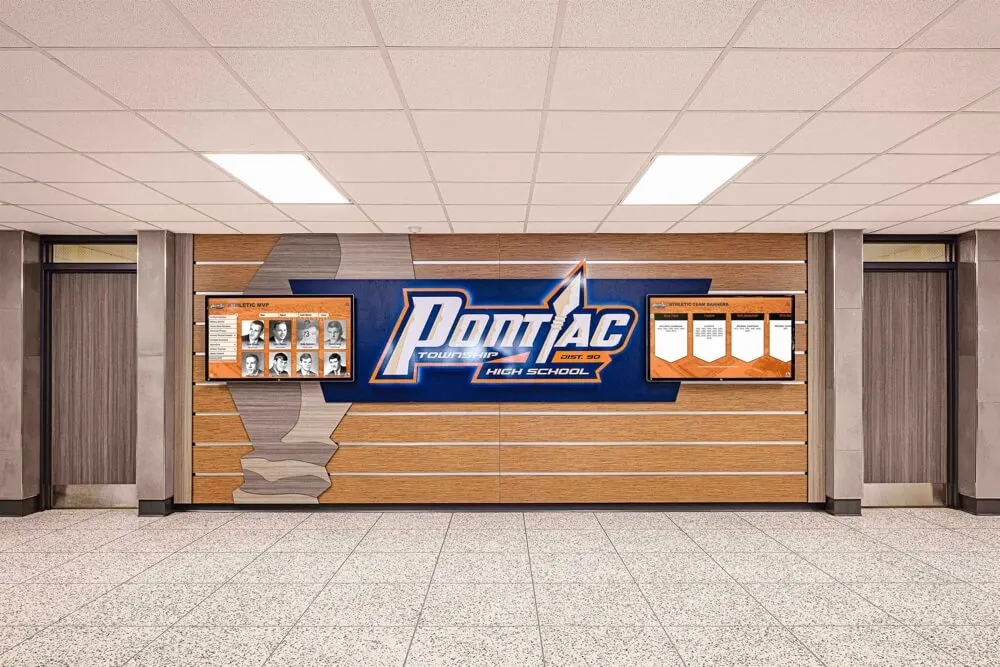
Professional installations create impressive environments demonstrating institutional pride while enabling interactive exploration
The admissions landscape grows increasingly competitive as demographic shifts intensify enrollment pressures, prospective students and families demand authentic transparency, and similar institutions compete for overlapping applicant pools. In this environment, schools that effectively communicate authentic community character, demonstrate sustained excellence across dimensions prospects value, and create memorable engagement experiences distinguishing themselves from competitors gain significant enrollment advantages.
Your institution possesses unique stories worth telling—founding narratives explaining institutional identity, achievement traditions spanning generations, authentic student voices describing daily experiences, distinguished alumni demonstrating outcome possibilities, and campus cultures creating belonging and community. These stories, effectively told through interactive digital platforms, transform utilitarian campus tours into compelling narrative journeys where prospects discover personal fit, develop emotional connections, and make informed enrollment decisions confident they belong within your community.
Every prospective student visiting your campus deserves experiences revealing authentic institutional character rather than generic marketing presentations. Every family making significant financial and personal investments deserves transparency about campus culture and student experiences. Every admission team deserves tools supporting enrollment goals through proven engagement effectiveness.
Interactive storytelling provides these capabilities, creating warm campus experiences that convert curious prospects into committed community members enrolled in vibrant institutions where they will thrive. With thoughtful planning, compelling content, appropriate technology, and sustained commitment, you can transform admission experiences while achieving enrollment objectives through storytelling that resonates, connects, and converts.
Ready to transform your admissions approach through interactive campus storytelling? Book a demo to discover how digital recognition platforms create engaging experiences that showcase institutional excellence while building the warm, connected communities where prospective students envision their futures.