



Wrestling programs face a unique recognition challenge. Unlike team sports where championships take center stage, wrestling celebrates individual achievement across multiple dimensions—technique mastery, weight class excellence, tournament performance, academic success, and community leadership. Traditional recognition methods—plaques lining gym walls, printed posters, static trophy cases—fail to capture the breadth and depth of wrestling achievement. Coaches need systems that honor Hall of Fame legends while featuring current All-State performers, highlighting weekly Wrestler of the Week selections, displaying meet schedules, and communicating program announcements—all in a single, accessible platform that engages wrestlers, families, and the broader school community.
Awards touchscreen technology addresses these challenges by creating dynamic, interactive recognition environments where wrestling achievement receives the prominence it deserves. These purpose-built digital displays transform how programs honor wrestlers, communicate with stakeholders, and build lasting pride in athletic excellence. Through personalized content surfacing, unlimited recognition capacity, and mobile accessibility, touchscreen systems turn cold, forgotten recognition walls into active community gathering points that activate engagement and strengthen program culture.
This comprehensive guide explores how awards touchscreen technology specifically serves wrestling programs, from Hall of Fame preservation to real-time weekly recognition, schedule management to announcement systems, and everything between.
Wrestling programs accumulate decades of achievement across multiple recognition categories. A typical high school wrestling program might honor 50-100 Hall of Fame inductees, recognize 20-30 All-State wrestlers annually, celebrate multiple All-Americans each decade, acknowledge weekly performers throughout each season, manage complex tournament schedules, and communicate program updates constantly. Traditional recognition systems buckle under this volume, forcing coaches to choose between comprehensive recognition and visual clutter, between honoring past legends and celebrating current achievers.

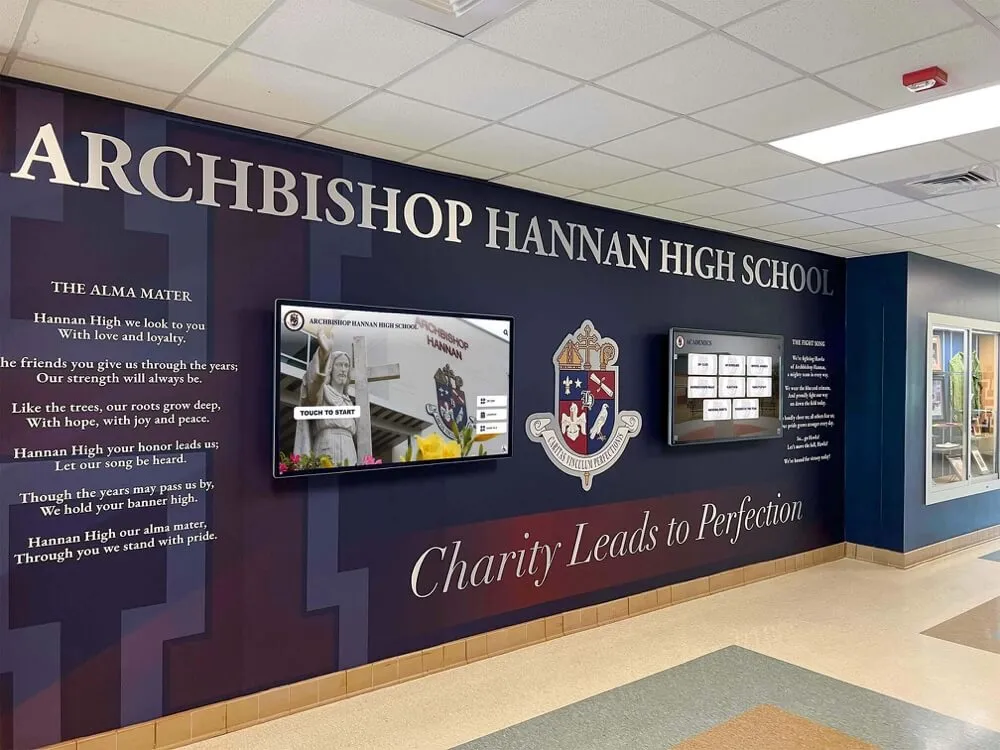
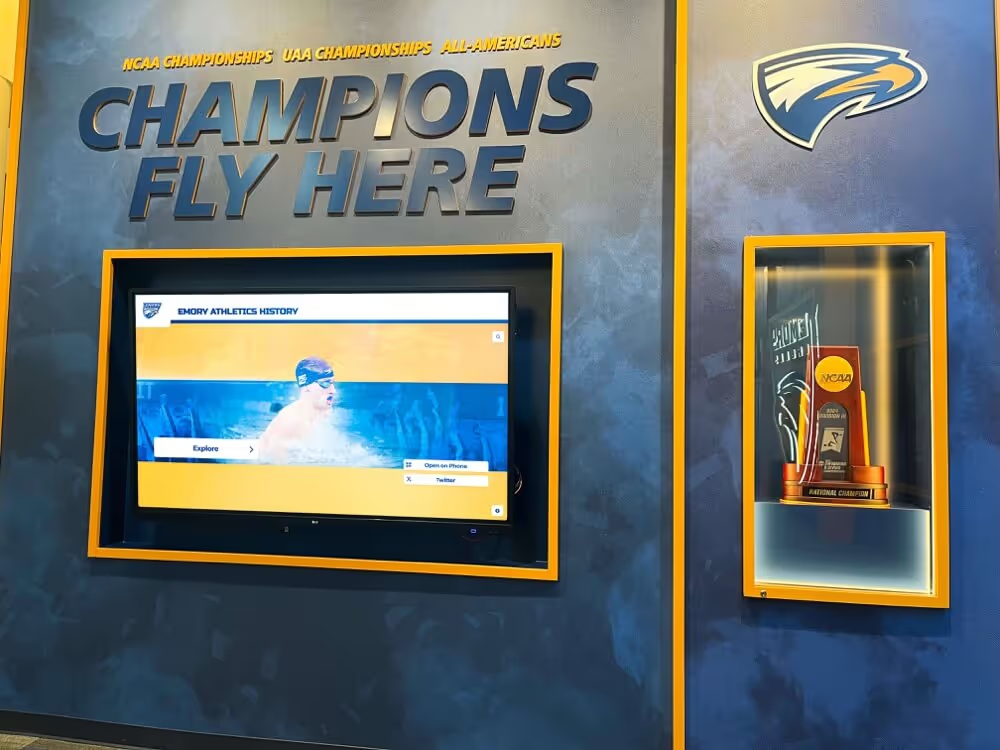
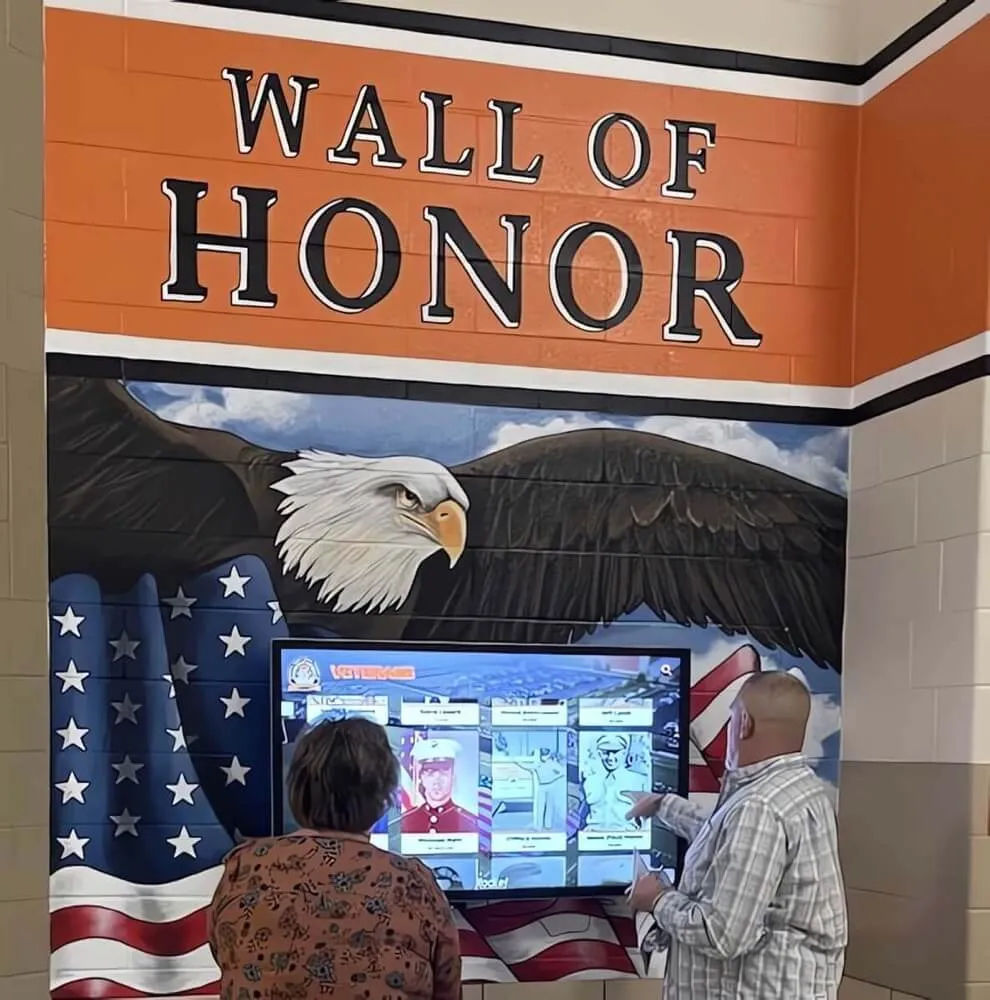
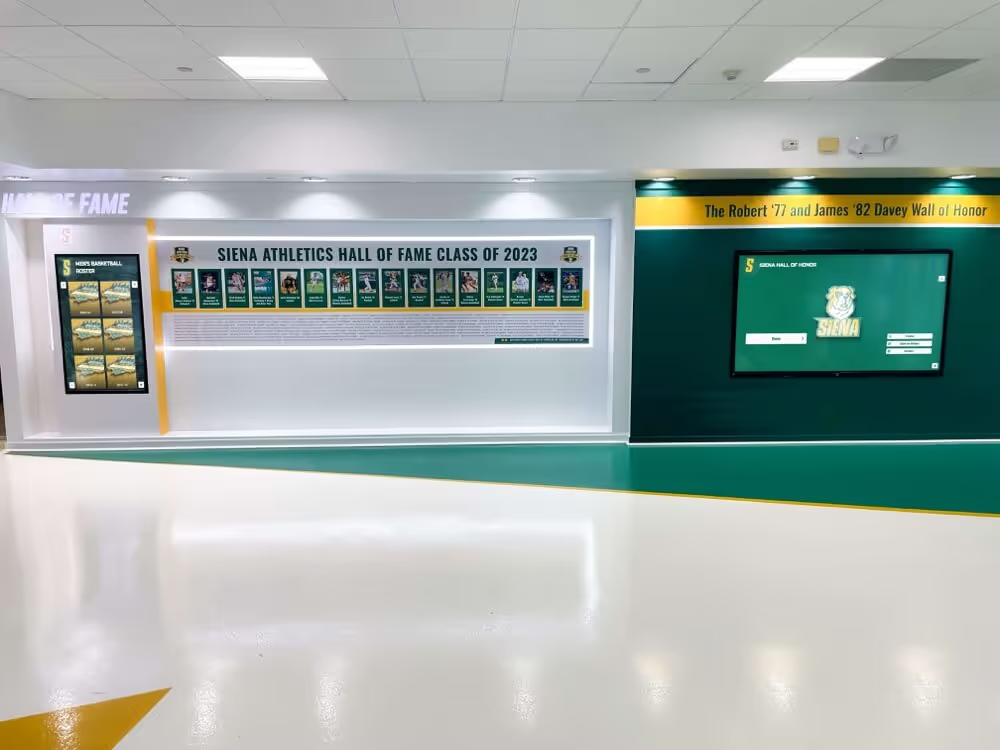
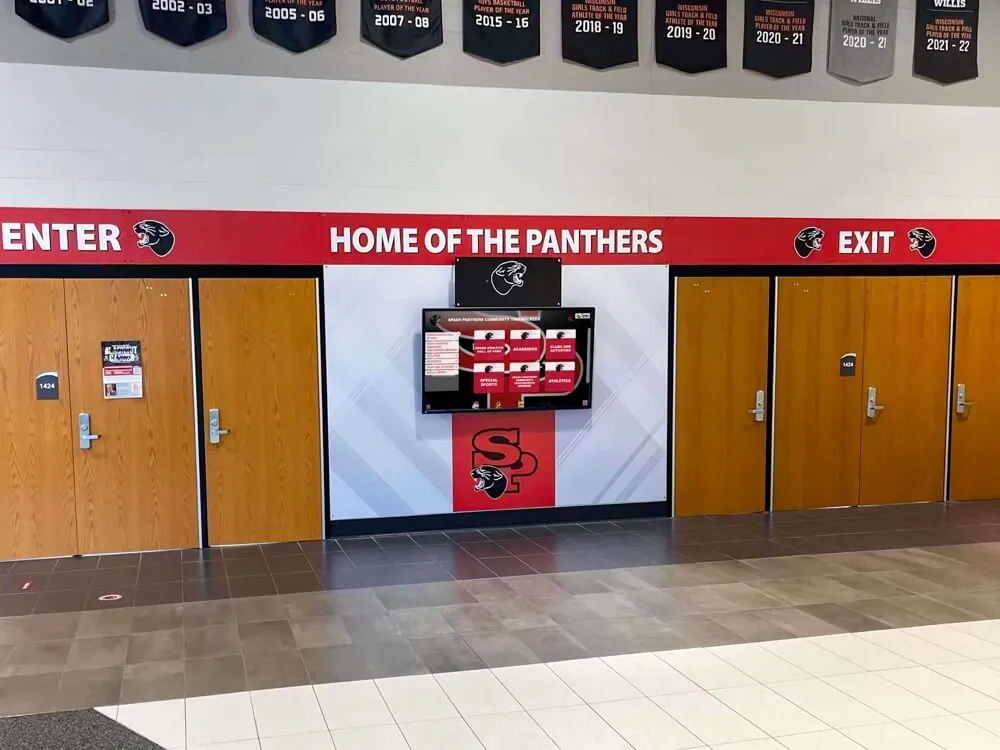
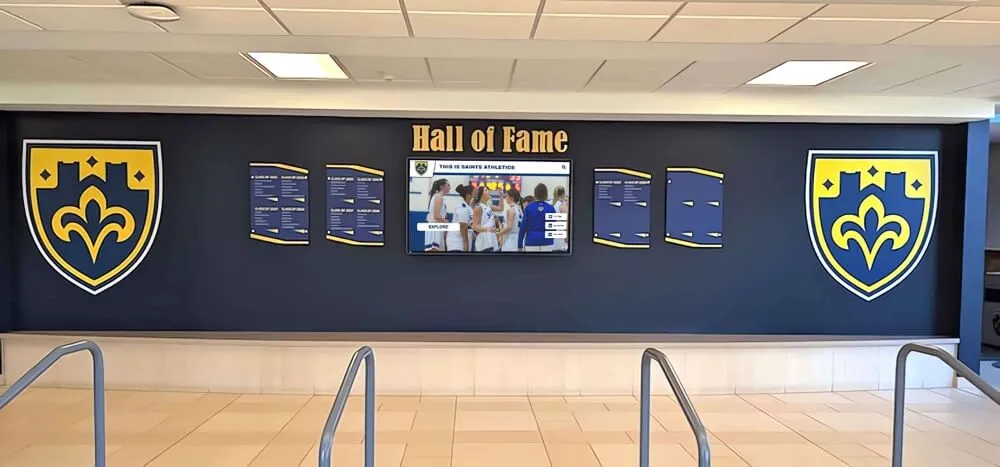
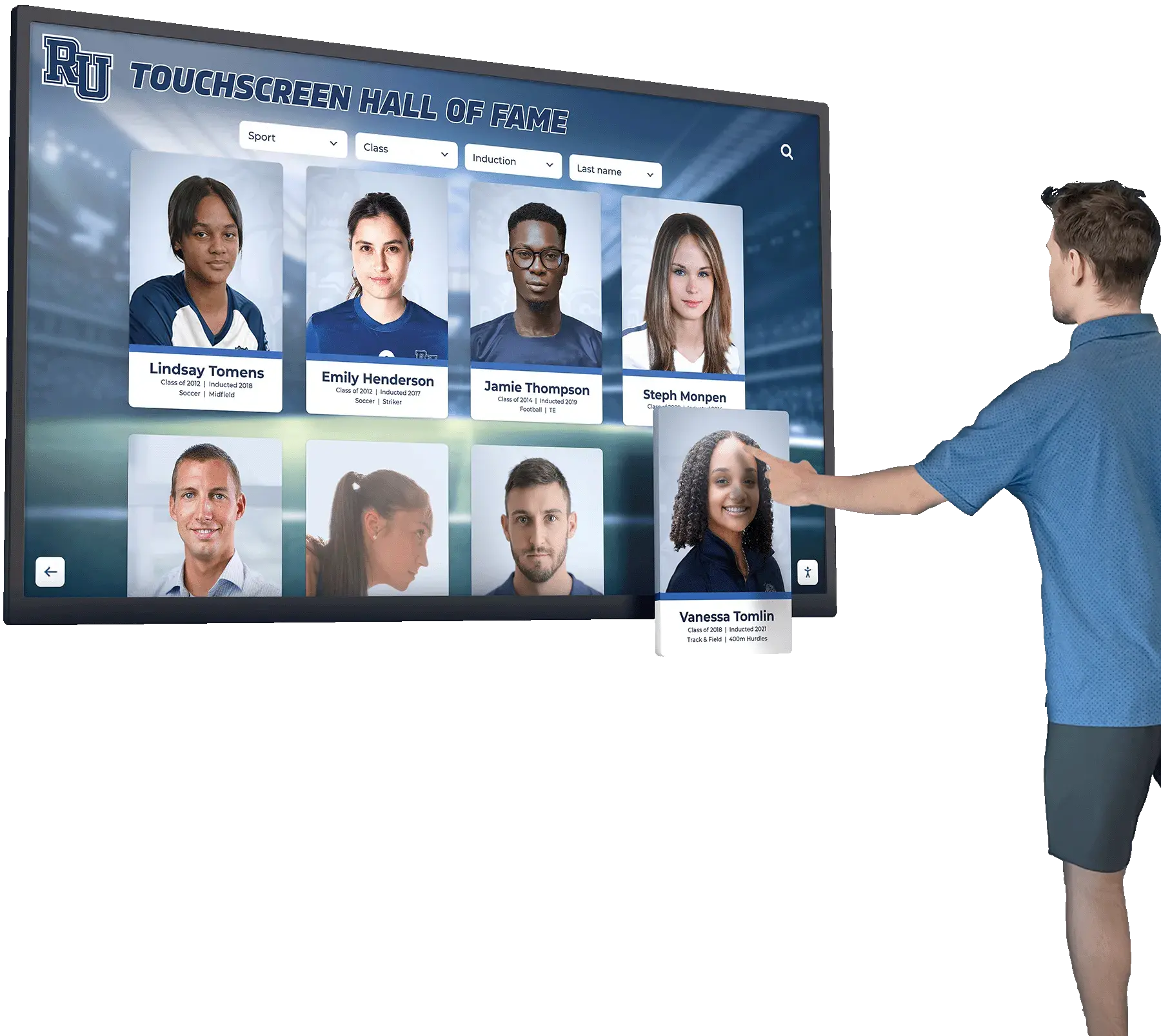
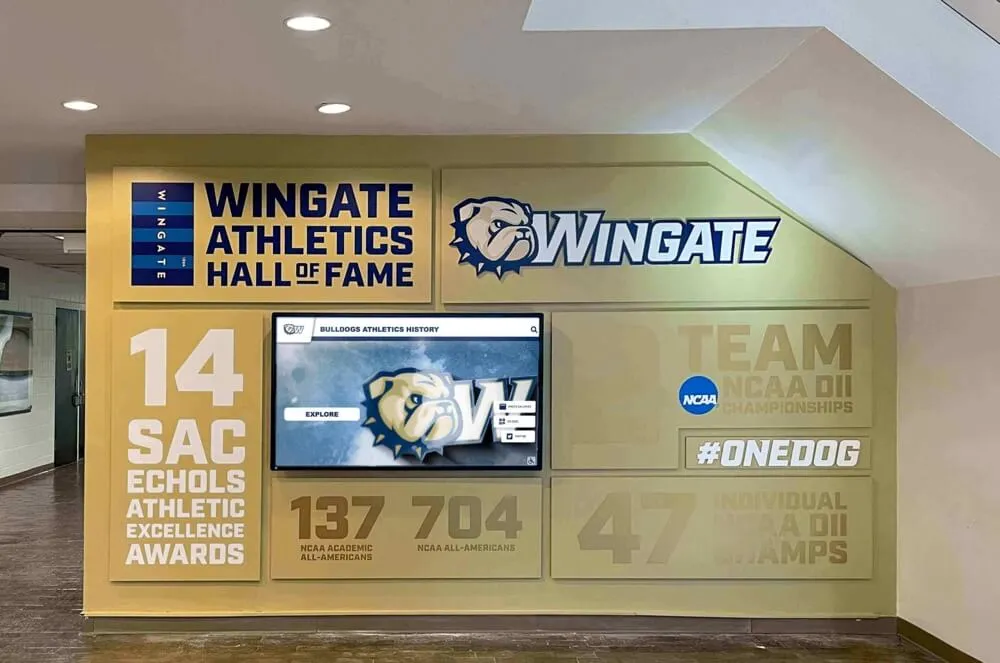
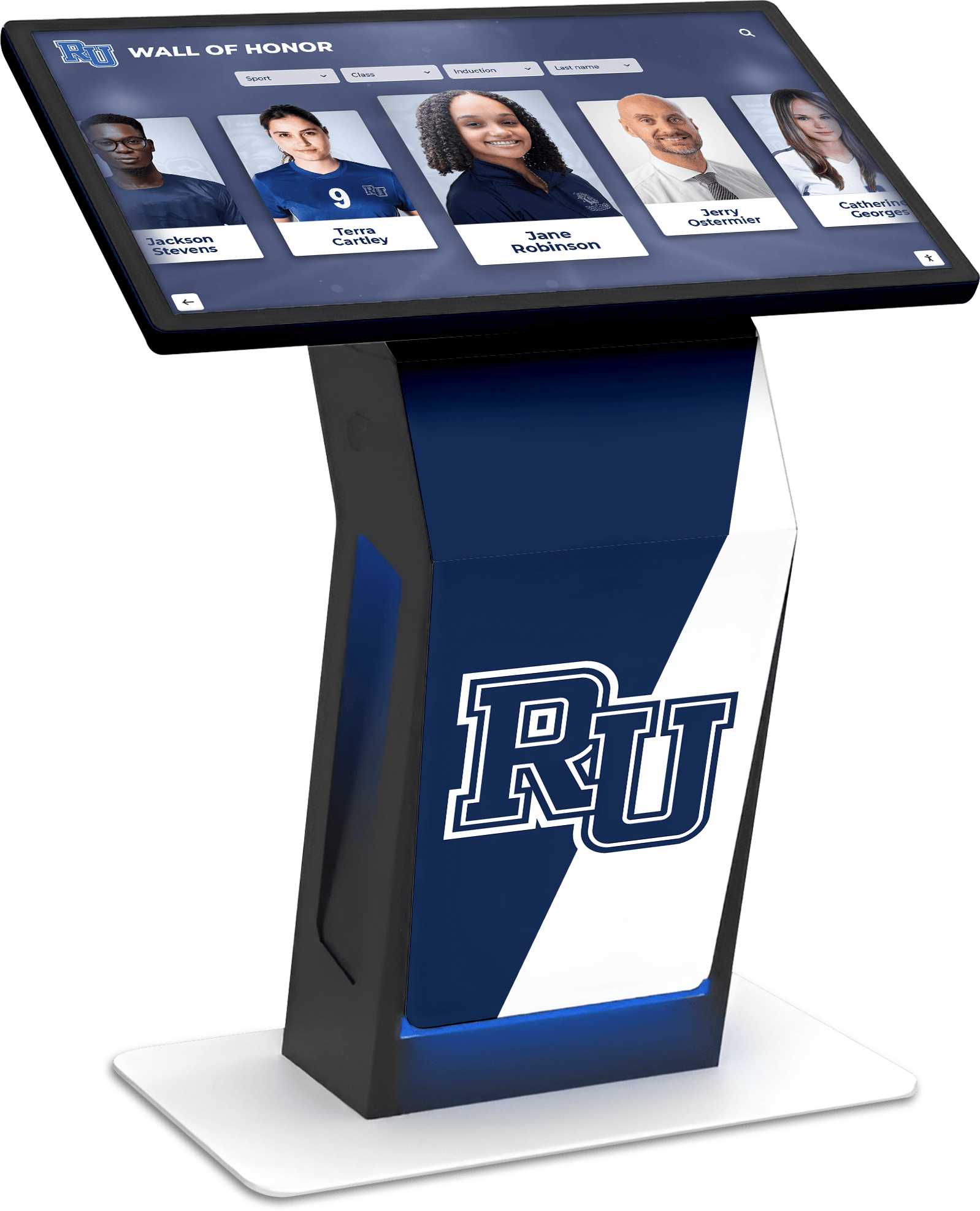
Awards touchscreen displays provide wrestling programs with unlimited recognition capacity while maintaining clean, professional presentation in high-traffic school locations
Understanding Awards Touchscreen Technology for Wrestling Programs
Awards touchscreen systems represent purpose-built digital recognition platforms designed specifically for athletic programs requiring comprehensive, multi-category recognition capabilities. Unlike generic digital signage or basic TV displays, these interactive kiosks combine large-format touchscreens with specialized recognition software, creating engaging experiences where visitors actively explore wrestling achievement rather than passively viewing content.
Core Technology Components
Interactive Touchscreen Hardware Commercial-grade touchscreens ranging from 43 to 65 inches provide the physical interface for awards displays. These industrial-rated screens feature multi-touch capabilities allowing simultaneous interactions, anti-glare coatings for hallway visibility, and protective glass withstanding high-traffic school environments. Unlike consumer TVs, commercial displays include extended warranties, high-duty-cycle ratings for continuous operation, and mounting systems designed for permanent installation.
Web-Based Recognition Software Modern awards touchscreen systems operate on web-based platforms rather than local applications, providing critical advantages for wrestling programs. Web architecture enables instant content updates from any device without accessing physical hardware—coaches update rosters from home, athletic directors add announcements from offices, and support staff manage schedules from workstations. This cloud-based approach eliminates software installation, simplifies technical management, and ensures consistent experiences across multiple displays.
Content Management Systems for Non-Technical Users Wrestling coaches rarely possess technical expertise for managing complex software systems. Purpose-built recognition platforms provide intuitive content management interfaces where users with basic computer skills update wrestler profiles, add achievement data, schedule announcements, and publish content without IT department assistance. These systems typically feature drag-and-drop editing, template-based layouts, and preview functions preventing publication errors.
Digital Warming Through Personalized Recognition
The concept of digital warming transforms how wrestling communities engage with recognition displays. Traditional static plaques create cold, impersonal experiences where viewers scan generic information without meaningful connection. Awards touchscreen technology warms these interactions through personalization—displaying relevant content based on viewer interests, surfacing timely information connected to current seasons, and creating pathways for deeper exploration of wrestling heritage.
When a current wrestler approaches a touchscreen display, the system highlights recent team achievements, upcoming matches, and weekly recognition relevant to their season. Alumni visiting campus discover Hall of Fame inductees from their graduation years, achievement records from their competitive eras, and connections to teammates they remember. Parents explore their wrestler’s profile, view performance statistics, and access tournament schedules all from the same interface. This content surfacing based on relevance and timeliness creates warm, personalized experiences replacing cold, generic static displays.
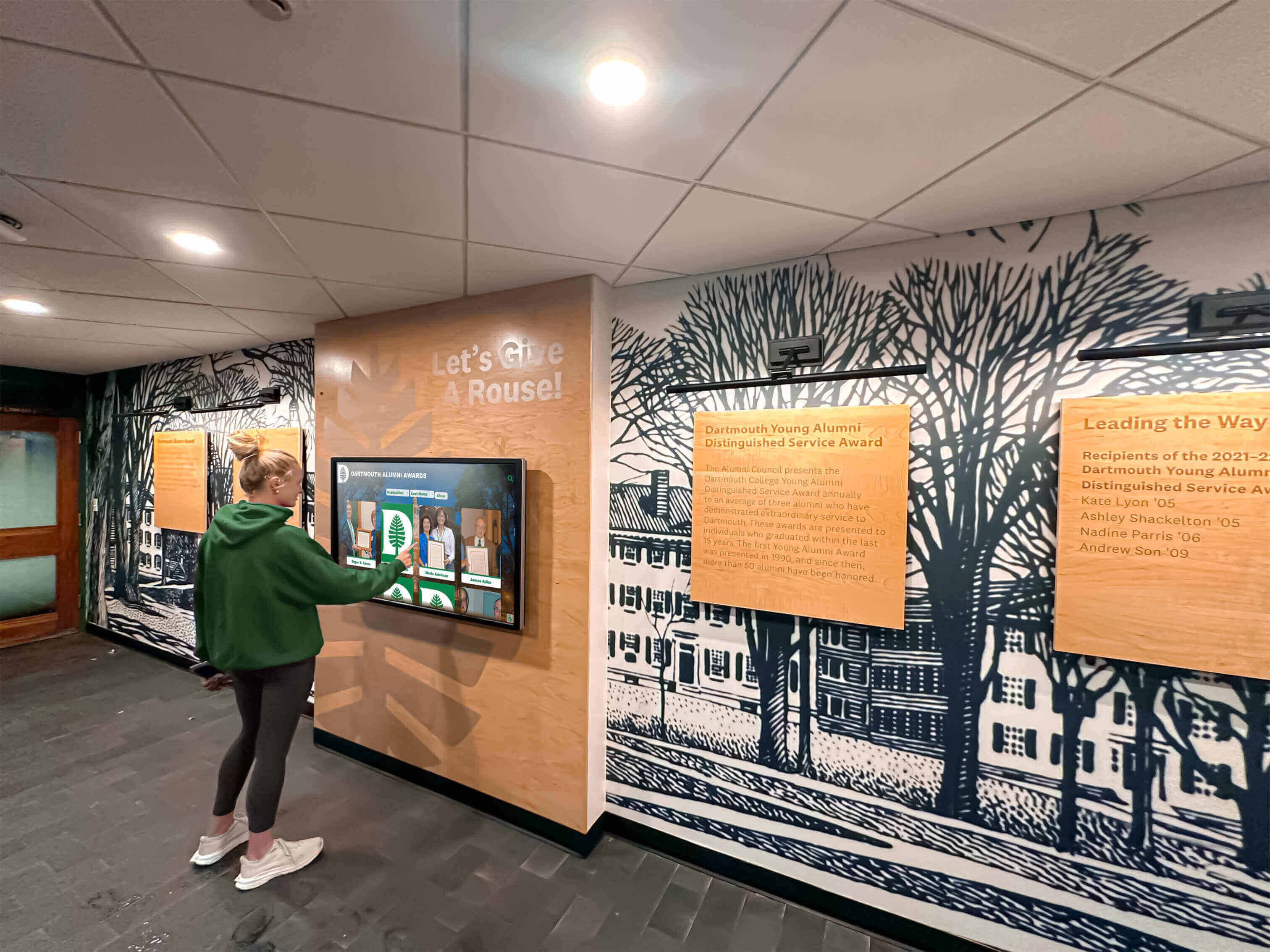
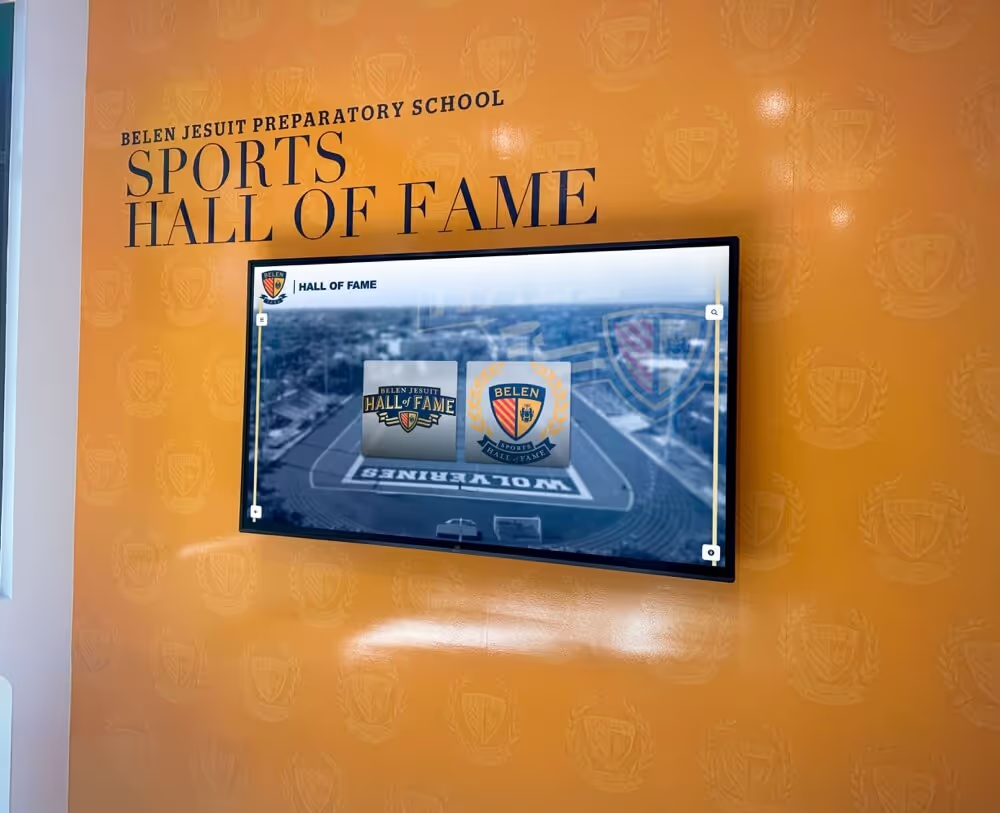
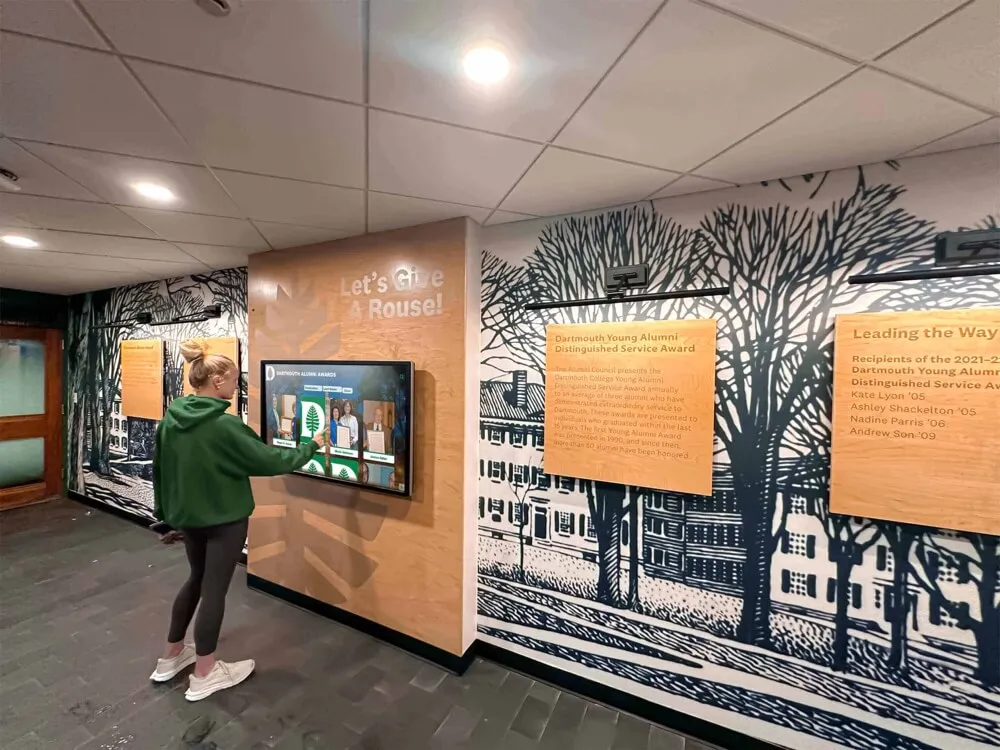
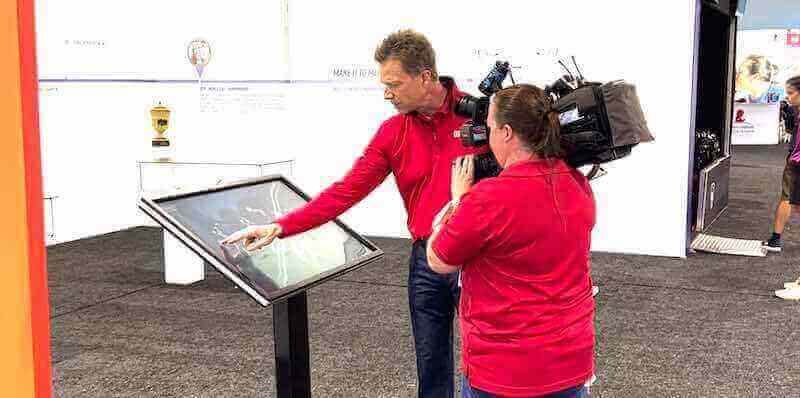
Interactive touchscreen technology engages students with wrestling program history and current achievements through intuitive touch navigation and personalized content discovery
Wrestling Hall of Fame: Digital Preservation and Interactive Exploration
Wrestling programs develop rich halls of fame celebrating athletes whose competitive excellence, technical mastery, and program contributions distinguished them among decades of wrestlers. Traditional hall of fame displays suffer from space limitations, static presentation formats, and limited information capacity—each inductee receives identical plaque space regardless of achievement breadth, restricting recognition to names, years, and basic accomplishments.
Unlimited Inductee Capacity
Awards touchscreen platforms eliminate space constraints that plague physical recognition systems. Programs induct new hall of fame members annually without removing earlier inductees, display comprehensive achievement data for each wrestler without space rationing, and preserve complete program history spanning establishment to present day. This unlimited capacity proves particularly valuable for wrestling programs with extensive histories—some schools honor 100+ hall of fame wrestlers accumulated across decades of competition.
The architecture supporting unlimited recognition differs fundamentally from traditional digital signage with per-user pricing models or content limits. Platforms like Rocket Alumni Solutions provide flat-rate pricing regardless of inductee volume, enabling programs to recognize every deserving wrestler without budget constraints or artificial capacity limitations.
Comprehensive Achievement Documentation
Wrestling achievement spans multiple dimensions requiring detailed documentation. Hall of fame profiles typically include:
Competitive Achievement Records
- Weight class competed (often multiple classes across careers)
- Season records for each varsity year
- Tournament placements (district, regional, state, national)
- Championship titles and runner-up finishes
- Career win-loss records and winning percentages
- Notable victories over ranked opponents
- Technical achievement (pins, technical falls, major decisions)
Individual Awards and Recognition
- All-State selections and placement levels
- All-American honors and national ranking history
- Conference awards and tournament most valuable wrestler selections
- Academic All-State or academic excellence recognition
- Character awards and sportsmanship honors
- Leadership positions (team captain, peer mentor roles)
Narrative Context and Personal Stories Beyond statistics, hall of fame profiles benefit from narrative elements providing context and humanizing achievement. Touchscreen platforms accommodate biographical paragraphs, coaching testimonials, memorable match descriptions, training philosophies, and post-graduation pathways—information impossible to include on physical plaques but valuable for creating meaningful recognition experiences.
Multimedia Integration Modern recognition extends beyond text and statistics to include photos, videos, and audio content. Hall of fame profiles incorporate:
- Action photos from competitive years
- Team photos showing inductee context
- Championship medal and trophy images
- Video highlights of signature matches or techniques
- Interview clips with inductees reflecting on careers
- Audio recordings of arena announcements or crowd reactions
This multimedia approach transforms hall of fame exploration from reading static information to experiencing wrestling heritage through rich, engaging content formats.
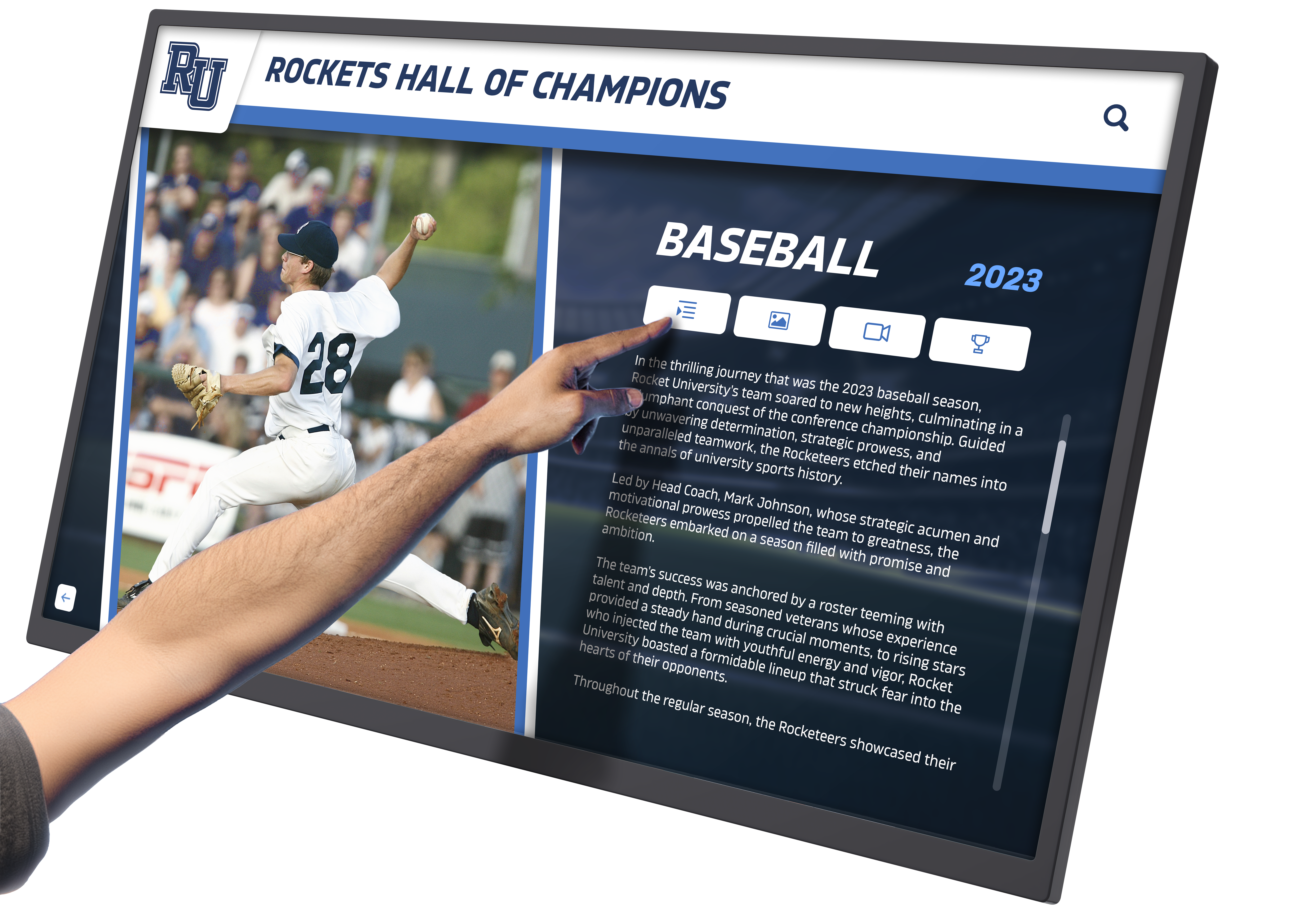
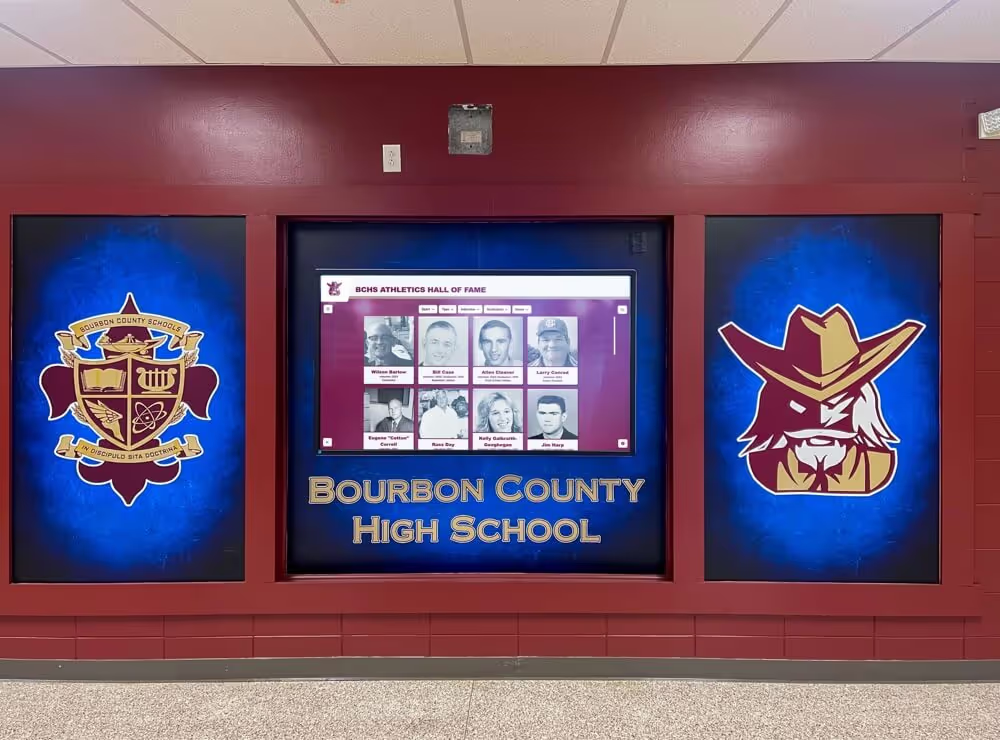
Digital hall of fame displays present comprehensive wrestler profiles with statistics, photos, achievements, and biographical context impossible to include on traditional plaques
Searchable and Filterable Recognition
Large wrestling halls of fame with dozens or hundreds of inductees create discovery challenges—visitors seeking specific wrestlers or achievement types struggle navigating chronological displays or alphabetical lists. Awards touchscreen systems solve this problem through sophisticated search and filter capabilities.
Search Functionality Name search allows instant inductee discovery—visitors type wrestler names and immediately access complete profiles. This proves particularly valuable during alumni events when former wrestlers want to locate teammates, opponents, or competitors from their eras.
Filter Options for Wrestling-Specific Categories Wrestling programs benefit from specialized filtering capabilities:
- Weight Class Filters: Display all inductees who competed at specific weight classes (103, 112, 125, etc.)
- Achievement Type Filters: Show only state champions, All-Americans, or specific honor categories
- Era Filters: Browse inductees by decade, graduation year ranges, or coaching tenure periods
- Record Filters: Discover wrestlers with 100+ career wins, undefeated seasons, or specific win percentage thresholds
These filtering capabilities create discovery pathways matching visitor interests. Current lightweight wrestlers explore hall of fame competitors at similar weight classes, learning techniques and achievement patterns relevant to their own development. Coaches researching program history filter by specific achievement types, analyzing patterns across successful wrestling careers for training insights.
Mobile Access and QR Code Integration
Wrestling recognition shouldn’t remain confined to single display locations. Modern awards touchscreen platforms include mobile web access—the same content displayed on lobby kiosks appears on smartphones, tablets, and computers through responsive web interfaces. QR codes positioned near touchscreen displays or printed on programs enable instant mobile access, allowing visitors to explore hall of fame content from their personal devices while standing in front of physical displays or after leaving campus.
This mobile accessibility extends recognition reach dramatically. Alumni share hall of fame profiles on social media, parents bookmark wrestler achievements for family records, recruits research program history before campus visits, and community members explore wrestling heritage from anywhere. The combination of prominent touchscreen displays creating physical presence and mobile accessibility enabling remote exploration maximizes recognition impact while accommodating diverse engagement preferences.
All-State Wrestler Recognition: Celebrating Elite Achievement
All-State selection represents pinnacle achievement in high school wrestling, recognizing the top performers across weight classes within state competition frameworks. Wrestling programs take enormous pride in All-State selections, viewing these honors as validation of training excellence, competitive success, and athlete development. Traditional recognition approaches—updating plaque walls annually, printing photos for hallway display—create maintenance burdens while limiting recognition depth and engagement potential.
Dynamic Recognition That Grows Automatically
Awards touchscreen systems transform All-State recognition from static annual updates to dynamic, growing repositories celebrating elite achievement across program history. Each season, coaches add new All-State selections to digital displays—typically a 5-minute process involving uploading wrestler photos, entering achievement data, and publishing updates. The platform automatically integrates new honorees with historical recognition, maintaining comprehensive All-State records spanning decades without physical space expansion or plaque replacement.
This growing recognition capacity proves particularly valuable for successful wrestling programs accumulating dozens of All-State selections annually across multiple weight classes. Programs might honor 5-10 new All-State wrestlers each year—over a decade, this creates 50-100 recognition profiles requiring significant physical space using traditional methods. Digital recognition displays accommodate this volume effortlessly while maintaining organized, accessible presentation.
Detailed All-State Achievement Context
All-State recognition encompasses multiple selection tiers and achievement contexts requiring explanation:
Selection Level Differentiation Most states feature multiple All-State recognition tiers:
- First Team All-State (typically top 3-4 per weight class)
- Second Team All-State (next 3-4 per weight class)
- Honorable Mention All-State (additional top performers)
- Division-specific All-State (Class A, AA, AAA distinctions)
Touchscreen platforms clearly indicate selection levels, ensuring recognition accurately reflects achievement distinctions. Profiles display achievement context—“First Team All-State at 145 lbs (Class AAA)” provides specificity impossible on crowded physical plaques.
Tournament Performance Data All-State selections result from state tournament performance. Recognition profiles benefit from tournament context:
- State tournament placement (champion, runner-up, third place, etc.)
- Path to placement (opponent names, match scores, decision types)
- Record during state tournament weekend
- Match statistics (takedowns, reversals, near falls, etc.)
This detailed documentation transforms generic “All-State” recognition into rich achievement narratives celebrating competitive excellence.
Multi-Year All-State Achievement Elite wrestlers earn multiple All-State selections across careers. Digital displays track cumulative achievement:
- “3-Time All-State Wrestler” badges on profile headers
- Year-by-year All-State selection documentation
- Weight class progression across All-State years
- Comparative statistics showing improvement between selections
Recognizing sustained excellence motivates current wrestlers while appropriately honoring career achievement beyond single-season performance.
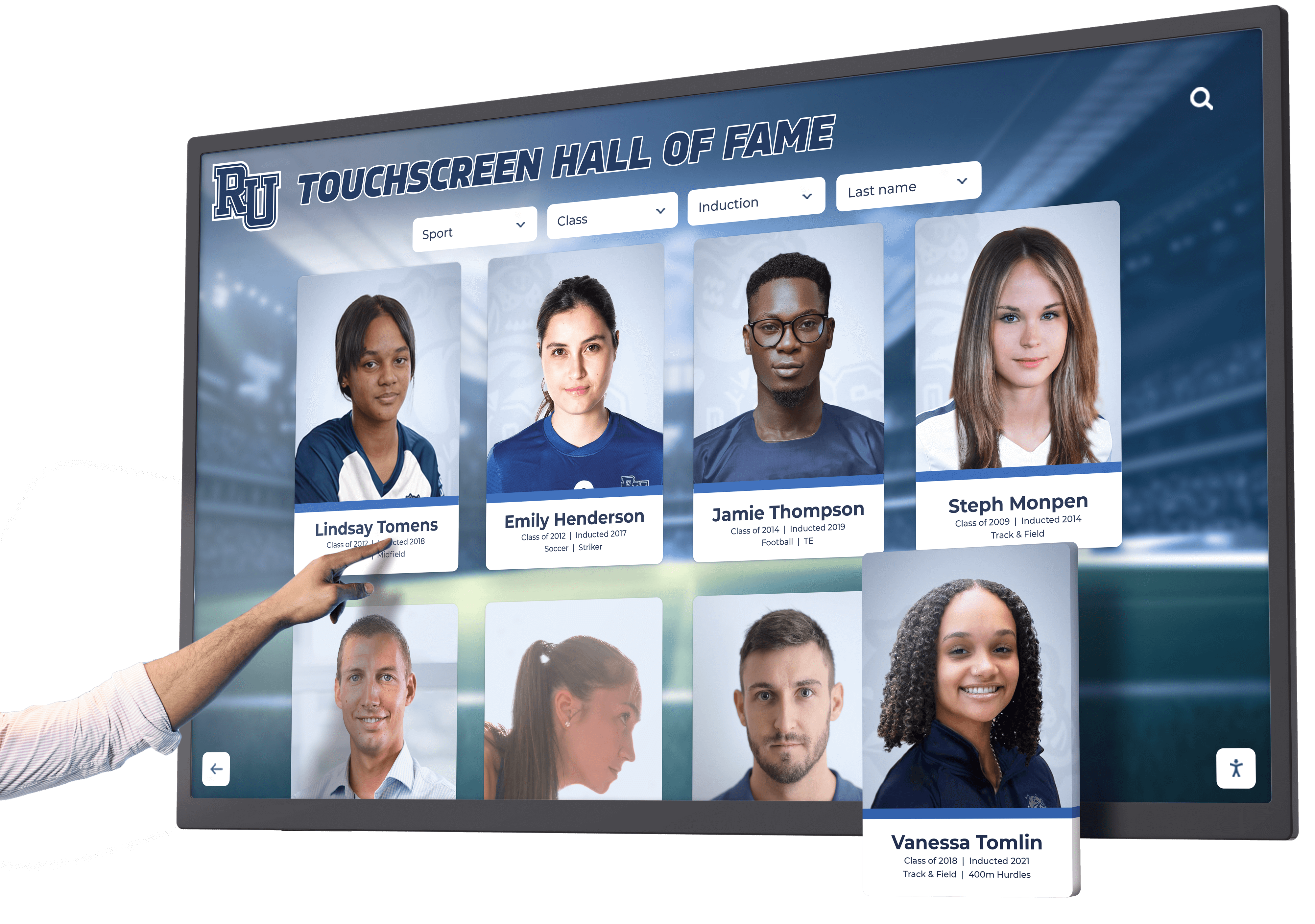
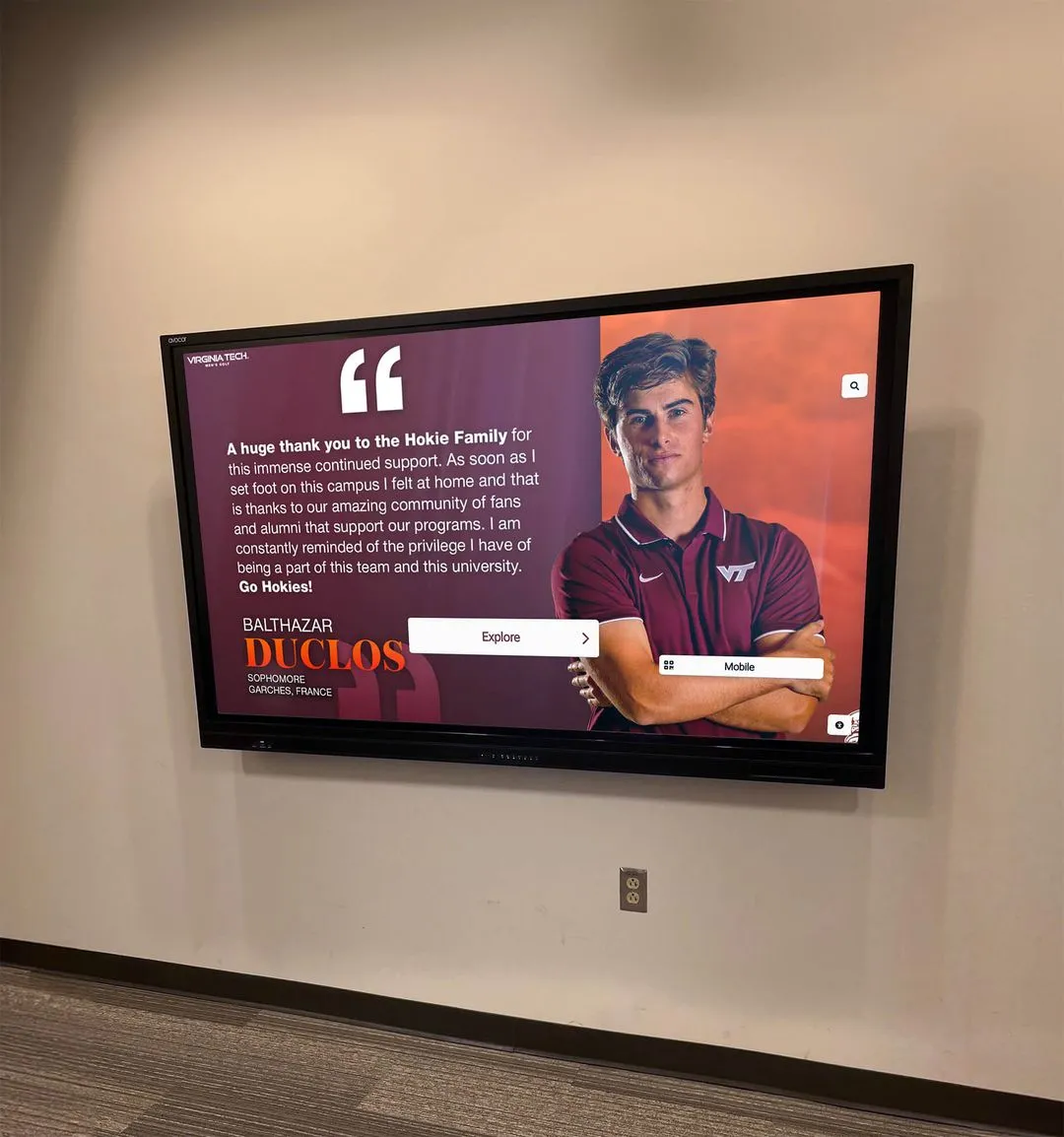
Touch navigation allows visitors to explore All-State wrestler profiles with detailed achievement data, tournament results, and career statistics in engaging, user-controlled experiences
Integration with Real-Time Rankings
During competitive seasons, wrestling programs often track athlete rankings from state wrestling organizations, national ranking services, or conference standings. Awards touchscreen platforms integrate current rankings with All-State historical recognition, creating bridges between past excellence and present performance.
Display features might include:
- Current roster with live state ranking data
- Comparison of current ranked wrestlers to All-State predecessors
- “Path to All-State” projections based on ranking trends
- Historical ranking data for past All-State selections
This integration demonstrates program continuity—today’s ranked wrestlers follow pathways established by All-State predecessors, creating motivational narratives connecting past and present excellence.
All-American Wrestler Recognition: Honoring National Excellence
All-American status represents the highest individual achievement in high school and college wrestling, recognizing top national performers at major tournaments. High school All-Americans typically earn recognition at prestigious events like Fargo Nationals (USA Wrestling), Super 32, FloNationals, or other elite national competitions. College All-Americans place top-8 at NCAA Championships. These honors occur less frequently than All-State selections, making each All-American recognition particularly significant for wrestling programs.
Contextualizing National Achievement
All-American recognition requires contextual explanation for audiences unfamiliar with wrestling’s national competition landscape. Awards touchscreen displays provide space for educational content explaining:
Tournament Context and Prestige
- Which tournaments grant All-American status
- Competition scale (number of participants, qualifying requirements)
- Historical significance of specific events
- Placement levels earning All-American recognition
Rarity and Selectivity Statistics demonstrating All-American achievement rarity create appropriate context:
- “Only 5 wrestlers in program history have earned All-American honors”
- “Fewer than 1% of high school wrestlers earn All-American recognition”
- Comparison to All-State frequency in your program
This context helps students, parents, and community members appreciate achievement significance beyond generic “All-American” labels.
Multi-Level All-American Achievement Tracking
National wrestling competition features multiple achievement tiers and tournaments, each representing distinct accomplishment levels:
High School National Tournaments
- USA Wrestling Fargo Nationals (most prestigious high school event)
- Super 32 Challenge
- FloNationals
- Walsh Ironman
- Beast of the East
- Various national tournament circuits
College All-American Levels
- NCAA Division I, II, or III distinctions
- NAIA National Championships
- NJCAA (junior college) recognition
- Placement levels (champion, runner-up, 3rd-8th place)
Awards touchscreen platforms track these distinctions, ensuring recognition accurately represents achievement context. Profiles might state “NAIA All-American, 4th Place at 157 lbs” rather than generic “All-American” labels, providing specificity valuable for understanding competitive excellence.
Career Achievement Progression
Elite wrestlers often earn multiple All-American honors across careers—annually at major high school events, then continuing through college competition. Digital recognition platforms track complete achievement progressions:
- Chronological All-American achievement timeline
- Tournament-by-tournament results at national events
- Weight class changes across All-American years
- Comparative statistics between All-American seasons
This comprehensive documentation celebrates sustained national excellence while providing current wrestlers with development pathways modeled by successful predecessors. Interactive athletic recognition systems make this multi-year tracking practical through unlimited content capacity and intuitive navigation.
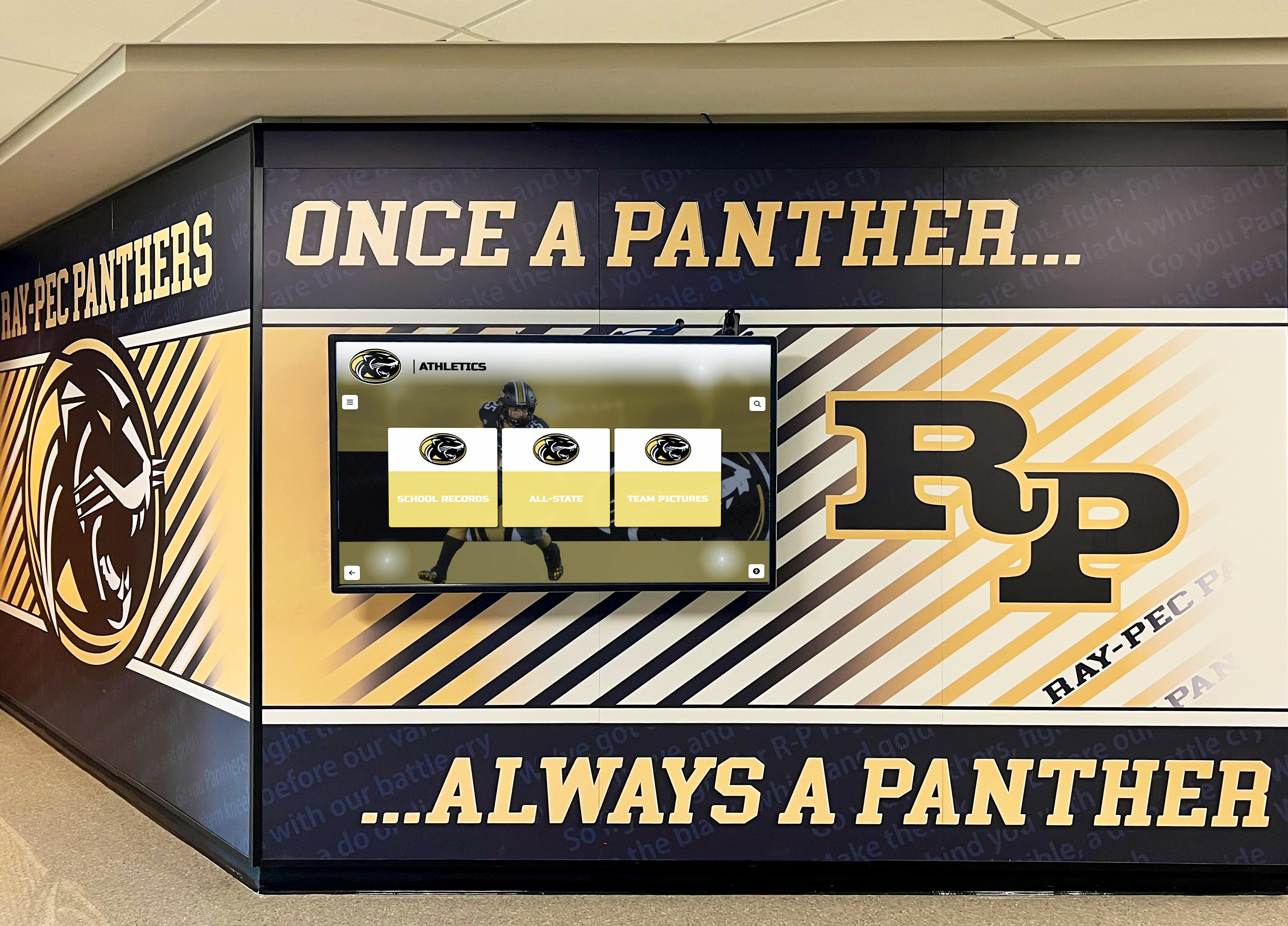
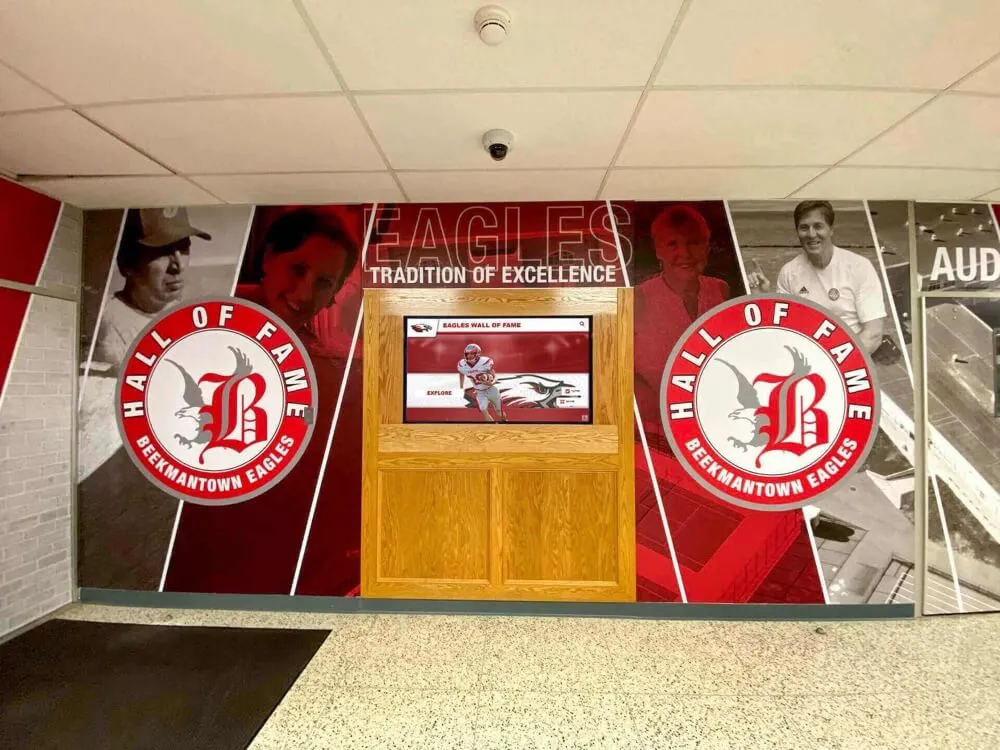
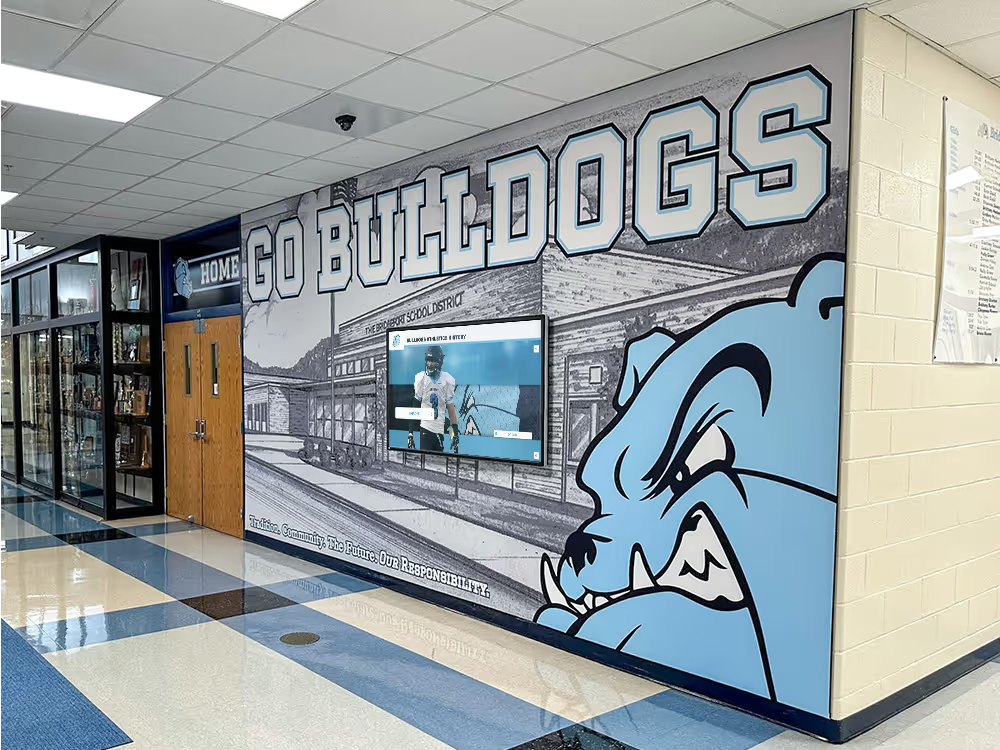
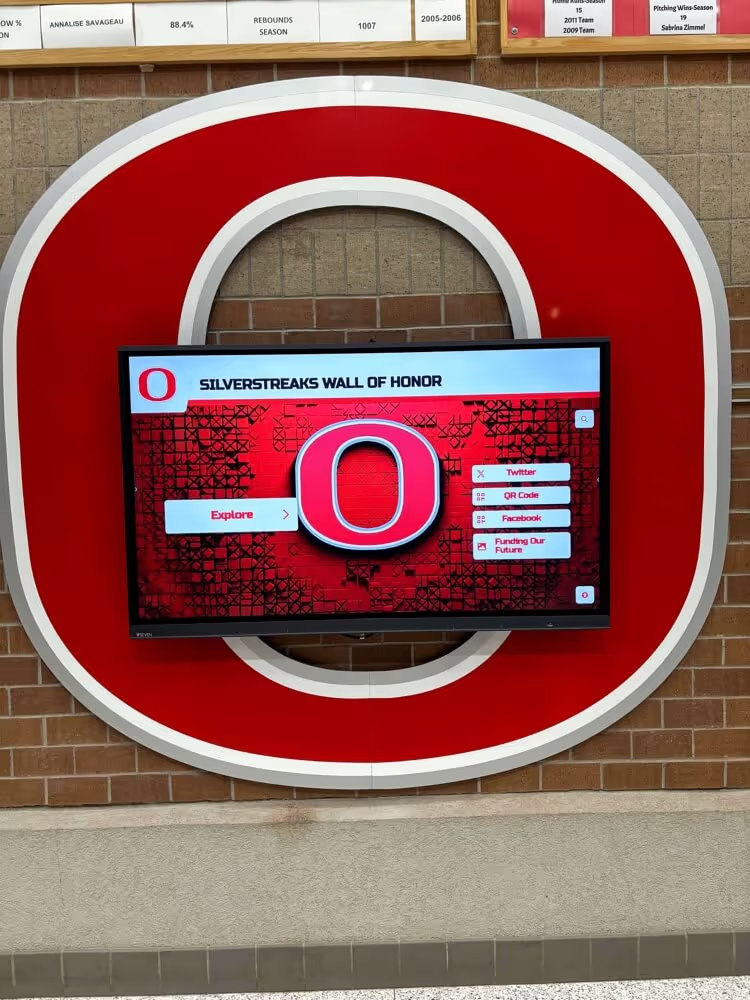
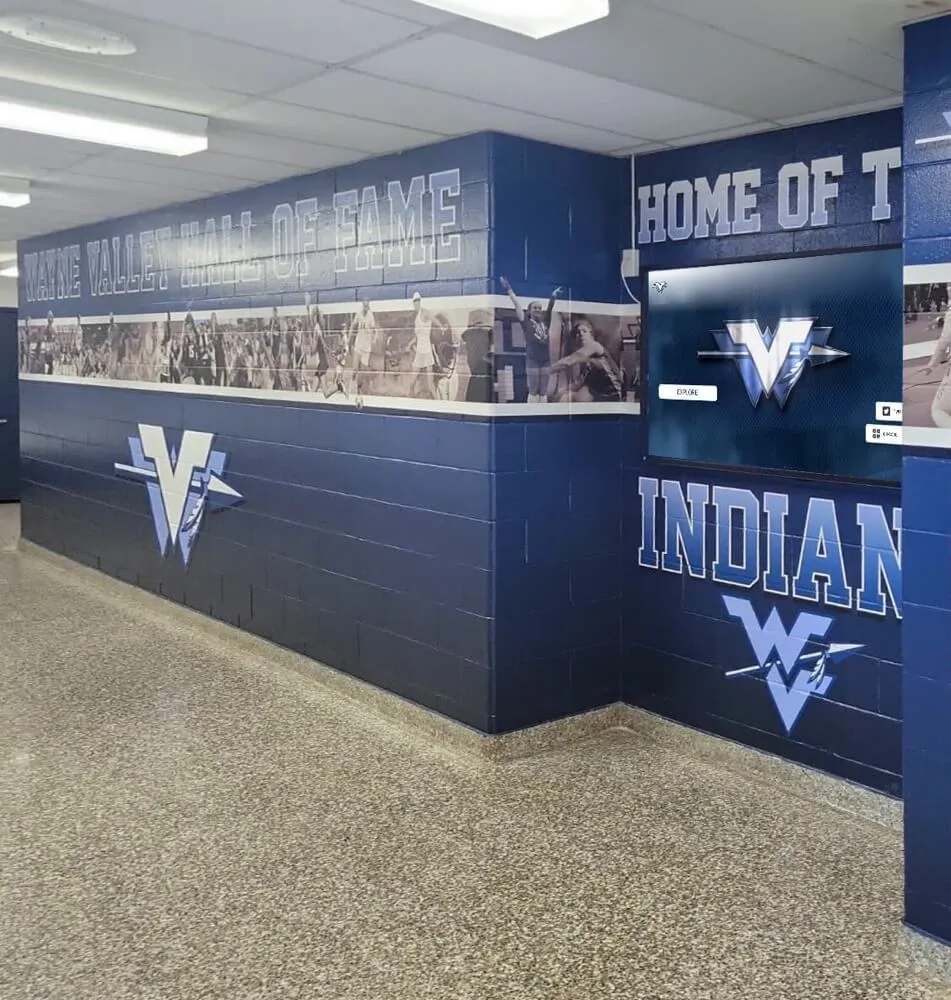
Integrated digital displays within athletic recognition murals combine traditional design elements with modern touchscreen technology for comprehensive achievement celebration
Wrestler of the Week Recognition: Celebrating Weekly Excellence
Weekly recognition programs acknowledge outstanding practice performance, competitive achievement, leadership development, or academic excellence throughout wrestling seasons. These programs motivate athletes by demonstrating that consistent excellence earns visibility, provide coaches with recognition tools reinforcing desired behaviors, and create frequent engagement touchpoints keeping wrestling programs visible to school communities throughout competitive seasons.
Dynamic Weekly Recognition Systems
Traditional Wrestler of the Week recognition relies on temporary methods—announcements during morning broadcasts, posters in hallways, social media posts—that disappear quickly without creating lasting recognition archives. Awards touchscreen platforms transform weekly recognition into permanent, searchable achievement records while maintaining weekly update simplicity.
Simple Weekly Updates Each week, coaches spend 5-10 minutes updating displays:
- Select current Wrestler of the Week from roster
- Upload recent photo (match action or portrait)
- Enter brief achievement description
- Publish update to touchscreen display and mobile platform
The platform automatically archives previous selections, maintains chronological recognition records, and updates display layouts highlighting current selections while preserving historical recognition.
Criteria Flexibility Wrestling programs define Wrestler of the Week criteria matching team values and coaching priorities:
- Match Performance: Outstanding tournament results, upset victories, technical achievement
- Practice Excellence: Work ethic, technique improvement, leadership during training
- Academic Achievement: Grade improvement, honor roll performance, academic milestones
- Character Recognition: Sportsmanship, team support, community engagement
- Milestone Achievement: Career win thresholds, season records, ranking improvements
Awards touchscreen displays clearly communicate selection criteria, helping wrestlers understand recognition pathways and motivating pursuit of weekly honor.
Season-Long Recognition Archives
Weekly recognition accumulates into comprehensive season archives celebrating diverse achievement across roster members. By season’s end, programs honor 12-15 different wrestlers (depending on season length and recognition frequency), distributing recognition broadly rather than concentrating honors on top performers exclusively.
End-of-Season Recognition Summary Season archives create valuable recognition content:
- Complete list of all Wrestler of the Week selections
- Statistics on recognition distribution across weight classes
- Most frequent selection recipients (highlighting sustained excellence)
- Achievement diversity (competitive, academic, character categories)
This archival function transforms temporary weekly recognition into permanent achievement documentation, increasing recognition value for honored wrestlers and families while creating season narratives celebrating team depth and diverse excellence.
Integration with Announcements and Communication
Wrestler of the Week recognition naturally connects to broader program communication needs. Awards touchscreen platforms integrate weekly recognition with announcement systems, creating unified communication hubs where visitors discover both individual recognition and program updates in single displays.
When programs publish weekly wrestling recognitions, displays might simultaneously show:
- Current week’s recognized wrestler
- Upcoming meet schedule
- Recent dual meet results
- Tournament registration information
- Practice schedule changes
- Community event announcements
This integration reduces communication fragmentation—information doesn’t scatter across separate bulletin boards, websites, and social media channels—instead consolidating in accessible touchscreen displays and mobile platforms.
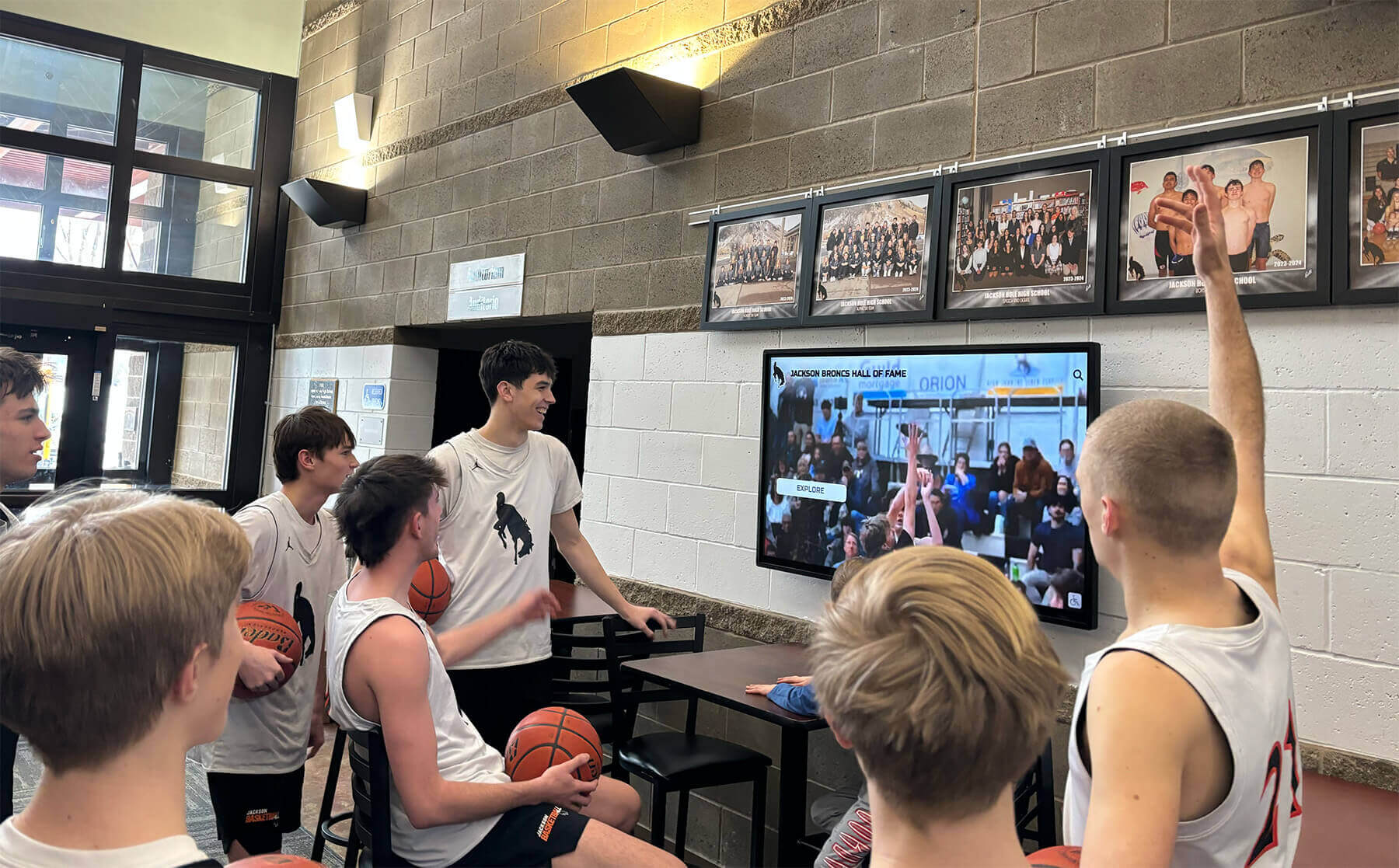
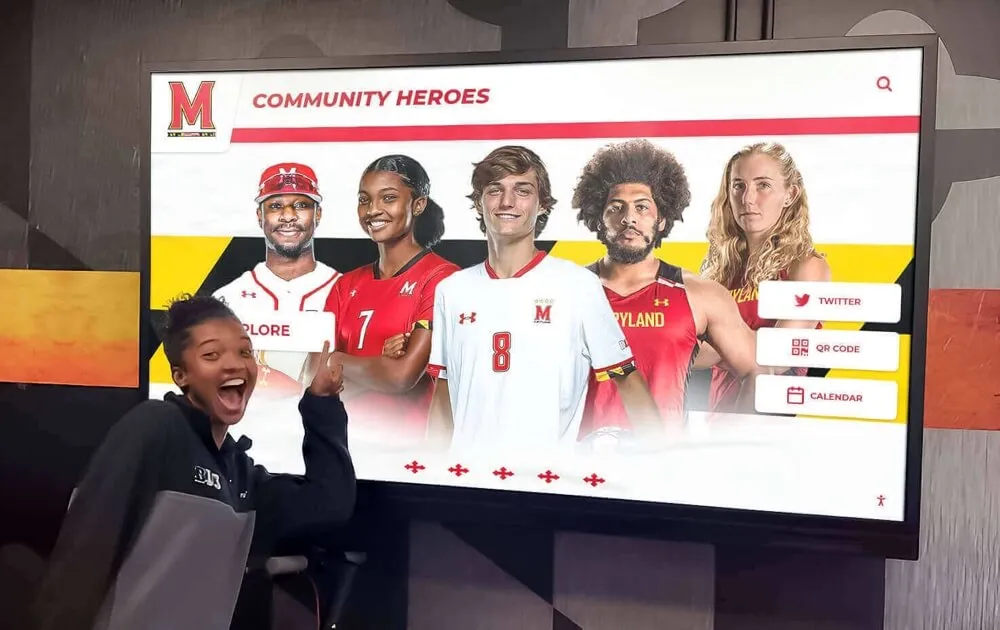
Group viewing experiences around touchscreen displays create social recognition moments where students celebrate peer achievements while exploring program information together
Schedule Management and Tournament Information
Wrestling schedules involve complexity exceeding most other sports—dual meets, weekend tournaments, invitational events, conference championships, district competitions, regional qualifiers, and state tournaments create information management challenges. Parents, athletes, and supporters need constant access to schedule information including dates, locations, start times, weight class restrictions, and tournament formats.
Centralized Schedule Display
Awards touchscreen systems function as schedule command centers, displaying comprehensive meet information accessible to school communities through lobby kiosks and mobile devices. Unlike printed schedules outdated by changes or website calendars requiring navigation through menu systems, touchscreen displays present immediate schedule visibility in high-traffic locations.
Schedule Information Categories Comprehensive wrestling schedule displays include:
Dual Meet Information
- Opponent name and mascot
- Home or away designation
- Venue address with mapping links
- Start time and expected duration
- JV/varsity schedule if applicable
- Special event notes (senior night, rivalry match, etc.)
Tournament Details
- Tournament name and location
- Format (bracket structure, dual meet format, etc.)
- Weight class offerings
- Registration requirements and deadlines
- Weigh-in times and procedures
- Expected competition schedule
- Participating schools or wrestler count
Championship Events
- District, regional, and state tournament information
- Qualification criteria and procedures
- Seeding information when available
- Bracket links and live results
- Venue logistics (parking, concessions, seating)
Real-Time Schedule Updates
Schedule changes occur frequently in wrestling—weather postponements, venue modifications, time adjustments, opponent changes due to forfeits. Traditional printed schedules or website calendars require deliberate checking for updates, often resulting in families missing change notifications.
Awards touchscreen platforms with web-based architecture enable instant schedule updates visible immediately on displays and mobile devices. Coaches or athletic staff modify schedule information from any location—home computers, smartphones, athletic offices—without accessing physical display hardware. Updates appear instantly across all viewing platforms, ensuring accurate information reaches entire wrestling communities.
Automated Notifications Advanced platforms integrate schedule updates with notification systems:
- Email notifications when schedules change
- SMS text alerts for urgent updates
- Mobile app push notifications
- Social media automatic posting
This multi-channel communication ensures schedule changes reach families through preferred communication methods, reducing missed events and confusion.
Integration with Results and Statistics
Schedule displays become more valuable when integrated with results and performance statistics. After each meet, displays update to show:
- Final team scores (dual meet results)
- Individual match results by weight class
- Notable performances (pins, upsets, technical falls)
- Season record updates
- Wrestling ranking changes
This integration transforms schedule displays from passive information sources to active engagement platforms where visitors check results, analyze performance trends, and track season progress.
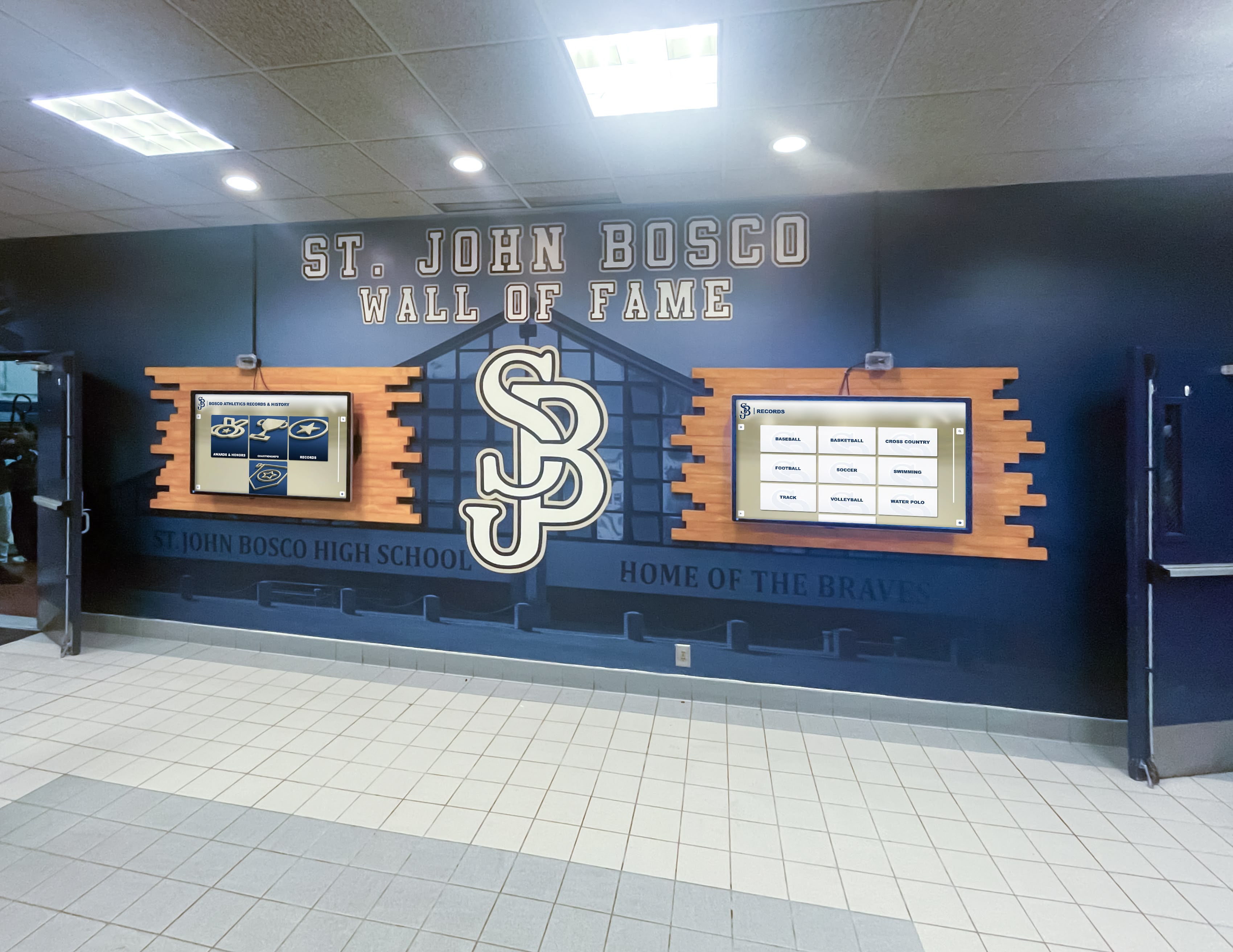
Multiple touchscreen displays in high-traffic hallways maximize visibility for schedule information, recognition content, and program announcements throughout school facilities
Announcements and Program Communication
Wrestling programs constantly communicate with athletes, families, and school communities about practices, meetings, fundraisers, volunteer opportunities, registration deadlines, equipment needs, booster activities, and countless other operational details. Communication fragmentation—messages scattered across emails, website posts, social media, paper flyers, morning announcements—results in missed information and community frustration.
Unified Announcement Hub
Awards touchscreen displays function as unified communication platforms consolidating diverse announcement types in accessible, prominent locations. Rather than hoping stakeholders check email regularly or navigate to program websites, schools place information directly in high-traffic hallways where wrestling community members naturally gather.
Announcement Categories Wrestling program announcements typically include:
Operational Information
- Practice schedule changes or cancellations
- Facility closures or location changes
- Equipment deadlines (ordering singlets, warm-ups, etc.)
- Physical examination requirements
- Registration or permission form due dates
Event Communication
- Team meeting dates and agenda previews
- Parent meeting information
- Banquet planning and ticket sales
- End-of-season awards ceremonies
- Alumni gatherings or homecoming activities
Community Engagement
- Booster club meeting schedules
- Volunteer opportunity postings
- Fundraising campaign progress
- Sponsorship recognition
- Community service projects
Emergency or Urgent Communication
- Weather-related cancellations
- Safety protocols or facility restrictions
- Health communications (illness outbreaks, etc.)
- Immediate schedule changes
Scheduling and Automatic Publishing
Rather than manually updating announcement displays daily, modern platforms include content scheduling capabilities. Coaches or communication staff create announcement content in advance, set publication windows, and let systems automatically publish and remove content based on defined schedules.
For example, tournament registration announcements might automatically appear three weeks before events, remain visible through registration periods, then automatically remove after deadlines pass. Meet reminder announcements appear 48 hours before competitions, ensuring timely visibility without requiring manual daily updates.
This automation reduces communication workload while ensuring timely, relevant announcement visibility—information appears when needed without cluttering displays with outdated content.
Visual Communication and Multimedia
Text announcements communicate information effectively, but visual content creates stronger engagement. Awards touchscreen platforms accommodate diverse content formats:
Photo Announcements
- Team photos from tournaments or events
- Action photos highlighting recent matches
- Behind-the-scenes practice images
- Community service activity documentation
Video Content
- Coach welcome messages or motivational content
- Technique demonstration videos
- Tournament highlight compilations
- Testimonials from alumni or college wrestlers
Infographics and Visual Data
- Season schedule visualizations
- Tournament bracket displays
- Weight class distribution charts
- Program growth statistics
This multimedia approach transforms announcement displays from text-heavy bulletin boards into engaging visual experiences capturing attention while communicating information effectively.
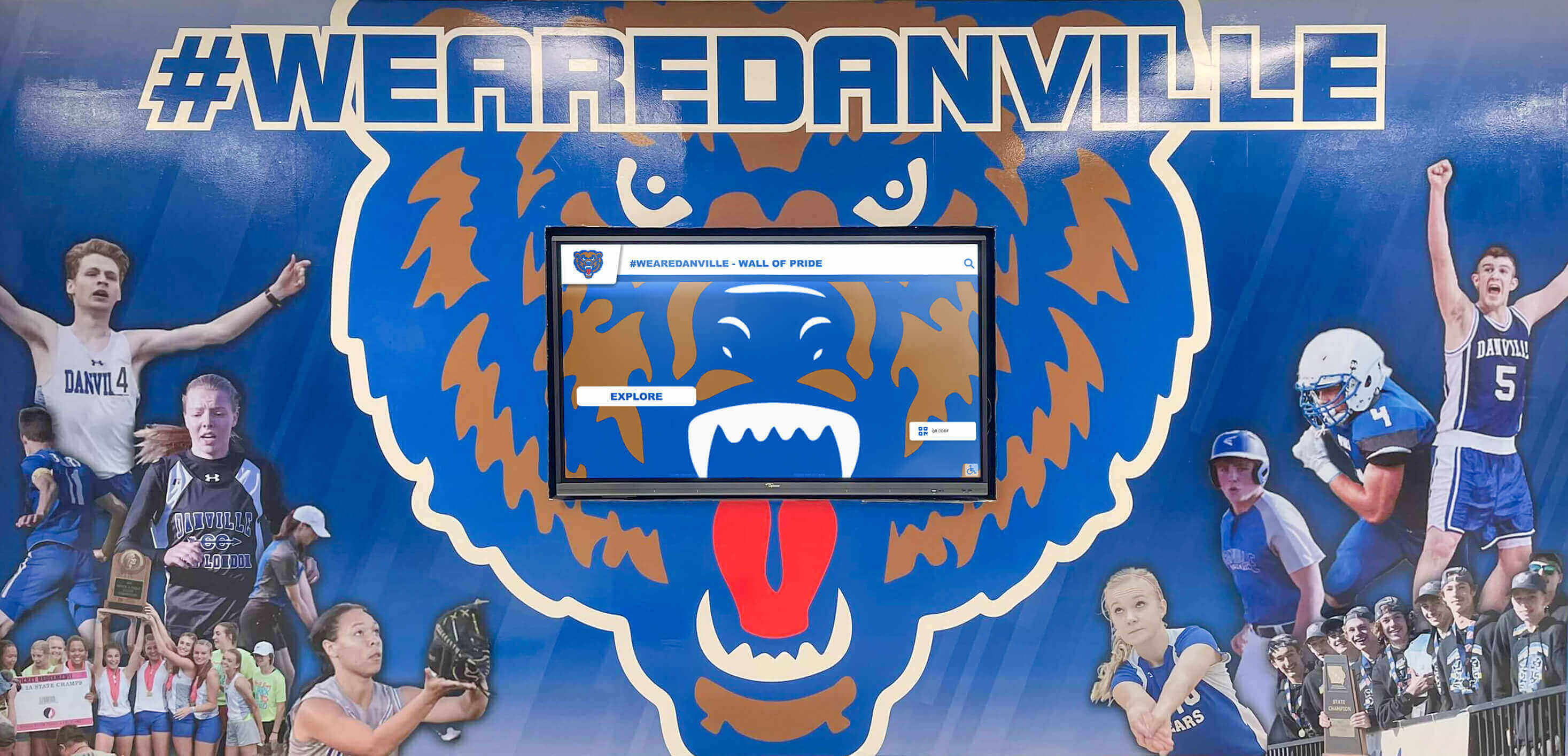
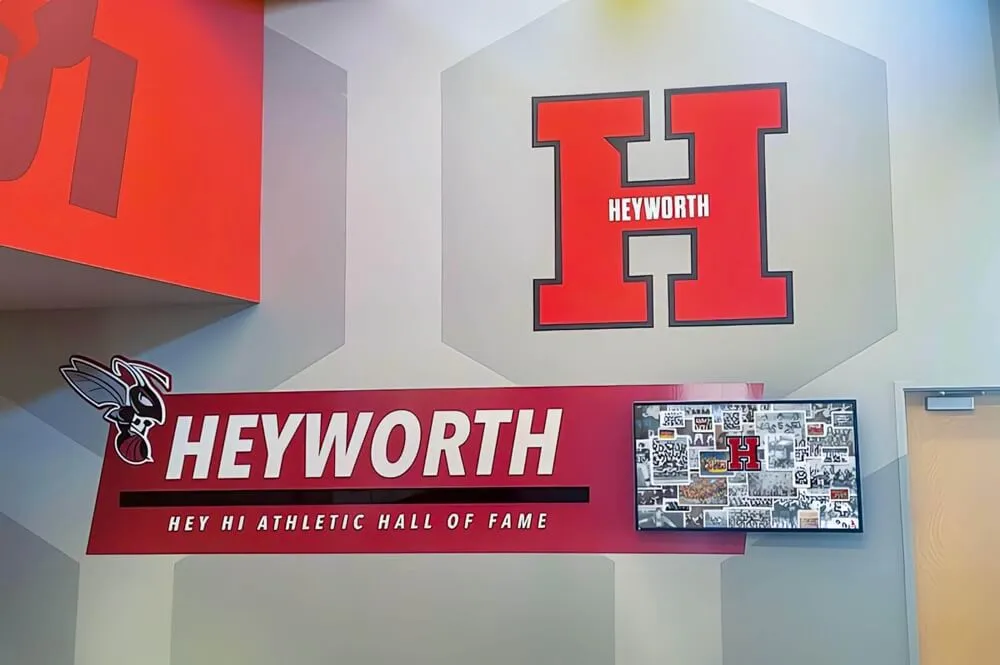
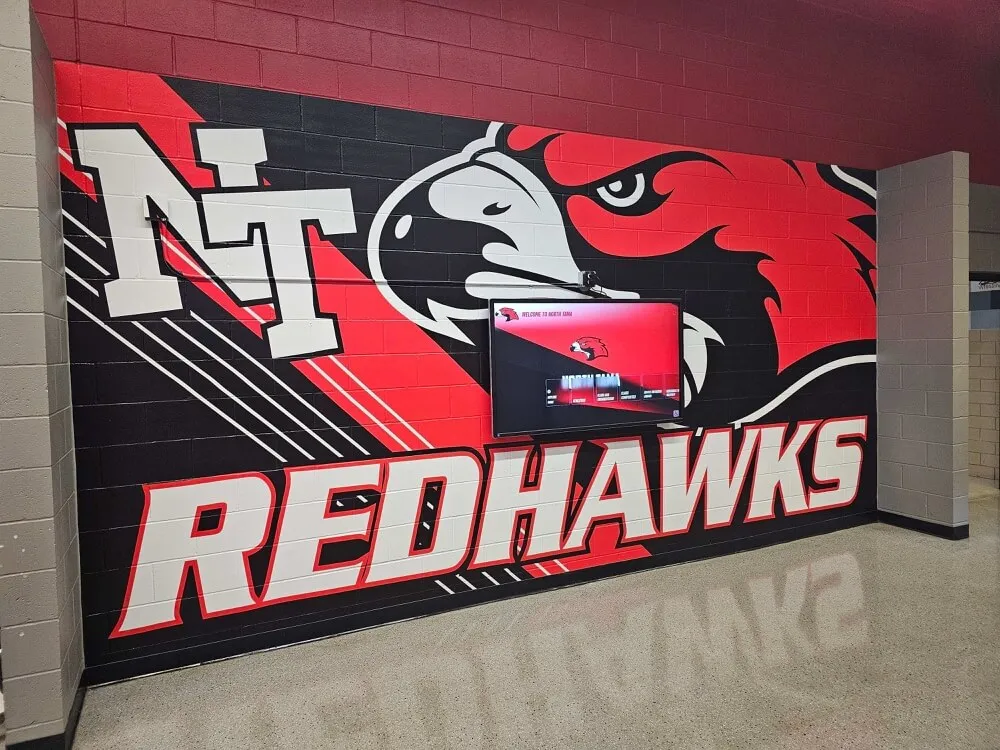
Athletic identity murals incorporating digital displays blend program tradition with modern communication technology, creating prominent announcement platforms that reinforce wrestling program pride and visibility
Implementation Considerations for Wrestling Programs
Transitioning from traditional recognition and communication methods to awards touchscreen systems requires planning around technical requirements, content preparation, stakeholder engagement, and operational integration. Understanding implementation considerations helps wrestling programs maximize technology investment while minimizing disruption.
Technical Requirements and Installation
Location Selection Touchscreen display placement significantly impacts recognition visibility and engagement. Ideal locations include:
- Main school lobbies or entry areas (maximum general visibility)
- Athletic facility entrances (wrestling community focused)
- Gymnasium lobbies (high athlete and family traffic)
- Wrestling room entrances (daily athlete engagement)
Location decisions balance general school visibility attracting diverse audiences with wrestling-specific placement maximizing relevant community engagement.
Power and Network Requirements Awards touchscreen installations require standard electrical outlets and internet connectivity. Web-based platforms need network access for content updates and mobile synchronization—wired ethernet connections provide most reliable performance, though WiFi connections typically suffice for display functions.
Schools with limited networking infrastructure or controlled network environments need coordination with IT departments ensuring displays receive appropriate network access and bandwidth allocation.
Physical Installation Most programs choose between two installation approaches:
Wall mounting: Displays mount directly to walls using commercial-grade brackets, creating permanent installations integrated with hallway architecture. Wall mounting works well for new construction or renovation projects where display locations receive planning consideration.
Freestanding kiosks: Self-contained floor kiosks include integrated displays, computers, and protective enclosures. Freestanding units offer installation flexibility—moving between locations requires simple relocation rather than wall modifications—making them ideal for rental facilities or spaces with mounting restrictions.
Content Preparation and Migration
Historical Recognition Data Collection Implementing comprehensive hall of fame or All-State recognition requires gathering historical data often scattered across paper archives, old websites, trophy engravings, and institutional memory. Successful implementations typically involve:
- Archive research identifying past honorees and achievement data
- Coach and administrator interviews filling information gaps
- Reunion outreach gathering alumni information and photos
- Athletic department records review for statistical verification
- Historical timeline development contextualizing achievement eras
Most programs phase content development, launching with recent honorees (last 5-10 years) and gradually adding historical recognition as research progresses.
Photo and Media Collection Recognition effectiveness increases significantly with quality visual content. Content preparation includes:
- Current athlete photos (team photos, portraits, action shots)
- Historical photo scanning and digitization
- Video clip collection and editing
- Permission documentation for photo and media usage
Schools often discover photo collection as the most time-intensive implementation aspect, particularly for historical recognition. However, photo acquisition typically continues post-launch rather than delaying implementation—profiles begin with available photos, and programs add media as it becomes available.
Content Organization and Categorization Before entering recognition data, programs benefit from organizational planning:
- Recognition category definitions (Hall of Fame, All-State, All-American, etc.)
- Achievement criteria documentation
- Tagging systems for searchability
- Information hierarchy (what appears prominently vs. detailed views)
Clear organization enables intuitive navigation and content discovery, improving user experiences while simplifying ongoing content management.
Stakeholder Engagement and Communication
Athletic Department Coordination Wrestling programs rarely operate in isolation. Implementation success requires coordination with:
- Athletic directors approving technology investments and display locations
- Other coaching staff potentially sharing displays or learning from implementation
- Facilities managers coordinating installation logistics
- IT departments providing network access and technical support
Early stakeholder engagement prevents implementation obstacles while potentially expanding implementation scope—successful wrestling program implementations often inspire school-wide athletic hall of fame projects benefiting all sports programs.
Booster and Alumni Organizations Parent booster clubs and alumni organizations often fund recognition projects or provide volunteer support for content development. Engaging these groups early creates:
- Potential funding sources for implementation costs
- Volunteer assistance with historical research and photo collection
- Advocacy support building broader school community backing
- Ongoing content contributors (alumni updates, historical stories, etc.)
Wrestler and Family Communication Introducing touchscreen recognition to wrestling communities requires explaining technology purposes, demonstrating features, and encouraging engagement. Communication strategies include:
- Parent meeting demonstrations showing navigation and content
- Wrestler training sessions teaching display interaction
- Social media promotion highlighting recognition features
- Email campaigns explaining mobile access and QR codes
Early engagement builds excitement while setting expectations for ongoing content development and feature additions.
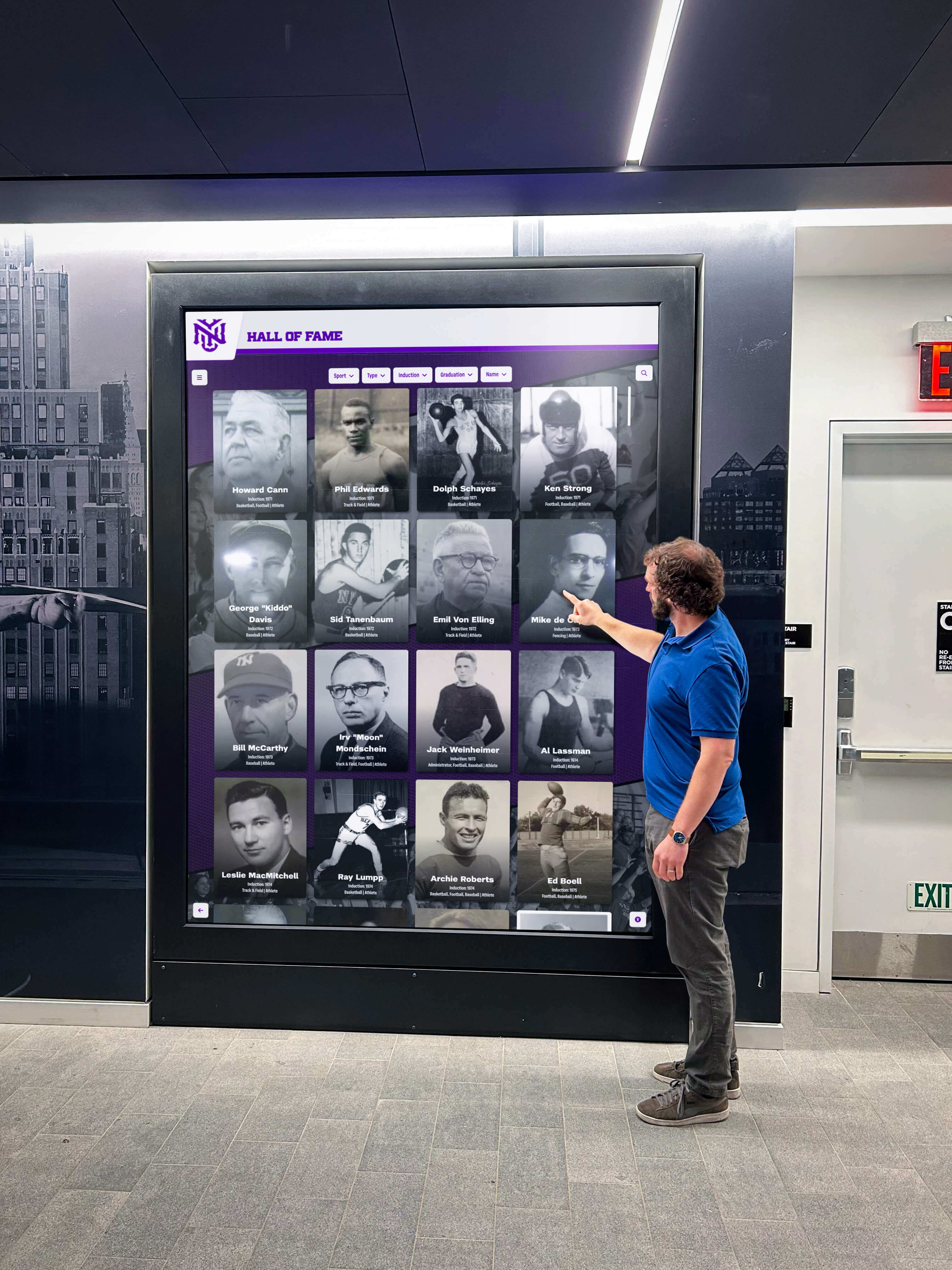
Natural interaction patterns emerge as visitors discover touchscreen navigation, exploring wrestling recognition content through intuitive touch gestures and visual discovery pathways
Budget Considerations and Funding Strategies
Implementation Cost Components Awards touchscreen system costs typically include:
Hardware costs: Touchscreen displays, mounting hardware, protective enclosures, and computing devices Software costs: Platform licensing (often annual subscriptions or one-time purchases) Installation costs: Professional installation services or in-house labor Content development: Initial historical research and data entry (often internal labor) Ongoing costs: Software subscriptions, electricity, occasional maintenance
Total implementation costs vary significantly based on display size, installation complexity, and software platform selection. Most wrestling programs invest between $5,000-$15,000 for comprehensive installations including hardware, software, and professional installation.
Funding Approaches Wrestling programs pursue various funding strategies:
Booster Club Funding Parent booster organizations frequently fund recognition projects through:
- Direct booster club budget allocations
- Special fundraising campaigns specifically for recognition projects
- Memorial or tribute donations honoring past coaches or athletes
- Corporate sponsorship sales positioning displays as advertising opportunities
Alumni Donations Wrestling alumni maintain strong program connections, making them natural recognition project donors. Effective alumni outreach emphasizes:
- Opportunity to honor teammates and coaches
- Legacy creation preserving program history
- Permanent visibility through display prominence
- Naming opportunities (display sponsorship levels)
School Budget Allocations Some athletic departments or schools fund recognition projects directly, viewing touchscreen displays as infrastructure investments benefiting multiple programs long-term.
Grants and Special Funding Occasional opportunities exist through:
- Community foundation grants supporting youth athletics
- State athletic association grants or awards
- Corporate educational giving programs
- Technology integration grants emphasizing digital learning tools
Training and Ongoing Management
Content Management Training Platform usability determines whether wrestling programs maintain updated, engaging recognition content or let displays become stale. Effective implementations include:
- Training sessions for coaches and athletic staff
- Step-by-step documentation for common updates
- Quick reference guides for routine tasks
- Technical support contact information
- Annual refresher training as staff changes
Content Update Responsibilities Clear responsibility assignment prevents content staleness:
- Head coach oversight of wrestler profiles and achievement updates
- Assistant coach management of weekly recognition
- Athletic director or secretary schedule and announcement updates
- Booster volunteer historical content development
- IT support technical troubleshooting and infrastructure management
Maintenance and Technical Support Most awards touchscreen platforms require minimal technical maintenance—web-based systems update automatically, touchscreen hardware includes multi-year warranties, and cloud infrastructure eliminates local server management. However, occasional needs include:
- Screen cleaning (fingerprint removal, dust)
- Physical inspection for damage
- Software support for user questions
- Content backup procedures
- System access credential management
Clear maintenance procedures and support contacts prevent minor issues from becoming content update obstacles.
Accessibility and Inclusive Recognition
Wrestling programs serve diverse communities where accessibility considerations ensure recognition reaches all stakeholders regardless of physical abilities, technical literacy, or language backgrounds. Modern awards touchscreen platforms incorporate accessibility features supporting inclusive recognition experiences.
Physical Accessibility Standards
ADA Compliance Americans with Disabilities Act guidelines specify accessibility requirements for public spaces including display heights, approach clearances, and reach ranges. Compliant installations feature:
- Display mounting heights accommodating wheelchair users
- Clear floor space for wheelchair maneuvering
- Reachable touch targets meeting size and positioning standards
- Adjustable display angles improving viewing for various heights
Web Content Accessibility Guidelines (WCAG 2.1 AA) Digital accessibility standards ensure content remains accessible to visitors with visual, hearing, motor, or cognitive disabilities. WCAG 2.1 AA compliance requires:
- Sufficient color contrast for text readability
- Keyboard navigation alternatives to touch interaction
- Screen reader compatibility for visually impaired users
- Caption availability for video content
- Adjustable text sizing options
- Alternative text descriptions for images
Many digital signage platforms lack WCAG accessibility features, creating exclusive rather than inclusive recognition experiences. Purpose-built recognition platforms prioritize accessibility, ensuring all community members access wrestling achievement information regardless of disability status.
Mobile and Remote Accessibility
Physical touchscreen displays provide prominent campus recognition, but mobile access extends recognition reach to stakeholders unable to visit campus regularly—alumni living remotely, families during school hours, college recruiters researching programs, or community members without regular campus access.
Complete accessibility requires:
- Responsive mobile web design adapting to smartphone screens
- Mobile app alternatives where appropriate
- QR code access from printed materials
- Search engine discoverability for public recognition content
- Social media integration enabling content sharing
This multi-platform accessibility transforms recognition from location-dependent displays to accessible-anywhere digital experiences, dramatically expanding engagement potential.
Language Accessibility
Wrestling programs in diverse communities benefit from multilingual recognition content. Platform features supporting language accessibility include:
- Multiple language versions of content
- Automatic translation integration
- Language selection options on touchscreen interfaces
- Bilingual announcement capabilities
While full translation requires additional effort, even partial language support (translated navigation, bilingual announcements) improves accessibility for non-English-speaking families.
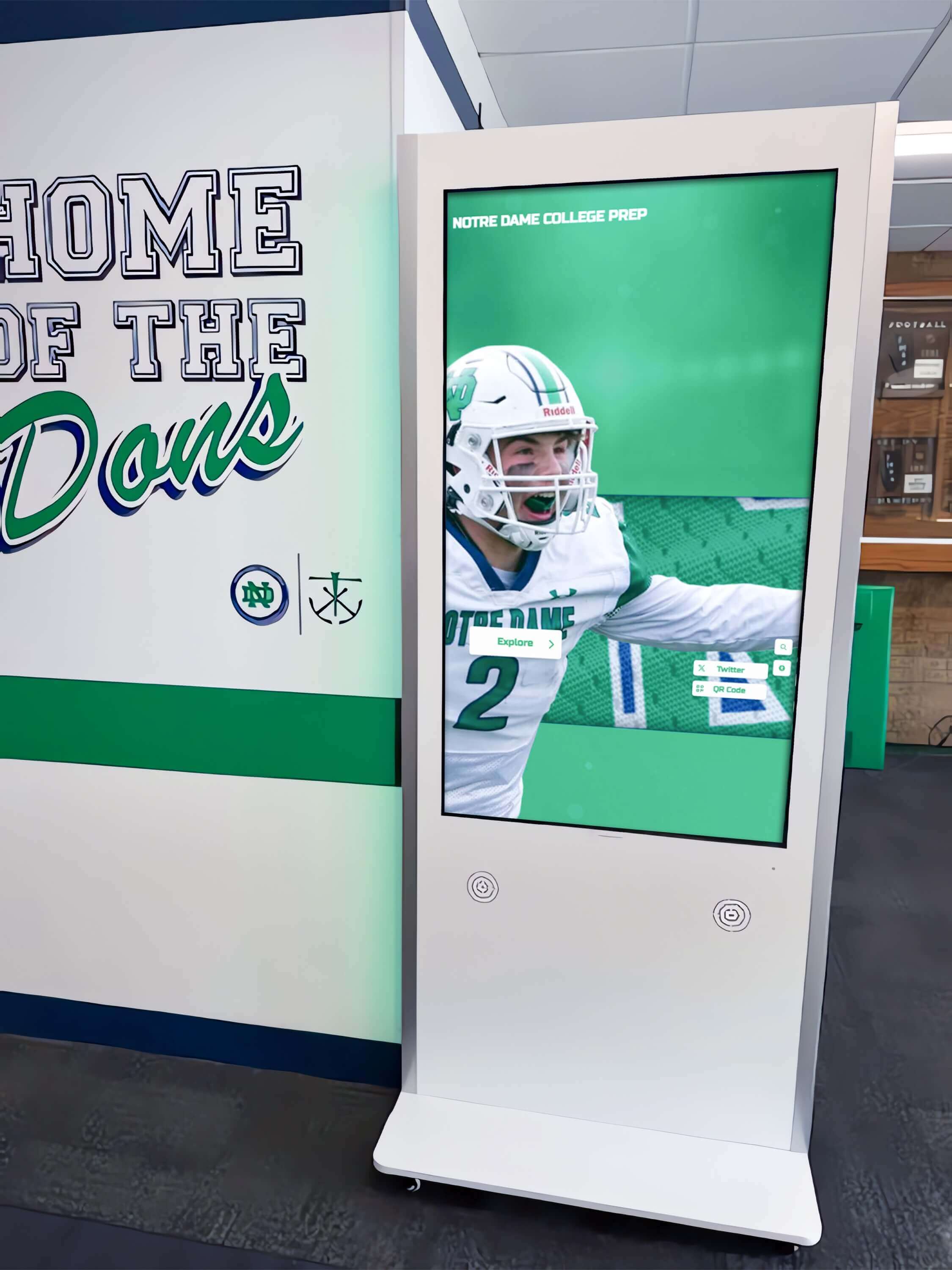
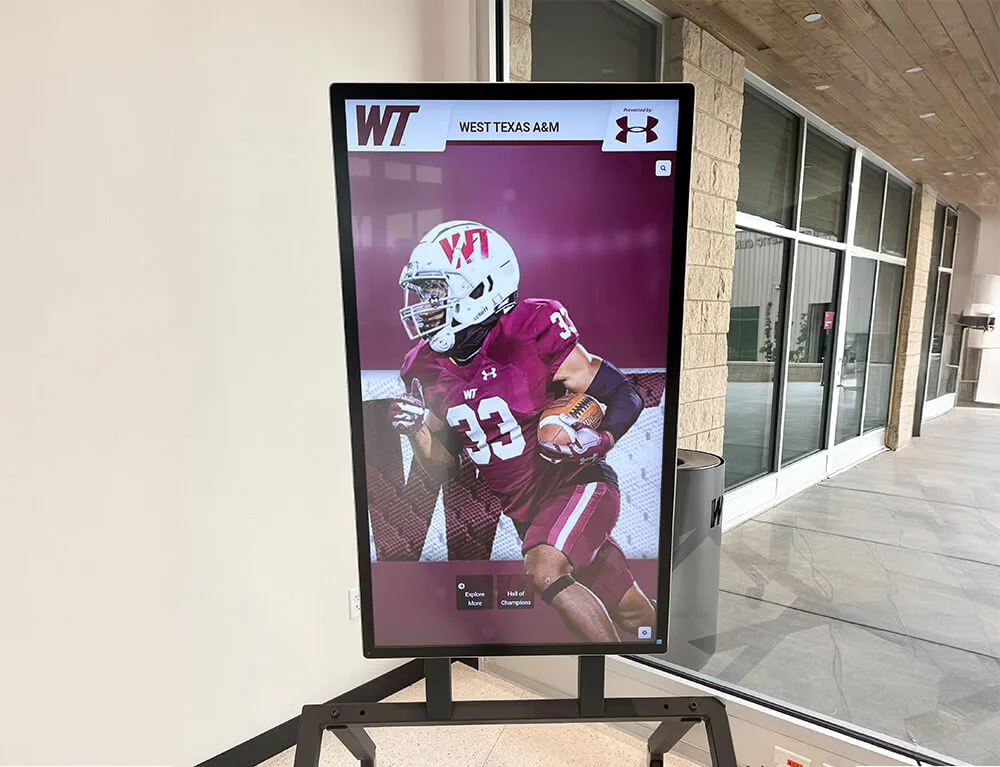
Freestanding kiosk installations provide flexible placement options while maintaining ADA accessibility standards through thoughtful height, approach clearance, and interaction design
Advanced Features and Future Capabilities
Awards touchscreen technology continues evolving, introducing advanced features expanding recognition capabilities and engagement opportunities. Wrestling programs benefit from understanding emerging capabilities as they plan long-term recognition strategies.
Statistical Integration and Performance Tracking
Modern platforms increasingly integrate with competition management systems, automatically importing match results, tournament placements, and performance statistics. This integration eliminates manual data entry while ensuring accuracy for:
Automated Record Boards Systems track wrestler statistics across careers, automatically calculating records for:
- Career win totals and winning percentages
- Season win records
- Fastest pin times
- Most takedowns in matches or seasons
- Technical fall records
Digital record boards automatically update as current wrestlers break historical records, creating dynamic recognition celebrating both current achievement and historical excellence.
Comparative Analytics Advanced platforms enable performance comparisons:
- Current wrestler statistics versus historical averages
- Weight class performance trends across program history
- Season comparison tools for multi-year athletes
- Team performance metrics tracking program development
Social Media Integration
Recognition effectiveness increases when wrestling programs amplify touchscreen content across social media platforms. Integration features include:
Automatic Social Posting Platforms automatically post recognition updates to program social media:
- Weekly Wrestler of the Week announcements
- New hall of fame inductee profiles
- Achievement milestones (100th career win, etc.)
- Schedule reminders and results
Social Sharing Capabilities Touchscreen displays and mobile platforms include social sharing buttons enabling:
- Wrestler profile sharing to personal social media
- Achievement announcement sharing by families
- Tournament result distribution
- Photo and video content amplification
Social Media Content Aggregation Some platforms aggregate program social media content into touchscreen displays, showing live feeds from Twitter, Instagram, or Facebook alongside recognition content.
Sponsorship and Revenue Opportunities
Awards touchscreen displays create advertising inventory monetizing recognition platforms through sponsor relationships. Revenue features include:
Sponsor Recognition Displays
- Sponsor logos on display home screens or rotation screens
- Sponsor profiles similar to wrestler profiles
- “Sponsored by” attributions on specific content sections
- Advertisement rotation between recognition content
Tiered Sponsorship Levels Programs create sponsorship packages at multiple investment levels:
- Presenting sponsors (primary display branding)
- Category sponsors (Hall of Fame sponsor, Schedule sponsor, etc.)
- Individual recognition sponsors (sponsor specific wrestler profiles)
- Event sponsors (sponsor tournament or meet recognition)
Revenue Impact Wrestling programs with active sponsor programs often generate $5,000-$15,000 annually from touchscreen display sponsorships, offsetting implementation costs while creating sustainable funding for program operations.
Virtual Reality and Augmented Reality Integration
Emerging technologies expand recognition experiences beyond traditional screen viewing:
Virtual Arena Tours VR integration enables virtual tours of wrestling facilities, championship arenas, or historical competition venues accessed through touchscreen displays or mobile apps.
Augmented Reality Recognition AR features overlay digital content onto physical spaces:
- Point smartphones at hallway walls to see virtual hall of fame displays
- AR viewing of historical match footage “projected” onto current mats
- Virtual trophy cases appearing through smartphone AR viewers
While still emerging, these technologies represent future directions for recognition platforms.

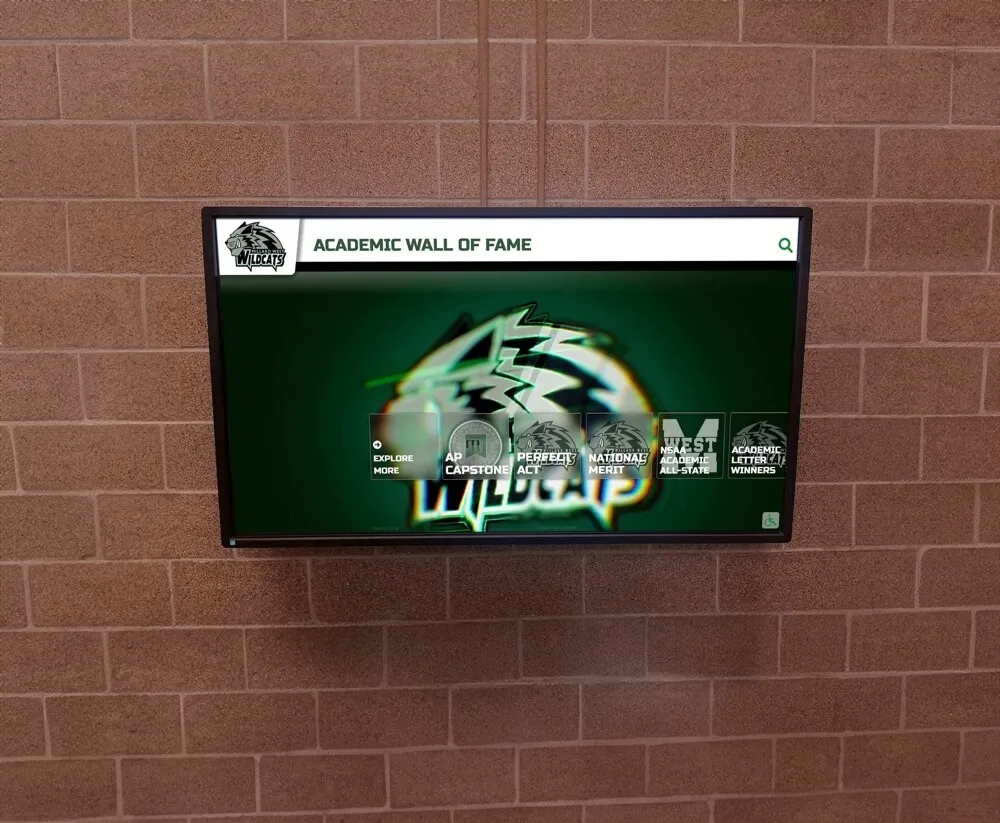
Intuitive card-based navigation patterns enable visitors of all technical abilities to explore wrestler profiles through simple touch gestures and visual recognition pathways
Platform Selection: Evaluating Awards Touchscreen Solutions
Wrestling programs considering touchscreen implementations face technology decisions affecting recognition effectiveness, management workload, and long-term costs. Understanding platform evaluation criteria helps programs select solutions matching their specific needs and constraints.
Web-Based vs. Native Application Architecture
Web-Based Platform Advantages Modern recognition platforms operate on web architectures where content management and display happen through web browsers rather than installed applications:
- Universal Access: Content updates from any device with web browsers (computers, tablets, smartphones)
- Automatic Updates: Platform improvements deploy automatically without software installation or hardware access
- Mobile Synchronization: Same content appears on touchscreens and mobile devices without separate mobile app development
- IT Department Independence: No software installation, server maintenance, or technical expertise requirements
- Device Flexibility: Works on various touchscreen hardware without device-specific configurations
- Accessibility Compliance: Web accessibility standards apply directly, simplifying WCAG compliance
Native Application Considerations Older recognition systems use native applications installed on display computers:
- Require physical hardware access for software updates
- Need IT expertise for installation and troubleshooting
- Create separate mobile app development requirements
- Limit content management to specific devices or software installations
- Complicate accessibility compliance through platform-specific requirements
For most wrestling programs with limited IT resources and needs for simple content management, web-based platforms provide significant operational advantages.
Content Management Complexity
Platform usability determines whether busy wrestling coaches maintain updated content or let recognition become stale. Evaluation criteria include:
User Interface Design
- Intuitive navigation requiring minimal training
- Visual editing with preview capabilities
- Template-based layouts simplifying content creation
- Drag-and-drop functionality for photos and media
- Mobile-friendly content management (update from smartphones)
Common Task Simplicity Evaluate ease of frequent updates:
- Adding new wrestler profiles (should take under 5 minutes)
- Publishing weekly recognition
- Updating schedules and announcements
- Modifying existing content
- Uploading photos and videos
Technical Support Availability
- Phone or chat support accessibility
- Response time expectations
- Training resource quality (videos, documentation)
- User community forums or peer support
Recognition Capacity and Limitations
Unlimited vs. Tiered Pricing Models Some platforms charge per-inductee, per-profile, or implement content limits encouraging frequent upsells. These pricing models create artificial capacity constraints—programs wanting to recognize additional wrestlers face unexpected costs.
Platforms with unlimited capacity eliminate these constraints, allowing programs to recognize every deserving wrestler without budget implications or artificial selection limitations.
Media Storage Limits Photo and video content require significant storage. Platforms with storage limits force difficult decisions:
- Limiting photos per wrestler
- Reducing video content
- Purchasing additional storage
- Deleting older content to accommodate new recognition
Unlimited storage removes these constraints, enabling comprehensive multimedia recognition.
Customization and Branding
Wrestling programs benefit from recognition displays reflecting team identity through colors, logos, and design elements. Evaluation considerations include:
Visual Customization Options
- Custom color schemes matching team colors
- Logo placement and sizing control
- Background image customization
- Font selection for brand consistency
Layout Flexibility
- Multiple template options for different content types
- Custom layout creation capabilities
- Category organization matching program structure
- Navigation customization for program-specific needs
White-Label Capabilities Full white-label platforms allow programs to present recognition as their own branded systems rather than third-party platforms, strengthening program identity and ownership.
Mobile and Remote Access
Mobile Web Platforms Responsive web design automatically adapts content for smartphone viewing without separate mobile app requirements.
Native Mobile Apps Some platforms provide dedicated iOS and Android apps with potentially enhanced features:
- Push notification capabilities
- Offline content access
- Native photo uploading from smartphones
- App store presence and discovery
QR Code Integration Evaluate QR code functionality:
- Generate codes linking to specific wrestler profiles
- Create codes for announcement access
- Print QR codes on programs, posters, or facilities
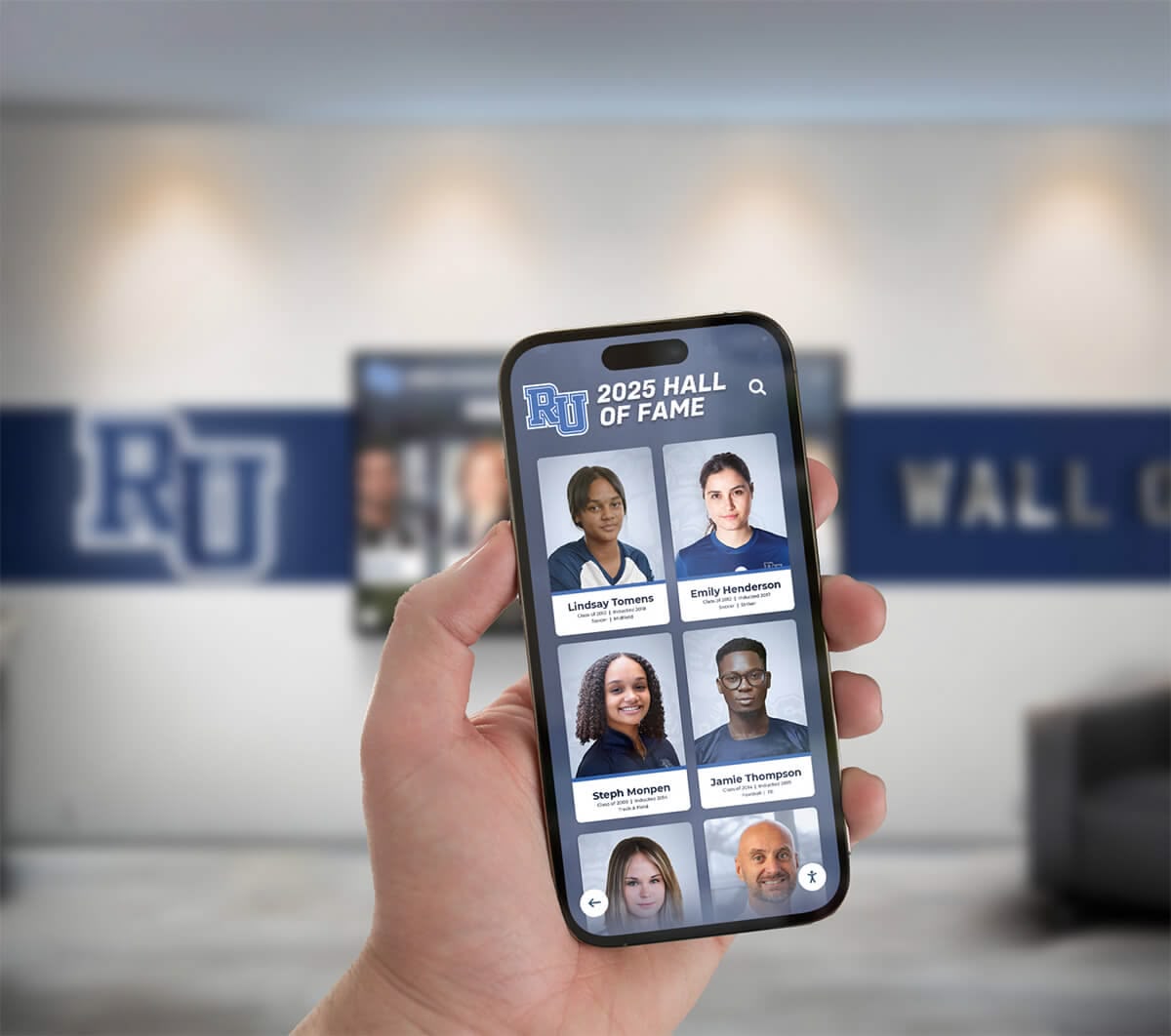
Mobile accessibility extends recognition reach beyond physical displays, enabling families, alumni, and community members to explore wrestling achievement from anywhere through smartphones and tablets
Support and Longevity
Vendor Stability Platform longevity affects recognition investment protection:
- Company history and financial stability
- Installation base and market presence
- Development roadmap and feature velocity
- User community size and engagement
Data Portability Ensure platforms enable content export protecting against:
- Vendor discontinuation
- Platform changes requiring migration
- Contract disputes
- Technology transitions
Standard export formats (CSV, JSON, XML) facilitate data migration if future platform changes become necessary.
Service Level Agreements Understand support commitments:
- Platform uptime guarantees
- Maintenance window policies
- Support response time commitments
- Update frequency and communication
Case Applications: Wrestling Program Recognition Scenarios
Understanding how different wrestling programs apply awards touchscreen technology helps programs envision implementation approaches matching their specific contexts and needs.
Small Program Scenario: Building Recognition Foundations
Program Context Small high school wrestling program with 20-25 roster members, modest competitive success (occasional individual qualifiers for state tournaments), limited historical documentation, and volunteer coaching staff with minimal administrative time.
Implementation Approach Focus on foundational recognition establishing program presence and building toward comprehensive systems:
- Current Roster Recognition: Athlete profiles with photos, weight classes, and season records
- Weekly Recognition: Simple Wrestler of the Week rotation celebrating effort and improvement
- Schedule Display: Meet calendar and tournament information eliminating communication confusion
- Announcement System: Practice changes, important deadlines, and event information
Benefits Realized
- Increased program visibility throughout school
- Improved parent communication and engagement
- Foundation for expanding recognition as program grows
- Motivation for current wrestlers through visible recognition
Established Program Scenario: Comprehensive Achievement Recognition
Program Context Successful high school program with 40-50 roster members, consistent state qualifier production, 30-year history, multiple All-State and occasional All-American wrestlers, and full-time coaching staff with athletic department support.
Implementation Approach Comprehensive multi-category recognition celebrating program depth:
- Hall of Fame: 40+ inductees from program history with detailed profiles
- All-State Recognition: Complete documentation of all-state selections spanning 15 years
- All-American Honor: Profiles for rare national-level achievers
- Current Season Recognition: Roster profiles, weekly awards, ranking updates
- Schedule and Results: Complete meet information with result integration
- Record Boards: Career win leaders, season records, program milestones
Benefits Realized
- Complete program history preservation
- Enhanced recruiting positioning through achievement demonstration
- Stronger alumni engagement through comprehensive historical recognition
- Increased community pride in program excellence
Club Wrestling Scenario: Multi-Level Recognition
Program Context Year-round wrestling club serving youth through high school levels, multiple coaches and teams, tournament-focused competition schedule, and active parent booster organization.
Implementation Approach Age-group and achievement-level recognition appropriate for developmental programming:
- Team Recognition: Separate sections for youth, middle school, and high school teams
- Tournament Results: Continuous updating with tournament placements and achievements
- Progression Tracking: Multi-year athlete development documentation
- Schedule Management: Complex tournament calendar for multiple age groups
- Registration and Communication: Event registration, practice schedules, club announcements
Benefits Realized
- Parents easily track athlete progress across multiple seasons
- Tournament schedule confusion reduction
- Achievement celebration across all age and skill levels
- Club identity and community building
- Enhanced retention through visible recognition
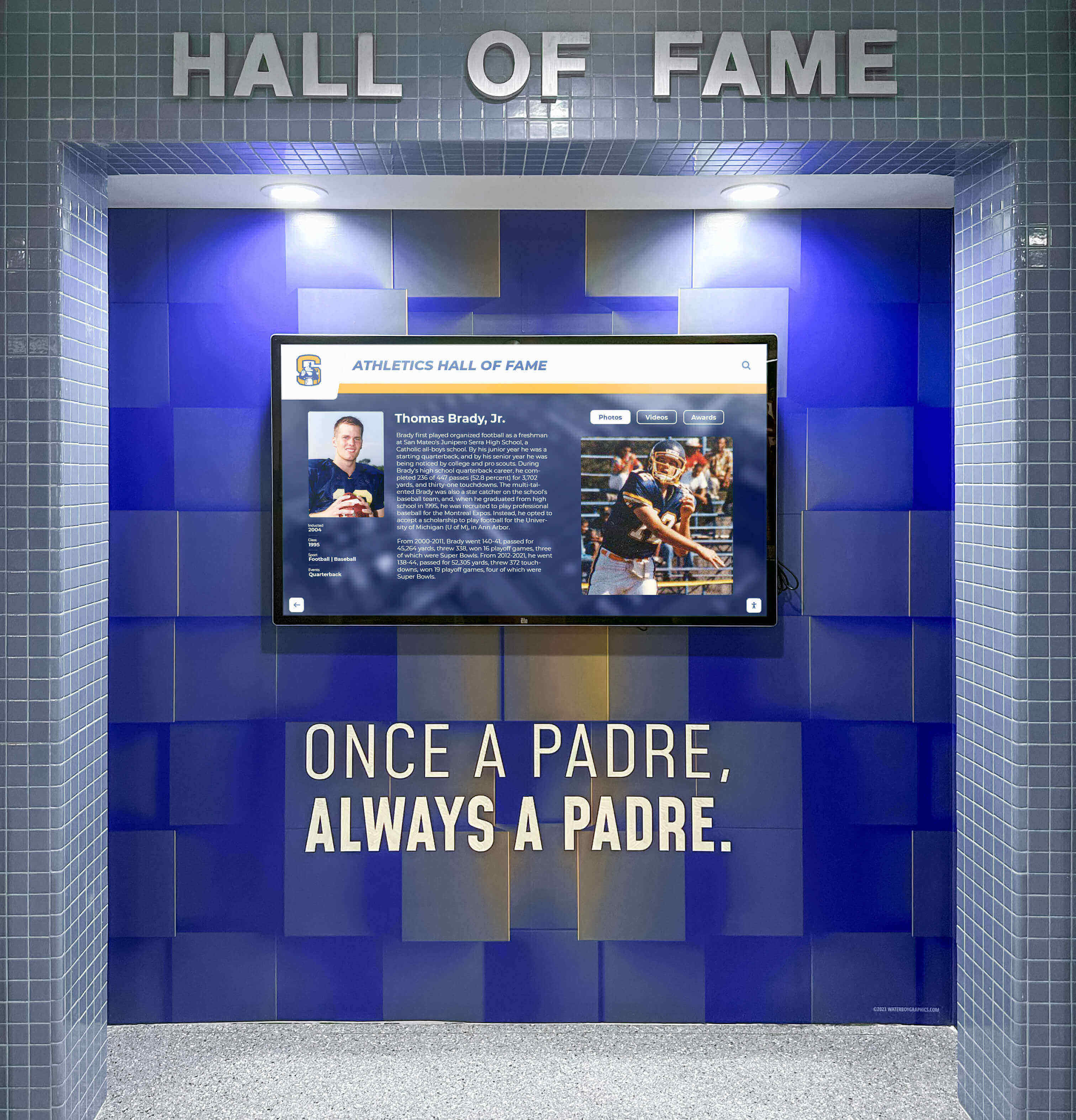
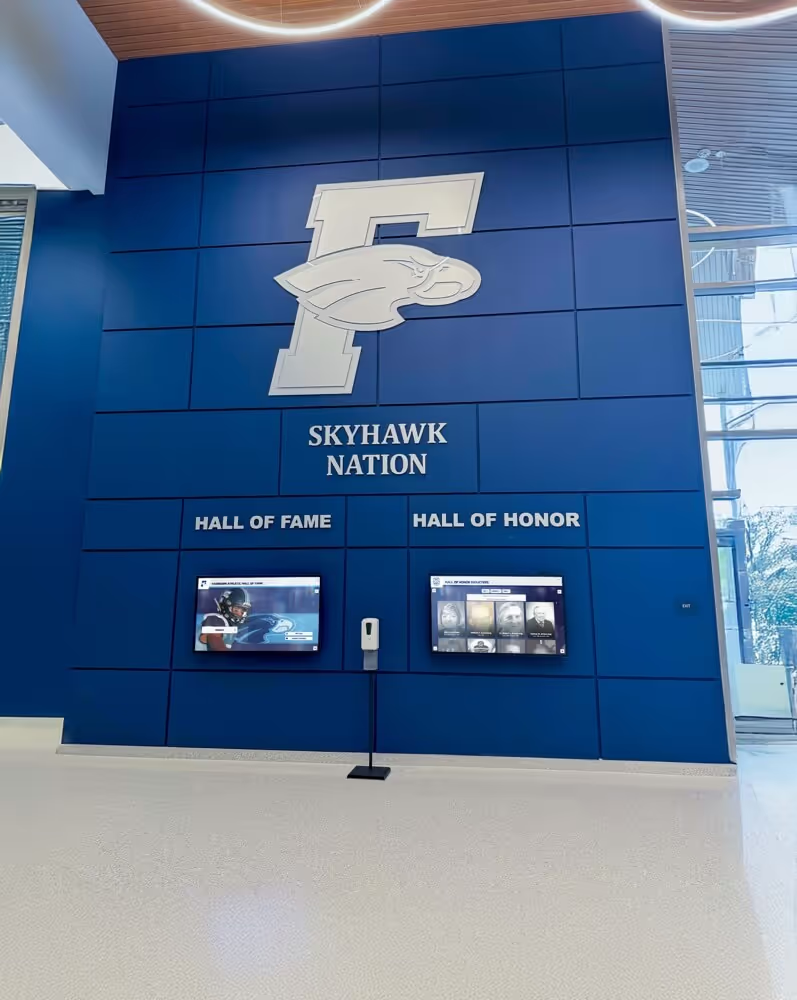
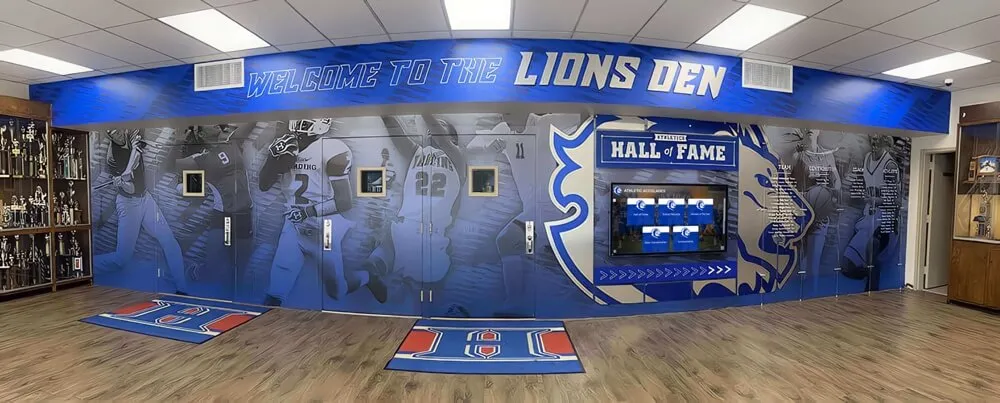
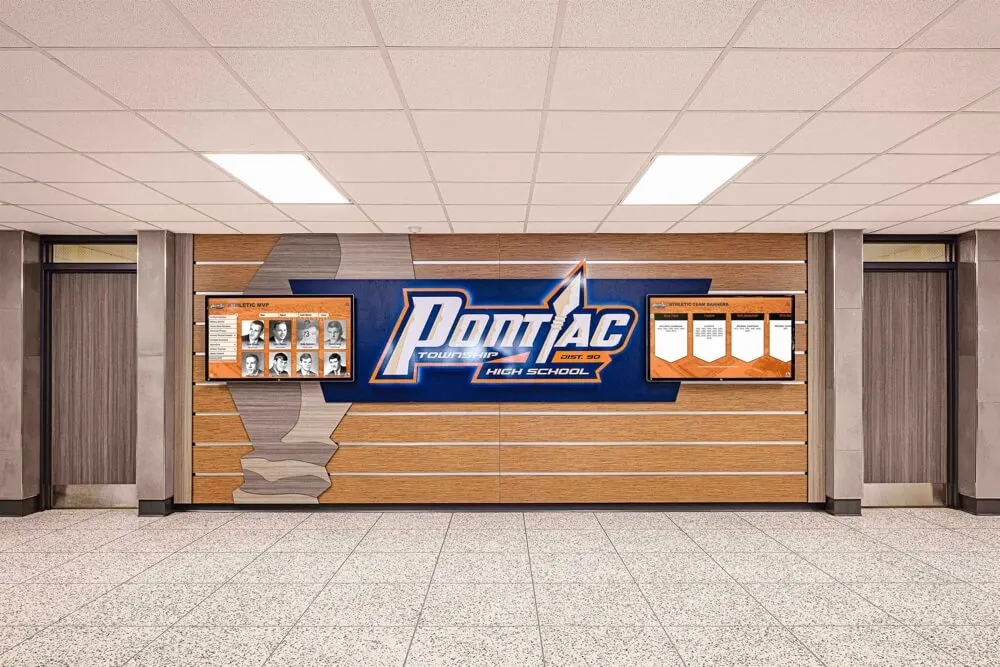
Integration of digital displays within traditional hall of fame wall designs creates hybrid recognition environments combining permanent architectural elements with dynamic digital content capabilities
Long-Term Recognition Strategy and Program Growth
Awards touchscreen implementations represent starting points for recognition programs that evolve over time. Understanding long-term strategic considerations helps wrestling programs maximize technology investments while building sustainable recognition cultures.
Content Development Roadmap
Most successful implementations follow phased content development rather than attempting comprehensive historical documentation before launch:
Phase 1: Current Season Foundation (Months 1-3)
- Launch with current roster profiles
- Implement weekly recognition system
- Establish schedule and announcement displays
- Begin recent historical recognition (last 2-3 years)
Phase 2: Recent History Integration (Months 3-12)
- Add 5-10 years of historical achievement
- Complete All-State and All-American recognition for recent graduates
- Expand photo libraries with recent content
- Develop statistical record boards
Phase 3: Comprehensive Historical Documentation (Year 2+)
- Research and document complete program history
- Add hall of fame recognition for historical eras
- Digitize historical photos and media
- Complete achievement record compilation
Phased approaches prevent delayed launches while distributing content development workload across reasonable timeframes.
Recognition Culture Development
Technology enables recognition, but culture drives engagement. Long-term success requires:
Routine Content Updates Establish regular update schedules:
- Weekly recognition every Monday
- Schedule updates immediately when changes occur
- Results posted within 24 hours of competition
- Announcements published minimum 1 week before events
Community Engagement Rituals Create traditions around recognition:
- Weekly gathering around displays for Wrestler of the Week announcements
- End-of-season celebration reviewing complete achievement archives
- Alumni reunion display demonstrations
- New parent orientation including recognition system introduction
Continuous Improvement Regular evaluation identifies enhancement opportunities:
- Annual surveys gathering user feedback
- Content usage analytics showing popular features
- Coach and athlete input sessions
- Technology upgrade consideration as capabilities expand
Expansion Beyond Wrestling
Successful wrestling program implementations often inspire broader athletic or school-wide recognition expansions. Schools observe wrestling recognition effectiveness and pursue:
- Multi-sport athletic hall of fame systems
- Academic recognition programs for honor roll and scholarship achievement
- Fine arts recognition for music, theater, and visual arts excellence
- Alumni achievement showcases across all school areas
- Community recognition celebrating local supporters and volunteers
Wrestling programs establishing recognition excellence often become institutional models inspiring comprehensive recognition transformation.
Measuring Recognition Impact and Success
Awards touchscreen implementations represent significant investments deserving evaluation demonstrating return on investment and justifying continued support. Understanding measurement approaches helps programs document recognition value.
Engagement Metrics
Display Interaction Data Modern platforms track engagement including:
- Daily interaction frequency (number of touch events)
- Session duration (how long visitors engage per session)
- Content exploration depth (number of profiles viewed per session)
- Popular content categories (which recognition types receive most views)
- Peak engagement times (when displays receive most use)
Mobile Access Analytics Web-based platforms track mobile engagement:
- Unique mobile visitors
- Return visit frequency
- Geographic distribution of mobile users
- Mobile session characteristics
Comparative Engagement Compare touchscreen display engagement against previous recognition methods:
- Increased visible engagement versus static plaques
- Mobile access numbers (previously impossible to track)
- Social media amplification metrics
Community Impact Indicators
Qualitative Feedback Gather stakeholder perceptions through:
- Parent surveys about recognition satisfaction
- Wrestler feedback on motivation and pride
- Alumni reactions during campus visits
- Community member comments
Observational Assessment Document behavioral changes:
- Increased crowds around displays
- Extended lobby time as visitors explore content
- Social media sharing frequency
- Spontaneous conversations about recognition
Recruitment and Retention Effects Track potential program growth connections:
- Roster size changes following implementation
- Prospective wrestler campus visit feedback
- Athlete retention rates across seasons
- Family satisfaction surveys
Administrative and Operational Metrics
Communication Efficiency Measure announcement system effectiveness:
- Reduced missed events or schedule confusion
- Decreased communication-related questions
- Faster information distribution
- Multi-platform message consistency
Time Investment Track management workload:
- Weekly update time requirements
- Content development hours
- Technical support needs
- Training time for new users
Cost Effectiveness Calculate recognition cost efficiency:
- Per-wrestler recognition cost compared to plaques
- Years of use before replacement needs
- Maintenance and update costs
- Sponsor revenue offsets
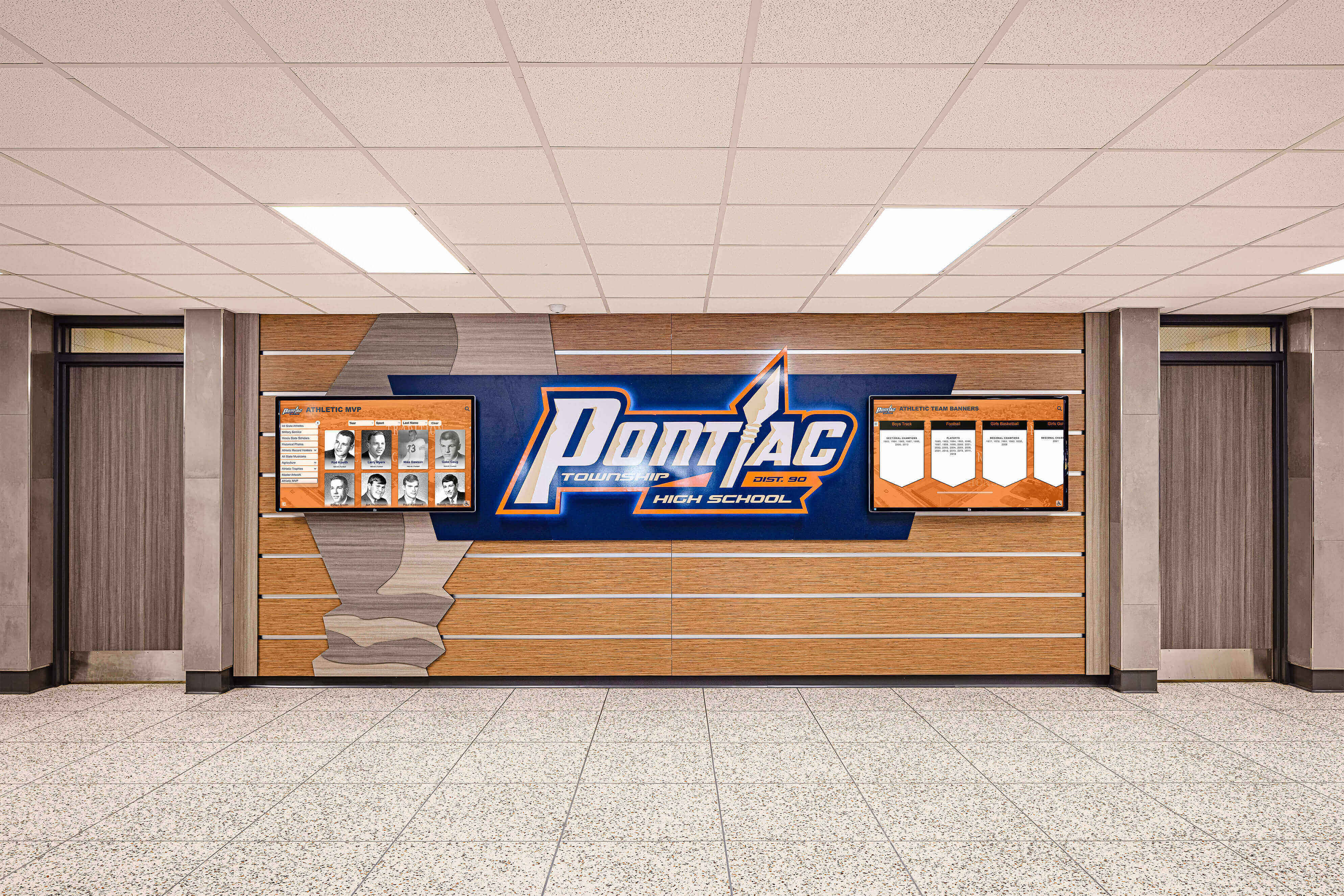
Strategic placement of recognition displays in main hallways ensures maximum visibility while creating prominent landmarks reinforcing wrestling program pride throughout school facilities
Conclusion: Transforming Wrestling Recognition Through Digital Warming
Wrestling programs deserve recognition systems matching the dedication, discipline, and achievement their athletes demonstrate daily. Traditional recognition approaches—limited by physical space, constrained by static formats, disconnected from modern communication patterns—fail to honor wrestling excellence adequately or engage communities effectively. Awards touchscreen technology addresses these limitations, creating dynamic recognition environments where wrestling heritage receives preservation, current achievement gains visibility, and community engagement becomes natural rather than forced.
The digital warming concept transforms recognition from cold, forgotten plaques into active community experiences. Wrestling Hall of Fame inductees receive comprehensive celebration through multimedia profiles accessible anytime from anywhere. All-State and All-American wrestlers earn recognition matching achievement significance. Weekly Wrestler of the Week programs distribute motivation across roster members while creating engagement touchpoints throughout seasons. Schedule and announcement systems eliminate communication frustration while keeping wrestling programs visible throughout school communities.
Implementation success requires thoughtful planning around content development, stakeholder engagement, technical requirements, and operational integration. However, wrestling programs discover that awards touchscreen platforms simplify rather than complicate recognition—web-based management, unlimited content capacity, and intuitive interfaces make comprehensive recognition practical even for programs with limited resources or technical expertise.
As wrestling programs evaluate recognition approaches, the question shifts from “Can we afford touchscreen technology?” to “Can we afford to continue with recognition methods that limit rather than celebrate achievement?” The investment in awards touchscreen systems represents commitment to wrestlers, families, alumni, and communities that wrestling excellence matters enough to preserve properly, celebrate visibly, and share widely.
Ready to explore how awards touchscreen technology can transform wrestling recognition at your school or club? Book a demo to see comprehensive recognition solutions designed specifically for wrestling programs celebrating multi-dimensional achievement through accessible, engaging digital experiences.