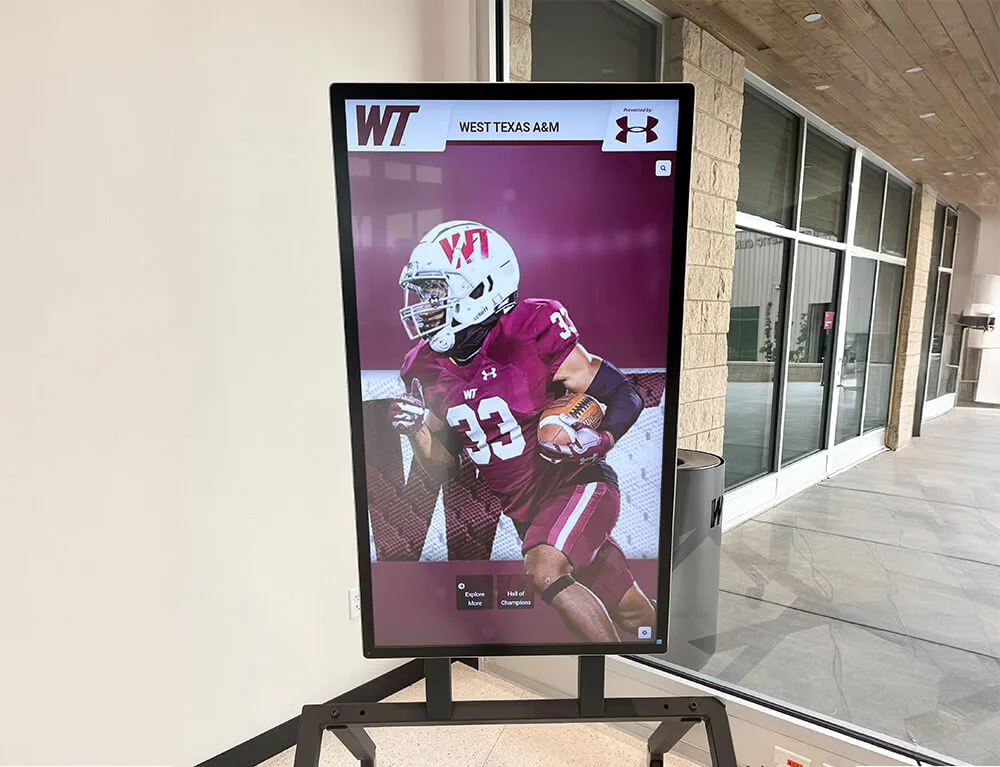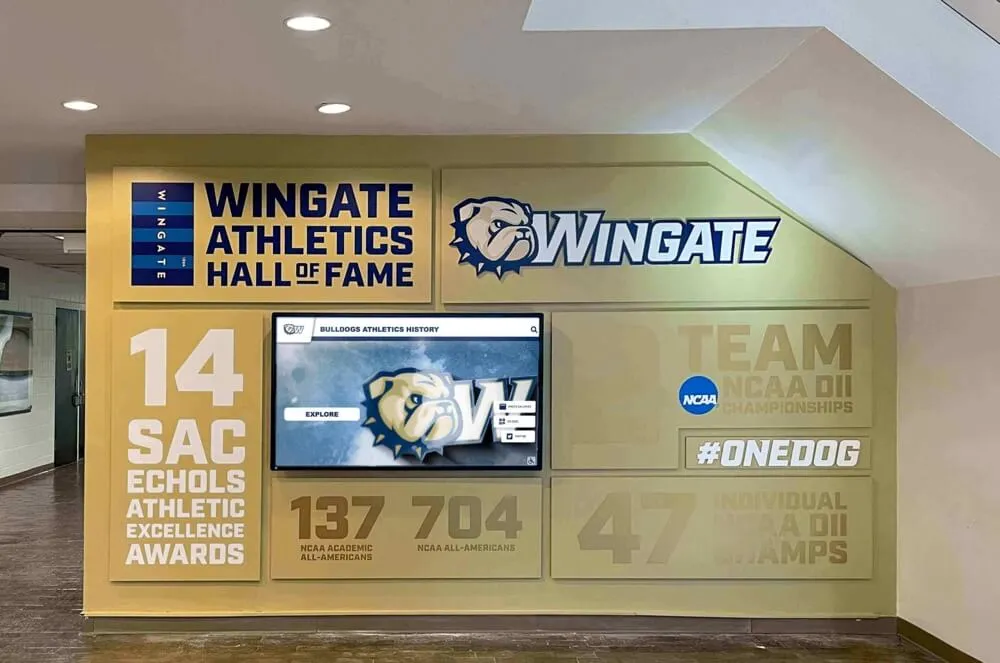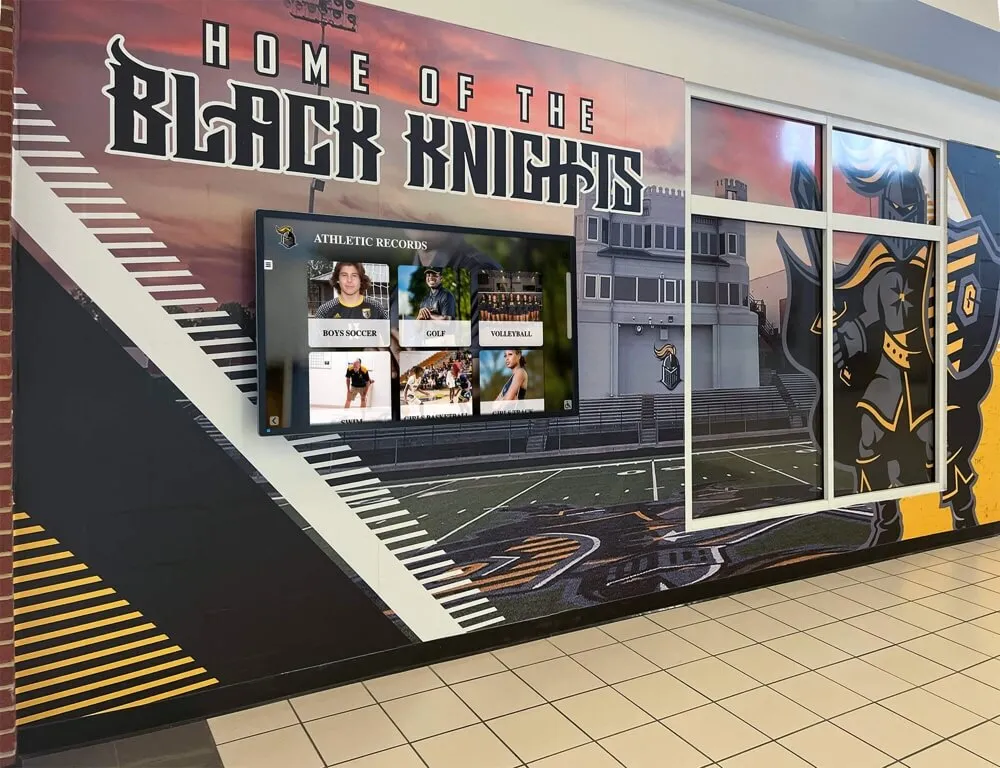




Athletic record boards transform school hallways and gymnasiums into inspiring spaces that celebrate excellence, document history, and motivate future generations of athletes. These displays serve as visible reminders of what’s possible when dedication meets opportunity, creating powerful connections between past achievements and current aspirations. Yet many schools struggle to design record boards that effectively showcase athletic accomplishments while maintaining relevance as new records emerge and programs evolve.
The challenge extends beyond simply listing names and numbers. Effective athletic record boards must balance honoring historic achievements with celebrating recent accomplishments, present information clearly without creating visual clutter, withstand the test of time while remaining easy to update, fit within budget constraints while delivering meaningful impact, and inspire current athletes while preserving legacy for future generations.
This comprehensive guide explores athletic record boards design ideas spanning traditional plaques and painted displays to modern digital solutions. Whether renovating existing recognition spaces, planning new athletic facilities, or seeking ways to celebrate program achievements more effectively, these design concepts provide frameworks for creating record boards that truly resonate with athletes, families, and school communities.
Athletic record boards accomplish vital objectives within school athletic programs. They validate years of training and competition by immortalizing exceptional performances, create aspirational targets that drive athlete development and program improvement, build institutional pride by documenting excellence across generations, educate communities about program history and traditions, and generate excitement during recruitment by demonstrating competitive standards and achievement culture.

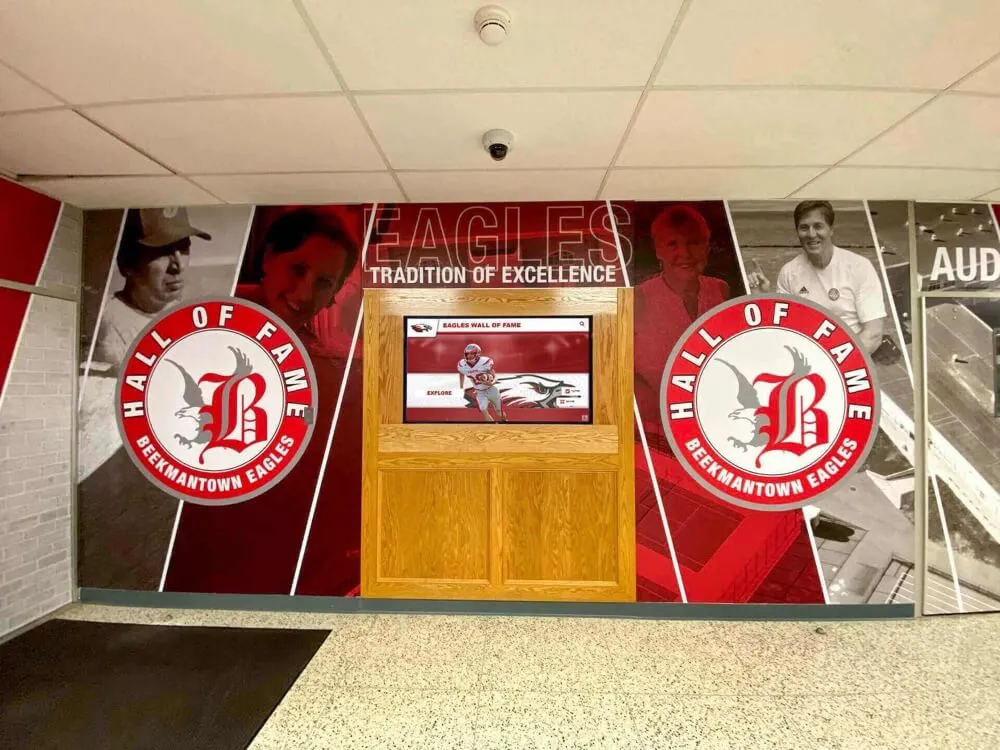
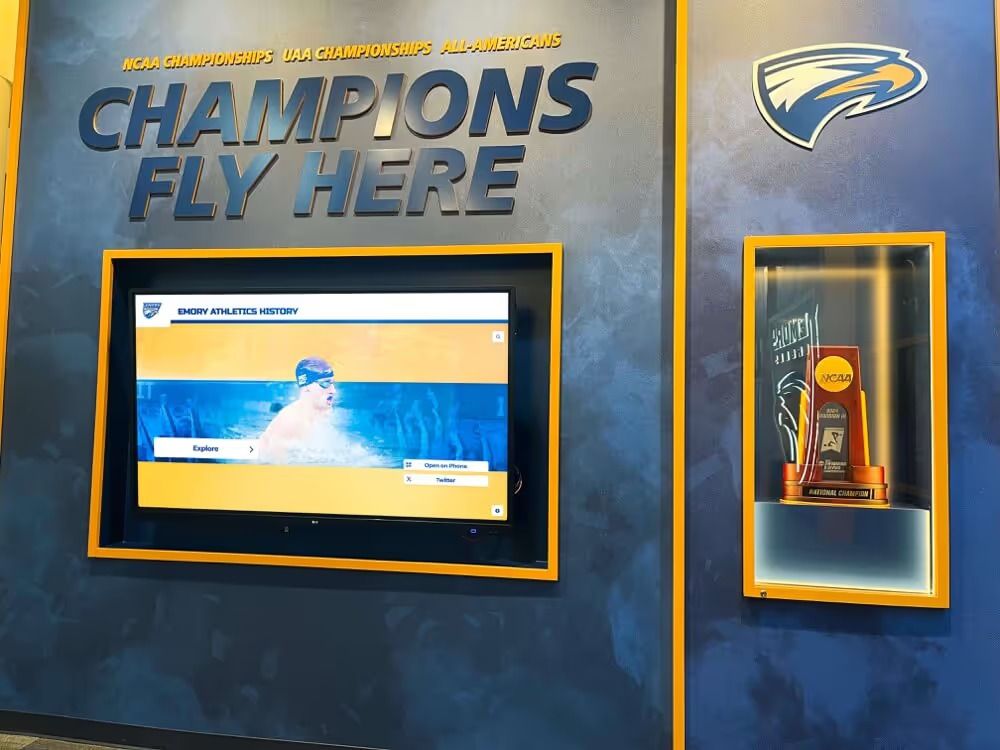
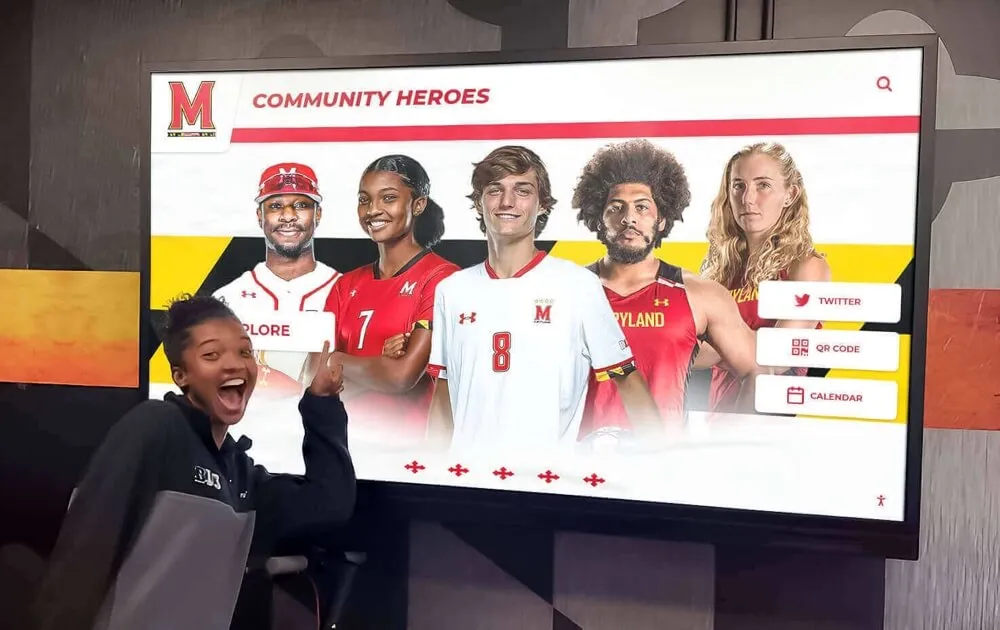
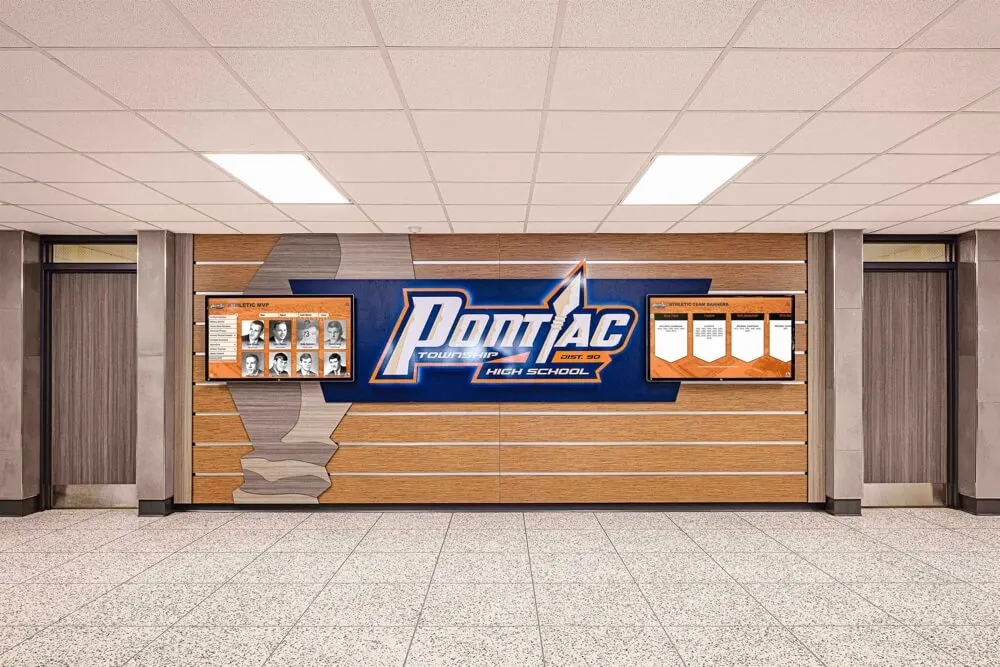
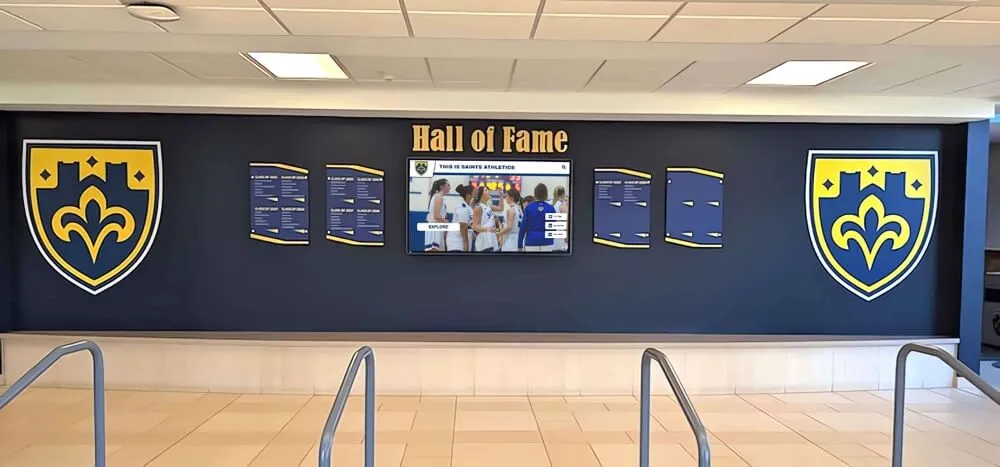
Modern athletic record boards combine visual impact with functional information display, creating inspiring spaces that celebrate program excellence
Understanding Athletic Record Board Fundamentals
Before designing athletic record boards, understanding core principles helps schools create displays that effectively serve their intended purposes while avoiding common pitfalls.
Why Athletic Record Boards Matter
Athletic record boards provide far more value than simple information display—they shape program culture and athlete motivation in meaningful ways.
Creating Competitive Targets and Motivation
Visible records create concrete goals athletes pursue throughout their careers. When student-athletes walk past displays showing school records daily, those numbers become familiar benchmarks measuring their own development. A sophomore basketball player seeing the single-season scoring record gains specific understanding of excellence within their program, transforming abstract concepts like “be great” into tangible targets like “score 520 points this season.”
This target-setting effect drives training intensity and competitive focus. Athletes naturally ask themselves whether they can reach displayed standards, channeling effort toward specific accomplishments rather than general improvement. Coaches leverage record boards in goal-setting conversations, helping athletes identify realistic yet ambitious targets based on program history.
Documenting Program History and Excellence
Schools with decades of athletic tradition possess rich histories deserving preservation. Athletic record boards capture this heritage, ensuring exceptional performances from previous generations receive ongoing recognition. A track athlete from 1985 who still holds the school record deserves acknowledgment alongside contemporary performers, creating connections across generations of program participants.
This historical documentation builds institutional memory and tradition. Current athletes gain perspective understanding they compete within programs with meaningful histories, not simply collections of seasonal teams. Parents and alumni visiting schools reconnect with their own athletic experiences seeing familiar names and remembering past achievements. Communities develop stronger program attachment when excellence receives permanent recognition rather than fading after graduation.
Schools looking to preserve comprehensive athletic histories often implement digital record tracking systems that combine record boards with deeper achievement archives accessible to communities.
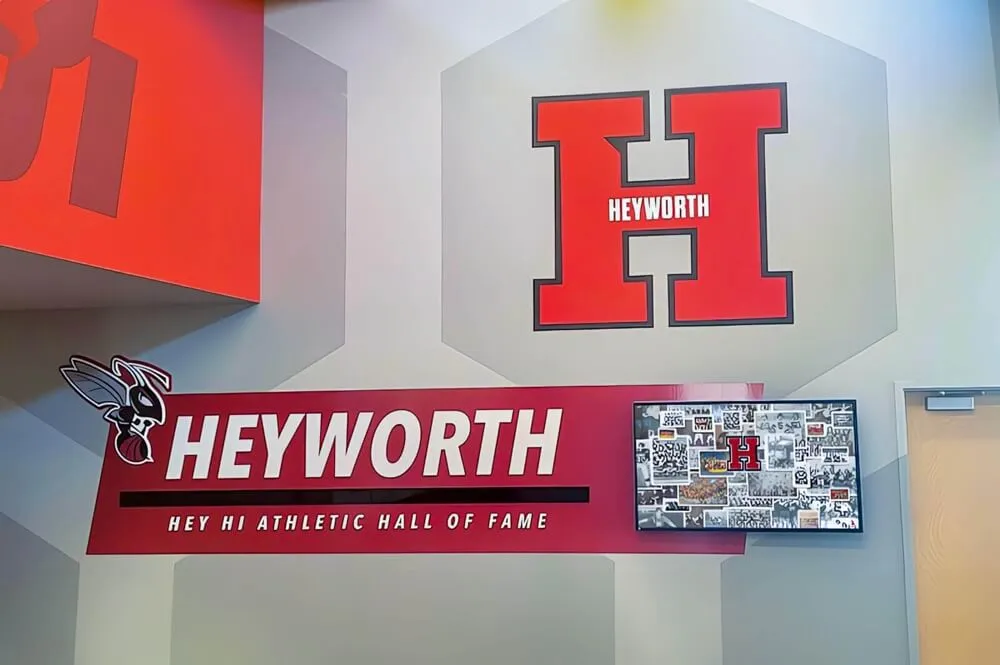
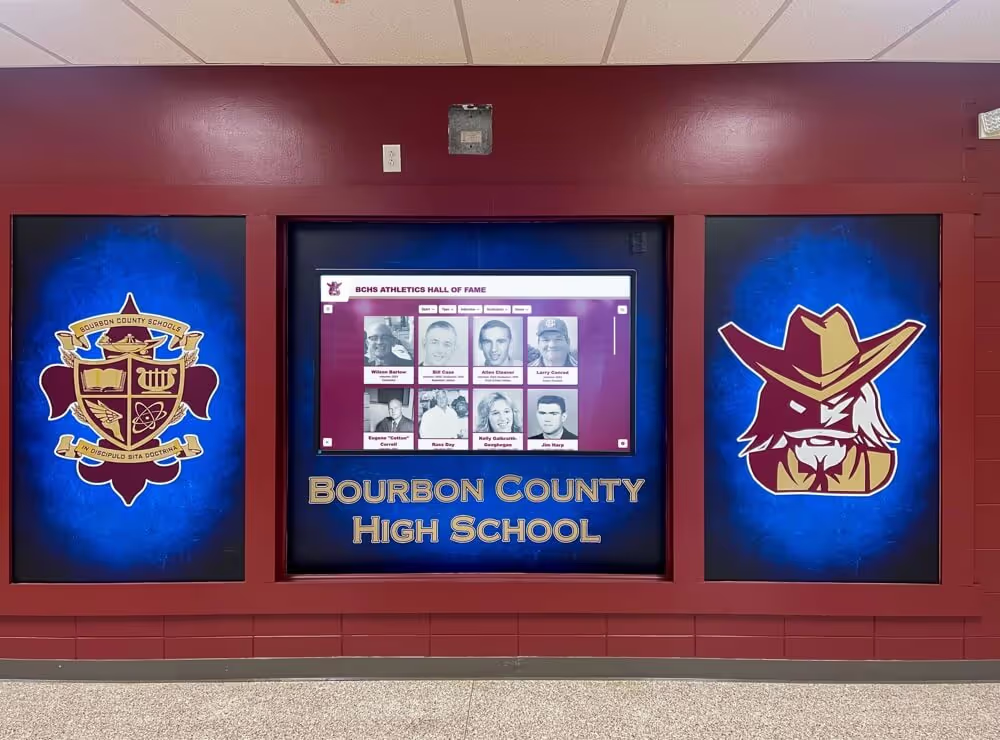
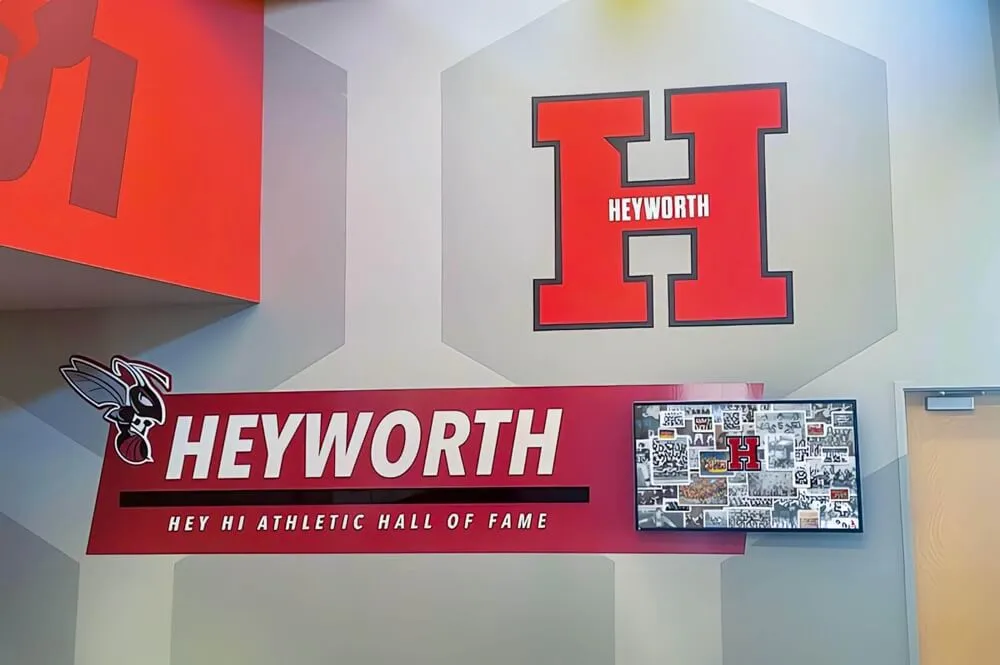
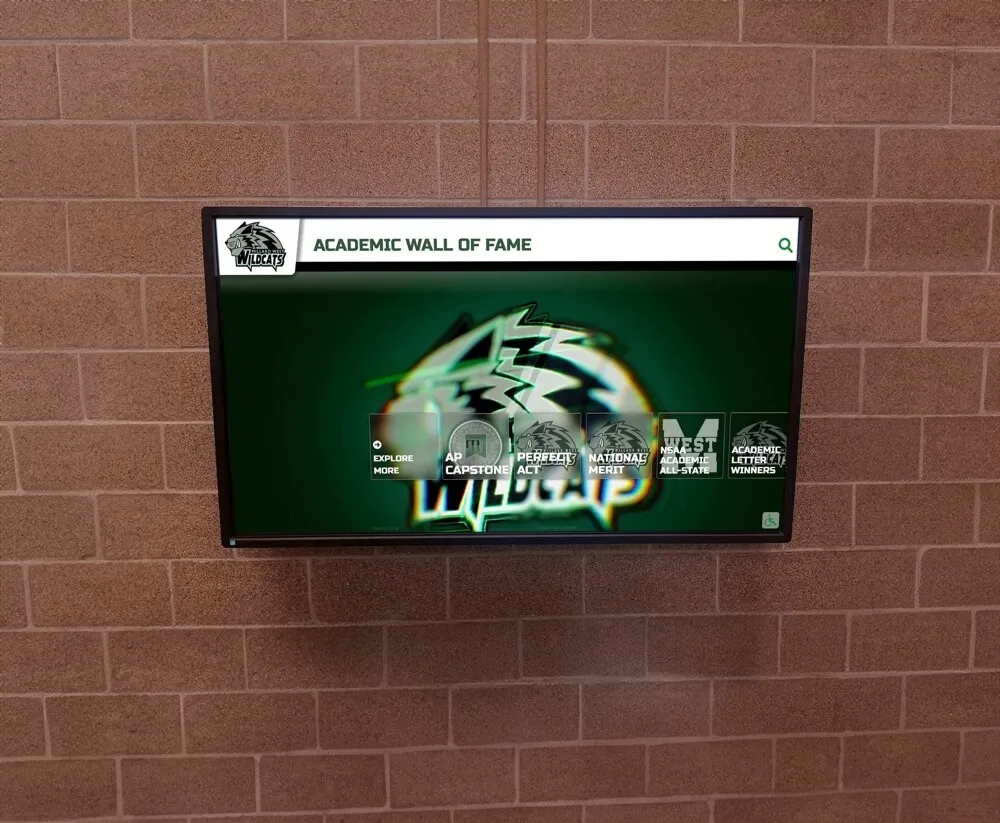
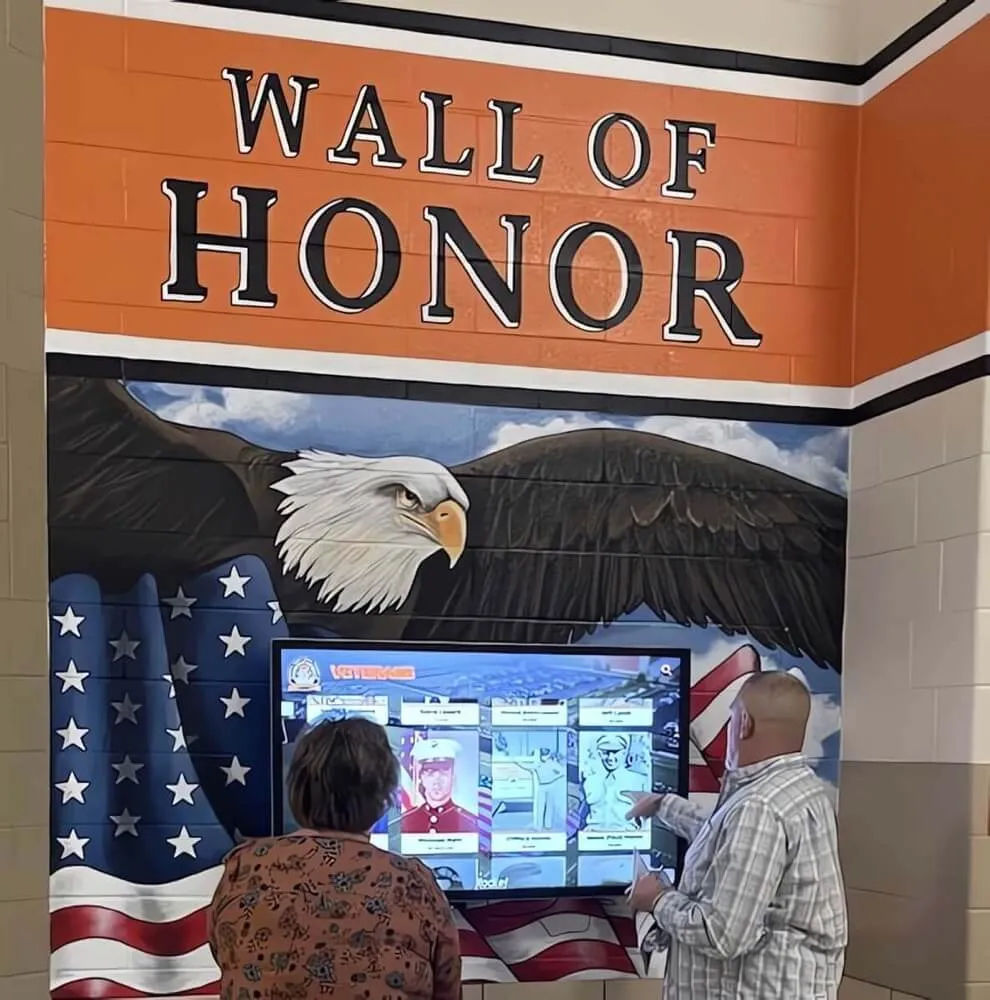
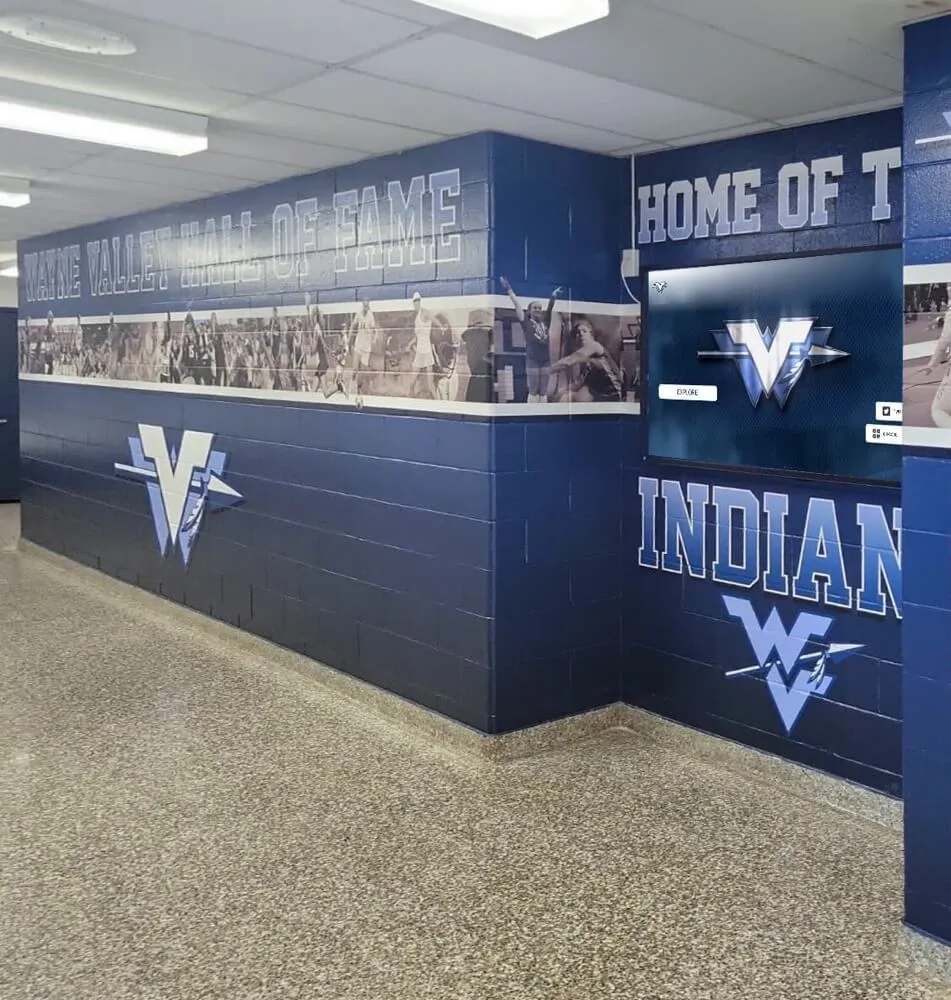
Traditional athletic recognition creates timeless displays that honor program heritage and establish visual continuity across generations
Building School Pride and Identity
Athletic achievements contribute significantly to school identity and community pride. Well-designed record boards make excellence visible to everyone—students, staff, visitors, and prospective families. A prominent display showcasing multiple state championships, conference titles, and individual records communicates program strength before anyone attends a competition.
This visibility effect extends beyond athletics. Strong athletic programs with visible recognition contribute to overall school reputation, attracting families during enrollment decisions and building community support for school funding initiatives. Record boards become talking points during building tours, reinforcement during alumni events, and sources of pride for everyone connected to institutions.
Traditional vs. Digital Athletic Record Boards
Schools face fundamental decisions between traditional fixed displays and modern digital solutions, each offering distinct advantages worth understanding.
Traditional Fixed Record Boards
Classic athletic record boards use permanent materials—painted murals, engraved plaques, vinyl lettering, carved wood, or printed panels—creating timeless displays many schools prefer.
Advantages of Traditional Approaches:
- Permanence and Prestige: Fixed displays communicate that honored achievements warrant permanent recognition, potentially feeling more prestigious than changeable digital content
- No Technology Requirements: Traditional boards need no power, internet, or technical support, eliminating ongoing technology costs and reducing maintenance needs
- Classic Aesthetic: Many schools prefer traditional looks matching architectural styles and existing recognition traditions
- One-Time Investment: After initial installation, traditional boards require minimal ongoing costs beyond occasional updates
- High Visibility: Painted murals and large plaques create strong visual impact impossible to miss or ignore
Limitations to Consider:
- Update Difficulty: Adding new records requires physical modification—repainting, new plaques, or vinyl replacement—creating logistical and financial barriers to updates
- Space Constraints: Fixed boards have finite physical space, eventually requiring difficult decisions about which records to display as more achievements accumulate
- Static Presentation: Traditional displays show information only—no video highlights, photos, or interactive exploration of achievement details
- Dated Information: Schools sometimes delay updates for years due to modification difficulty, leading to outdated displays missing recent achievements
Schools pursuing traditional approaches should explore creative display layouts that maximize space efficiency while maintaining visual impact.
Digital Athletic Record Boards
Modern schools increasingly choose digital displays showing athletic records through screens that offer flexibility and multimedia capabilities impossible with traditional approaches.
Digital Display Advantages:
- Effortless Updates: Adding records requires simple content management system edits completed in minutes rather than physical renovation projects
- Unlimited Capacity: Digital systems accommodate unlimited records, achievements, and historical data without physical space constraints
- Multimedia Integration: Include athlete photos, competition video highlights, detailed statistics, team photos, and achievement stories beyond basic record information
- Dynamic Content: Rotate between different sports, showcase various achievement types, highlight current athletes, and celebrate recent victories alongside historical records
- Enhanced Engagement: Interactive touchscreen displays let visitors explore detailed achievement information, search specific sports or athletes, and discover program history at their own pace
- Modern Appeal: Digital displays resonate with contemporary students accustomed to screen-based information and dynamic content
Implementation Considerations:
- Technology Requirements: Digital boards need power, potential internet connectivity, and periodic software updates requiring some technical capability
- Ongoing Costs: While hardware lasts years, digital solutions involve content management, occasional updates, and potential subscription fees
- Display Quality: Cheap screens look unprofessional—quality digital record boards require appropriate hardware investment matching installation importance
Solutions like Rocket Alumni Solutions provide purpose-built platforms specifically designed for athletic recognition, offering unlimited record capacity, intuitive content management, and displays that integrate seamlessly into school environments. These systems combine the prestige of traditional recognition with digital flexibility, creating record boards that remain current while honoring program heritage.
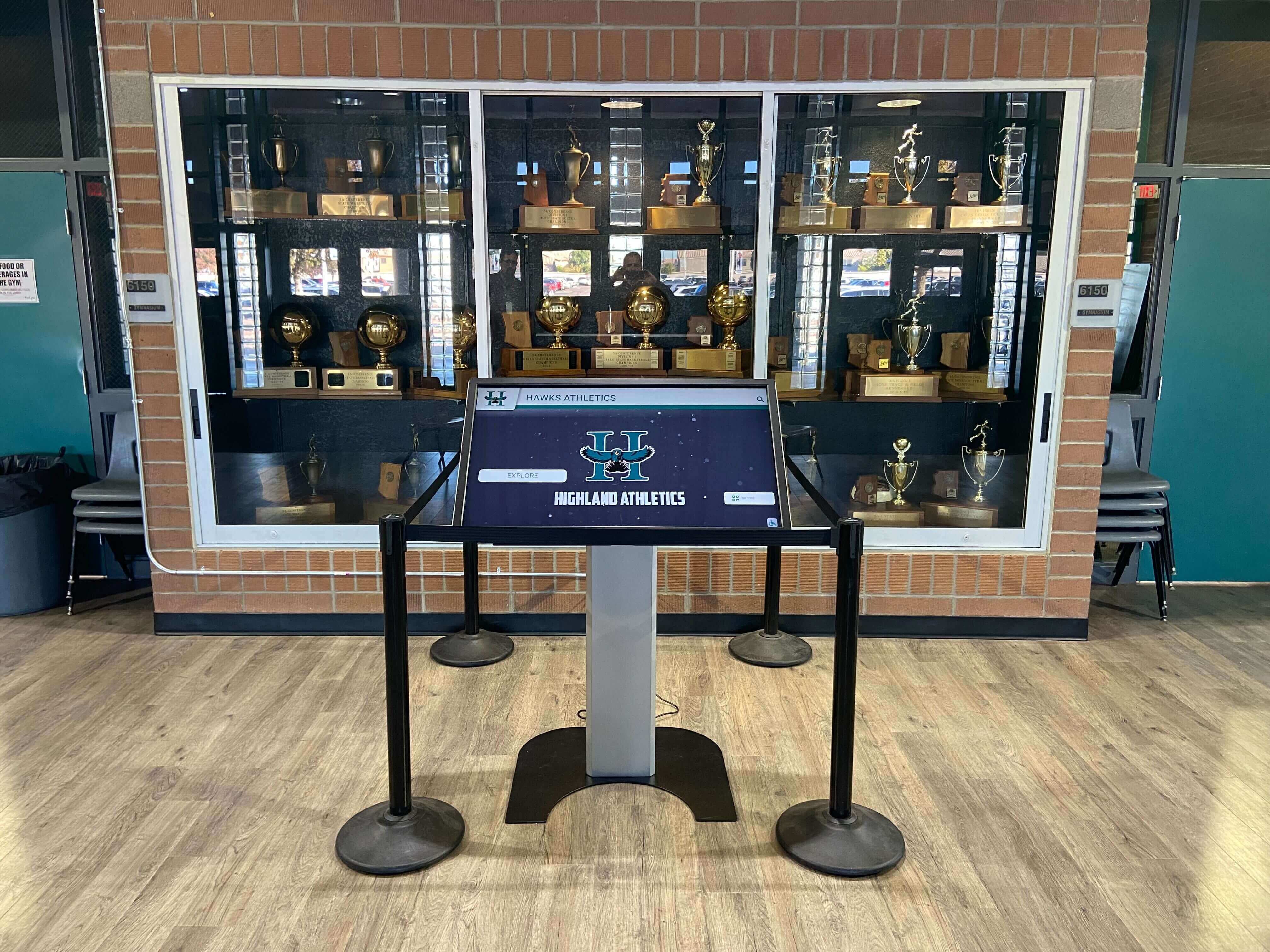
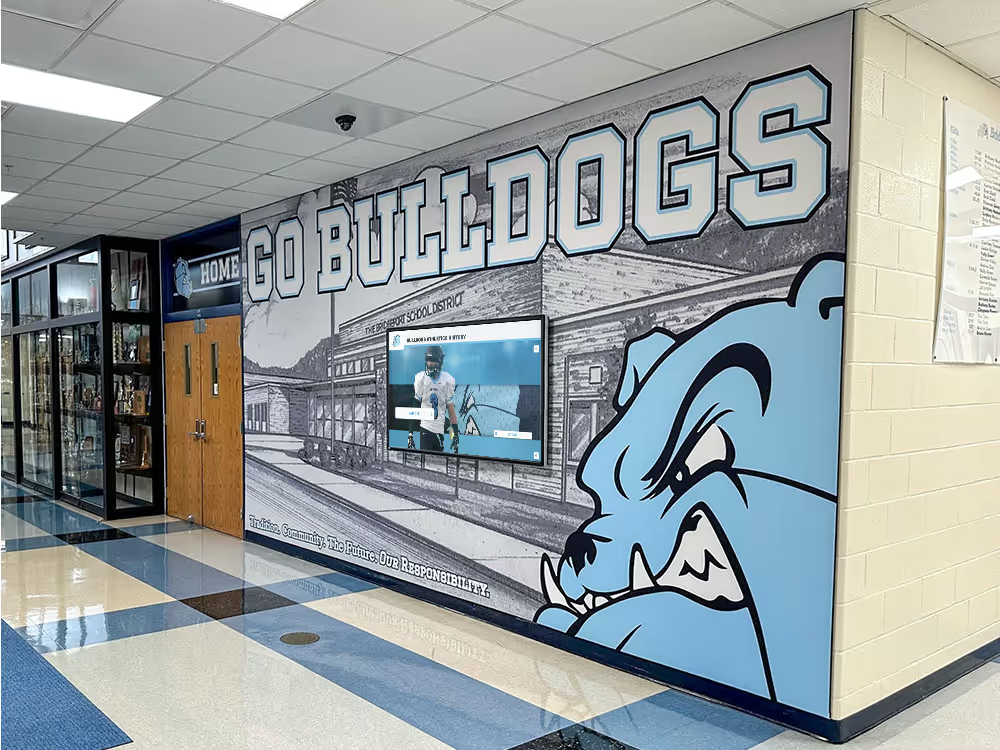
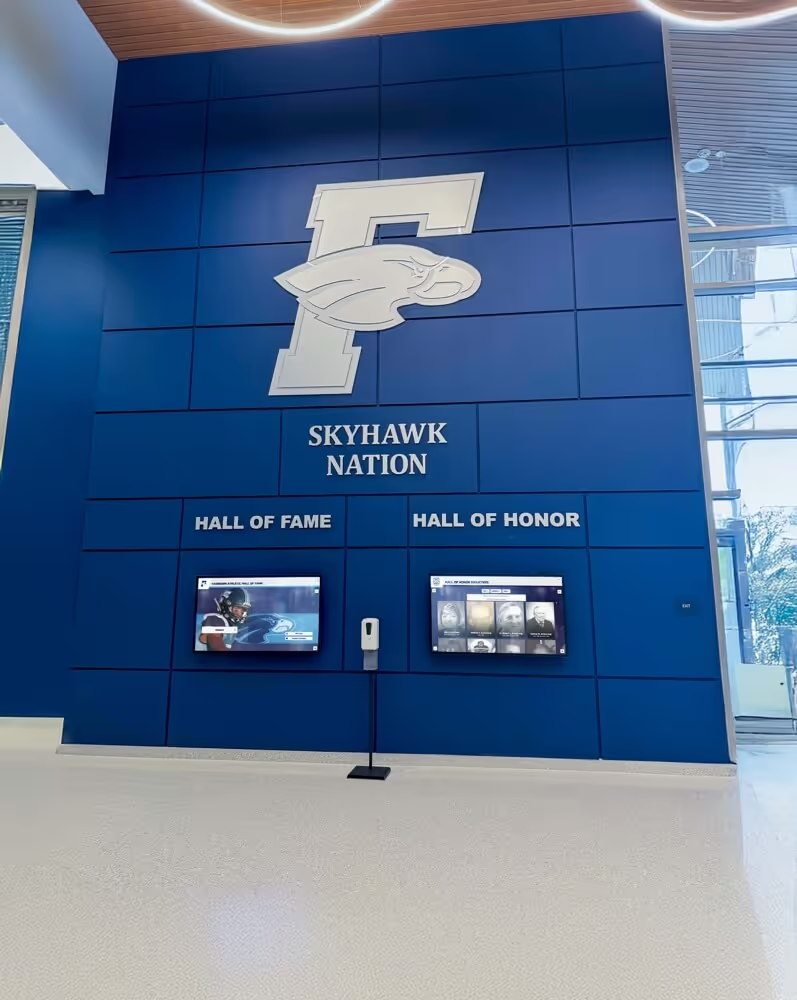
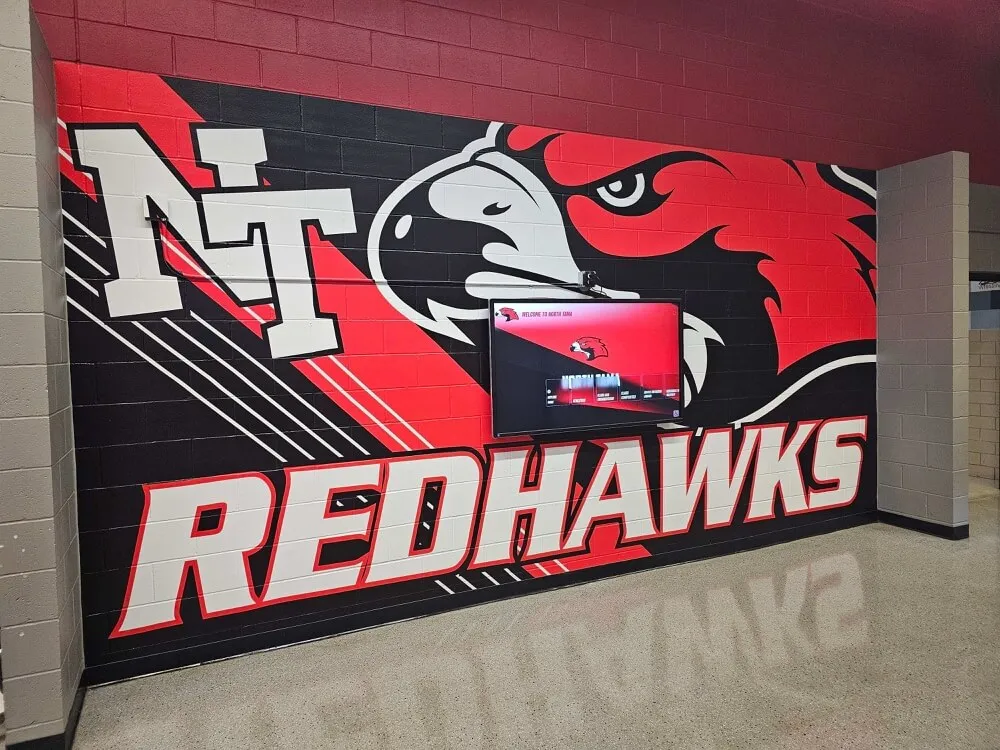
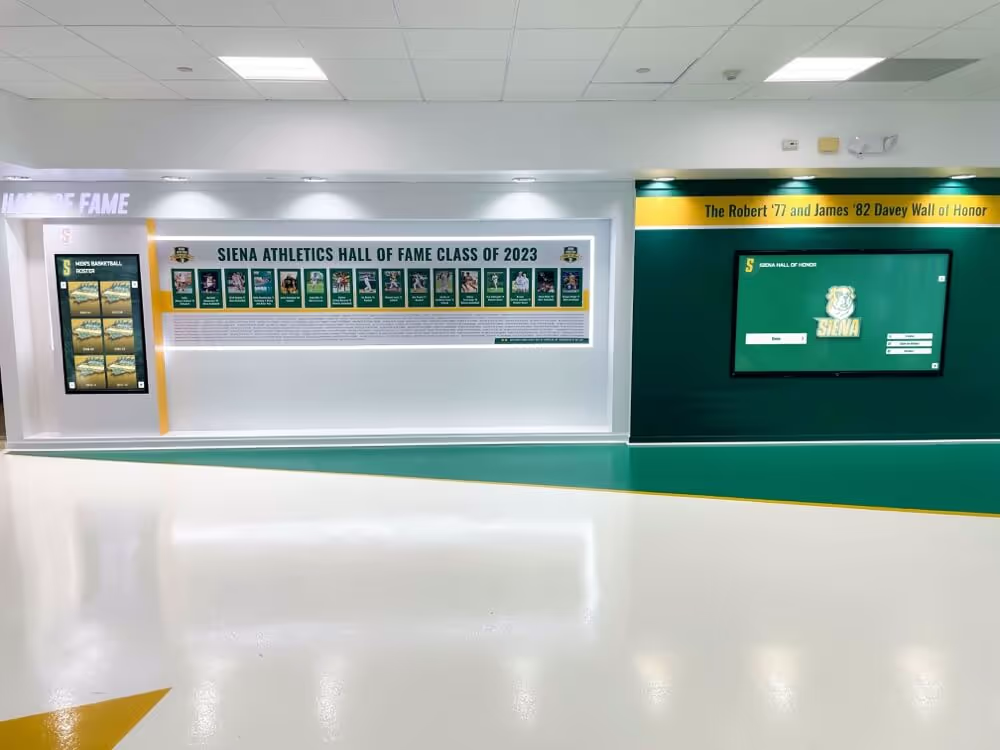
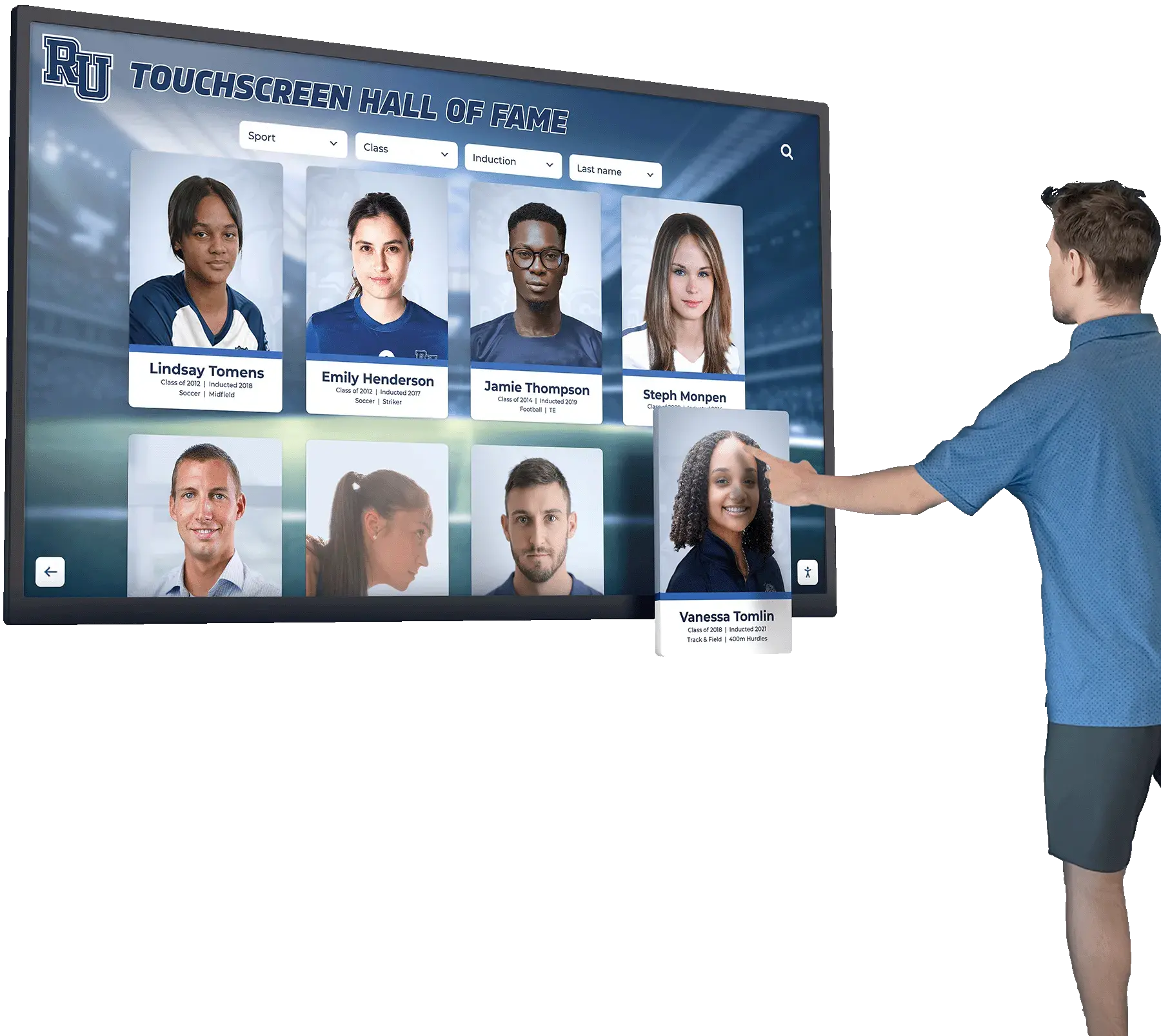
Digital touchscreen displays enable visitors to explore comprehensive athletic achievement information while maintaining elegant integration with existing trophy and recognition spaces
Design Principles for Effective Athletic Record Boards
Successful record boards share common design characteristics that maximize impact while ensuring usability and longevity.
Layout and Visual Hierarchy
Thoughtful layout determines whether athletic record boards communicate clearly or create confusing clutter.
Organizing by Sport
Most schools structure record boards by sport, creating clear sections for each program. This organization helps visitors find relevant information quickly while ensuring all sports receive appropriate recognition.
Effective Sport Organization Approaches:
- Seasonal Grouping: Arrange by season (fall sports, winter sports, spring sports) matching how schools and communities think about athletic calendars
- Major Sports Prominence: Give prominent positions to sports with longest traditions, largest participation, or highest community visibility
- Equal Space Allocation: Dedicate similar space to all sports ensuring emerging programs receive recognition equal to established traditions
- Visual Separation: Use headers, divider lines, color blocking, or spacing to clearly distinguish between different sports sections
Schools with extensive athletic programs sometimes create sport-specific record boards in team spaces—basketball records near gymnasiums, swimming records by pools, track records near competition facilities—while maintaining comprehensive displays in main athletics spaces.
Record Category Selection
Schools must decide which records warrant display space. Common categories include:
Individual Performance Records:
- Single-game/match/meet achievements (points scored, goals, touchdowns, time records)
- Season performance records (total points, batting average, win-loss records)
- Career cumulative records (total goals, career wins, all-time scoring)
- Event-specific records (shot put distance, 100m dash time, diving scores)
Team Achievement Records:
- Championship years (conference, sectional, regional, state)
- Best season records (win-loss, winning streaks, undefeated seasons)
- Tournament performances (consecutive tournament appearances, championship game appearances)
- Historical milestones (program wins, years competing, longest traditions)
Effective boards balance showcasing exceptional individual performances with celebrating team success, ensuring both personal excellence and collective achievement receive appropriate recognition.
Color, Typography, and Branding
Visual design elements determine whether athletic record boards feel professional and cohesive or appear amateurish and disconnected from school identity.
School Colors and Visual Identity
Athletic record boards should reflect school colors, mascots, and visual branding creating immediate recognition and institutional pride.
Branding Integration Strategies:
- Color Dominance: Use primary school colors as dominant background or text colors ensuring instant visual connection to school identity
- Mascot Incorporation: Feature school mascots, logos, or symbols prominently within record board designs
- Font Consistency: Match typography to fonts used throughout school communications and athletic branding materials
- Visual Continuity: Design record boards that visually complement surrounding spaces, existing trophy cases, and other recognition displays
Schools with strong visual identities leverage this consistency creating recognition spaces that feel professionally designed and authentically connected to institutional culture.
Typography and Readability
Record boards communicate information, making readability absolutely critical regardless of aesthetic preferences.
Typography Best Practices:
- Size Appropriateness: Text must be readable from typical viewing distances—consider how far most viewers stand from displays
- Font Selection: Choose clean, professional fonts avoiding overly decorative options that sacrifice legibility
- Contrast: Ensure strong contrast between text and backgrounds—light text on dark backgrounds or dark text on light backgrounds
- Information Hierarchy: Use font sizes, weights, and styles to distinguish between headers, record categories, athlete names, and achievement details
- Consistent Formatting: Maintain consistent formatting throughout record boards helping viewers quickly understand information structure
Poor typography undermines even well-designed boards. Testing readability before finalizing designs prevents expensive mistakes.
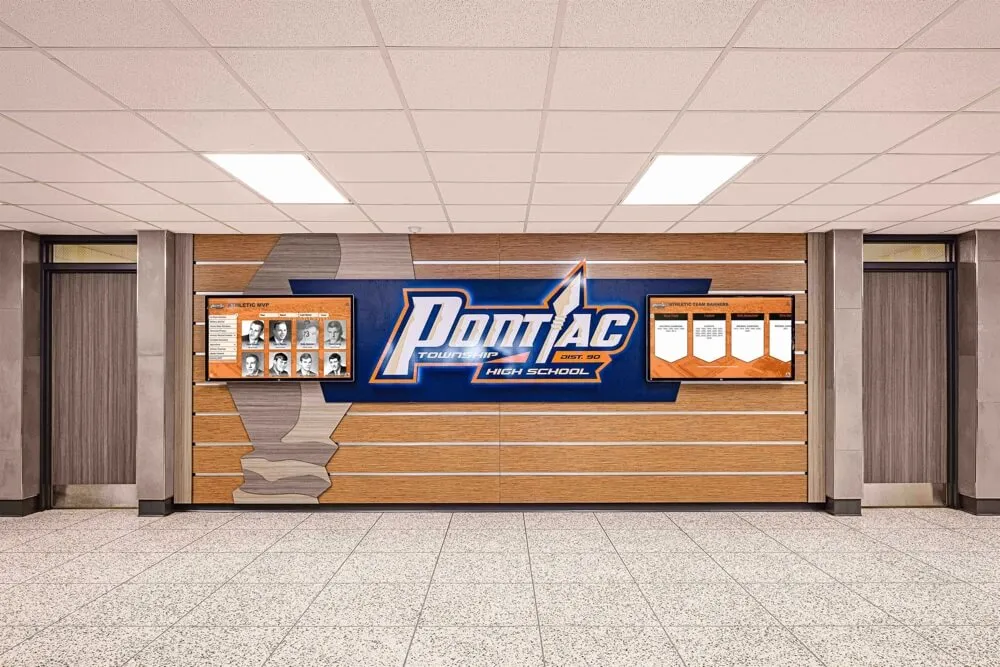
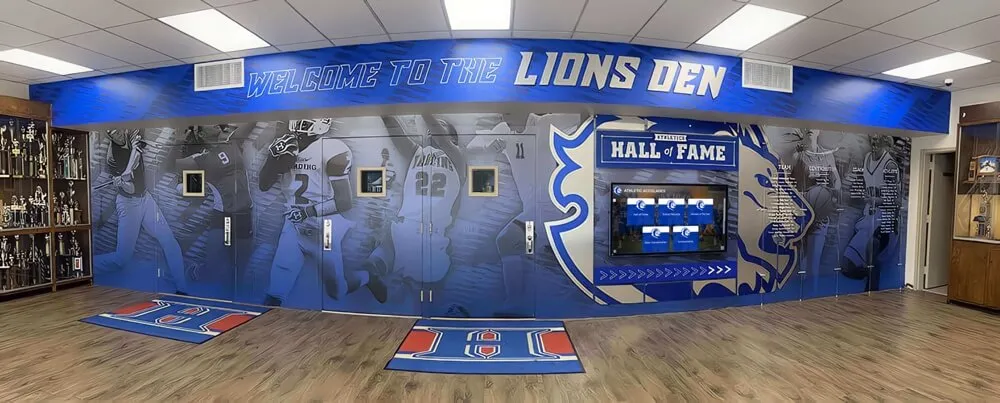
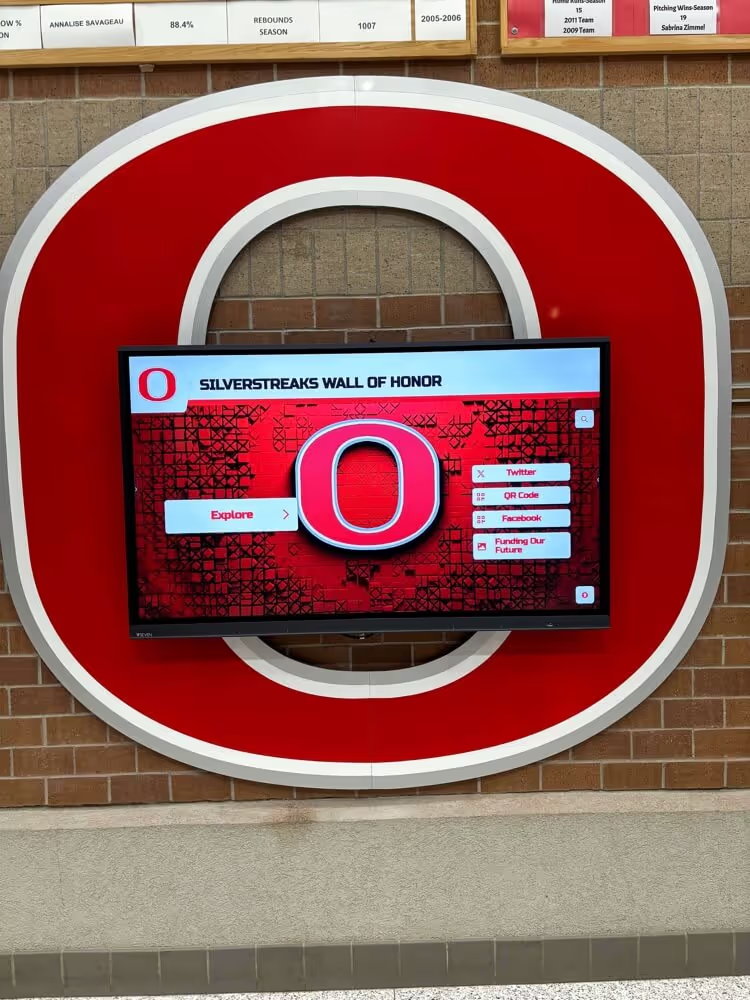
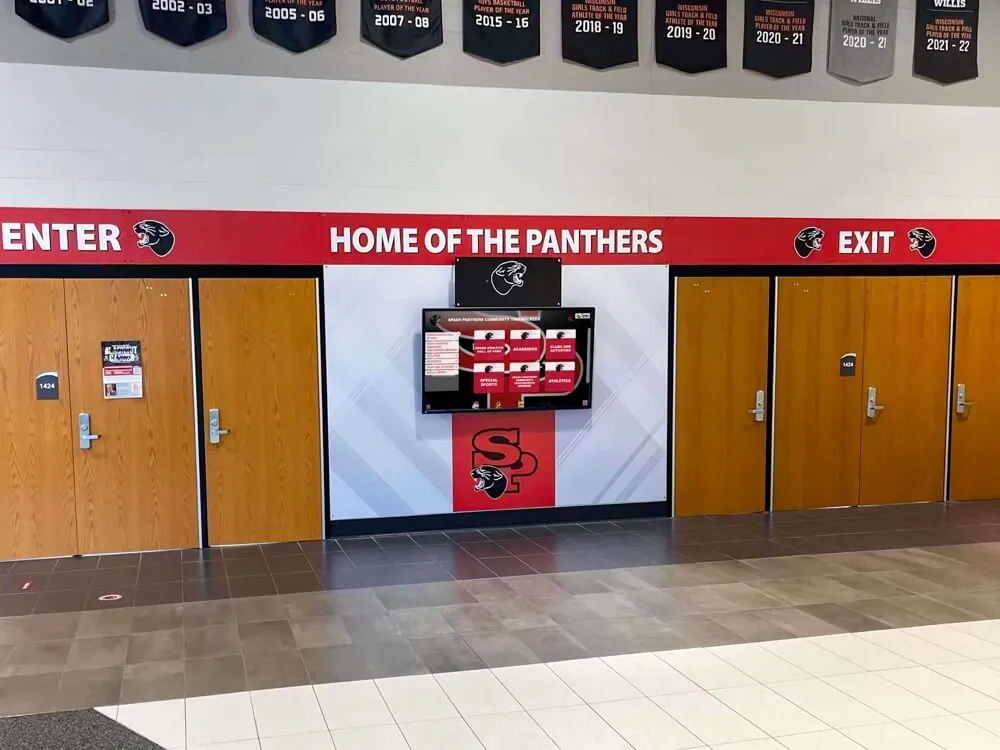
Well-organized athletic honor walls use clear visual hierarchy and consistent formatting to communicate achievements effectively while creating inspiring hallway environments
Space Utilization and Placement
Where and how schools position athletic record boards significantly affects their visibility, impact, and effectiveness.
High-Traffic Location Selection
Record boards achieve maximum impact in locations with consistent foot traffic and natural viewing opportunities.
Ideal Placement Locations:
- Main Athletics Hallways: Corridors leading to gymnasiums, locker rooms, or athletic offices where athletes, coaches, families, and visitors naturally congregate
- Gymnasium Entrances: Prominent positions immediately visible when entering competition spaces, celebrating program excellence before every home event
- School Main Entrances: High-visibility locations showcasing athletic achievements to all students, staff, and visitors regardless of sports involvement
- Athletic Complex Lobbies: Dedicated athletics facilities offer ideal spaces for comprehensive record displays becoming centerpieces of athletic environments
- Weight Rooms and Training Facilities: Places where athletes spend significant time provide constant exposure to records motivating training efforts
Avoid placing record boards in seldom-visited locations or areas with poor lighting diminishing their visibility and impact.
Vertical vs. Horizontal Orientations
Wall space dimensions and content volume determine optimal board orientations.
Vertical Layout Considerations:
Vertical boards work well for limited horizontal space, emphasize hierarchical information organization, suit narrow hallways or wall sections between doorways, and create dramatic floor-to-ceiling displays in spaces with appropriate height.
Horizontal Layout Considerations:
Horizontal boards accommodate more sports or categories at eye level, feel more natural for timeline presentations showing records chronologically, suit spaces with significant horizontal wall length but limited height, and enable parallel organization showing multiple sports side by side.
Many effective designs combine orientations—horizontal sections for each sport with vertical columns listing individual records—creating visual interest while optimizing space usage.
Athletic Record Board Content and Organization Strategies
What information appears on record boards and how schools organize content determines their usefulness and longevity.
Selecting Which Records to Display
Schools with decades of athletic history cannot display every achievement, requiring thoughtful selection criteria.
Must-Include Record Categories
Most athletic record boards feature these fundamental categories:
Program Championships and Titles
- State championship years across all sports
- Conference or league championships showing competitive consistency
- Tournament achievements (Final Four appearances, sectional titles)
- Undefeated seasons or historic winning streaks
These team achievements demonstrate program excellence while celebrating collective success involving entire teams, coaches, and communities rather than solely individual performances.
Individual Performance Records
Sport-specific records showing the best individual performances in program history:
For basketball, schools typically display points in a game, points in a season, career points, rebounds, assists, steals, and three-pointers made. Track programs highlight event records (100m dash, shot put, high jump, etc.). Swimming programs track event times for each competitive distance and stroke. Baseball and softball feature batting average, home runs, RBIs, wins for pitchers, and strikeouts.
Selecting appropriate records requires understanding which statistics matter most within each sport’s context and culture.
Notable Alumni and College Athletes
Many record boards include sections recognizing athletes who competed collegiately or achieved post-high-school distinction:
- Athletes receiving Division I, II, or III scholarships
- Professional athletes who emerged from programs
- Olympic or national team participants
- Athletes earning All-State recognition during high school careers
- Notable coaching careers of former athletes
This content connects current programs to broader athletic worlds, demonstrating that school athletics can launch meaningful competitive careers beyond high school.
Balancing Historical and Current Recognition
Effective record boards honor tradition while celebrating contemporary achievements, avoiding the trap of becoming outdated museums disconnected from current programs.
Establishing Time Horizons
Schools face decisions about how far back records extend. Comprehensive approaches include all-time records since programs began, while practical approaches might focus on recent decades (past 25-30 years) when reliable record-keeping exists.
Advantages of All-Time Records:
- Honors entire program histories regardless of when excellence occurred
- Creates connections spanning generations of athletes and communities
- Establishes truly elite standards that withstand time
Advantages of Recent-Era Focus:
- Maintains relevance to current students who may not connect with 1950s achievements
- Reflects modern competitive environments, training methods, and rule structures
- Provides more achievable targets for contemporary athletes
Many programs compromise, maintaining all-time records for major achievements (championships, exceptional individual records) while showing recent-era records in other categories.
Highlighting Recent Achievements
Regardless of historical depth, record boards should prominently feature recent accomplishments ensuring current athletes receive recognition.
Recent Achievement Integration:
- Dedicated sections for “Recent Champions” showing past 3-5 years of excellence
- “This Year’s Records” highlighting achievements from current seasons
- Rotating content on digital displays alternating between historical and contemporary
- Visual distinction (different colors, sections, or callouts) making recent achievements prominent
This balance respects history while keeping record boards feeling current and relevant to contemporary program participants.
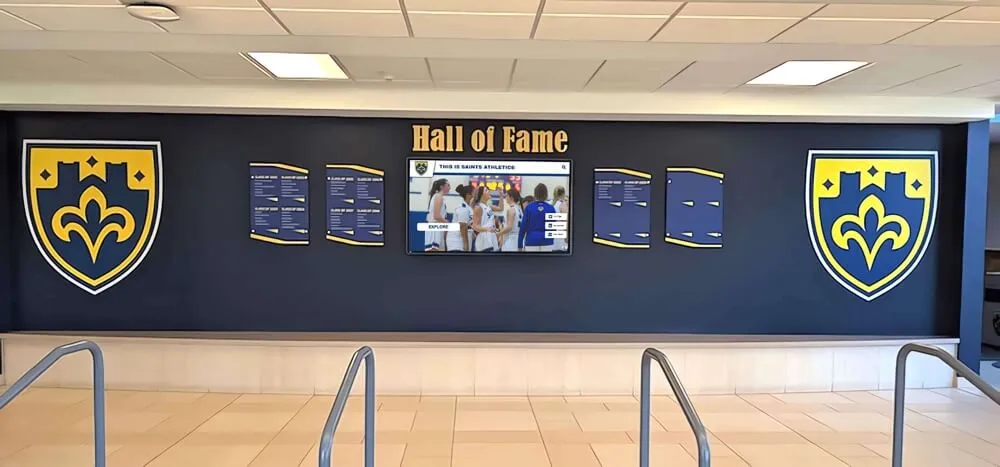
Thoughtful design integration creates cohesive athletic recognition spaces where record boards complement overall facility aesthetics while maintaining clear information presentation
Modern Digital Solutions for Athletic Record Boards
Digital technology transforms what’s possible with athletic record boards, offering capabilities traditional displays cannot match while simplifying long-term maintenance.
Interactive Touchscreen Athletic Displays
Modern touchscreen displays let visitors explore comprehensive athletic information through intuitive interactive experiences.
Interactive Display Capabilities
Touchscreen athletic record boards enable:
- Deep Information Access: Visitors tap records to view complete achievement details, athlete biographies, competition photos, and performance context beyond what fits on static displays
- Search and Filter Functions: Users search specific athletes, sports, years, or record types, instantly finding relevant information within extensive athletic databases
- Video Integration: Incorporate competition highlights, championship game footage, record-breaking performances, and athlete interviews bringing achievements to life beyond statistics
- Historical Exploration: Browse decades of program history, compare achievements across eras, and discover how records evolved over time
- Social Sharing: Modern systems enable visitors to share achievements on social media, extending recognition beyond physical display locations
These capabilities transform record boards from passive information displays into engaging exploration experiences where athletes, families, and visitors spend meaningful time discovering program history.
Implementation in Athletic Spaces
Successful interactive displays integrate seamlessly into existing athletic environments:
Schools typically position touchscreen displays in gymnasium lobbies, main athletics hallways, training facility entrances, or athletic director office areas where athletes and visitors naturally gather. The key is ensuring prominent placement with appropriate lighting and comfortable interaction spaces where multiple people can view screens simultaneously.
Quality installations require professional-grade touchscreen displays (minimum 43-55 inches), intuitive content management systems enabling easy updates, reliable mounting systems appropriate for public spaces, and content designed specifically for touchscreen interaction rather than adapted from other formats.
Cloud-Based Content Management Systems
Behind every effective digital athletic record board sits a content management system determining how easily schools can maintain current, accurate information.
Benefits of Modern CMS Platforms
Contemporary content management systems purpose-built for athletic recognition offer substantial advantages over traditional update approaches:
Remote Update Capability: Athletic directors, coaches, or designees can update records from any location using web-based interfaces—no need to physically access displays or hire contractors for every modification.
Multi-User Access: Multiple staff members receive appropriate permissions, distributing update responsibilities across coaches who best understand their sport-specific achievements.
Scheduled Publishing: Content can be prepared in advance and scheduled for automatic publication at specific dates—useful for planning end-of-season updates during off-peak times.
Version Control and Backups: Changes are tracked with the ability to review history and revert modifications if errors occur, providing confidence that updates won’t accidentally destroy existing content.
Template Consistency: Content management systems maintain consistent formatting automatically, ensuring new records match existing display aesthetics without manual design work for each addition.
Platforms like Rocket Alumni Solutions provide these capabilities specifically designed for school athletic recognition, combining unlimited record capacity with intuitive interfaces that don’t require technical expertise. These systems eliminate the perpetual struggle schools face keeping record boards current as new achievements occur.
Unlimited Capacity and Scalability
Traditional record boards inevitably reach capacity limits—running out of wall space, plaque positions, or affordable expansion options. Digital solutions eliminate these constraints entirely.
Growing Without Physical Limits
Digital athletic record boards accommodate unlimited records regardless of how many achievements accumulate:
- Add new records instantly without physical expansion projects
- Include comprehensive statistics beyond what fits on traditional boards
- Recognize achievements across all sports without space allocation decisions
- Preserve complete historical records rather than selectively removing older content
- Expand recognition categories over time as programs evolve
This unlimited capacity proves particularly valuable for schools with extensive athletic traditions spanning decades and multiple successful programs. Rather than making difficult decisions about which achievements to display, digital systems preserve everything while maintaining organized, accessible presentation.
Multi-Sport Comprehensive Recognition
Schools with 15-20+ athletic programs face significant challenges recognizing all sports appropriately within limited physical space. Digital displays rotate between sports automatically, ensuring all programs receive equal recognition time without requiring dedicated wall space for each sport.
This rotation capability prevents smaller sports from being overlooked while avoiding overwhelming viewers with simultaneous information from all programs. Visitors see different sports during different viewing sessions, encouraging repeated engagement while maintaining clean, focused presentations at any given moment.
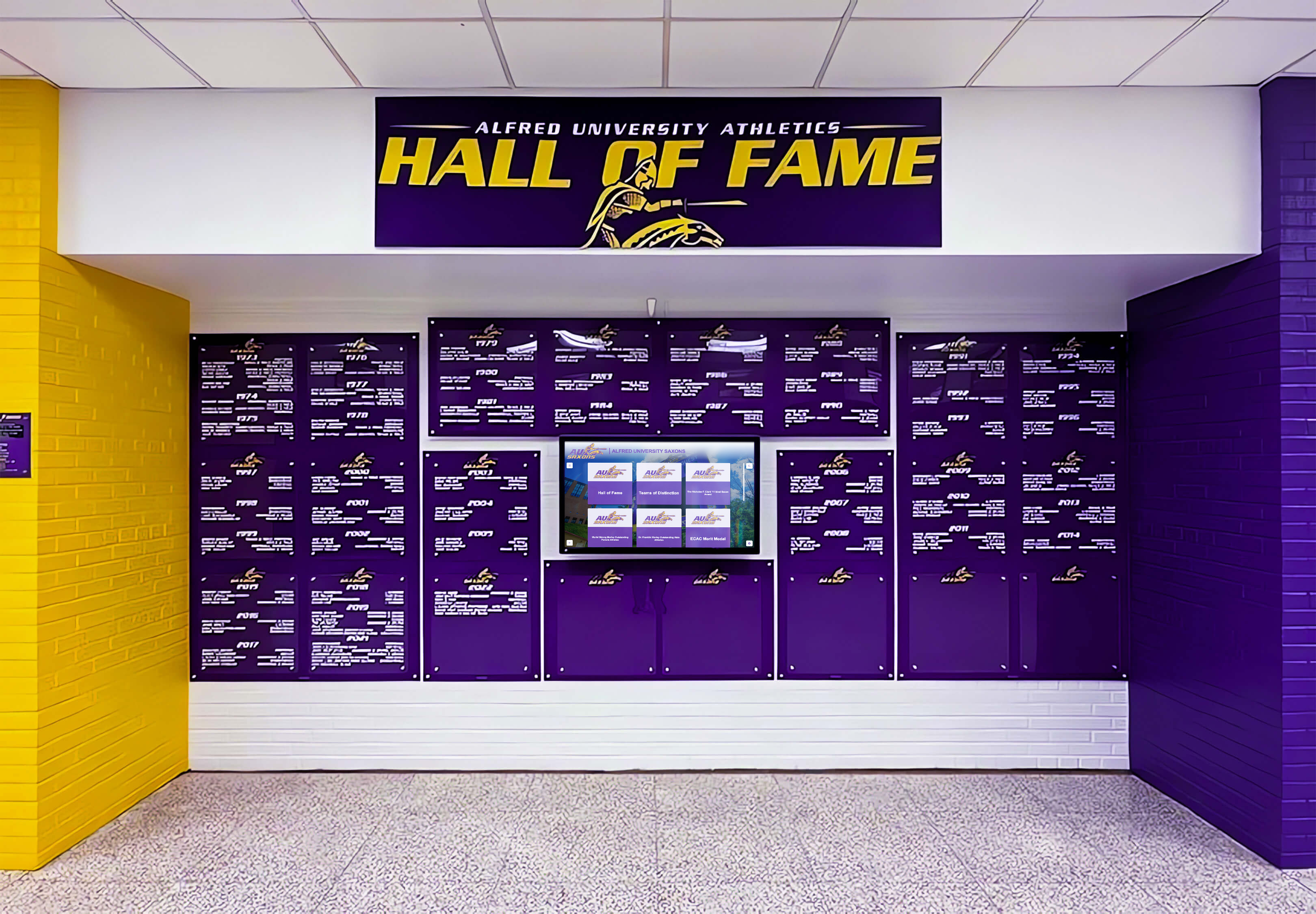
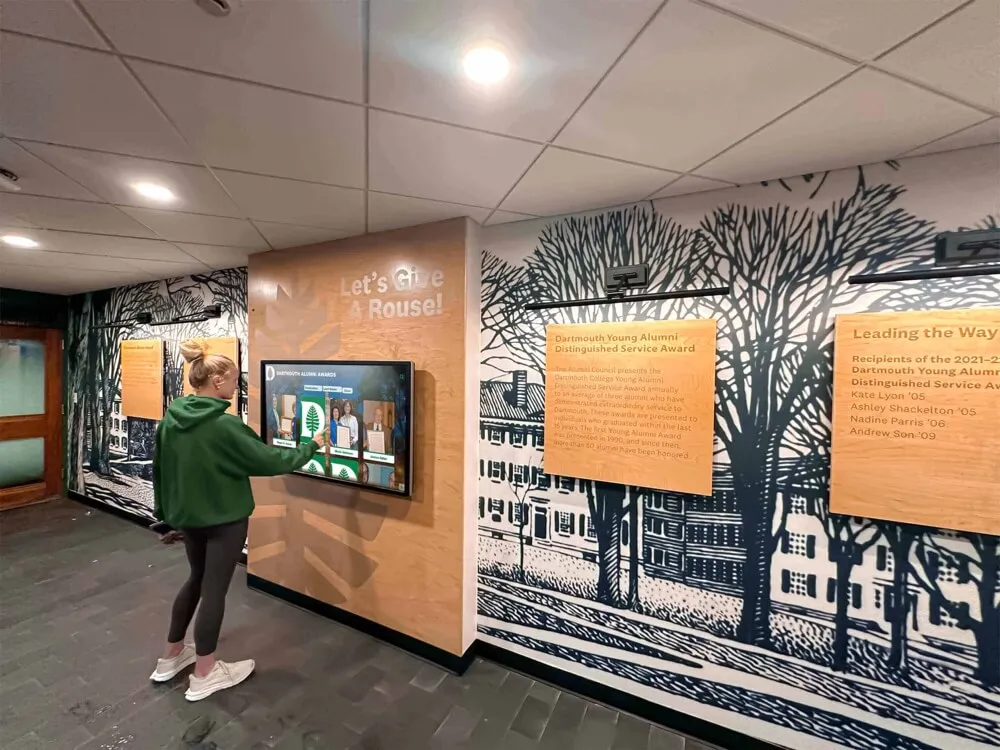
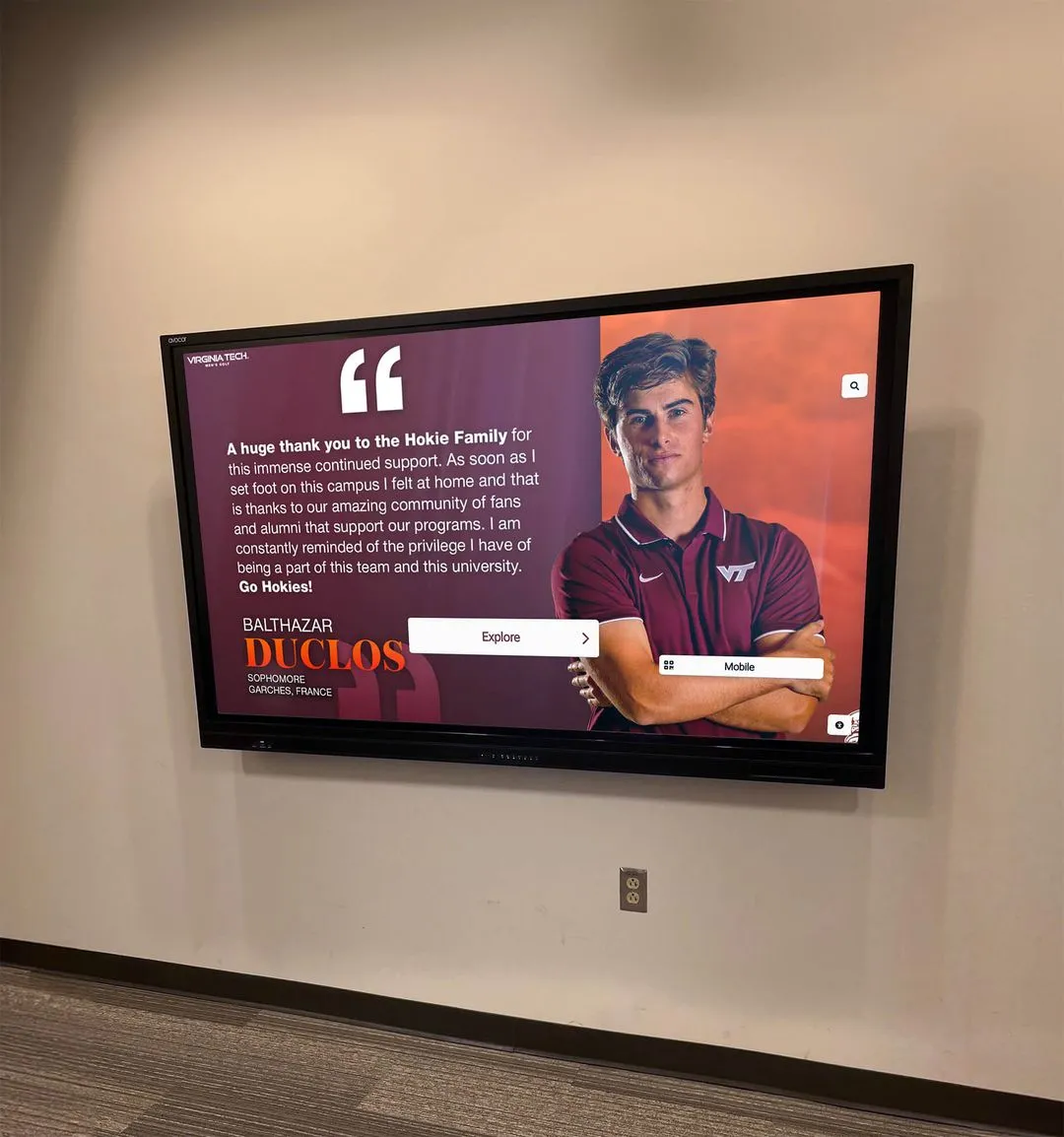
Comprehensive digital displays integrate school branding while showcasing multiple sports and achievement categories within cohesive recognition environments
Maintaining and Updating Athletic Record Boards
Even the best-designed record boards lose effectiveness without systems ensuring regular updates and ongoing maintenance.
Creating Update Protocols
Establish clear processes determining who updates records, when updates occur, and how changes are approved.
Assigning Update Responsibilities
Successful programs designate specific people responsible for record board maintenance:
- Athletic Director Oversight: Ultimate responsibility typically rests with athletic directors ensuring updates happen consistently
- Coach Input: Individual sport coaches provide achievement information as seasons conclude knowing their sport’s records best
- Athletic Secretary Support: Administrative staff may handle actual content entry based on coach-provided information
- Student Assistant Involvement: Some schools engage student managers or athletic leadership students in record-keeping and update processes
Clear assignment prevents situations where everyone assumes someone else handles updates, resulting in boards remaining unchanged for years.
Establishing Update Schedules
Regular schedules ensure record boards stay current rather than only receiving attention when problems become obvious:
- Post-Season Updates: Review and update records after each sport season concludes while information is fresh
- Annual Comprehensive Review: Conduct complete record audits annually, verifying accuracy and identifying needed corrections
- Championship Immediate Updates: Add championship achievements and exceptional records immediately after they occur, capitalizing on excitement
- Summer Preparation: Use summer when athletic activity is lower to complete major updates or renovations before new school years begin
Digital content management systems make frequent updates practical, eliminating the logistical and financial barriers associated with traditional board modifications.
Verification and Accuracy Standards
Record integrity matters tremendously—incorrect information undermines credibility and unfairly diminishes actual record-holders.
Source Documentation Requirements
Maintain documentation supporting displayed records:
- Official scorebooks and statistics from record-setting performances
- Newspaper clippings or game reports documenting achievements
- Athletic association or conference record verification when applicable
- Photo or video evidence of performances when available
- Coach certifications or official verification of reported statistics
This documentation enables future verification if questions arise and provides interesting historical context beyond bare statistics.
Correction Processes
When errors are discovered, correct them promptly with appropriate acknowledgment:
- Verify claims before making changes—current records may be correct despite contrary beliefs
- Update displays immediately once errors are confirmed
- Communicate corrections to affected individuals—both incorrect record-holders and rightful record owners deserve notification
- Understand how errors occurred and improve processes preventing similar mistakes
Digital systems make corrections straightforward, contrasting with traditional boards where error correction might require expensive physical modifications leading to delays acknowledging rightful record-holders.
Best Practices for Athletic Record Board Projects
Schools planning record board installations or renovations should follow proven approaches maximizing project success.
Gathering Stakeholder Input
Involve appropriate people ensuring record boards serve intended audiences and reflect community values.
Key Stakeholder Groups:
- Coaches: Understand which achievements matter most within each sport’s culture and possess historical knowledge about program records
- Athletic Directors: Provide institutional perspective on priorities, budget parameters, and facilities planning
- Alumni: Offer historical context, may identify record-keeping gaps, and provide valuable feedback on recognition priorities
- Current Athletes: Ensure designs resonate with contemporary students who are primary motivation targets
- School Administration: Approve projects, provide funding parameters, and ensure alignment with overall school recognition philosophy
Meaningful input from these groups produces record boards that feel comprehensive and appropriate rather than reflecting narrow individual perspectives.
Budget Planning and Phasing
Athletic record board projects vary dramatically in cost depending on scope, materials, and technology choices.
Traditional Board Cost Factors:
Traditional athletic record boards range from $2,000-$15,000+ depending on size, materials, and installation complexity. Painted murals with vinyl lettering represent lower-cost options, while custom-fabricated systems with engraved plaques or dimensional elements cost significantly more. Budget for periodic update costs—adding records to traditional boards typically costs $200-$800 per update depending on complexity.
Digital Display Investment:
Quality digital athletic record boards require greater initial investment—typically $8,000-$25,000 for complete systems including professional displays, content management platforms, installation, and content setup. However, ongoing update costs are dramatically lower since content changes require no physical modifications. Over 10-year periods, digital solutions often prove more cost-effective when considering total ownership costs.
Many schools implement digital record boards through fundraising campaigns, alumni donations, or sponsorship opportunities. The displays’ prominence and ongoing visibility make them attractive naming opportunities for major donors.
Phased Implementation:
Schools facing budget constraints can phase recognition projects:
- Phase 1: Implement digital display for highest-priority sport or main athletic hallway
- Phase 2: Expand to additional sports or locations as budgets permit
- Phase 3: Add interactive features, historical content archives, or additional display locations
This approach provides immediate benefits while spreading costs across multiple budget cycles.
Incorporating Championship Recognition
Athletic record boards focusing exclusively on individual statistical records miss opportunities to celebrate equally important team achievements.
Effective displays prominently feature championship years, conference titles, tournament appearances, and exceptional season records. Some schools create separate championship banner displays complementing individual record boards, while others integrate both recognition types within comprehensive displays.
This dual focus ensures athletes understand that both individual excellence and team success receive appropriate honor, reinforcing that sports involve personal achievement and collective accomplishment equally.
Future-Proofing Your Athletic Recognition
Thoughtful design choices ensure record boards remain effective for decades rather than requiring replacement after a few years.
Designing for Longevity
Consider how record boards will age and what future needs might emerge:
Traditional Board Longevity Factors:
- Select durable materials resisting fading, wear, and environmental conditions
- Design layouts with expansion space for future records
- Choose timeless design aesthetics rather than trendy styles that quickly date
- Use update methods (like changeable plaques or digital elements) within traditional frameworks
- Position boards away from direct sunlight preventing premature fading
Digital System Longevity:
- Choose commercial-grade displays rated for extended operating hours
- Select systems with proven long-term platform support and regular updates
- Ensure content management systems offer data export preventing vendor lock-in
- Plan for eventual hardware replacement while preserving content investment
- Maintain content backups independent of primary systems
Adapting to Changing Sports Programs
School athletic programs evolve—adding sports, discontinuing others, or shifting competitive emphasis. Record boards should accommodate these changes gracefully.
Flexible Design Approaches:
- Modular layouts where sport sections can be rearranged as priorities shift
- Digital systems easily adding or removing sports without physical changes
- Generic design elements not overly specific to current sport lineups
- Space allocation systems easily adjusting to program changes
This flexibility prevents record boards from becoming outdated as programs evolve, protecting long-term investment value.
Integration With Broader Recognition Strategies
Athletic record boards function best as components within comprehensive recognition strategies rather than isolated displays.
Complementary Recognition Elements:
Schools often combine record boards with trophy displays, team photos, athlete of the year recognition, college commitment announcements, Hall of Fame inductions, and sport-specific recognition spaces. Together, these elements create environments where athletic excellence receives appropriate multifaceted celebration.
Digital platforms like Rocket Alumni Solutions enable this integration, providing systems that accommodate record boards, hall of fame profiles, achievement galleries, and recruiting recognition within unified platforms. This comprehensive approach creates cohesive recognition environments where different achievement types receive appropriate honor through consistent, professionally designed displays.
Creating Inspiring Athletic Environments
Ultimately, athletic record boards should inspire everyone who encounters them—motivating current athletes, celebrating alumni, building community pride, and demonstrating what dedication and excellence produce.
The most effective record boards combine clear information presentation with emotional resonance. Visitors should leave displays feeling inspired by what previous athletes accomplished and motivated to pursue their own excellence. Athletes should see records as achievable targets with hard work, not impossibly distant standards. Alumni should feel pride in program traditions and their own contributions to institutional legacies.
Modern digital solutions make this inspiration sustainable. Rather than gradually becoming outdated as updates lag and information grows stale, digital record boards remain perpetually current. Every achievement receives prompt recognition, ensuring displays always reflect program status accurately. This currency maintains relevance and prevents record boards from becoming ignored fixtures people walk past without noticing.
Schools planning athletic record board projects should prioritize this inspirational quality alongside practical information display. Ask whether designs motivate athletes, whether content tells compelling achievement stories, whether presentations connect viewers emotionally to accomplishments, and whether systems can maintain this impact as years pass and new records emerge.
When record boards successfully inspire while informing, they become invaluable athletic program assets—recruiting tools, motivation engines, pride builders, and historical archives simultaneously.
Taking the Next Step in Athletic Recognition
Athletic record boards represent significant opportunities to celebrate program excellence, motivate athlete development, and build institutional pride through thoughtful recognition design. Whether implementing traditional displays honoring timeless achievement or modern digital solutions offering unprecedented flexibility, the key lies in creating systems that truly serve athletes, programs, and communities.
Schools exploring digital athletic recognition solutions should consider platforms specifically designed for educational institutions and athletic programs. These purpose-built systems understand school needs—balancing professional presentation with practical management, offering unlimited capacity accommodating decades of future achievements, providing intuitive interfaces requiring no technical expertise, and delivering displays that integrate seamlessly into athletic environments.
Ready to create athletic record boards that inspire current athletes while honoring program heritage? Rocket Alumni Solutions provides comprehensive digital recognition platforms combining unlimited record capacity with effortless content management, helping schools celebrate athletic excellence through displays that remain current year after year. Discover how modern athletic recognition transforms program culture while preserving achievements for generations to come.