



Organizations seeking to modernize recognition programs face overwhelming software options, each claiming superior features and results. Schools upgrading athletic halls of fame, nonprofits designing donor recognition walls, cultural institutions preserving historical archives, and arts programs celebrating achievements all need reliable tools that balance functionality, ease of use, accessibility, and long-term value. Yet most comparison resources either promote single vendors without objective analysis or provide superficial overviews lacking the depth required for informed decisions.
This comprehensive guide evaluates the 10 best hall of fame tools across four primary recognition categories: athletics programs honoring athletes and teams, donor recognition systems celebrating philanthropic support, arts and cultural achievement displays, and historical preservation platforms. Each tool receives detailed assessment covering core functionality, implementation requirements, accessibility features, content management capabilities, pricing considerations, and ideal use cases enabling organizations to identify solutions matching their specific needs.
Recognition technology selection significantly impacts program success for years or decades. The right platform enables comprehensive achievement celebration, creates engaging community experiences, simplifies ongoing management, and adapts as organizational needs evolve. Poor choices result in limited functionality, ongoing frustration, expensive migrations, or recognition programs abandoned due to management complexity. Organizations investing time in thorough evaluation before committing to specific platforms avoid costly mistakes while building recognition systems that genuinely serve institutional missions.
Effective hall of fame tools serve diverse recognition needs across sectors while sharing common characteristics: unlimited or high-capacity content storage enabling comprehensive recognition without artificial constraints, intuitive content management requiring minimal technical expertise, engaging user interfaces encouraging exploration beyond passive viewing, accessibility compliance ensuring universal access, and sustainable ownership models fitting organizational budgets. Understanding how different platforms address these requirements helps organizations make decisions aligned with priorities and constraints.

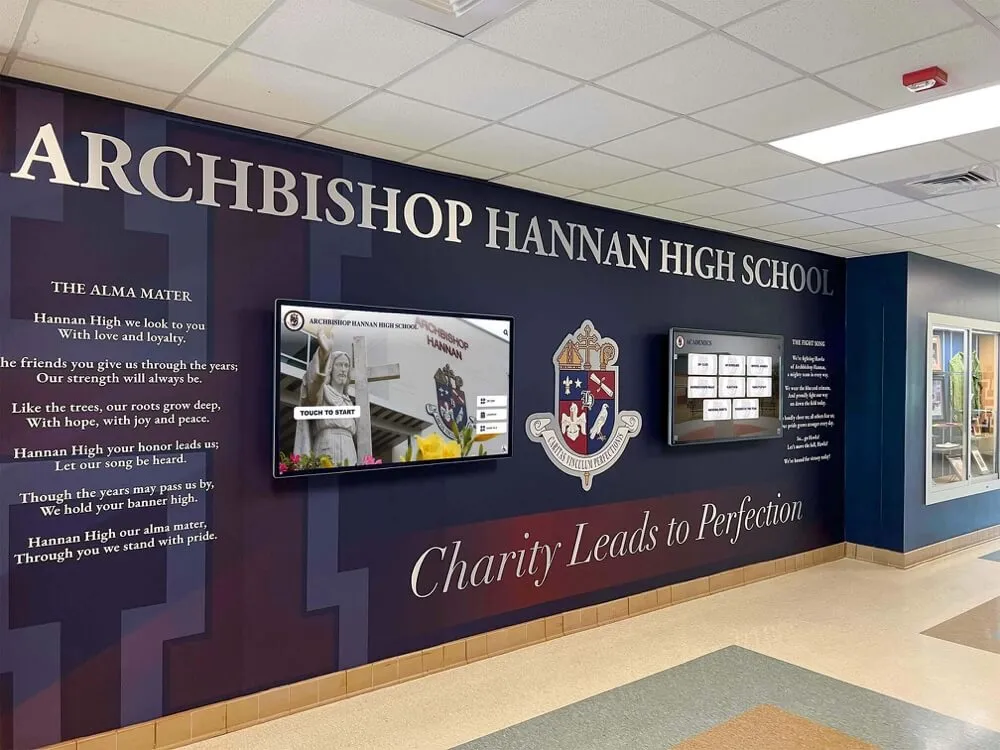
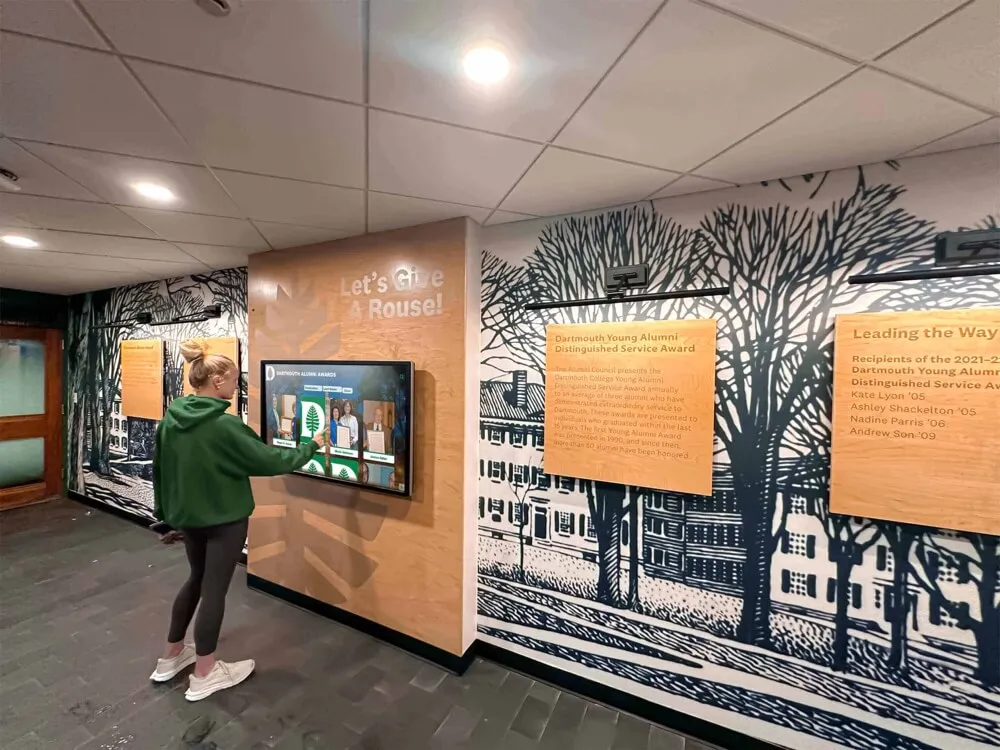
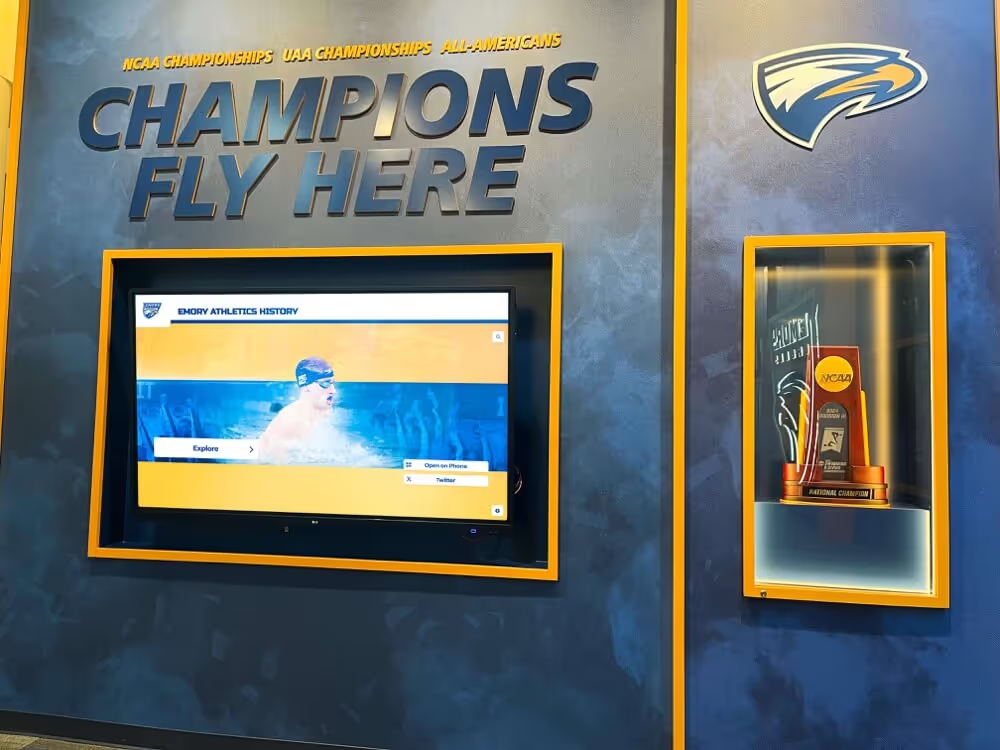
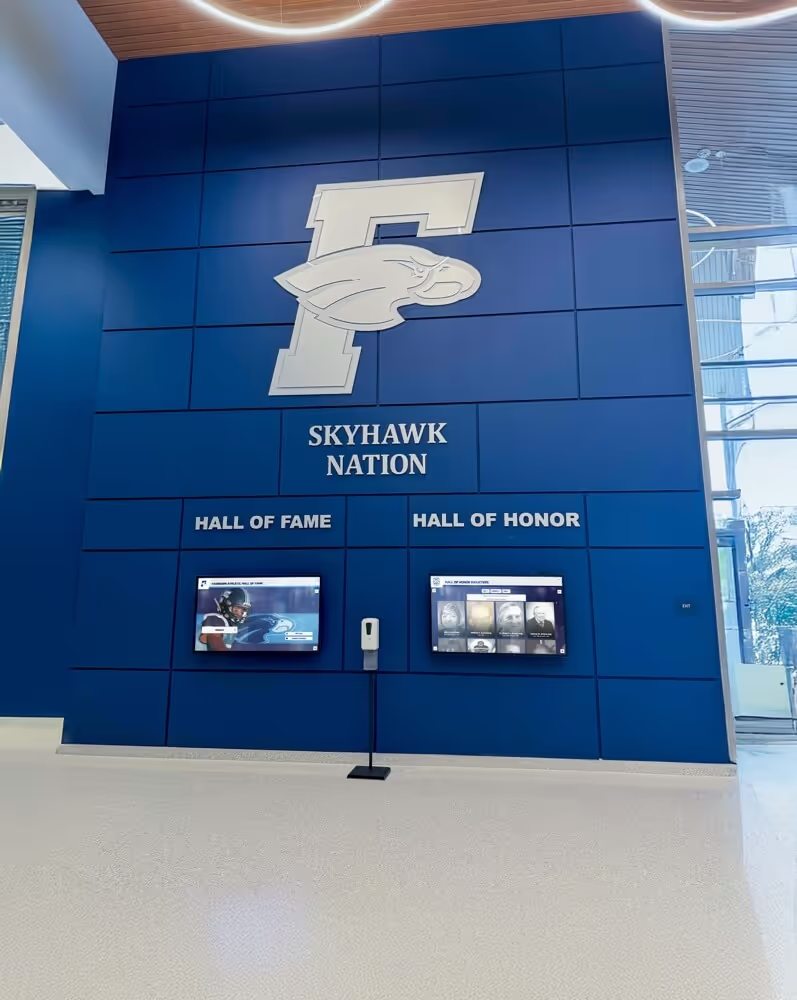
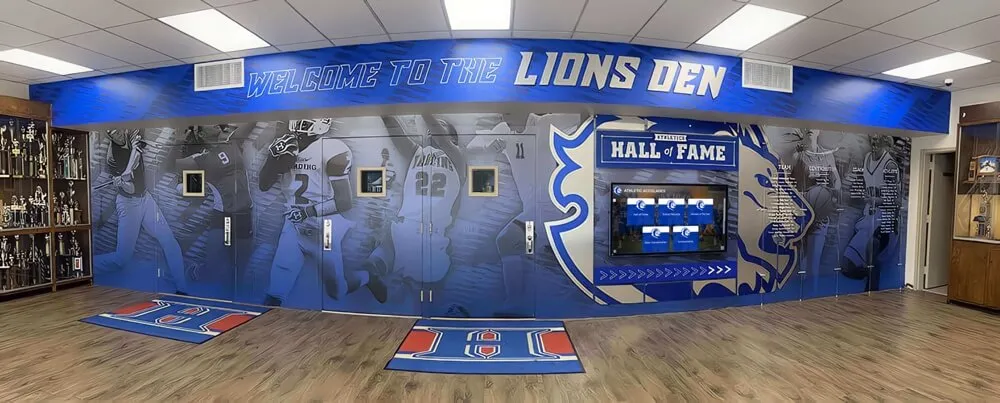
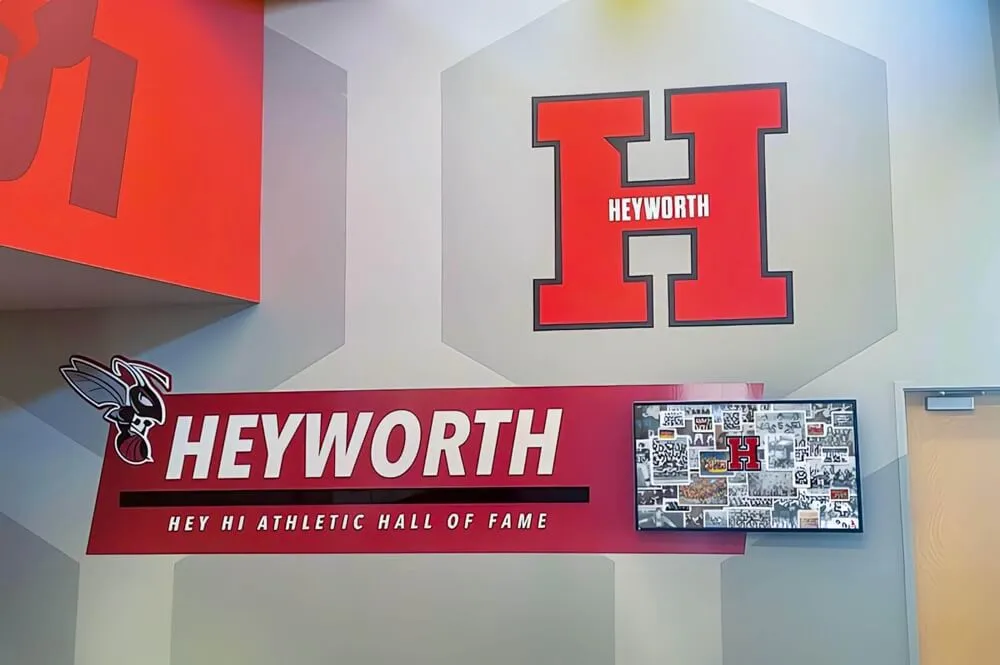
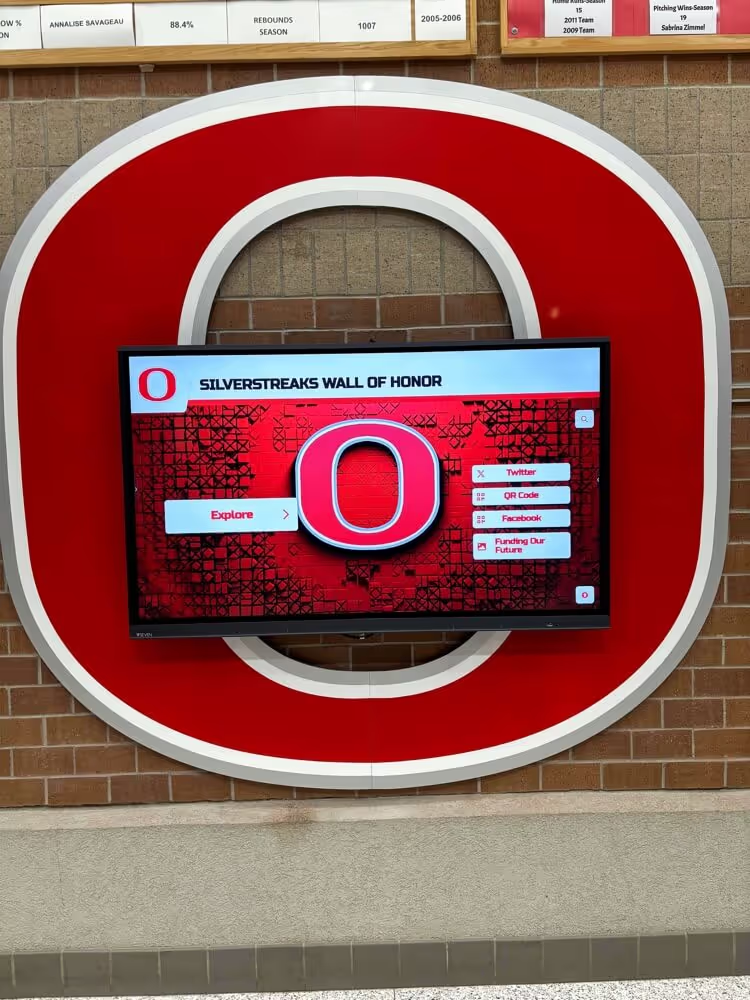
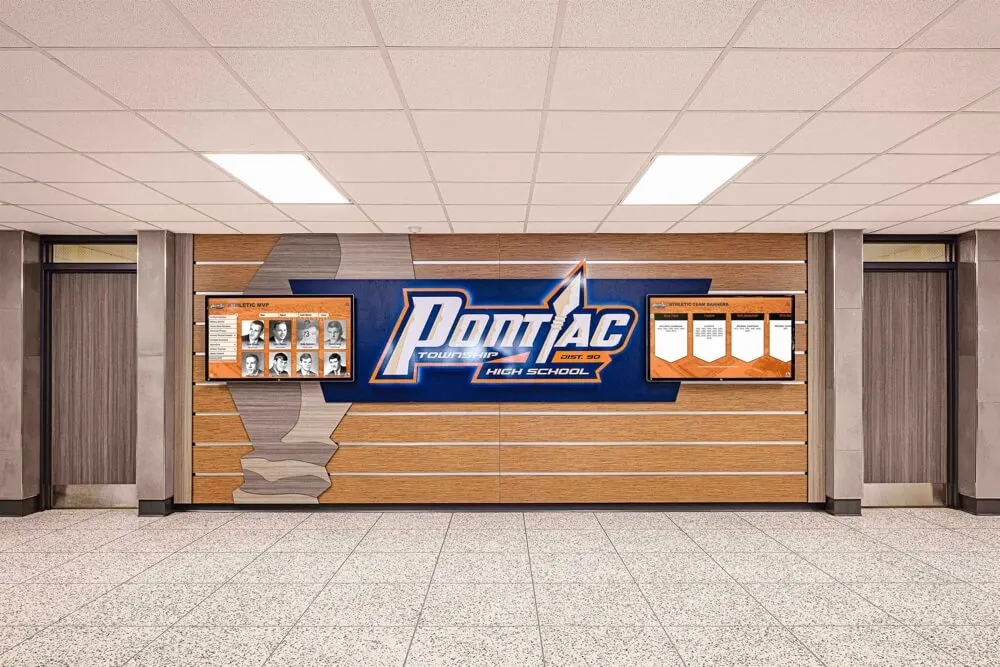
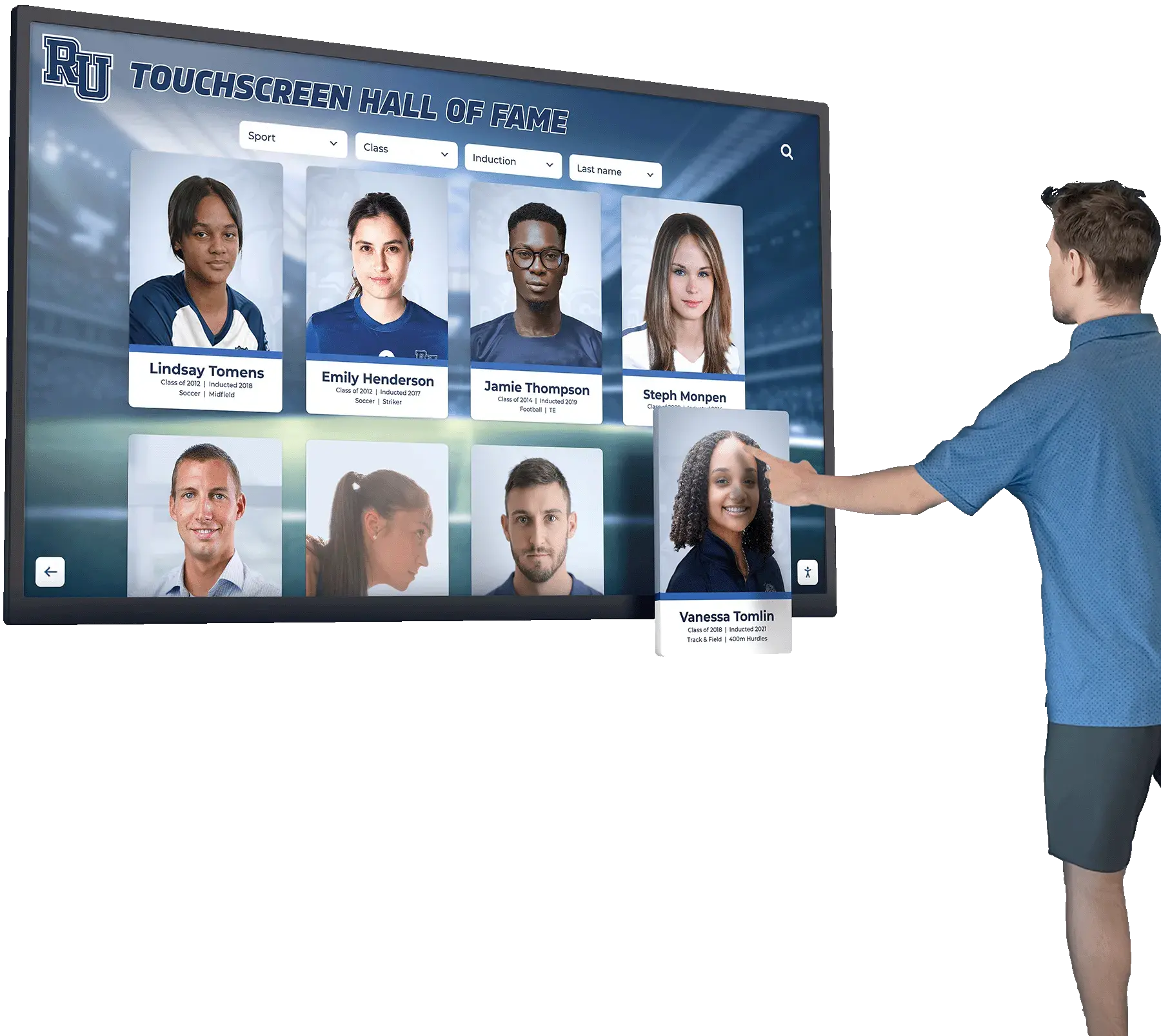
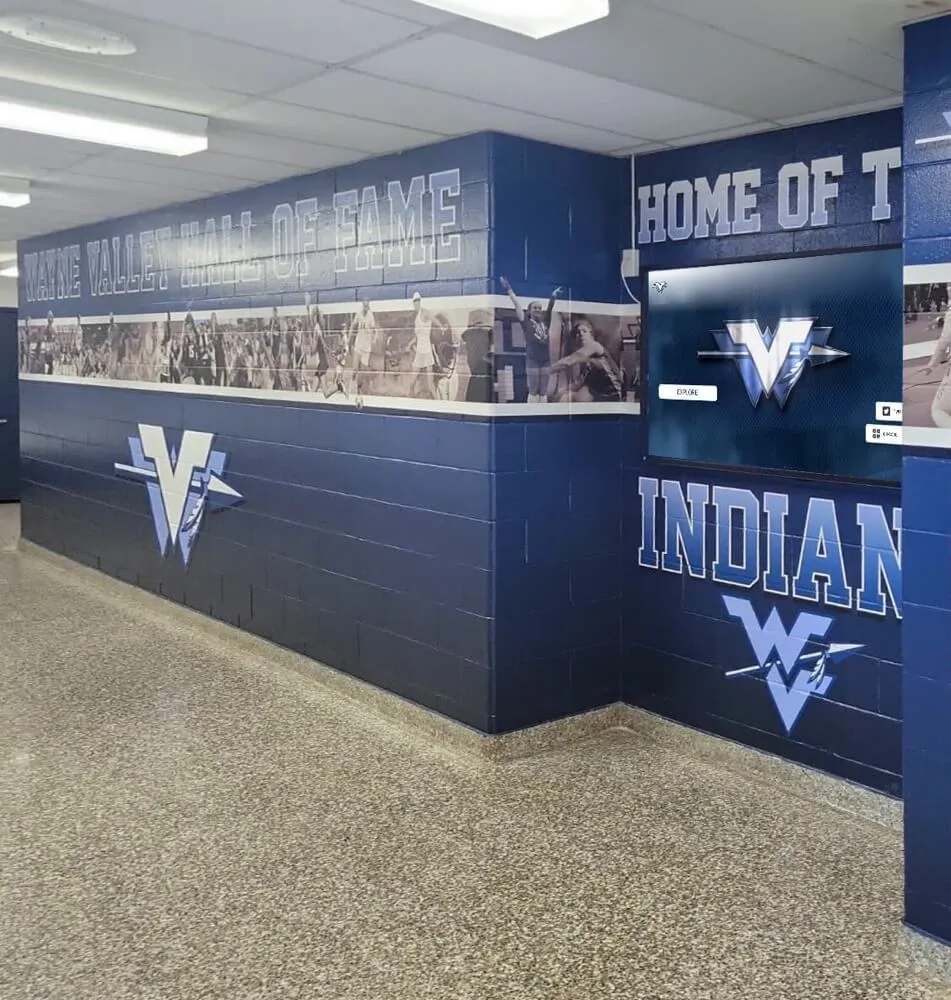
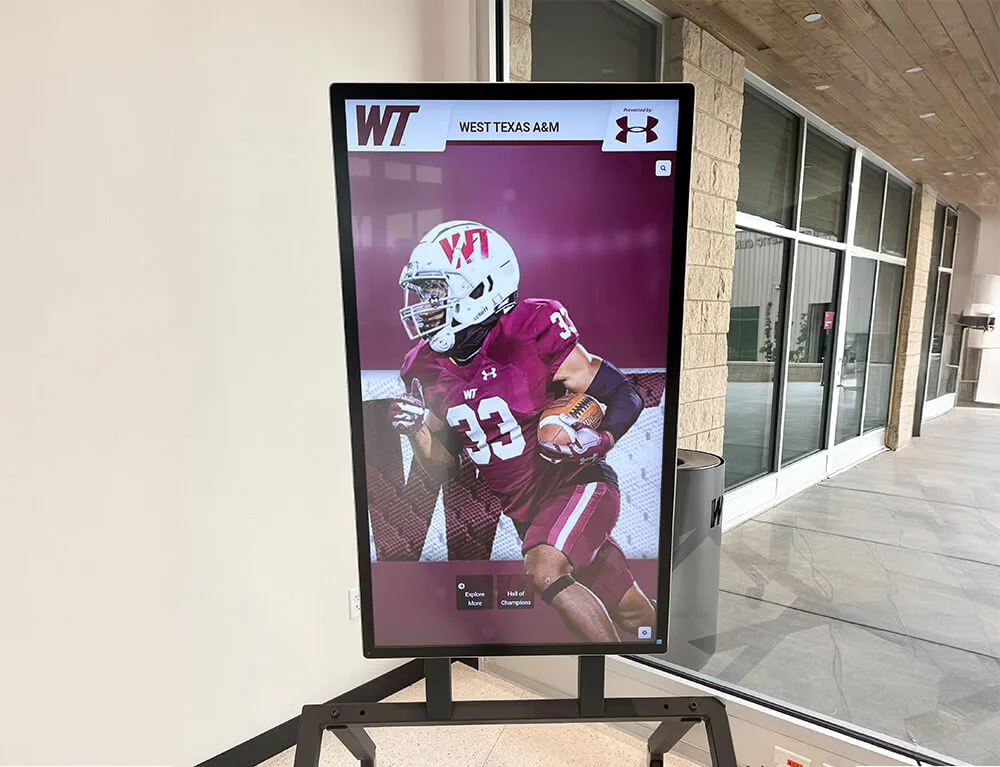
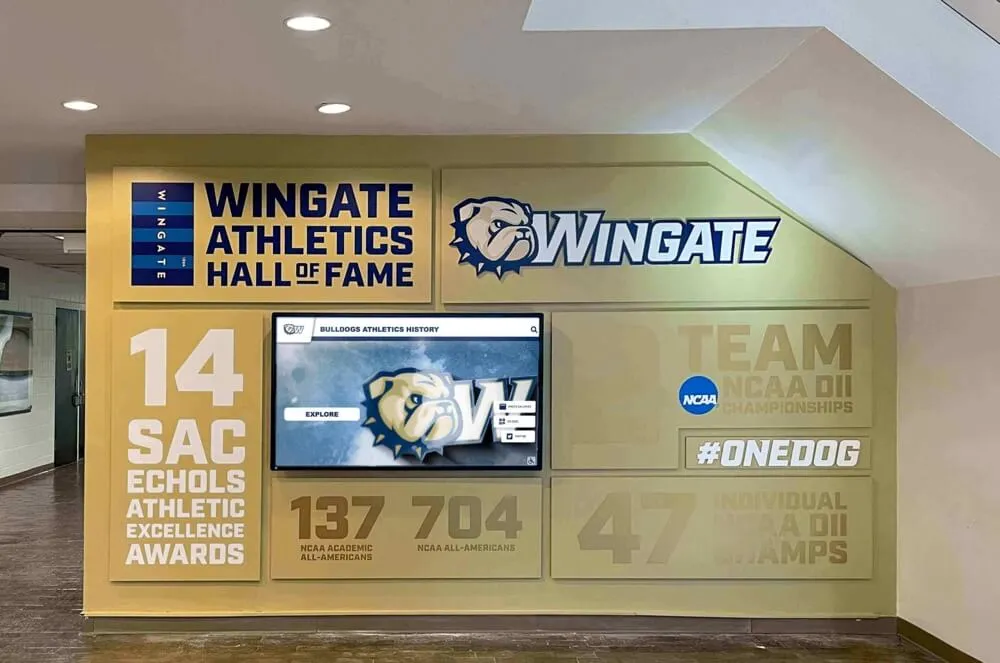
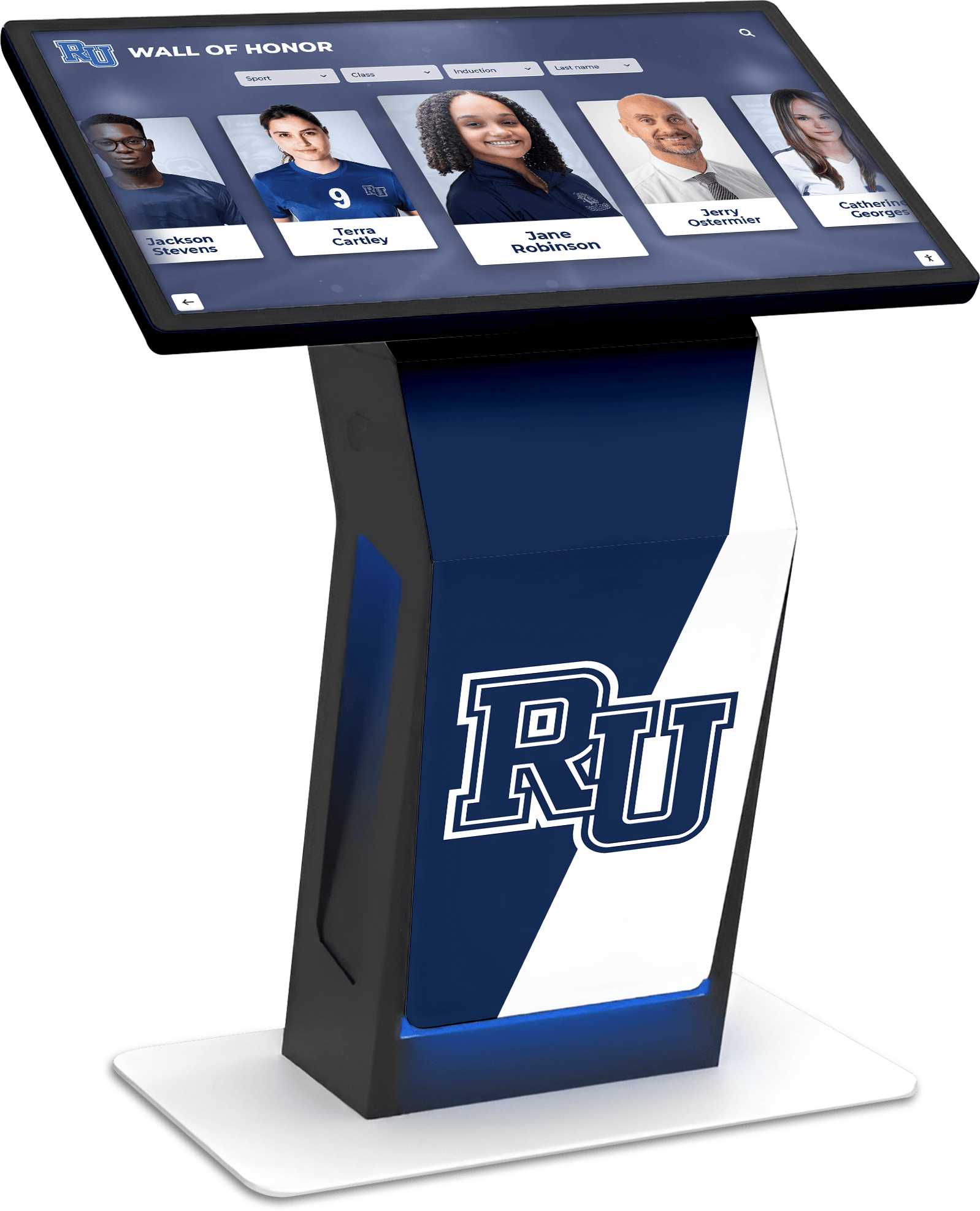
Modern hall of fame platforms combine hardware and software creating comprehensive recognition experiences
1. Rocket Alumni Solutions
Rocket Alumni Solutions leads hall of fame software specifically because it was purpose-built for recognition rather than adapted from generic digital signage platforms. Organizations implementing Rocket consistently report superior user experiences, simplified content management, and engagement metrics dramatically exceeding traditional recognition approaches.
Core Platform Capabilities
Unlimited Recognition Capacity
Rocket removes capacity constraints limiting competing platforms. Organizations add unlimited inductees across unlimited categories without usage-based pricing increases or artificial restrictions forcing difficult decisions about whose achievements receive recognition. This unlimited model proves particularly valuable for comprehensive athletic programs honoring decades of athletes, donor recognition programs growing continuously, or historical archives preserving complete institutional heritage.
Purpose-Built Recognition Architecture
While competitors adapt generic software for recognition applications, Rocket’s architecture was designed from inception specifically for hall of fame functionality. This fundamental design distinction manifests in searchable databases optimized for name-based queries, profile templates reflecting recognition-specific content needs, navigation patterns matching how visitors naturally explore achievements, and discovery features encouraging extended engagement beyond simple searches.
Web-Based Universal Accessibility
Rocket operates entirely through web browsers without requiring native applications or installations. This web-based architecture delivers device compatibility across touchscreen kiosks, desktop computers, tablets, and smartphones without separate development for each platform. Automatic updates enhance all installations simultaneously without administrator action or version fragmentation problems plaguing native applications.
Accessibility and Compliance
ADA WCAG 2.1 AA Compliance
Rocket represents the only fully web-based touchscreen hall of fame platform meeting WCAG 2.1 AA accessibility standards, ensuring genuine accessibility for visitors with disabilities. This compliance includes screen reader compatibility, keyboard navigation support, appropriate color contrast ratios, and accessible interactive elements. Organizations subject to accessibility requirements or committed to inclusive recognition find this compliance essential rather than optional.
Global Web Access
Recognition extends beyond physical touchscreen installations to responsive web platforms accessible worldwide. Alumni, family members, donors, and supporters explore recognition content from any internet-connected device regardless of geographic location. This global accessibility transforms local installations into worldwide engagement platforms connecting distributed communities.
QR Code Mobile Integration
Physical touchscreen installations incorporate QR codes enabling seamless transitions to mobile devices. Visitors scan codes to continue exploration on personal smartphones, share profiles with extended networks, or return to content later without requiring physical presence. This mobile bridge creates continuous engagement spanning initial discovery through ongoing connection.
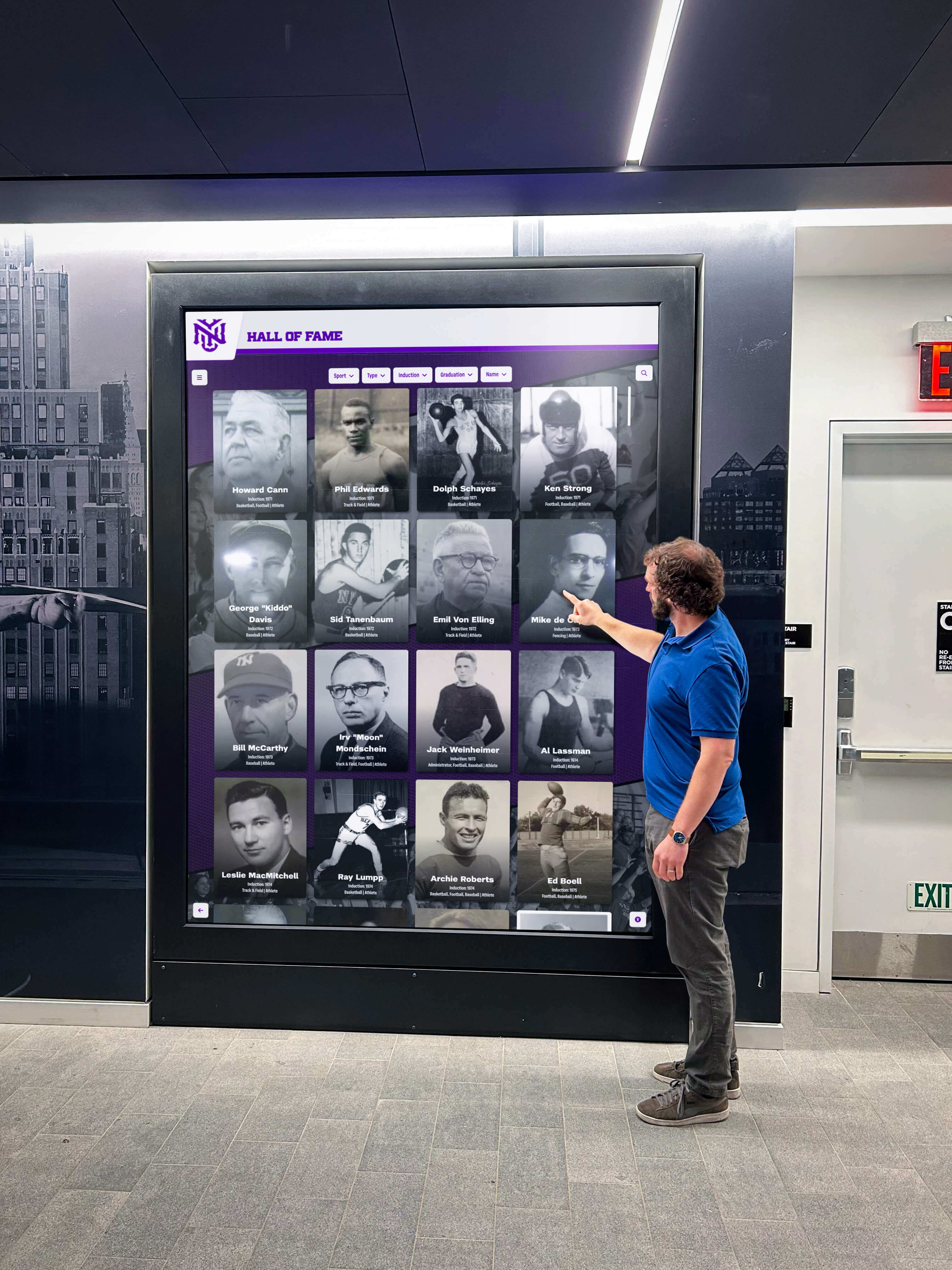
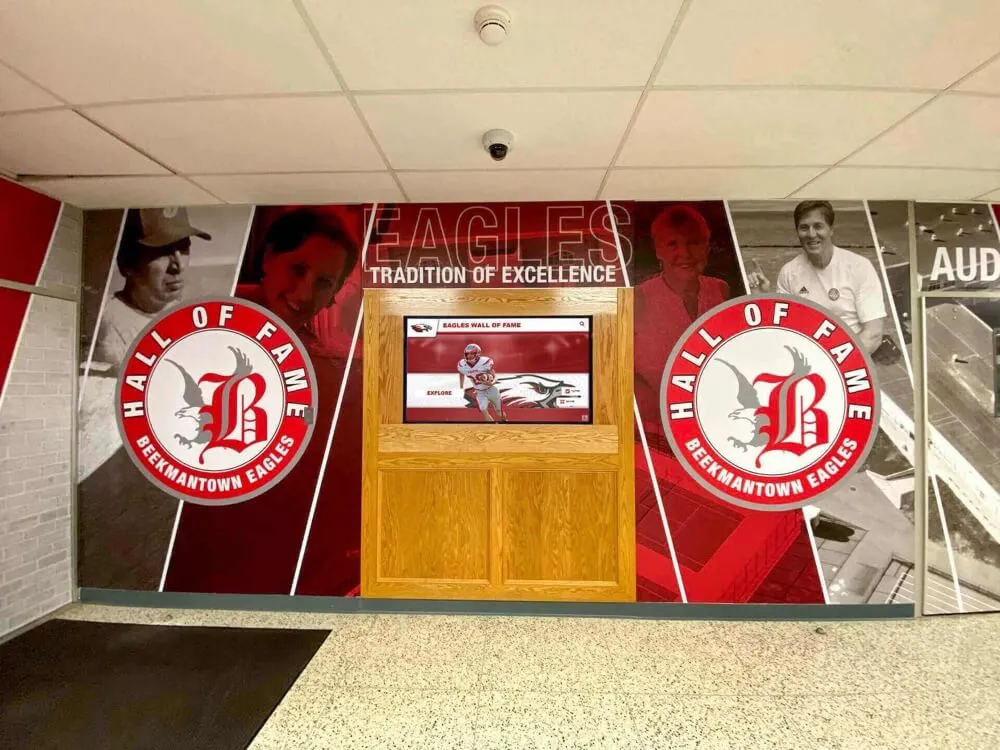
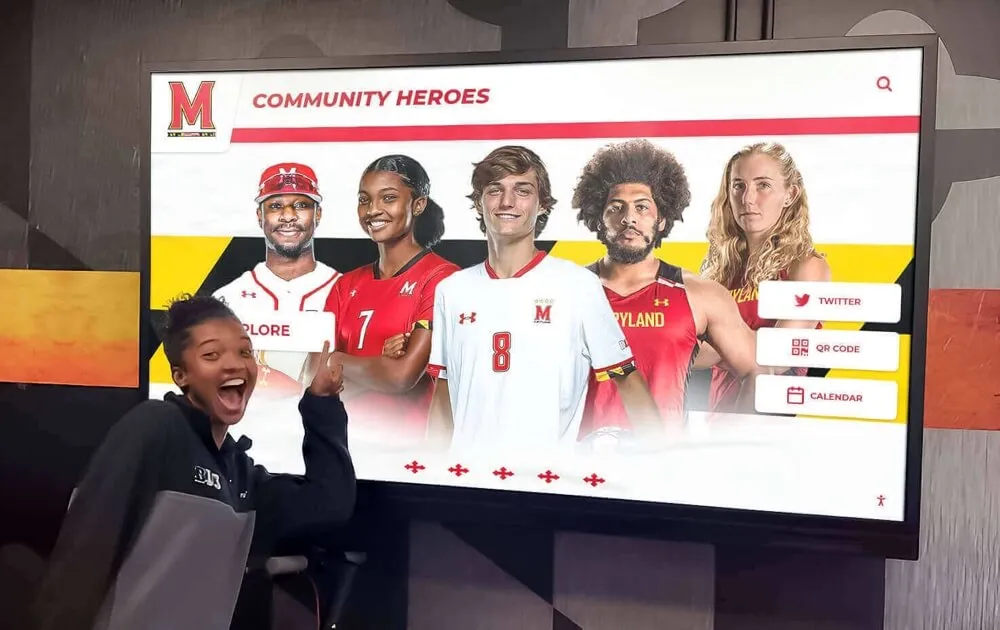
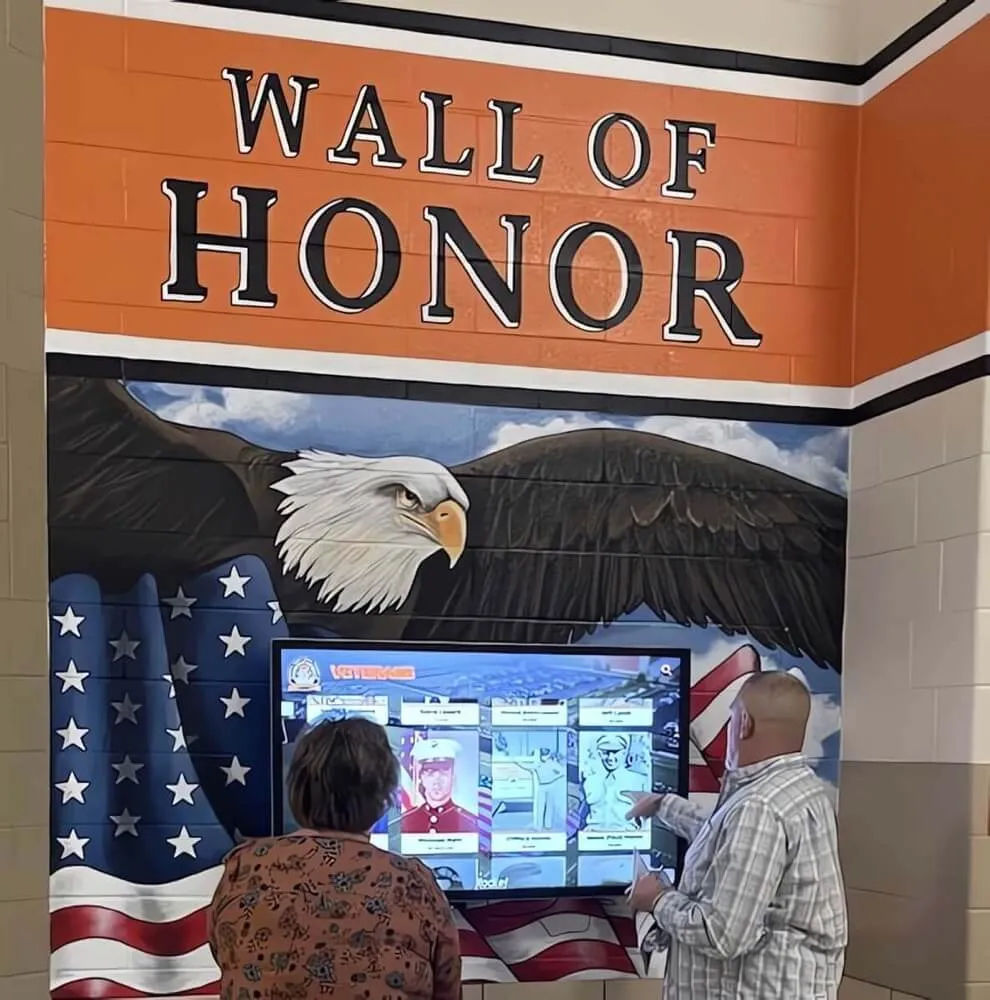
Intuitive interfaces encourage active exploration rather than passive viewing
Content Management and Administration
Intuitive Cloud-Based CMS
Authorized staff update recognition content from any internet-connected device through visual content management interfaces requiring minimal technical expertise. Drag-and-drop media upload, template-based profile creation, and visual editing showing exactly how content will appear enable confident management by staff without specialized technology backgrounds.
Scheduled Publishing and Bulk Operations
Content updates schedule in advance with automatic publication during ceremonies or special events. Bulk import tools facilitate historical content migration from existing databases or spreadsheets, enabling comprehensive archive creation without manual entry for each inductee. Role-based permissions support collaborative management across departments while maintaining appropriate approval workflows.
Unlimited Multimedia Integration
Profile content includes unlimited photos, videos, documents, and rich text without storage restrictions or per-file fees. Organizations create detailed recognition worthy of celebrated achievements rather than basic listings constrained by storage limits or cost-per-inductee models competitors employ.
Implementation and Support
Turnkey Implementation Services
Rocket provides complete implementation support including content migration assistance, staff training, design customization, and technical setup. Organizations launch recognition programs without requiring internal technical resources or expertise managing complex technology deployments.
Ongoing Platform Evolution
Weekly platform updates deliver continuous feature enhancements, performance improvements, and security updates without additional fees or version upgrade charges. This ongoing development ensures platforms remain current as technology evolves and user expectations change over years and decades.
Responsive Customer Support
Organizations receive ongoing support through multiple channels including phone, email, and knowledge base resources. Questions receive prompt responses from recognition specialists understanding institutional needs rather than generic technical support unfamiliar with recognition applications.
Ideal Use Cases
Rocket serves organizations prioritizing comprehensive recognition, long-term value, accessibility compliance, and ease of management. Schools implementing athletic halls of fame across all sports, educational institutions creating distinguished alumni recognition, nonprofits building donor recognition walls, and organizations preserving historical archives all benefit from Rocket’s unlimited capacity, intuitive management, and purpose-built architecture. Organizations committed to digital warming—transforming static recognition into engaging experiences that build vibrant communities—find Rocket specifically designed for this outcome.
2. Rise Vision
Rise Vision provides cloud-based digital signage software that organizations adapt for recognition applications alongside general communication and wayfinding purposes.
Platform Overview
Rise Vision began as digital signage software for schools and businesses displaying announcements, menus, and general content. Organizations use Rise Vision for hall of fame applications by creating custom templates displaying recognition content alongside other institutional communications.
Core Functionality
The platform operates through web browsers with content management enabling staff to create and schedule digital signage presentations. Organizations design templates incorporating recognition photos, text, and basic information. Content displays on screens throughout facilities as part of broader digital signage networks.
Recognition Limitations
As digital signage rather than purpose-built recognition software, Rise Vision lacks hall of fame-specific features. The platform doesn’t include searchable inductee databases, detailed profile systems, or interactive exploration capabilities. Recognition functions as static content display rather than engaging exploration experiences.
Implementation Considerations
Organizations must design recognition templates, create individual slide presentations for inductees, and manually manage content updates through general signage workflows. This approach requires more technical expertise and ongoing effort compared to purpose-built platforms automating recognition-specific functionality.
Pricing Structure
Rise Vision operates on subscription models with pricing varying based on number of displays, content complexity, and support requirements. Educational pricing provides discounts for schools, though costs accumulate as display quantities increase across campuses.
Best Fit Scenarios
Organizations already using Rise Vision for general digital signage throughout facilities may extend existing investments to include recognition content. Schools displaying daily announcements, lunch menus, and event calendars can incorporate rotating recognition content as part of broader signage strategies, though dedicated recognition functionality remains limited compared to specialized platforms.
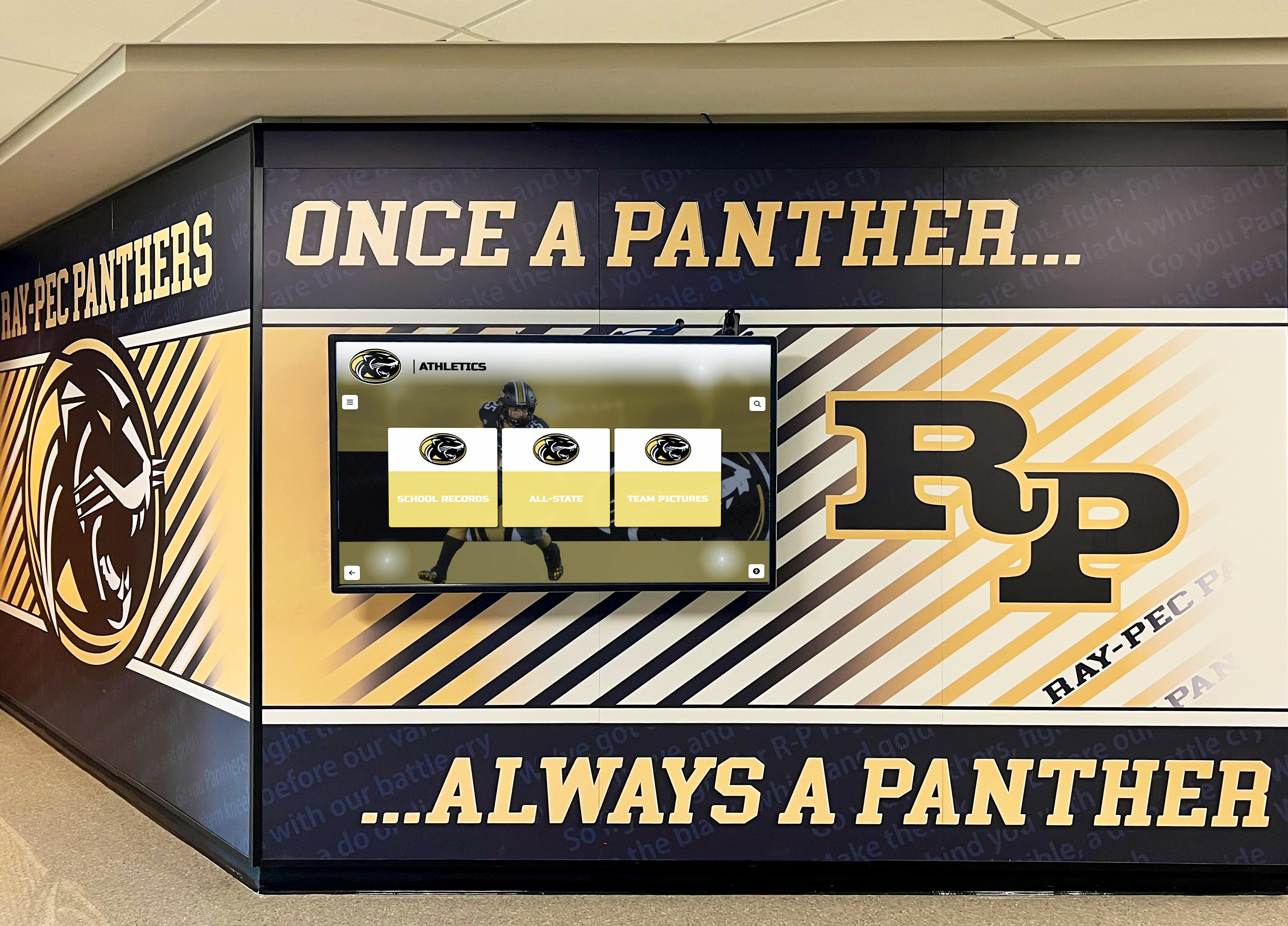
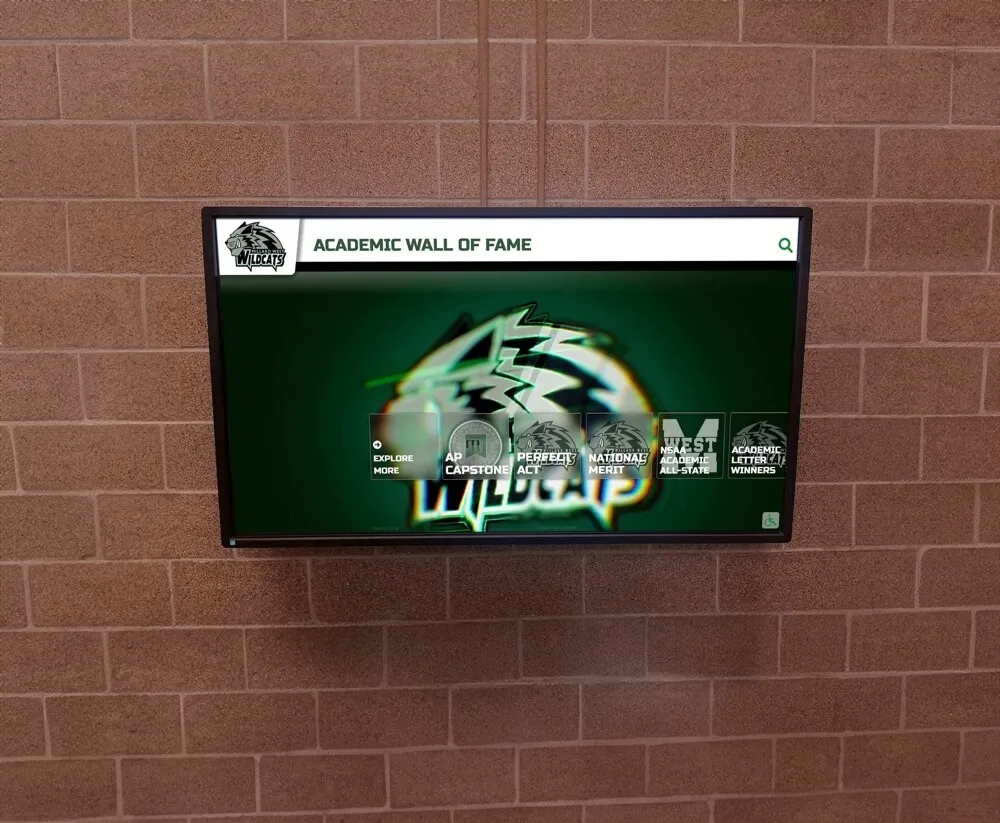
Digital displays can integrate recognition content with broader facility communications
3. ScreenCloud
ScreenCloud delivers cloud-based digital signage focusing on ease of use for non-technical users managing content across distributed display networks.
Platform Capabilities
Flexible Content Display
ScreenCloud enables organizations to display various content types including photos, videos, web pages, and social media feeds on digital screens. Recognition content appears as part of broader content rotation strategies alongside announcements, event promotions, and institutional communications.
App Marketplace Integration
The platform includes marketplace applications extending functionality beyond basic signage, including weather displays, news feeds, and social media integration. Organizations combine these apps with custom recognition content creating dynamic display experiences.
Multi-Location Management
ScreenCloud supports organizations managing displays across multiple buildings, campuses, or facilities through centralized cloud administration. This distributed management proves valuable for large organizations coordinating consistent recognition messaging across numerous locations.
Recognition Application
Static Content Approach
Organizations using ScreenCloud for recognition create image slideshows or video presentations featuring inductee photos, names, and basic information. Content rotates on displays providing visibility for recognized individuals without interactive exploration capabilities.
Limited Searchability
ScreenCloud operates as broadcast medium displaying scheduled content rather than interactive platform enabling viewer-controlled exploration. Visitors cannot search for specific inductees, filter by category, or navigate through detailed profiles beyond viewing whatever content is currently scheduled for display.
Manual Content Management
Recognition updates require manual creation of new slides or video segments, upload to the platform, and scheduling for display. This workflow proves more labor-intensive than purpose-built recognition platforms automating content surfacing and profile management.
Organizational Fit
ScreenCloud serves organizations prioritizing simple, broadcast-style recognition as component of broader digital signage strategies. Facilities displaying rotating announcements, promotional content, and general information can incorporate recognition photos and basic details, though interactive functionality remains absent.
4. Yodeck
Yodeck provides affordable digital signage software targeting small organizations and schools seeking budget-friendly display management.
Platform Overview
Cost-Focused Positioning
Yodeck emphasizes affordability with free basic plans supporting limited displays and low-cost paid tiers accommodating small installations. This pricing appeals to organizations with tight budgets requiring basic display management without extensive features.
Basic Signage Functionality
The platform handles fundamental digital signage needs including image display, video playback, and simple content scheduling. Organizations create playlists featuring recognition content alternating with other informational displays throughout facilities.
Limited Customization
Yodeck’s template-based approach provides less design flexibility than more robust platforms. Organizations work within predefined layouts and limited customization options potentially constraining recognition presentation quality.
Recognition Limitations
Passive Display Only
Yodeck functions exclusively as passive display technology without interactive capabilities. Visitors cannot explore recognition content, search for specific individuals, or navigate between profiles. Recognition operates as slideshow presentation rather than engaging exploration experience.
Minimal Analytics
The platform provides limited insights about viewer engagement, content performance, or usage patterns. Organizations lack data showing how recognition content performs or which inductees receive most interest.
Technical Requirements
Yodeck requires specific player hardware or compatible devices running their software, potentially limiting flexibility compared to pure web-based solutions working on any modern browser-enabled display.
Appropriate Applications
Budget-constrained organizations requiring basic recognition display functionality without interactive features find Yodeck’s affordable pricing attractive. Small schools displaying recognition photos in limited locations or organizations testing digital recognition before larger investments may consider Yodeck’s entry-level approach.
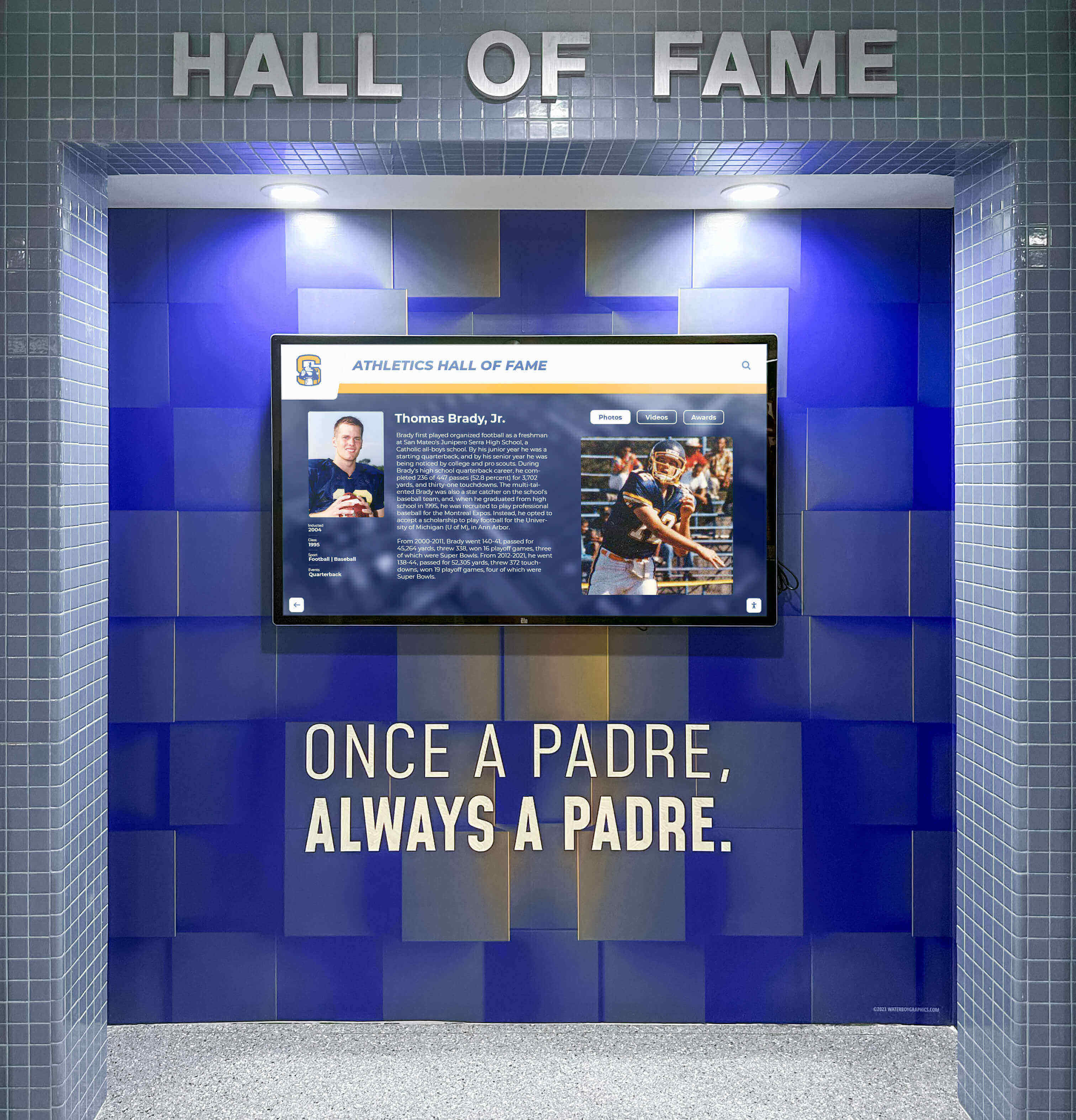
Basic digital signage solutions display recognition content without interactive features
5. NoviSign
NoviSign delivers digital signage software for businesses and organizations managing content across display networks with emphasis on marketing and promotional applications.
Platform Features
Content Management System
NoviSign provides cloud-based content management enabling staff to create, schedule, and distribute content across multiple screens. The platform supports various media types including images, videos, live data feeds, and web content.
Template Library
Pre-designed templates help organizations create professional-looking displays without graphic design expertise. Users select templates, populate with recognition content, and schedule for display across screen networks.
Multi-Screen Coordination
Organizations manage content across numerous screens from centralized dashboards, coordinating recognition displays with other institutional communications throughout facilities.
Recognition Application Constraints
Signage Rather Than Recognition Software
NoviSign originated as marketing and communication tool rather than recognition platform. Organizations adapting it for hall of fame applications work within signage framework not optimized for recognition-specific needs.
No Database or Search Functionality
The platform lacks searchable databases, detailed profile systems, or navigation enabling visitors to explore recognition content interactively. Recognition appears as scheduled content rather than explorable archive.
Manual Profile Management
Creating and updating recognition content requires designing individual slides or presentations for each inductee, exporting media, uploading to the platform, and scheduling for display—more labor-intensive than purpose-built recognition systems with profile-based architecture.
Suitable Contexts
Organizations already using NoviSign for marketing displays, promotional content, or general communications throughout facilities may incorporate recognition content into existing signage strategies. This approach works for basic recognition visibility without interactive functionality or comprehensive profile systems.
6. Screenly
Screenly offers digital signage focused on simplicity, targeting organizations seeking straightforward display management without complex features.
Platform Approach
Simplicity-First Design
Screenly emphasizes ease of use with streamlined interfaces and minimal learning curves. Organizations new to digital signage appreciate straightforward functionality avoiding overwhelming complexity.
Raspberry Pi Compatibility
The platform works with affordable Raspberry Pi computers as display players, reducing hardware costs compared to commercial-grade display systems. This cost-effectiveness appeals to budget-conscious organizations.
Cloud and Local Options
Screenly offers both cloud-managed and standalone local installations, providing flexibility for organizations with varying network infrastructure and security requirements.
Recognition Functionality
Basic Display Capabilities
Organizations use Screenly to display recognition image slideshows, video montages, or static informational graphics on screens throughout facilities. Content rotates on scheduled intervals providing visibility for recognized individuals.
Limited Interactive Potential
Screenly operates primarily as passive display system without sophisticated interactive features. While the platform can display basic web content including simple interactive pages, it lacks comprehensive hall of fame database and navigation capabilities.
Technical Setup Requirements
Implementing Screenly requires technical knowledge setting up Raspberry Pi devices, configuring network connections, and managing player hardware—potentially challenging for non-technical organizations without IT support.
Appropriate Users
Organizations with technical capabilities seeking affordable, basic recognition display functionality may find Screenly’s low-cost approach attractive. Small nonprofits, community organizations, or educational programs requiring simple recognition visibility without interactive features or comprehensive management systems fit Screenly’s capabilities and pricing.

Recognition displays create gathering points for community engagement and shared pride
7. Signagelive
Signagelive provides enterprise digital signage software serving large organizations, corporations, and retail environments managing extensive display networks.
Enterprise Platform
Scalability and Reliability
Signagelive emphasizes enterprise-grade reliability, scalability across thousands of displays, and professional service level agreements. Large organizations managing distributed display networks appreciate robust infrastructure and uptime guarantees.
Hardware Flexibility
The platform supports various display hardware including commercial screens, media players, and system-on-chip displays from multiple manufacturers. This hardware agnosticism prevents vendor lock-in and accommodates diverse equipment preferences.
Professional Services
Signagelive offers professional implementation, training, and ongoing support services appropriate for large deployments requiring dedicated assistance and customization.
Recognition Implementation
Custom Development Requirements
Organizations using Signagelive for recognition typically require custom development creating recognition-specific functionality beyond standard signage features. This customization involves design work, content structuring, and technical implementation requiring professional services.
Enterprise Pricing
Signagelive’s enterprise positioning reflects in pricing appropriate for large corporate deployments rather than typical school or nonprofit budgets. Licensing models accommodate thousands of screens but prove expensive for organizations managing limited recognition displays.
Complex Administration
Enterprise platforms prioritizing flexibility and power often present steeper learning curves than simplified alternatives. Organizations require dedicated staff or professional services managing Signagelive implementations effectively.
Best Fit Organizations
Large universities managing recognition across numerous athletic facilities, major nonprofits with multi-location recognition programs, or corporations implementing employee recognition networks across office locations may benefit from Signagelive’s enterprise capabilities. Smaller organizations find the platform’s complexity and pricing exceed recognition needs.
8. Four Winds Interactive
Four Winds Interactive delivers comprehensive digital communication platforms for enterprises, healthcare systems, and large educational institutions managing complex internal communication needs.
Platform Capabilities
Enterprise Communications Focus
Four Winds emphasizes workplace communication including employee directories, wayfinding, emergency notifications, and internal messaging alongside content display functionality. Recognition represents one component of broader communication ecosystems.
Interactive Kiosk Support
The platform includes interactive kiosk functionality enabling touch-based navigation, though primarily designed for wayfinding and information access rather than recognition-specific applications.
Content Management Workflows
Sophisticated workflow management supports large organizations coordinating content approval, scheduling, and distribution across departments and locations. Multiple stakeholders collaborate on content management with role-based permissions and approval processes.
Recognition Considerations
Not Recognition-Specific
Four Winds originated as enterprise communication platform rather than recognition software. Organizations adapting it for hall of fame applications work within communication framework requiring customization for recognition needs.
Complexity and Learning Curve
Enterprise platforms designed for complex organizations typically involve extensive training, technical expertise, and ongoing administration. Smaller organizations seeking straightforward recognition functionality find Four Winds more complex than necessary.
Pricing Reflective of Enterprise Focus
Four Winds pricing reflects enterprise positioning serving large organizations with substantial technology budgets and dedicated IT departments managing digital communication infrastructure.
Appropriate Organizations
Large university systems managing recognition alongside comprehensive digital communication needs, major healthcare organizations implementing employee recognition within broader workplace communication platforms, or corporate enterprises coordinating recognition with wayfinding and internal messaging may consider Four Winds’ comprehensive approach. Organizations seeking dedicated recognition functionality without enterprise communication requirements find simpler alternatives more appropriate.
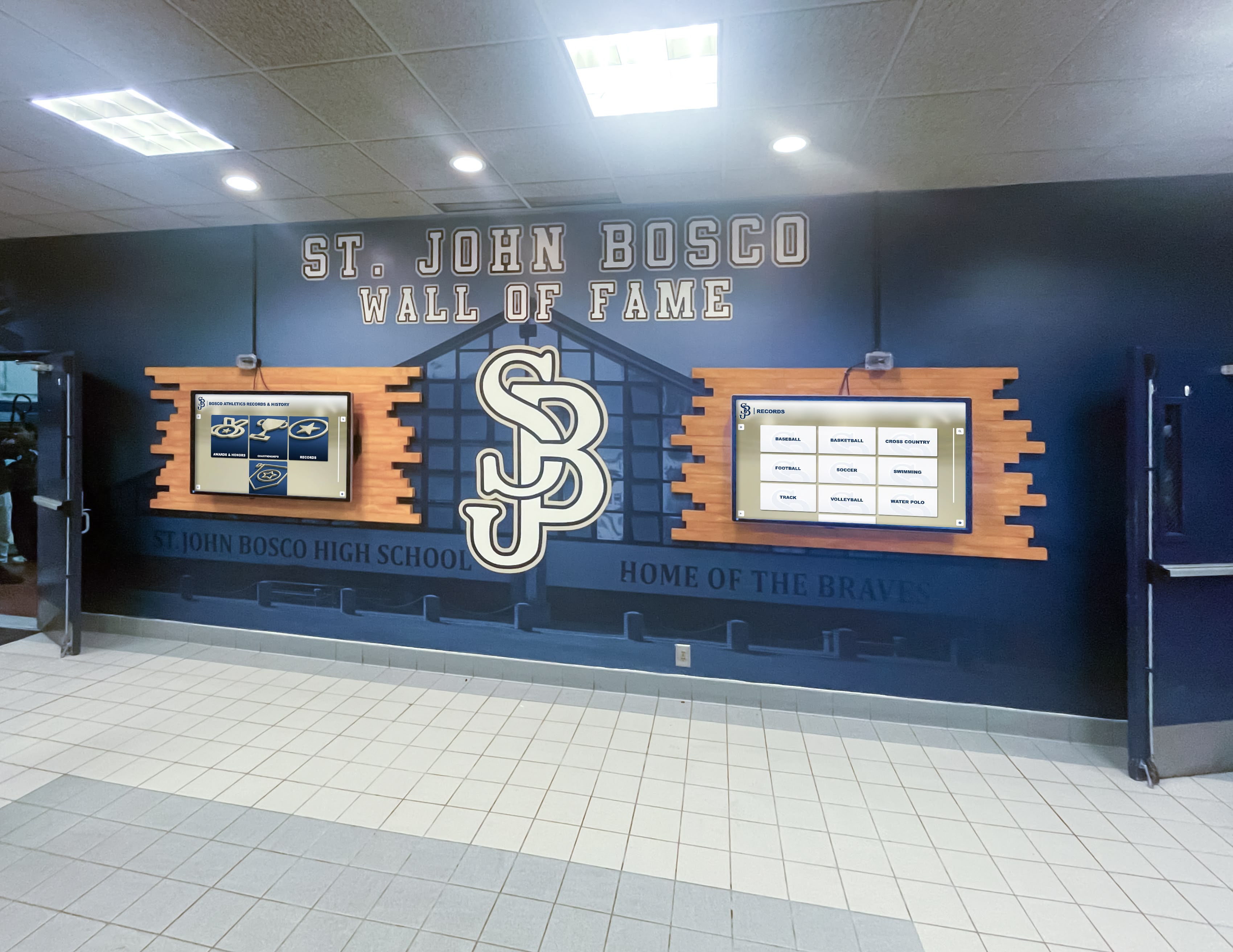
Multi-screen installations provide comprehensive recognition capacity across facilities
9. TelemetryTV
TelemetryTV provides cloud-based digital signage emphasizing data visualization, analytics dashboards, and dynamic content integration alongside traditional signage applications.
Platform Strengths
Data Integration Capabilities
TelemetryTV excels at integrating live data feeds, analytics dashboards, and dynamic content updates. Organizations display real-time information, metrics, and data visualizations alongside traditional static content.
Flexible Content Options
The platform supports diverse content types including web pages, social media feeds, video content, and custom applications. This flexibility enables creative display strategies beyond simple image slideshows.
Developer-Friendly Architecture
Technical organizations appreciate TelemetryTV’s API access and developer tools enabling custom integrations and specialized functionality beyond standard features.
Recognition Application
Requires Technical Customization
Organizations implementing recognition with TelemetryTV typically develop custom applications or web pages displaying recognition content through the platform’s web content capabilities. This approach requires technical expertise beyond typical recognition program administrators.
No Native Recognition Features
TelemetryTV lacks purpose-built recognition functionality including profile management systems, searchable databases, or recognition-specific templates. Organizations create recognition functionality from scratch using the platform as display layer.
Data Visualization Unnecessary for Recognition
TelemetryTV’s strengths in data visualization and live data integration provide limited value for recognition applications primarily displaying biographical content, photos, and achievement details rather than live metrics.
Suitable Scenarios
Organizations with technical development capabilities seeking to build custom recognition applications can use TelemetryTV as display infrastructure. However, most organizations find purpose-built recognition platforms provide required functionality without custom development investment, time, and ongoing maintenance.
10. Carousel Digital Signage
Carousel provides cloud-based digital signage software serving education, corporate, healthcare, and retail markets with emphasis on ease of use and reliable performance.
Platform Overview
Education Market Focus
Carousel targets educational institutions with pricing, features, and support appropriate for K-12 schools and higher education campuses. This education emphasis creates better alignment with school recognition needs compared to generic corporate signage platforms.
Content Management for Non-Technical Users
The platform emphasizes intuitive content management enabling teachers, administrators, and staff without technical backgrounds to create and schedule content confidently. This accessibility reduces dependence on IT departments for routine content updates.
Scheduling and Automation
Carousel includes robust scheduling allowing organizations to plan content days, weeks, or months in advance with automatic publication. This scheduling proves valuable for coordinating recognition displays with ceremonies, events, and special occasions.
Recognition Applications
Slideshow-Based Recognition
Organizations use Carousel to create recognition slideshows featuring inductee photos, names, and basic achievement information. Content rotates on displays throughout facilities providing visibility for recognized individuals.
Limited Interactive Features
While Carousel supports displaying web content including simple interactive pages, the platform lacks comprehensive hall of fame database architecture, advanced search functionality, or navigation systems enabling sophisticated recognition exploration.
Manual Profile Management
Recognition content updates require creating new slides, uploading media, and scheduling for display through general signage workflows. This manual approach proves more time-consuming than automated profile-based recognition systems.
Best For
Schools already using Carousel for digital signage throughout campuses may incorporate recognition content into existing investments. Organizations prioritizing basic recognition visibility as part of broader signage strategies find Carousel’s education-focused approach more aligned with institutional needs compared to corporate-oriented alternatives, though dedicated recognition functionality remains limited.
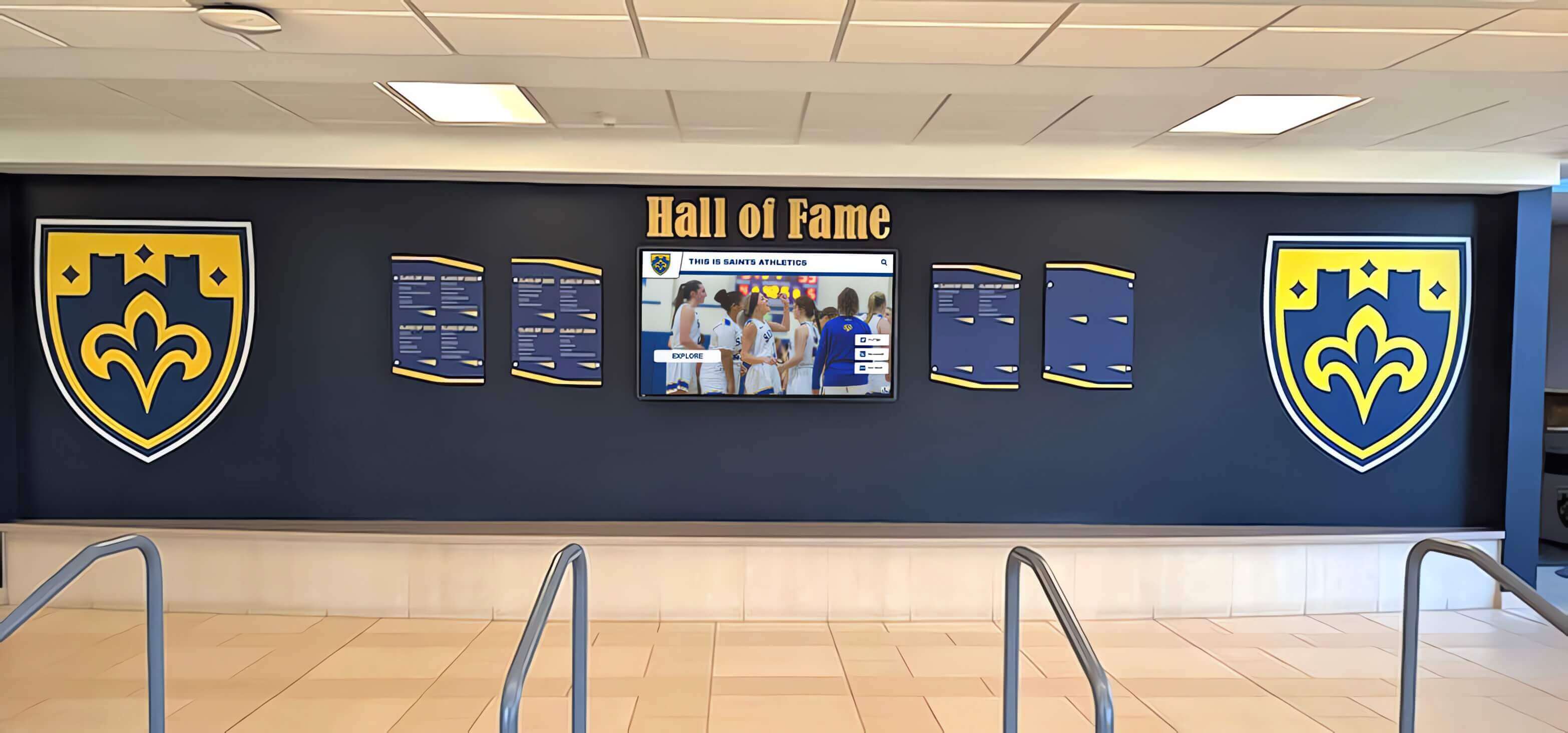
Strategic placement ensures recognition becomes part of daily institutional culture
Comparative Analysis: Key Selection Factors
Organizations evaluating hall of fame tools must consider multiple factors beyond basic functionality, including long-term ownership costs, technical requirements, accessibility compliance, content management ease, and alignment with recognition program goals.
Purpose-Built vs. Adapted Solutions
Recognition-Specific Architecture
Platforms designed specifically for hall of fame applications like Rocket Alumni Solutions provide functionality reflecting recognition program needs: searchable inductee databases, profile-based content management, discovery features encouraging exploration, and navigation optimized for achievement research. These purpose-built systems require minimal customization or workarounds delivering core functionality immediately.
Digital Signage Adaptation Limitations
Generic digital signage platforms adapted for recognition typically lack hall of fame-specific features. Organizations create recognition functionality through custom development, template design, and workflow workarounds—investing substantial time and expertise building what purpose-built platforms include natively. This adaptation approach often results in compromised functionality, increased complexity, and ongoing maintenance overhead.
Development and Customization Investment
Organizations choosing generic platforms for recognition applications must budget for significant customization, whether through internal technical resources or professional services. These development costs, combined with ongoing maintenance as platforms evolve, often exceed price differences between generic signage and purpose-built recognition software.
Accessibility and Inclusivity
Legal Compliance Requirements
Educational institutions, nonprofits receiving government funding, and organizations subject to ADA requirements must ensure digital recognition meets accessibility standards. Only platforms specifically designed for accessibility compliance like Rocket Alumni Solutions guarantee WCAG 2.1 AA conformance. Generic signage platforms typically lack comprehensive accessibility features, potentially exposing organizations to legal risks while excluding community members with disabilities from recognition access.
Universal Design Benefits
Even organizations not legally required to meet accessibility standards benefit from inclusive design ensuring all community members can access recognition regardless of abilities. Accessible platforms with screen reader support, keyboard navigation, appropriate contrast, and properly structured content serve broader audiences more effectively than inaccessible alternatives.
Content Management and Ongoing Administration
Technical Expertise Requirements
Purpose-built recognition platforms emphasize intuitive content management enabling staff without technical backgrounds to confidently add inductees, update profiles, and manage recognition content. Generic signage platforms often require technical knowledge for content creation, template design, and display coordination—potentially restricting management to IT departments rather than recognition program administrators.
Time Investment for Routine Updates
Recognition programs require ongoing content additions as new inductees join, profiles receive updates, and featured content rotates. Platforms automating recognition workflows enable efficient ongoing management, while manual approaches through general signage tools consume substantial time for routine updates potentially causing recognition maintenance to become burdensome and neglected.
Scalability as Programs Grow
Recognition programs expand as organizations accumulate years or decades of achievements. Platforms supporting unlimited or high-volume content enable sustainable growth, while solutions with capacity constraints or escalating per-inductee pricing create future limitations and cost increases as recognition archives grow.
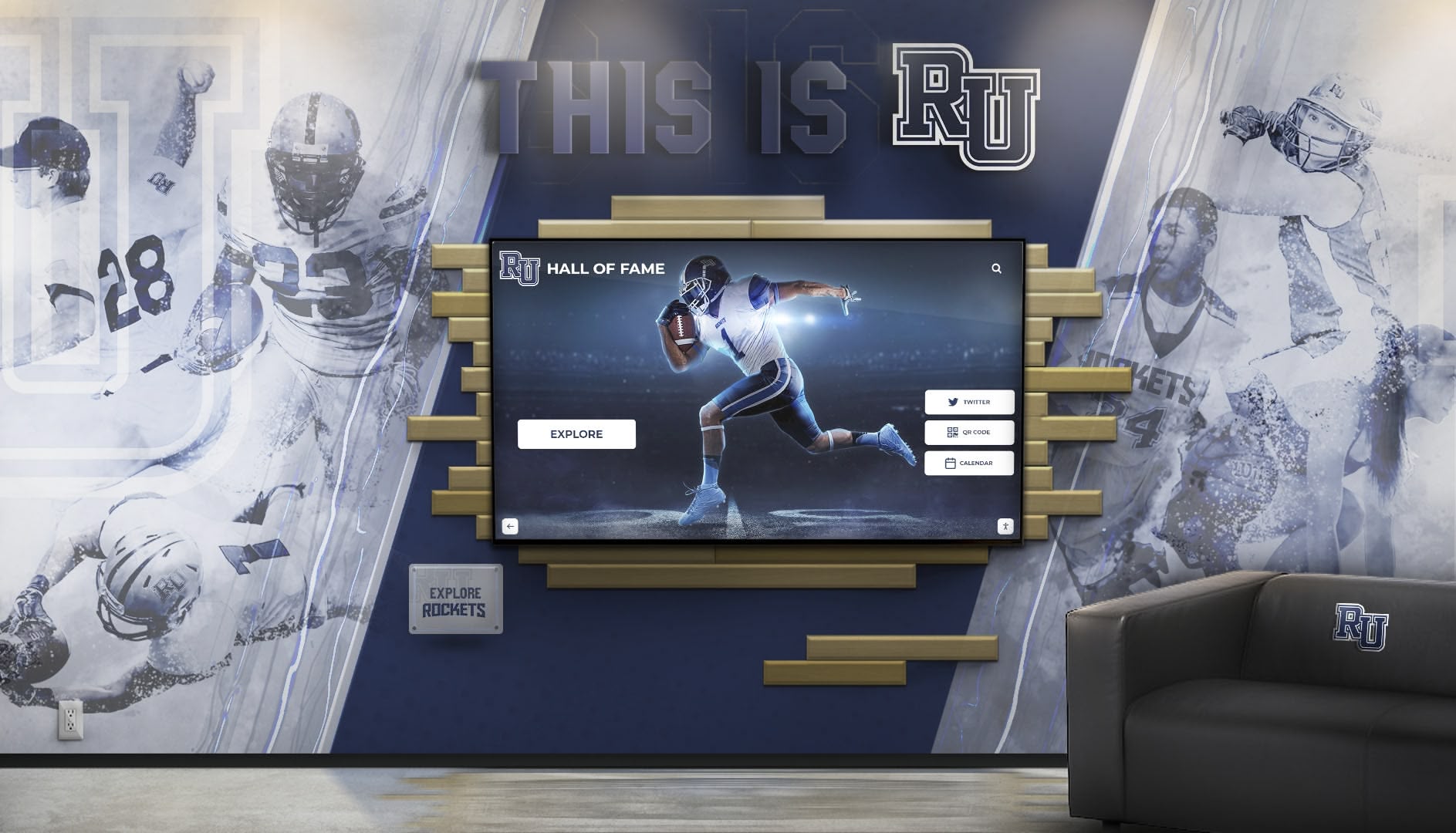
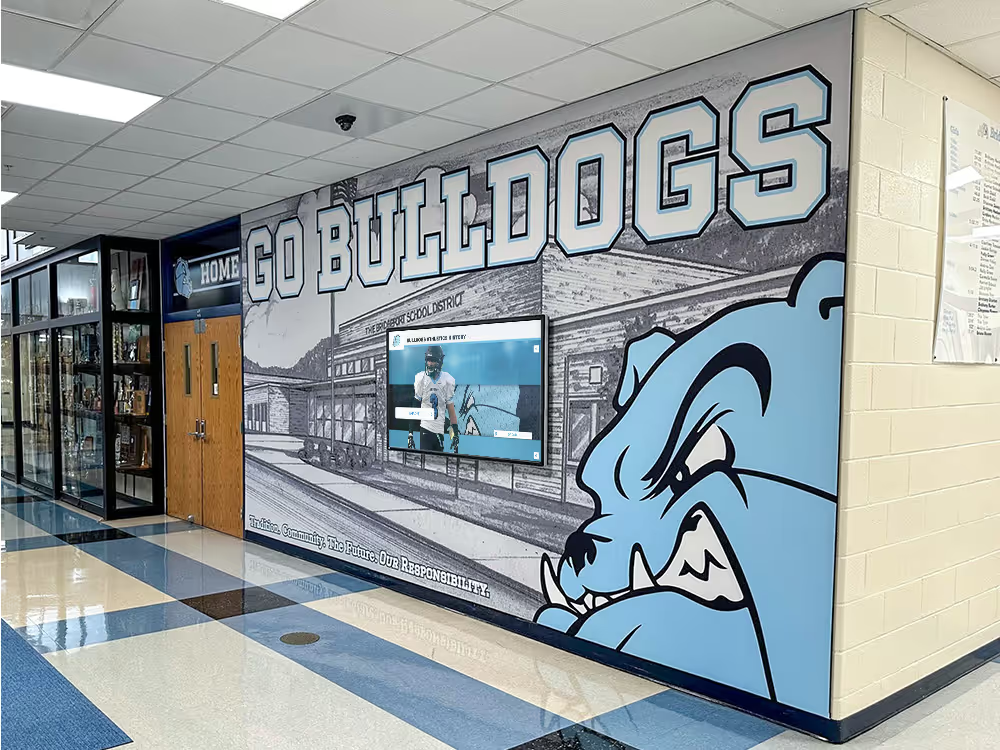
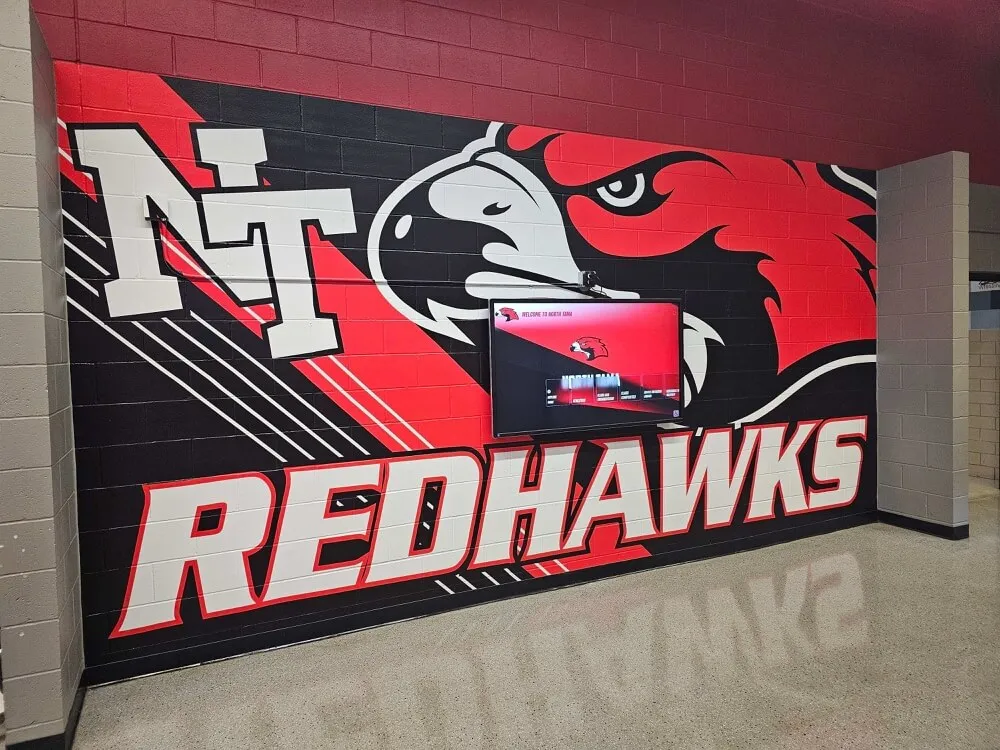
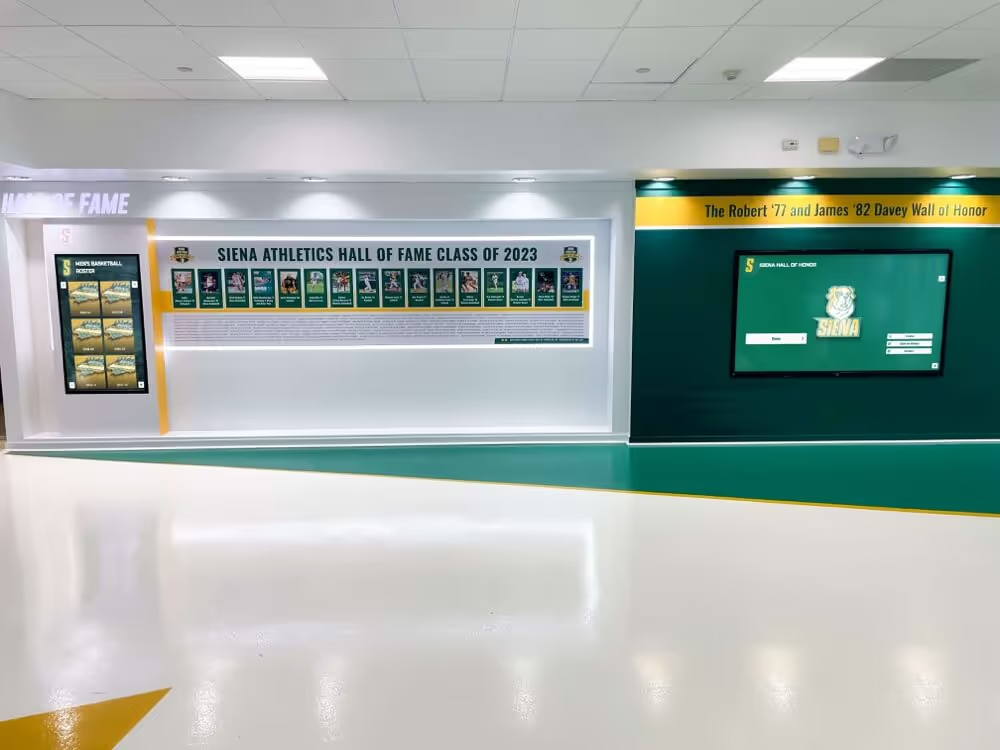
Custom installations reflect institutional identity while providing comprehensive recognition functionality
Total Cost of Ownership
Initial Implementation Costs
Organizations must evaluate complete implementation costs including software licensing, required hardware, professional services for setup and customization, content migration from existing systems, staff training, and design work. Advertised software pricing often represents only portion of total investment required to launch functional recognition programs.
Ongoing Operational Expenses
Long-term costs include annual software licensing or subscriptions, hardware maintenance and eventual replacement, continued technical support, and staff time managing ongoing content updates. Organizations should project these costs over expected 7-10 year platform lifecycles rather than focusing exclusively on initial implementation expenses.
Hidden Costs and Future Investments
Generic platforms adapted for recognition often incur hidden costs including custom development for required functionality, professional design services creating templates, technical expertise managing complexity, and potential future migration costs when platforms prove inadequate for evolving needs. Purpose-built recognition platforms minimize these hidden expenses by including necessary functionality natively.
Implementation Guidance for Different Organization Types
Different organizational contexts require tailored approaches to hall of fame tool selection based on recognition needs, technical resources, budget constraints, and program scale.
K-12 Schools and High Schools
Typical Recognition Needs
Secondary schools implement athletic halls of fame honoring athletes and teams, academic recognition celebrating scholars and achievements, distinguished alumni programs, and historical preservation documenting school heritage. Recognition spans current students receiving ongoing awards and alumni honored for lifetime accomplishments.
Resource Constraints
Schools operate on limited budgets with recognition competing against academic programs, athletic equipment, facility maintenance, and countless other priorities. Technology purchases require justification to school boards, parent organizations, or booster clubs often unfamiliar with recognition software nuances.
Technical Support Limitations
School IT departments manage extensive responsibilities supporting instructional technology, student information systems, network infrastructure, and device management. Recognition systems requiring substantial technical oversight add burden to already stretched IT resources.
Platform Recommendations
Schools benefit most from turnkey, purpose-built recognition platforms like Rocket Alumni Solutions that include implementation support, require minimal technical expertise for ongoing management, provide unlimited recognition capacity accommodating comprehensive athletic and academic programs, and offer sustainable pricing appropriate for educational budgets. Generic digital signage platforms create ongoing technical burden and customization requirements misaligned with school resources.
Higher Education Institutions
Complex Recognition Requirements
Colleges and universities implement recognition across multiple contexts: varsity athletic programs with decades of athletes across numerous sports, distinguished alumni programs spanning diverse fields and generations, donor recognition celebrating philanthropic support, faculty achievement recognition, and comprehensive historical preservation.
Multiple Stakeholder Coordination
University recognition involves coordination across athletics departments, alumni relations offices, development departments, and institutional advancement—each with distinct needs, approval processes, and content management requirements.
Technology Infrastructure
Higher education institutions typically have sophisticated IT infrastructures and technical resources supporting complex system implementations, custom integrations, and ongoing platform administration.
Platform Considerations
Universities benefit from comprehensive recognition platforms supporting multiple use cases, role-based content management enabling departmental administration, integration capabilities connecting with advancement databases and alumni systems, and enterprise-grade reliability. Both purpose-built solutions like Rocket offering higher-education-specific features and enterprise platforms like Signagelive supporting complex requirements prove viable depending on recognition program scope and available technical resources.
Nonprofit Organizations
Donor Recognition Priority
Nonprofits primarily implement recognition celebrating philanthropic support through donor walls, capital campaign recognition, memorial giving programs, and volunteer appreciation. Recognition serves advancement goals encouraging continued support and inspiring additional giving.
Budget Sensitivity
Nonprofit organizations carefully scrutinize technology investments, balancing recognition program costs against mission-critical programs serving beneficiaries. Recognition systems must demonstrate clear value justifying expenditures within constrained budgets.
Limited Technical Resources
Many nonprofits lack dedicated IT staff, depending on volunteers, contractors, or minimal technology personnel managing all organizational technology needs. Recognition platforms requiring substantial technical expertise prove impractical without dedicated resources.
Recommended Approaches
Nonprofits benefit from cost-effective, turnkey recognition solutions requiring minimal technical expertise and providing donor-specific functionality. Purpose-built platforms with donor recognition features including giving level organization, campaign-specific recognition, and stewardship communication integration align well with nonprofit needs. Generic signage platforms lacking donor-specific functionality require customization investment inconsistent with nonprofit resources and priorities.
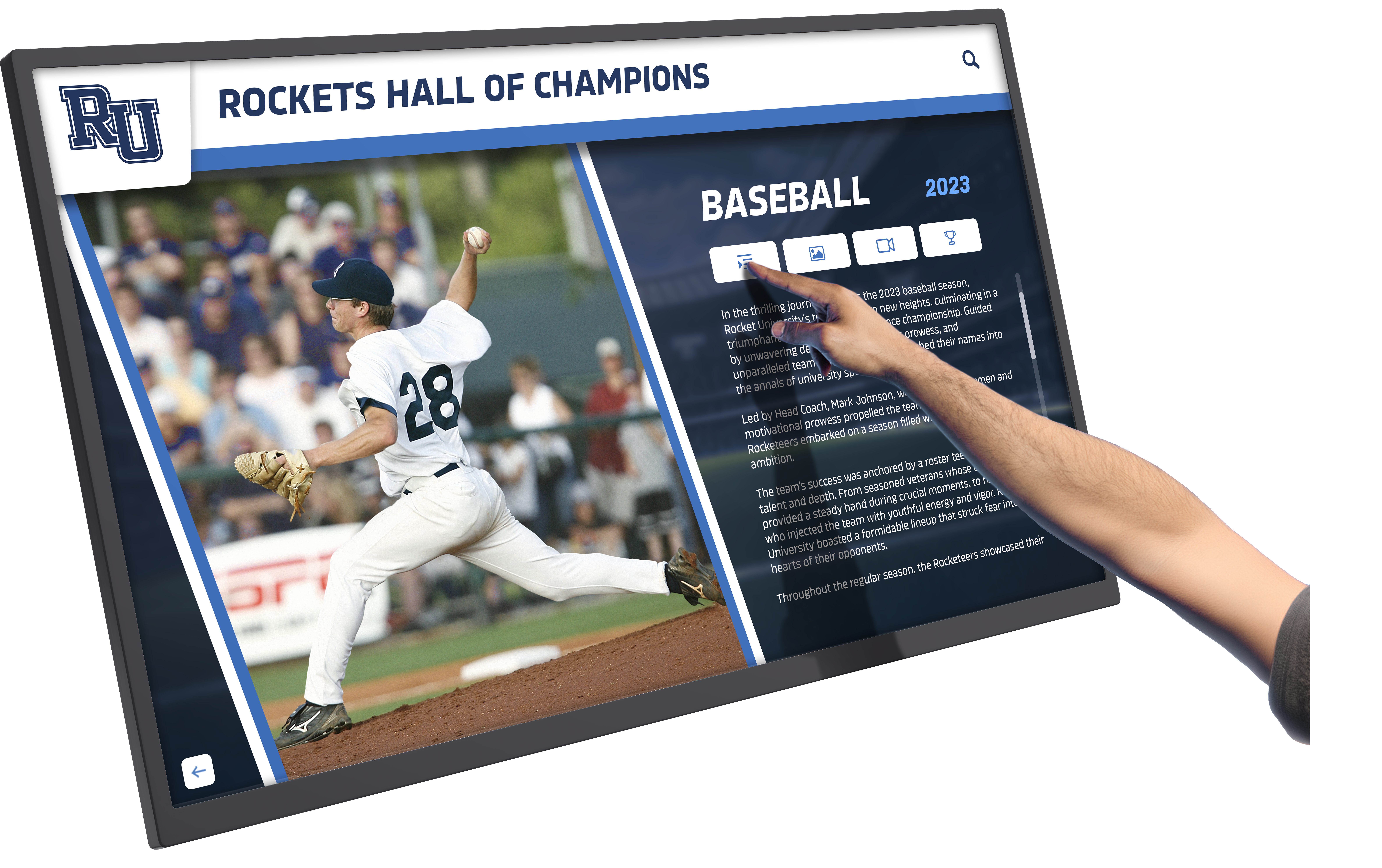
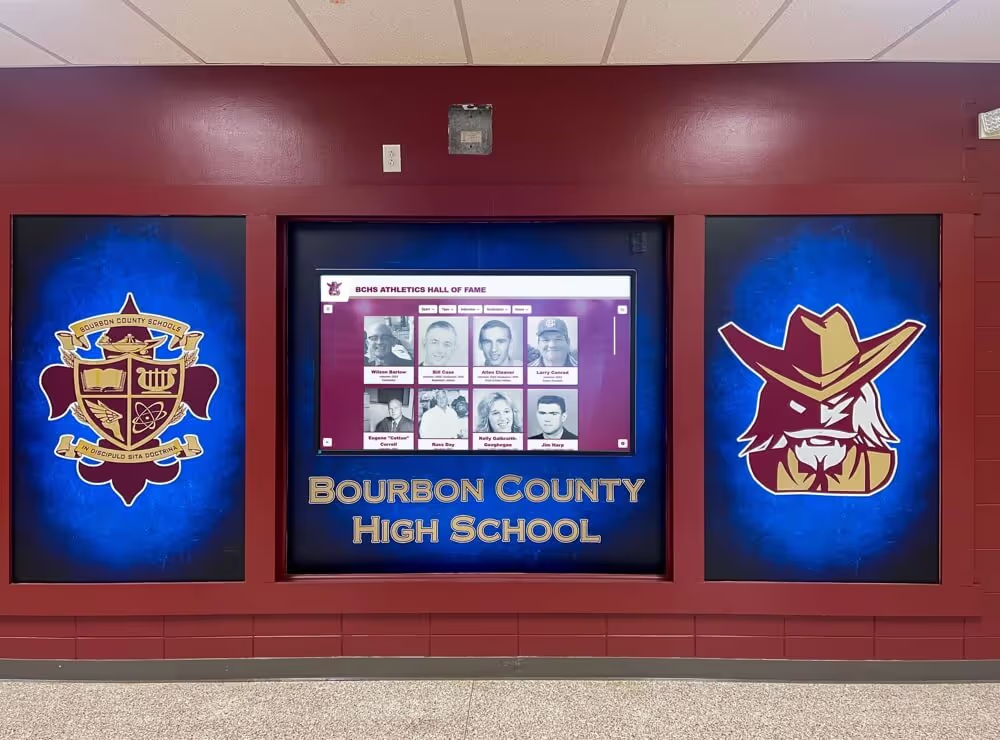
Detailed profiles with photos, statistics, and stories create meaningful recognition experiences
Cultural Institutions and Museums
Historical Preservation Focus
Museums, historical societies, and cultural organizations prioritize comprehensive archiving, detailed contextualization, extensive multimedia integration, and scholarly documentation standards. Recognition serves educational missions preserving and interpreting cultural heritage.
Public Engagement Requirements
Cultural institutions require engaging visitor experiences encouraging exploration, learning, and extended facility time. Recognition functions as interpretive content complementing collections and exhibitions.
Grant Funding and Special Projects
Museums often fund technology through grants, capital campaigns, or special project funding with specific timelines, outcomes, and reporting requirements influencing platform selection and implementation approaches.
Platform Selection Criteria
Cultural institutions benefit from platforms supporting extensive multimedia content, sophisticated organization and categorization for complex archives, accessibility features ensuring universal public access, and engagement analytics demonstrating program value for funders. Purpose-built recognition platforms with strong historical archive capabilities or museum-specific content management systems prove most appropriate depending on recognition program scope and integration with broader collections management needs.
Future-Proofing Recognition Investments
Organizations selecting hall of fame tools commit to platforms for years or decades. Evaluation should consider not only current needs but platform evolution capabilities ensuring recognition systems remain relevant as technology, user expectations, and organizational requirements change.
Platform Development and Updates
Continuous Feature Enhancement
Leading platforms invest consistently in development adding new features, improving performance, and adapting to emerging technologies. Organizations benefit from ongoing innovation without requiring platform migrations or expensive upgrade purchases. Evaluate vendor commitment to development through release frequency, feature roadmaps, and historical improvement patterns.
Technology Stack Modernization
Web technologies, device capabilities, and interaction paradigms evolve continuously. Platforms built on modern, maintained technology stacks adapt to change more readily than legacy systems requiring expensive rebuilding as underlying technologies become obsolete. Web-based platforms generally offer better future adaptability than native applications requiring separate development for each device and operating system.
Vendor Stability and Long-Term Viability
Market Position and Financial Stability
Organizations depend on vendors maintaining platforms over years or decades. Evaluate vendor market position, customer base, financial stability, and business model sustainability. Established vendors with substantial customer bases demonstrate viability, while startups or vendors in unstable markets present higher risk of platform discontinuation requiring costly migrations.
Customer Base and Industry Presence
Vendors serving many organizations in similar contexts benefit from accumulated expertise, proven implementations, and development priorities aligned with customer needs. Platforms primarily serving different markets may prioritize features irrelevant to recognition applications while neglecting functionality recognition programs require.
Making the Final Decision
Selecting optimal hall of fame tools requires systematic evaluation balancing functional requirements, budget constraints, technical capabilities, and long-term strategic alignment.
Requirements Assessment
Define Recognition Program Scope
Clearly articulate recognition program scope including achievement categories to celebrate, anticipated inductee volumes over timeframes, multimedia content expectations, web accessibility requirements, and interactive functionality needs. Comprehensive requirements definitions enable objective platform evaluation against specific needs.
Identify Critical vs. Desirable Features
Distinguish between essential functionality required for acceptable recognition programs and desirable enhancements improving but not defining program success. This prioritization focuses evaluation on meeting critical requirements rather than pursuing perfect solutions with unnecessary complexity.
Vendor Evaluation Process
Request Demonstrations and Trials
Insist on comprehensive platform demonstrations showing actual recognition implementations rather than generic marketing presentations. Request trial access allowing staff to explore administrative interfaces, test content management workflows, and evaluate user experiences firsthand before commitments.
Reference Checking
Contact multiple organizations using platforms under consideration, asking about implementation experiences, ongoing satisfaction, vendor support quality, platform reliability, and whether they would select the same solution knowing what they’ve learned through usage.
Total Cost Projection
Develop complete cost projections over expected platform lifecycles including all implementation expenses, annual operational costs, anticipated growth impacts on pricing, and potential hidden costs. Compare platforms based on complete ownership costs rather than initial licensing prices.
Implementation Planning
Realistic Timeline Development
Establish realistic implementation timelines accounting for content development, technical setup, staff training, and phased launches if appropriate. Rushed implementations often result in poor initial experiences undermining recognition program success.
Content Strategy Before Platform Selection
Develop content strategies defining what recognition will include before selecting platforms. Understanding content needs enables better platform evaluation matching functionality to requirements rather than adapting content to platform constraints.
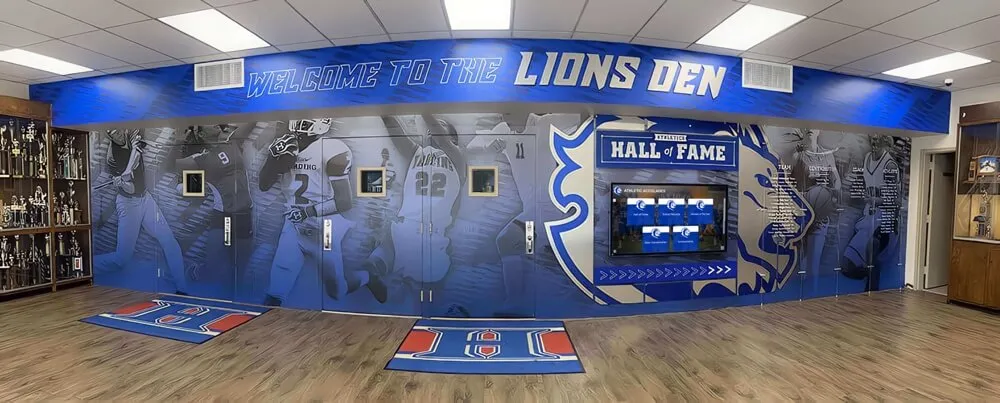
Comprehensive recognition systems honor achievements while building institutional culture
Conclusion
The hall of fame tools market presents diverse options spanning purpose-built recognition platforms like Rocket Alumni Solutions designed specifically for achievement celebration to generic digital signage software organizations adapt for recognition applications. This fundamental distinction between recognition-specific and general-purpose platforms significantly impacts implementation complexity, ongoing management burden, feature comprehensiveness, and long-term value.
Purpose-built platforms deliver recognition-optimized functionality including searchable databases, intuitive profile management, discovery features encouraging exploration, and accessibility compliance ensuring inclusive access. Organizations implementing these specialized solutions benefit from streamlined implementations, manageable ongoing administration, and comprehensive feature sets meeting recognition needs without customization investment. Generic signage platforms require substantial adaptation through custom development, template design, and workflow engineering—transforming advertised simplicity into complex implementations requiring technical expertise and ongoing maintenance.
Beyond technical capabilities, successful platform selection requires considering organizational context including available budget and total ownership costs, technical resources supporting implementation and ongoing administration, recognition program scope and growth trajectories, stakeholder needs across departments and constituencies, and alignment with institutional priorities around accessibility, engagement, and community building.
Rocket Alumni Solutions leads this comparison because it was purpose-built for recognition applications, provides unlimited capacity without escalating costs, meets full WCAG 2.1 AA accessibility standards, delivers intuitive management requiring minimal technical expertise, and includes comprehensive implementation support and ongoing platform development. Organizations prioritizing recognition program success, sustainable management, inclusive access, and long-term value consistently find purpose-built platforms deliver superior outcomes compared to adapted digital signage alternatives regardless of initial price differences.
The recognition technology landscape continues evolving with emerging capabilities including artificial intelligence personalization, augmented reality integration, enhanced analytics, and deeper advancement system integration. Organizations selecting platforms today should prioritize vendors demonstrating commitment to ongoing development ensuring recognition investments remain relevant as technology and expectations evolve over coming decades.
Your achievements and the people behind them deserve recognition approaching the excellence they demonstrated earning celebration. Thorough hall of fame tool evaluation ensures your technology investments support rather than constrain recognition programs, enabling you to build the vibrant, engaged communities where every member feels valued and connected through comprehensive achievement celebration.
Ready to explore how purpose-built recognition platforms create engaging experiences worthy of your community’s achievements? Book a demo to discover how comprehensive recognition capabilities, intuitive management, and accessibility compliance combine to deliver recognition programs that genuinely serve your institutional mission while building lasting community engagement.